Alden’s latest move may be the final act in Warren Buffett’s newspaper misadventure

Warren Buffett. Photo (cc) 2011 by Fortune Live Media.

The final act is about to be consummated in Warren Buffett’s disappointing dalliance with the newspaper business. Despite the legendary investor’s self-professed love for newspapers, he ran the newspapers he acquired starting in 2012 as a hopeless cause rather than investing in them as his fellow billionaires Jeff Bezos did with The Washington Post and John Henry did with The Boston Globe.

Buffett eventually sold his papers — including his hometown Omaha World-Herald — to Lee Enterprises. And on Monday we learned that the predatory hedge fund Alden Global Capital is now attempting to purchase Lee’s 90 daily newspapers, which are located in 26 states. The death watch has begun.

I wrote about Buffett’s track record as a newspaper owner in my book “The Return of the Moguls.” Here’s an excerpt.

***

When Buffett’s Berkshire Hathaway investment company purchased 63 newspapers from the Media General chain in 2012 for $142 million, the news was greeted with the hope that the legendary octogenarian might be just the person to show the way forward. Buffett bolstered his new holdings by extending loans to those papers totaling $445 million. It was a generous gesture with which Aaron Kushner and his investors, who also wanted the papers, could not compete. A year earlier Buffett had bought his hometown paper, the Omaha World-Herald, along with six other papers for $200 million. He already owned The Buffalo News. And in those pre-Bezos days, he held a substantial number of shares in The Washington Post Co. “Does Warren E. Buffett want to be a media mogul?” asked The New York Times.

Certainly Buffett had the right pedigree. Not only was he a brilliant financial thinker, but he had long loved newspapers and had been a close adviser to the Graham family at The Washington Post for many years. He even had a hand in winning a Pulitzer Prize: in 1973, when he was the owner of the Omaha Sun, he helped his reporters investigate a local charity by finding documents, providing financial analysis, and even assisting with the writing. Katharine Graham praised Buffett fulsomely in her autobiography, saying that he became a trusted confidant after he invested in the Washington Post Co. “By the spring of 1974,” she wrote, “Warren was sending me a constant flow of helpful memos with advice, and occasionally alerting me to problems of which I was unaware.”

Yet Buffett, astute financier that he is, expressed skepticism about prospects for the newspaper business after it entered its long decline. In 2009, for instance, he said he had no interest in purchasing papers, because their financial outlook was so grim. “For most newspapers in the United States, we would not buy them at any price,” he said. “They have the possibility of going to just unending losses.” And though he later reversed himself, his acquisition strategy gravitated toward papers of the type that still do reasonably well: those in medium-sized markets where the local paper is the principal source of regional and community news and where competition from the internet is less a factor than it is in large cities. Buffett’s papers carry little debt and are profitable. In the spring of 2016, though, he admitted that the picture was continuing to darken for the newspaper business and that he was no closer to finding a way out than anyone else.

“We haven’t cracked the code yet,” he told USA Today. “Circulation continues to decline at a significant pace, advertising at an even faster pace. The easy cutting has taken place. There’s no indication that anyone besides the national papers has found a way.” He added that even though all of his papers were making money (at that time he was up to 32 dailies and 47 weeklies), that might not be the case in future years. “If you have a problem in five years, you have a problem now,” he said. Buffett doubled down on those remarks in early 2017, telling CNBC that The New York Times, The Wall Street Journal, and possibly The Washington Post were the only newspapers he believed had an “assured future,” explaining, “They have developed an online presence that people will pay for.”

Less than two months later, the hammer came down at BH Media, the company Buffett had set up to manage his newspapers. BH Media announced the termination of 289 positions throughout the chain, including the elimination of 108 vacant jobs. The BH Media president and chief executive officer, Terry Kroeger, told the Omaha World-Herald that Buffett had been informed of the reductions but that “his opinion was not sought or offered,” in keeping with Buffett’s hands-off investment philosophy. Kroeger blamed the papers’ declining revenue on changes in retail advertising, and especially on the move to online shopping — an irony given how the most successful of the new breed of newspaper owners, Jeff Bezos, made his money. Buffett’s World-Herald did not suffer any cuts at that time. But then, in May, BH Media reduced the size of the Omaha paper and eliminated three jobs, according to a memo to the staff from the executive editor, Melissa Matczak.

For a self-confessed newspaper fan whose net worth was roughly the same as that of Bezos (more than $60 billion apiece in mid-2016), Buffett’s role in helping to figure out the future of journalism might be considered disappointingly modest. Perhaps it would be too much to expect someone in his mid-80s to dedicate himself to figuring out the future of the newspapers he had acquired. But he was ideally positioned to bring in the sorts of minds who might apply themselves to the task of saving smaller papers in much the same way that Bezos and Henry were attempting to reinvent their much larger properties. Surely Buffett understands as much as anyone that readers and advertisers will put up with an ever-diminishing paper for only so long before an irreversible downward spiral sets in.

Become a member of Media Nation for just $5 a month!
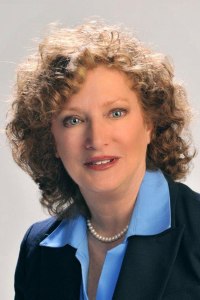
In our latest podcast, Penny Abernathy talks about news deserts and what to do about them

Penelope Muse Abernathy

Penelope “Penny” Muse Abernathy, a visiting professor at Northwestern University’s Medill School of Journalism, arguably launched a movement with her path-breaking research on “news deserts” and the forces undermining community newspapers across the nation.

Abernathy, a former executive with The New York Times and The Wall Street Journal, was also Knight Chair in Journalism and Digital Media Economics at the University of North Carolina from 2008 to 2020. She talks about why this is a pivotal moment for community journalism, about her forthcoming research and about why her journalism students are still bullish on speaking truth to power at the local level.

In Quick Takes, Dan reports that the nonprofit strategy at The Salt Lake City Tribune is actually working out, and Ellen tunes us in to Heartland Signal, a new digital outlet with a Democratic spin that is setting up to cover the midterm congressional elections.

Please give us a listen — and subscribe via Apple Podcasts, Spotify or wherever fine podcasts are available.

Completing my Holy Trinity of New Haven apizza landmarks with a trip to Sally’s

Now that’s apizza!

As any pizza aficionado knows, New Haven is home to the Holy Trinity of a certain type of pizza known as apizza (pronounced “a-beetz”) — thin and cooked very quickly in an ultra-hot oven, usually with charring on the bottom. Frank Pepe’s and Sally’s are in the Italian neighborhood of Wooster Square. The Modern is closer to downtown.

Despite traveling to New Haven for reporting trips on a number of occasions over the years, for some reason I had never made it to Sally’s. Well, I rectified that last Tuesday evening. I showed up around 7:30 and was told I’d have to wait about 20 minutes, which attests to the restaurant’s popularity. But then someone left, and I was seated almost immediately.

I began with a Caesar salad that arrived in a to-go package, which struck me as odd. I mean, I was right there. The dressing had not been mixed in, and it was so thick that I couldn’t really pour it — rather, it fell in glops on the romaine. The cheese was powdered rather than shaved. It wasn’t a bad salad, but I’ve had much better.

Next: The main event. I had asked for a small sausage and mushroom, but the order somehow got bollixed up and I ended up with a “medium,” which was surely enough for three people. It was an appealing-looking pie in the New Haven tradition, more oval than round, with lots of ground sausage to make up for the relative dearth of mushrooms. And it was delicious, thin and bursting with flavor.

My only criticism is personal — I like my pizza with a lot of cheese and not too much tomato sauce. What I got was a lot less cheesy than I would have liked. According to the Wiktionary, though, New Haven-style apizza is supposed to have “only a small amount of grated Parmesan cheese,” which means that Sally’s delivered the goods. By contrast, my memory of the Modern is that they’re generous with the cheese, which I recall as a zesty blend. I hope to go back in a few weeks.

My “medium” Sally’s pizza was so huge that I would have risked serious gastric distress if I’d eaten more than half. The server seemed stricken when I told him that I couldn’t take it with me since I was traveling by train. Sadly, I watched him take it away. In the interest of writing a complete review (gluttony was not the issue; oh no, not all), I ordered a cannoli pie for dessert. Like the Caesar salad, it was served in a to-go container. Unlike the salad, it was perfect.

I also ordered a glass of Sally’s red wine, served in a water glass. It was fine if unmemorable.

Overall, I’d say my trip to Sally’s was a success — although with the Modern and Pepe’s nearby, I doubt I’ll be back. The Modern remains my favorite, even though they use an oil-fired oven, unlike the coal ovens at Pepe’s and Sally’s. It almost seems like cheating, though it makes no difference to the pizza.

We’re lucky to have some great pizza places in Medford and Arlington, so I don’t feel especially deprived by not being able to go to the Modern every week. But New Haven apizza is truly something special.

This post was part of last week’s Media Nation Member Newsletter. To become a member for just $5 a month, please click here.

Guild approves contract with Boston Globe Media, ending nearly three years of strife

After nearly three years of increasingly fraught negotiations, the Boston Newspaper Guild and Boston Globe Media Partners have finally reached agreement on a new three-year contract. The Guild is the union that represents newsroom employees at the Globe as well as several other departments. Staff members at Boston.com and Stat News are included as well.

Don Seiffert has the details in the Boston Business Journal, reporting that about 85% of Guild members approved the contract proposal, which calls for raises, a signing bonus, a new parental-leave policy, the continuation of overtime pay and unspecified protections against outsourcing.

Become a member of Media Nation for just $5 a month!

The Globe has been growing in recent years, as its paid digital subscription drive has led to profitability (at least before the pandemic) and new hires. William Turville wrote in the U.K.-based Press Gazette last week that digital-only subscribers have settled in at about 225,000, as the paper has retained most of those who signed up at a big discount during the height of COVID-19.

Still, there are warning signs for owners John and Linda Henry, as Seiffert notes. The contract talks grew increasingly contentious over time. In September, Sens. Elizabeth Warren and Ed Markey pulled out of a Globe-sponsored event in order to show their support for the union.

“There’s definitely a sour taste lingering in our mouths,” an anonymous union member told Seiffert. “I doubt any of us will trust our owners as much as we once did.”

Such feelings are understandable but can be overcome with time. The best way to do that is to put out a great newspaper.

Here’s a statement from management, as reported by the Globe:

A Globe spokesperson said the contract “provides strong protections and economic benefits for Guild members and we will immediately start working together on its implementation.”

“The Globe remains committed to journalistic excellence and a relentless focus on providing the best possible service to our region,” the spokesperson said in a statement. “We will continue to invest and innovate in order to ensure that the local, independent journalism that our community has relied on for nearly 150 years will thrive and be sustainable for many years to come.”

And here’s a statement from the Guild, provided Friday night by a trusted source:

Dear Guild members,

Following the tabulation of today’s vote, we are pleased to announce that Guild membership has voted to ratify the three-year tentative contract agreement between the Boston Newspaper Guild and Boston Globe Media Partners.

Together, the two parties have reached an agreement that will benefit the approximately 300 members of the Guild while also providing the company some of the operational flexibility it desired to chart a path for the company’s future success.

As soon as the contract is officially ratified by both parties, which will happen in short order, Guild members will receive a $1,000 signing bonus and a 3 percent raise on their base salary. At the start of year two and year three of this agreement, members will receive 2 percent raises. After nearly three years of difficult negotiations, it is nice to know that our members will have some extra money coming in during the holidays.

Additionally, this agreement will help codify crucial employee rights that were at risk during many stages of these negotiations. All employees will be protected by the Guild’s powers of grievance and arbitration in matters of discipline, termination, and any attempt by the Globe to create new company policies. The Guild also ensured that strong fences have been put around the company’s ability to subcontract work to outside providers, a crucial compromise that protects the integrity of our newsroom. This agreement also retains the successors and assigns clause from our prior CBA, which means that the vast majority of Guild members will enjoy all of the rights afforded by this contract in the event that the Globe comes under new ownership.

This contract would not have been possible without the time and effort of so many of you who chose to fully engage, show up, and do the hard work required, despite the demands of your own busy lives. Through your words and actions over the last three years, we have reached an agreement that stands in stark contrast to the one we were first offered back in 2018. Over the next three years, we hope that every member will continue to stay involved and be vocal about policies you believe will create a better, stronger Boston Globe.

In solidarity,

The BNG Negotiation Team

Scott Steeves
Jenna Russell
Kevin Slane

Project Veritas is at the vortex of two cases that threaten the First Amendment

James O’Keefe of Project Veritas. Photo (cc) 2020 by Gage Skidmore.

A pair of legal battles involving Project Veritas, a right-wing activist group known for recording its victims on hidden camera and then deceptively editing what they said, have raised a couple of dicey First Amendment issues.

The first involves FBI raids against James O’Keefe, the founder of Project Veritas, as well as against his associates. The raids were connected to the alleged theft of a diary kept by President Biden’s daughter Ashley, even though Veritas did not publish anything from the diary and ended up turning it over to law enforcement.

Become a member of Media Nation for just $5 a month! Members receive a weekly newsletter with exclusive early content. Just click here.

As Josh Gerstein writes in Politico, the raids “are prompting alarm from some First Amendment advocates, who contend that prosecutors appear to have run roughshod over Justice Department media policies and a federal law protecting journalists.” He quotes longtime First Amendment advocate Jane Kirtley, a former executive director of the Reporters Committee for Freedom of the Press, as saying:

This is just beyond belief. I’m not a big fan of Project Veritas, but this is just over the top. I hope they get a serious reprimand from the court because I think this is just wrong.

Maybe, maybe not. Project Veritas is entitled to the protections afforded to any journalistic organization, no matter how sleazy. The question, as Gerstein observes, is whether Veritas did anything illegal in obtaining the diary.

For instance, Daniel Ellsberg, Chelsea Manning and Edward Snowden all broke the law in obtaining secret documents, and they all paid a high price for their actions. The news organizations that published those documents, though, were not prosecuted because there was no evidence they had participated in those crimes. (Julian Assange of Wikileaks is a special case. Source or publisher? Passive recipient or active participant in the theft of classified information? I’ll leave those questions aside for today.)

What we don’t know about the Project Veritas case is whether the government is claiming that O’Keefe and his crew were participants in the theft of the diary. If that’s what they’re charged with, then the First Amendment doesn’t come into play — and I suspect that’s what we’re going to find out. Absent such a claim, though, the actions of the FBI would indeed represent a grave threat to freedom of the press.

The second, and more serious, case involves a libel suit that Project Veritas filed against The New York Times. In a proceeding not directly related to the libel claim, Veritas argued that documents the Times published violated the group’s right to attorney-client privilege. That led to an extraordinary order, reported by Michael D. Grynbaum in the Times:

On Thursday, the trial court judge, Charles D. Wood of State Supreme Court in Westchester County, ordered that The Times “immediately sequester, protect and refrain” from disseminating any of the materials prepared by the Project Veritas lawyer. Furthermore, Justice Wood instructed The Times to “cease further efforts to solicit or acquire” those materials, effectively preventing the newspaper from reporting on the matter.

This is censorship — prior restraint. I’m sure Judge Wood has a law degree, but anyone who’s taken an undergraduate First Amendment course knows this is unconstitutional. Under the Near v. Minnesota standard, the government may not engage in prior restraint except in a few narrowly drawn instances: incitement to violence, serious breaches of national security and obscenity. By contrast, the reasons for restraining the Times in the Project Veritas case are trivial. Bruce Brown, executive director of the Reporters Committee for Freedom of the Press, put it this way:

This is the first prior restraint entered against the New York Times since the Pentagon Papers, and it is an outrageous affront to the First Amendment.

Prior restraints — which are orders not to publish — are among the most serious threats to press freedom. The trial court should have never entered this order. If it doesn’t immediately vacate the prior restraint, an appellate court must step in and do so.

Two cases, two very different sets of facts. As I said, we’ll have to wait and see on the first case, which might prove to be no big deal. The second case, though, strikes me as a reflection of the low esteem in which the media are held these days. A protection that has allowed news organizations to publish secret government documents as long as they don’t put the country at risk is now being flouted by a state judge for the flimsiest of reasons.

The Cambridge Chronicle lives. But the city still needs a lot more coverage.

News coverage in Cambridge — or the lack thereof — got a lot of attention recently when Joshua Benton wrote in Nieman Lab about the departure of Amy Saltzman as editor of the Cambridge Chronicle-Tab.

What drew national notice was Benton’s warning that maybe Saltzman wouldn’t be replaced and that Gannett would allow it to sink into the ranks of ghost newspapers. Fortunately, that didn’t happen, although Gannett has gone on a spree of shutting down print editions recently. Saltzman’s successor, Will Dowd, introduced himself this week. But Benton’s larger point still holds. Cambridge, a well-educated, affluent city of about 118,000, is covered by just one full-time paid journalist.

Saltzman edited the Chronicle for nine years, which is about 150 years in Corporate Chain Journalism Time. In her farewell column, she writes that she had more resources at her disposal back when she started — in addition to herself, there were one and a half reporting positions, an editorial assistant, a freelance budget, several photographers and an office in nearby Somerville. Four years later, she found herself alone. Yet she adds:

So as I leave my post, I have one plea: Support local journalism. Subscribe to the Chronicle. The paper’s survival as the oldest continuously run weekly newspaper in the country continues to be against all odds and should be lauded.

Well, now. Should Cantabrigians support the Chronicle? My answer would be yes if they’re getting value from it. But I don’t think anyone should feel obliged to support a paper that’s been hollowed out by Gannett and its predecessor company, GateHouse Media, especially when it could almost certainly be run profitably with a bigger staff and a more imaginative approach to the business of journalism. At this point, the closest thing the city has to a news source of record is the Cambridge Day, a mostly volunteer project. It would be nice to see some resources put into the Day, or perhaps into a nonprofit start-up.

Then again, news coverage in Cambridge has always been a puzzle. According to legend, at one time it was the largest city in the country without a daily newspaper, a fact that was usually attributed to its proximity to Boston. Yet neither the Globe nor the Herald ever gave more than cursory coverage to Cambridge. The alt-weeklies — The Boston Phoenix and The Real Paper — actually devoted quite a few resources to Cambridge coverage since that’s where a lot of their readers lived. I remember covering a few Cambridge political stories myself. But those papers are all gone.

When I was a senior in college, a friend of mine who lived in Cambridge and I made serious plans to launch a weekly after we graduated that would compete with the Chronicle, then owned by the Dole family. As we immersed ourselves in the details, though, we discovered that the Chronicle was actually selling its ads at prices well below those listed on its rate card. Realizing we’d be undercut, we got about the business of finding jobs, and that was that.

Later on, Russel Pergament launched the Cambridge Tab, a free paper that was part of a chain of Tab papers in the western suburbs. Pergament sold out to Community Newspaper Co. in 1996, when it was owned by Fidelity Capital. The Chronicle and the Tab were eventually merged.

Which brings us back to the present. Saltzman enjoyed a solid reputation, and I know that Dowd was respected for his work at Gannett’s North Shore papers. But one person can’t cover a city of nearly 120,000 people. It’s long past time for someone to step in and provide Cambridge with the news and information it needs.

Please become a member of Media Nation for just $5 a month!

Living the new normal, from a long-delayed commencement to an Amtrak trip

Photo by Matthew Modoono / Northeastern University

Previously published at GBH News.

We are now 21 months into the COVID-19 pandemic. I’m writing this on the Amtrak to New Haven, a remarkably normal activity that conjures up images of life as we once knew it.

Except that I paid extra for a business-class ticket so I wouldn’t be too near anyone else. Except that I put my cloth mask away and switched to an industrial-strength N95 as soon as I took my seat. Except that I’ve received two doses of a COVID vaccine along with a booster, and I’m still wondering when, if ever, this will all come to an end.

This past Saturday I took part in a ritual at Northeastern University that simultaneously underscored the hope and the sense of danger we’re all experiencing. Some 2,500 members of the Class of 2020 gathered in Matthews Arena to celebrate the commencement that had been canceled at the height of the pandemic. It was held in two shifts, morning and afternoon, and masks were mandatory. It was a wonderful, festive moment.

Even so, it was impossible not to notice that a few of the grads refused to wear masks. And it was hard not to wonder what the effect would be of all those people briefly removing their masks so they could get their pictures taken. I’m triply vaxxed and pretty healthy, but I’m also 65. And though I’m reasonably confident that I wouldn’t get too sick if I were infected, I don’t want to spread it to anyone else.

As we all know, once again we’re right on the cusp. The Delta variant, which wreaked such havoc on the optimism we all felt after the first vaccines became available, had been on the wane in recent months. But now it seems to be rising once again — even in Massachusetts, where the vaccination rate is among the highest in the country.

“These state trends are disconcerting, but not surprising, as national declines in COVID cases have stalled in recent weeks,” Harvard public health professor Howard Koh told The Boston Globe. “We need to be extra-vigilant and careful as the winter season approaches. We must push the state’s vaccination rates even higher, resist suggestions to drop mask requirements too early, and eliminate disparities.”

Yet the urge to move in the opposite direction is overwhelming. Even as COVID cases were ticking up, the city of Medford, where I live, was lifting its indoor mask mandate — except, incongruously enough, in city-owned buildings.

Maybe returning to our normal lives and going maskless when it makes sense (i.e., not in an arena packed with graduates and their families) is what we all ought to be doing. David Leonhardt of The New York Times, whose morning newsletter has been a source of calm for many of us, said as much last Friday. His take, grounded in evidence and statistics, is that those of us who are fully vaccinated and healthy are in no more danger of becoming seriously ill from COVID than we are from the flu. And of course, we take few precautions to avoid getting the flu except for annual vaccines, and many of us don’t even bother with those.

“The bottom line is that COVID now presents the sort of risk to most vaccinated people that we unthinkingly accept in other parts of life,” Leonhard wrote. “And there is not going to be a day when we wake up to headlines proclaiming that COVID is defeated. In many ways, the future of the virus has arrived.”

Consider the example of Alexis Madrigal, who wrote in The Atlantic about his experience with a breakthrough infection despite being young, physically fit and fully vaxxed. He attended a friend’s wedding in New Orleans at which all the other guests had been vaccinated, too. He got COVID. But he didn’t get all that sick. The worst part was how his illness affected those around him.

“My kids had to come out of school and isolate with my wife,” he wrote. “A raft of tests had to be taken by everyone I’d had even limited contact with. (I was one of at least a dozen people at the wedding who got sick.) I had been with several older people, including my mother-in-law. For my wife and children, the tests went on for days and days, each one bringing a prospective new disaster and 10 to 14 more days of life disruption or worse.”

No, no fun. But, as he acknowledged, the vaccines worked. As Madrigal put it: “Maybe we’re in this space for another year or two or three. One way to put the question of endemicity is: When do we start treating COVID like other respiratory illnesses?”

The pandemic was especially hard on education. Students from kindergarten through college were affected, and instructors have had to juggle Zoom classes, hybrid learning, what to do when students test positive and a number of other challenges they couldn’t haven’t have imagined confronting before March 2020.

But the classroom, too, is returning to some semblance of normal. I’m on sabbatical this year, working on another book, but my colleagues tell me they’ve been having a reasonably upbeat semester. Vaccines are required. Everyone is masked and tested regularly. This is about as good as it’s going to get, at least for another year or so.

“Every graduating class — like every graduate — is tested,” Northeastern president Joseph Aoun said at Saturday’s commencement. “But your class faced the ultimate test: A global cataclysm that literally cut your final semester short. The scale and impact of the COVID-19 pandemic is unlike anything we have seen in our lifetimes, yet you persevered. You overcame every challenge, every hardship. Class of 2020, I am in awe of what you have achieved.”

I’m in awe, too. And I’m glad that my students — my former students — were able to come back to campus and be recognized for what they accomplished during their time at Northeastern, especially during those awful last few months. Meanwhile, it’s onward — to New Haven, to the future and to whatever this miserable pandemic has in store for us next.

The Salt Lake Tribune, now a nonprofit, reports that it’s healthy and growing

Salt Lake City. Photo (cc) 2011 by Jazz Spain.

You sometimes hear that nonprofit status is not a solution to the local news crisis. After all, just because a media outlet is a nonprofit doesn’t mean it’s exempt from having to bring in revenue and balance its books.

True. But nonprofit ownership also means local ownership invested in the community. Which is why the latest news from The Salt Lake Tribune, the largest daily paper in Utah, is so heartening.

According to a recent update from Lauren Gustus, the executive editor, the Tribune is growing. The newsroom, she writes, is 23% larger than it was a year ago, with the paper adding a three-member Innovation Lab reporting team and beefing up its reporting, digital and editing operations. After cutting back to just one print edition each week, it’s adding a second. The Tribune is also taking care of its employees, she says, providing much-needed equipment to its photographers as well as a 401(k) match and parental leave.

“We celebrate 150 years this year and we are healthy,” she writes. “We are sustainable in 2021, and we have no plans to return to a previously precarious position.”

The Tribune was acquired from the hedge fund Alden Global Capital in 2016 by Paul Huntsman, part of a politically connected Utah family. As I wrote for GBH News in 2019, Huntsman, like many civic-minded publishers before him, discovered that owning a newspaper isn’t as easy as he might have imagined. He was forced to cut the staff in order to make ends meet before hitting on the idea of transforming the Tribune into the first large nonprofit newspaper in the country.

Nonprofit ownership makes it easier to raise tax-deductible grant money from foundations, and it transforms the subscription model into a membership model. Done right, the audience feels invested in the news organization in a way that it generally doesn’t with a for-profit newspaper.

One disadvantage is that nonprofit news organizations are constrained from some traditional newspaper functions, including having a robust editorial page that endorses political candidates. On the latest episode of our podcast, “What Works,” Storm Lake Times editor Art Cullen told Ellen Clegg and me that’s why he and his older brother, John, the publisher, have kept their paper for-profit.

What the Cullens have done instead is set up a nonprofit organization called the Western Iowa Journalism Foundation that can receive tax-deductible donations to support the Times and several other papers. It’s a model similar to that used by news outlets as large as The Philadelphia Inquirer and as small as The Colorado Sun and The Provincetown Independent.

The local news crisis will not be solved by a single model, and there’s plenty of room for nonprofits, for-profits and hybrids. What’s taking place in Salt Lake is important, and is sure to be watched by other news executives.

“The Tribune will welcome more journalists in 2022,” writes Gustus, “because you’ve told us many times over that this is what you want and because if we are not holding those in public office to account, there are few others who will.”

Please become a member of Media Nation for just $5 a month!