Would-be Boston Globe owner goes all in on print

Here’s an interesting Associated Press story on Aaron Kushner, who made a run at buying The Boston Globe a few years ago and ended up with the Orange County Register instead. Kushner is betting the ranch on a print-centric approach, adding pages, improving color and — get this — pumping up the paper’s investigative-reporting capabilities.

People who wish to subscribe online will pay the same as print subscribers, Kushner says, because “the value of the journalism isn’t any less. The reporter isn’t paid any less. The photographer isn’t paid any less.” Well, OK, but the production and distribution costs are a lot less, aren’t they?

At a time when the newspaper business can’t find a way to fix itself, there’s no sense in mocking Kushner’s backward-looking approach. My suspicion is that he may enjoy some short-term success, though this is clearly no way to build for the future. But let’s see what happens. I doubt that he’s given up his hopes of buying the Globe some day, so this could be a rehearsal.

WTKK continues to inch toward the grave

Talk radio station WTKK (96.9 FM) continues to inch its way toward the grave. The latest word is that the operation will shuffle off this mortal coil on Wednesday as corporate owner Greater Media paves the way for robo-music of some kind.

Today I’m among those interviewed by Boston Globe reporter Callum Borchers on what went wrong. In a nutshell: lack of a clear identity in recent years, compounded by the rise of sports radio.

At the Boston Herald, Gayle Fee reports that WTKK’s principal remaining asset — the morning team of Margery Eagan and Jim Braude — may end up at former rival WRKO (AM 680) or at public station WGBH (89.7 FM).

Update: And it’s finally official.

Media Nation’s top 10 posts of 2012

be02f758328311e2b55612313804a1b1_7Work-force reductions at The Boston Globe. The end of WFNX as an over-the-air radio station. “Local” news from the Philippines. Possible bankruptcy at GateHouse Media.

These were a few of the top 10 Media Nation posts of 2012 as determined by Google Analytics and WordPress’ own internal statistics.

Most people who read Media Nation come in via the home page, which means that any notion of a “top 10” is dubious. Usually it means that a particular post got retweeted a lot on Twitter or was linked to by a popular media website such as JimRomenesko.com.

But the list isn’t entirely without meaning — and one takeaway for me is that Media Nation’s role as an aggregator and a curator may be its most important. I’ll keep that in mind in the year ahead.

Here is my top 10 for 2012.

1. The Boston Globe keeps on shrinking (July 23). Despite some encouraging signs in the form of rising digital-subscription numbers and a continued commitment to first-rate journalism, The Boston Globe, like nearly all daily newspapers, continues to struggle financially. Last summer Media Nation obtained a memo from Globe publisher Christopher Mayer announcing another wave of downsizing at the Globe and its sister paper, the Telegram & Gazette of Worcester.

2. Donna Halper on the future of radio (May 17). Friend of Media Nation Donna Halper was kind enough to write a guest commentary, and her post turned out to be the second most popular of 2012. Halper wrote following an announcement by the Phoenix Media/Communications Group that it would sell WFNX’s broadcast frequency, 101.7 FM, to Clear Channel. Fortunately for local music fans, by the end of 2012 WFNX and the Globe’s RadioBDC were engaged in a spirited competition of online-only local music stations — the real future of radio.

3. Long-distance “local” journalism (July 5). The public radio program “This American Life” and the journalist Anna Tarkov reported extensively on Journatic, which helps community newspapers cuts costs by outsourcing some of their local coverage. At its worst, news was being compiled by underpaid Filipino workers writing under fake bylines. Dubbed “pink slime” journalism by one former practitioner, Journatic underscored what debt-ridden corporate chains will do to survive — and thus demonstrated the importance of independent local journalism.

4. And Joe Scarborough thinks “Morning Joe” is awesome (Jan. 1). A full-page ad in The New York Times for the wretched MSNBC program “Morning Joe” started the gears whirring when I noticed one of its celebrity endorsers was Tom Brokaw. Who, uh, appears on “Morning Joe.” I got to work, and soon found that Politico, which was quoted as praising the program, had an undisclosed partnership. The ad even stooped to using seemingly positive quotes from two reviewers who actually didn’t like it much at all. Disingenuous, to say the least.

5. More bad news for GateHouse Media (March 19). By now it’s not exactly news when executives at GateHouse Media, struggling with $1.2 billion in debt, pay themselves handsome bonuses. (Nor is that unusual at newspaper companies.) In 2012, though, there was a wrinkle at the chain, which owns some 100 community newspapers in Eastern Massachusetts. Jack Sullivan of CommonWealth Magazine paged through the company’s financial disclosures and discovered that officials were openly raising the possibility of a bankruptcy filing.

6. David Gregory debates himself (Oct. 1). The host of “Meet the Press” was brought in to moderate the second televised debate between Republican Sen. Scott Brown and his Democratic opponent, Elizabeth Warren. Unfortunately, it was all about David Gregory. Good thing the candidates were forced to weigh in on whether Bobby Valentine deserved a second year as Red Sox manager. Warren blew the question but won the election.

7. From Newtown, a plea for media restraint (Dec. 17). I republished an open letter from John Voket, associate editor of The Newtown Bee, to his colleagues at the New England Newspaper & Press Association following the massacre at Sandy Hook Elementary School. Voket wrote about “reporters and media crews invading the yards and space of grieving survivors, school staff and responders,” and asked editors “to remind your correspondents that most are still requesting to be left alone.” A heartfelt message from ground zero.

8. Calling foul on politicians who lie (Aug. 30). It would be hard to come up with a more falsehood-laden performance than U.S. Rep. Paul Ryan’s speech at the Republican National Convention. Ryan’s lies prompted me to wonder how far the balance-obsessed media would be willing to go in labeling them for what they were.

9. At CNN, getting it first and getting it wrong (June 28). My instant reaction to CNN’s false report that the U.S. Supreme Court had overturned the individual mandate in the Affordable Care Act. At least CNN executives flogged themselves in the public square. As we later learned, Fox News made the same mistake — and refused to apologize.

10. An unconscionable vote against the disabled (Dec. 5). My reaction to Senate Republicans’ rejection of a United Nations treaty on the rights of the disabled — a treaty modeled after the Americans with Disabilities Act, championed by President George H.W. Bush, a Republican.

Ghosts of 2011. Oddly enough, the single most popular post of 2012 was one I wrote in 2011 — a fairly terse item on Jay Severin’s return to the Boston airwaves, a comeback that proved to be brief. As I wrote last year, I’ve put up several Severin posts that have generated huge traffic, and I have no idea why.
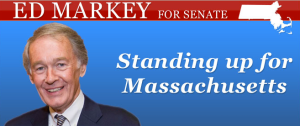
Ed Markey, through the mists of time

Veteran political reporter Peter Lucas reminds us of a great anecdote involving a young state rep named Ed Markey and Massachusetts House Speaker Tom McGee, who died last week. Lucas writes in The Sun of Lowell:

In the middle of his second term in 1975, Markey opposed McGee on a bill dealing with the abolition of part-time district court judges in Massachusetts. As a result, so the story goes, an angry McGee threw Markey, a lawyer, off the Judiciary Committee, and had him and his desk moved out of the committee offices into the hallway.

A year later, a congressional seat opened up, and Markey ran under the slogan “They may tell me where to sit, but nobody tells me where to stand.” It was “boffo,” Lucas writes, and Markey won.

Now, as Markey gears up for a Senate campaign, he’ll have to convince voters that he’s done or said anything as memorable as that in the intervening 38 years.

29 years later, Ed Markey resumes his Senate campaign

Screen Shot 2012-12-27 at 4.28.52 PM

It looks like U.S. Rep. Ed Markey, a Malden Democrat, has decided to run for the Senate vacancy being created by John Kerry’s appointment as secretary of state. (Via David Bernstein.)

This will not be Markey’s first Senate run. In 1984 he was one of several Democrats who jumped in after Sen. Paul Tsongas announced he would not seek re-election because of illness. Markey soon jumped right out and ran for re-election to Congress. (Kerry, of course, was the eventual Senate winner.) Trouble was, a former state senator from Winchester named Sam Rotondi, who was also running for Congress, refused to be a domino and decided to stay in the race.

I covered the Markey-Rotondi race for The Daily Times Chronicle of Woburn, and it went right down to primary day. If I’ve got my years right, Markey then had to beat a stronger-than-usual Republican, former Somerville mayor S. Lester Ralph. It was a fun campaign.

How public should public gun records be?

Screen Shot 2012-12-27 at 10.54.07 AMThere is public information, and there is public information.

If someone makes publicly available data about sex offenders more readily accessible, that might help protect children. But it could also make it more difficult for offenders who have finished paying their debt to society to get on with their lives — theoretically increasing the risk that they will reoffend.

If the names and addresses of people who signed a petition in opposition to same-sex marriage are posted online, it may expose the tactics of anti-marriage activists who fooled people into thinking they were signing something else. But it could also expose sincere gay-marriage opponents to ridicule or worse for simply exercising their democratic rights.

It’s a discussion I’ve had with my students on several occasions, and now the dilemma has spread to guns. The Journal News, a Gannett paper that covers the affluent suburbs of Westchester County, N.Y., and beyond, has put together a map showing the names and addresses of people who hold permits for handguns, which it obtained through a Freedom of Information Act request.

“About 44,000 people in Westchester, Rockland and Putnam — one out of every 23 adults — are licensed to own a handgun,” writes Dwight R. Worley of The Journal News.

As with the examples I cited up top, this is public information. The Journal News has every legal right to do this. But it has prompted an outcry from gun owners and others who say the information ought to be private. One critic has responded by posting the names, home addresses and personal information of every Journal News employee he can find, reports Patrick Clark of The New York Observer.

Greg Mitchell has a detailed report at The Nation, and J. David Goodman recaps the story at The New York Times.

Personally, I’m not sure what to make of this. I’ve been trying to think of a journalistic or social good that has been accomplished by publishing this, and I’m having a hard time thinking of one. I guess if I had a neighbor who behaved erratically, I’d want to know if he might have a legally obtained gun. But that seems like a stretch.

Before The Journal News put together its map, the information fell into a gray area — public, yes, but not easily accessible. Is there a reason for some types of information to be public but also hard to get? Is there anything we can or should do about that in the age of the Internet?

Danny Schechter seeks to revive the Media Channel

Old friend Danny Schechter the News Dissector is seeking to revive the Media Channel, which not that many years ago tracked coverage by national and international news organizations from a progressive point of view. Schechter writes:

HELP MEDIA CHANNEL RETURN STRONGER THAN EVER

From: Danny Schechter, Your News Dissector, and Editor, Mediachannel.org

Dear Friends,

First, some not so good news.

Last spring, we woke up one morning to find that we could no longer access many of our domains including Mediachannel.org and NewsDissector.com, two well-known and respected websites that we launched in the year 2000 to provide a global platform for media analysis, criticism, debate, and activism. I’ll spare you the details of our externally created travails; it was an ordeal no one should have to go through!

But now …

With help from good friends, colleagues, and supporters, we have recovered our domains.

Finally, Mediachannel.org will be back!

We are rededicating ourselves to revitalizing the fight for media accountability and transparency, because every day, consolidated corporate media shapes our future by disseminating and reinforcing government and corporate propaganda. Too often, this mechanism inhibits social and political change by artificially restricting public debate, undermining democracy for the benefit of narrow interests, rather than strengthening it for us all.

Mediachannel.org will once again become a “one stop shop” for the best writing, reflections, and investigations on the power and impact of media in our world. We will name and shame dishonest journalism, feature stories on best practices, and showcase media resources. We know we have important information and analyses to share, and hope you will join or rejoin us.

Additionally, we will resume sending out our newsletter, Media Savvy, and my blog, News Dissector, recognized as Blog of the Year by the Hunter College Media Department in New York City, directly to your inbox, free of charge.

How You Can Help Mediachannel:

Please write to us at support@mediachannel.org and tell us:

  • How do you think Mediachannel.org can be most effective?
  • What do you think we should be covering and offering in this new media age?
  • Which media websites do you find most useful and why?

If you can, please click here and help us by making a year-end tax-deductible gift.

Checks can be made payable to: 

The Global Center; P.O. Box 677
; New York, NY 10035 (please note Mediachannel on the check).

Your support will enable us to finally get back into action, providing you with unique investigative journalism that spans the globe.

 As a token of my appreciation for any donation above $50, I will happily send you a copy of my latest eBook, “Dissecting the News and Lighting the Fuse,” published with help of Coldtype.net. This new 220-page book features updates of our best work along with new articles and essays. It is an exciting collection of timely dissections.

Thank you for your support over the years. We didn’t disappear voluntarily, and we know you will be pleased to read our latest reporting and commentary again regularly as a member of Mediachannel.org.

Onward,
Danny Schechter
Editor and News Dissector

P.S.: I want to extend a special thank you to Rob Kall of OpEdNews.com, who rebuilt Mediachannel when our site was taken down, and Aaron Krowne of ML-Implode.com, for hosting Newsdissector.net.