The Hussman School of Journalism and Media at UNC. Photo (cc) 2020 by Mihaly I. Lukacs.
There’s been an important new development in the Nikole Hannah-Jones story. According to the veteran journalist John Drescher, writing for a North Carolina website called The Assembly, a “mega-donor” to the University of North Carolina opposed hiring Hannah-Jones, the Pulitzer Prize-winning New York Times journalist who conceived of the 1619 Project and who’s been denied tenure by the UNC board of trustees.
The donor is Walter Hussman Jr., the publisher of the Arkansas Democrat-Gazette, whose $25 million gift to the UNC journalism program in 2019 resulted its being named the Hussman School of Journalism and Media. Drescher reported that Hussman is so enamored of old-fashioned both-sides objectivity that he “relayed his concerns to the university’s top leaders, including at least one member of the UNC-CH Board of Trustees.” Among other things, Hussman wrote:
My hope and vision was that the journalism school would be the champion of objective, impartial reporting and separating news and opinion, and that would add so much to its reputation and would benefit both the school and the University. Instead, I fear this possible and needless controversy will overshadow it.
Hussman is no fan of the 1619 Project either, although he appears to be aligned more with historians who’ve criticized it than he is with those on the right who’ve attacked it.
Now, there are several curious aspects to Hussman’s opposition. First of all, Hannah-Jones is an opinion journalist who works for the Times’ opinion section. Her journalism is rigorously fact-based, informed by a strong point of view. Does Hussman really oppose such journalism? After all, the Democrat-Gazette has an opinion section. (All four of the ADG’s opinion journalists who warrant a headshot are white men, by the way.)
The other curious aspect is that Hussman doesn’t actually understand what objectivity is. The Assembly quotes from an op-ed that Hussman wrote for The Wall Street Journal in 2019:
Two years ago I heard a prominent journalist say she doesn’t believe in the “false equivalency” of presenting both sides, and that she sees her job as determining the truth, then sharing it with her audience. I decided then that I needed to let our readers know that we didn’t agree with those statements.
The problem is that objective reporting, as conceived by Walter Lippmann more than 100 years ago, is an open-minded and dispassionate pursuit of the truth, not balance or both-sidesism. “Seek truth and report it” is the way the Society of Professional Journalists’ Code of Ethics puts it.
Hussman, unfortunately, has embraced the caricature of objectivity. And Hannah-Jones has gotten caught up in his misunderstanding.
Addendum: In 2019 I wrote about a genuinely innovative idea at the ADG: the paper was giving iPads to its subscribers so it could stop printing the paper and save money. If you let your subscription lapse, it would stop working.
Nikole Hannah-Jones. Photo (cc) 2018 by Associação Brasileira de Jornalismo Investigativo
New York Times journalist Nikole Hannah-Jones is said to be considering a lawsuit over a decision by the board of trustees at the University of North Carolina not to grant her tenure. Hannah-Jones is the creator of the 1619 Project, a Pulitzer Prize-winning effort to recenter American history around slavery that has come under attack on the right.
I’m curious as to what a lawsuit would look like. If she could get a hearing, then perhaps it would be possible to force the trustees to explain their reasoning under oath. But my understanding of the tenure process is that you can be turned down at any stage for any reason.
The trustees of a college or university rarely get involved except to ratify whatever the president brings before them. But, in fact, they have the power to say no even to cases that have been approved by the department, the dean, the provost and the president. When I came up for tenure at Northeastern in 2014, I didn’t relax until the trustees had voted since I couldn’t be sure I hadn’t enraged one or more of them with something I’d written or said over the years as part of my work as a journalist.
Hannah-Jones is eminently worthy of tenure, and a nationwide pressure campaign is under way to push the trustees into reversing their earlier decision. She is being denied something she has earned because the right hates her work and her message. Hannah-Jones has been offered a five-year contract instead of tenure, something that the UNC can do without the approval of the trustees. But with tenure comes academic freedom, and it seems pretty clear that one of the trustees’ motives is to force an outspoken Black woman to be careful about what she says and writes.
Still, I have to wonder if a lawsuit would serve more as a distraction than as a way of overturning the trustees’ unjust vote.
I had a chance Thursday to talk about news deserts and ghost newspapers with Gina Baleria, the host of the podcast called “News in Context.” Baleria is a former radio journalist who’s now an assistant professor of journalism, media writing and digital media at Sonoma State University. You can listen to our conversation or grab the feed right here.
Here it is: Former “On the Media” co-host Bob Garfield will be podcasting as part of a project called BookSmart Studios, along with John McWhorter and Amna Khalid.
When I began compiling my list of top 25 albums a year ago, I already knew who it would end with: Bob Dylan, the master, one of the 20th century’s leading songwriters, Nobel Prize-winning poet, still going strong after turning 80 this past Monday.
But what album would I choose? Something from his early acoustic folkie years? Well, no. I prefer Dylan the rocker. His middle period, just after he’d gone electric but before the motorcycle crash that would end the white-hot-genius phase of his career? His mid-’1970s comeback? What about his entirely unexpected return to relevance, when he released three albums from the late 1990s through the mid-2000s that were just a half-notch below his greatest work?
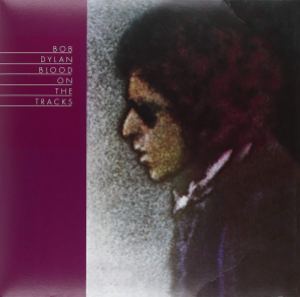
My choice came down to two albums: “Highway 61 Revisited” (1965), the greatest rock-and-roll record ever made, and “Blood on the Tracks” (1975), his most personal album, a suite of songs about heartbreak and loss that is brilliant in its conception and execution. His singing, always wildly expressive, is at its best on both. So — how to choose?
For me, it has to be “Blood on the Tracks.” You might call this album my gateway drug into the larger world of Dylan’s music. It was released just as I was ready to listen. It’s accessible in a way that few of his albums are, devoid of the obscurantism that characterizes even some of his best work, including “Highway 61.” (That said, I’ve listened to “Lily, Rosemary and the Jack of Hearts,” one of the anchors on “Blood,” maybe a few hundred times over the years and I still can’t tell you exactly what’s going on, even though it seems fairly straightforward on the surface. I think it’s because it’s all foreground with virtually no background.)
My favorite song on the album, and a contender for my favorite Dylan song ever, is “Idiot Wind,” nearly eight minutes of vitriol dedicated, I guess you’d say, to his then-wife, Sara, from whom he was in the process of divorcing. The story he tells ain’t pretty, and I’m sure Mrs. Zimmerman didn’t deserve it. But it is great art. Dylan knows exactly how it’s going to land, so he eases into it with a hilarious shaggy-dog story and ends with a few unconvincing lines in which he attempts to cast himself as co-malefactor. But the middle — oh, my God. If I’m listening in my car, here’s the part makes me nearly drive off the road:
I noticed at the ceremony, your corrupt ways had finally made you blind I can’t remember your face anymore, your mouth has changed, your eyes don’t look into mine The priest wore black on the seventh day and sat stone-faced while the building burned I waited for you on the running boards, near the cypress trees, while the springtime turned Slowly into Autumn
The way Dylan stretches out and twists “slowly” kills me every time I hear it.
Every song on “Blood on the Tracks” is a revelation. It kicks off with “Tangled Up in Blue,” a strange song that mashes several different narratives together, centuries apart, and that serves as a commentary, I suppose, on the ’60s and what he was leaving behind. It would become one of his signature songs, along with “Blowing in the Wind” and “Like a Rolling Stone.” “You’re a Big Girl Now” and “If You See Her, Say Hello” depict Dylan at his most vulnerable. (Dylan has said “Blood on the Tracks” is not about him. But Dylan himself is a character played by Robert Zimmerman.)
Even the seeming trifles, which close what used to be sides one and two (they made these things out of vinyl, and you’d play them with a needle, and — well, never mind), serve their purpose. “You’re Going to Make Me Lonesome When You Go” anticipates his lover’s eventual departure even in the midst of their relationship. “Buckets of Rain,” which follows “Shelter from the Storm,” itself a kinder meditation on love, gives us a chance to just relax and come down a bit as we begin to process what we’ve just heard.
And then there’s a song that didn’t even make it onto the album — “Up to Me,” which popped up on the “Biograph” compilation in 1985. It sounds a lot like “Shelter from the Storm,” and it would have been a career highlight for almost any other artist.
If you love “Blood on the Tracks,” I’d recommend a book about its making called “A Simple Twist of Fate,” by Andy Gill and Kevin Odegard. It tells the story of Dylan’s early attempts to record the songs with studio musicians in New York and his decision to re-record most of it in Minneapolis with local musicians and the help of his brother, David Zimmerman. It was not a great band, despite what Gill and Odegard argue, but they bring a sense of urgency to the proceedings that was missing from the New York sessions.
If you’ve never quite gotten around to Dylan, I recommend you start with “Blood on the Tracks.” It might turn out to be where you end up, too.
Please consider becoming a paid member of Media Nation for just $5 a month. You’ll receive a weekly newsletter with exclusive content. Click here for details.
Alden Global Capital is wasting no time in taking a chainsaw to its newly acquired newspapers. NPR media reporter David Folkenflik tweeted a thread that contains some horrifying details about what the hedge fund has in store for Tribune Publishing:
$60MM of that debt carries a 13% rate – it was borrowed from Media News – Alden Global's other newspaper division.
h/t to @benyt for initial tweet about NYDNews & memo
— David Folkenflik (@davidfolkenflik) May 26, 2021
How about that? A $60 million loan with a 13% interest rate that Alden will pay to itself.
The cuts, by the way, will come on top of massive downsizing that took place in 2020, when Alden was a mere minority shareholder. Tribune’s Chicago Tribune reports:
Last year, Tribune Publishing employment fell by 30%, dropping from 4,114 employees at the end of 2019 to 2,865 employees at the end of 2020, according to the company’s annual reports. The company had a total of 896 newsroom employees across its eight markets entering this year.
Finally, the New York Post’s Keith Kelly writes that Los Angeles Times owner Patrick Soon-Shiong, who was in a better position than anyone to stop the sale of Tribune to Alden, is “taking a lot of heat” for not voting against it — or at least for not abstaining in a way that would have stopped the deal.
Kelly quotes an unnamed source who calls Soon-Shiong “second most despised man in newspapers today behind Heath Freeman,” Alden’s president. Nice quote. I wonder who said it?
The Boston Globe is in the process of creating a four-person team to cover climate change, according to an email to the staff from Steven Wilmsen, the paper’s narrative editor. A trusted source forwarded it to me a little while ago.
One of those people is a new hire — Sabrina Shankman, who’s coming over from Inside Climate News, for whom she covered the Arctic. She’ll be joined by longtime environmental reporter David Abel and Janelle Nanos, who apparently will be part-time, as she’ll continue covering retail as well. Rounding out the team will be a digital producer who has yet to be hired. Wilmsen writes:
It’s important to note that as you read this — and even as we reported seismic, world-changing matters over the last 18-months — the planet’s health continued on a dangerous path. Last year was the hottest on record. The urgency for dramatic action has never been greater. The Globe’s goal is to bring that urgency to our readers — and to reduce the scale of an overwhelmingly large problem to the community and regional level. We aim to shine light on the hurdles and inequities our region faces as we strive for zero emissions, show pathways toward solutions, and, perhaps most importantly, hold leaders who are responsible for getting us there to account. That’s a big and exciting job that ultimately must engage many others in the newsroom, especially reporters on key beats. We’ll be reaching out in the weeks and months ahead.
In the current newspaper environment, it is impossible to take note of a development like this without stressing — again — how crucial it is to have committed local ownership. Even as John and Linda Henry continue to invest in the Globe (though it’s long past time to settle that union contract), papers elsewhere are being dismantled by the corporate chains and hedge funds that have acquired them.
Anyway, good move. It adds value for Globe subscribers and, needless to say, it’s about an issue of paramount importance.
A big announcement from Ellen Clegg and me: We are working on a book about successful community journalism projects across the country. The tentative title: “What Works: The Future of Local News.” Today we outline our plans for the Nieman Journalism Lab.
This hasn’t been a secret. We actually started our reporting more than a year ago but had to hit pause when the pandemic came. Now we’re starting up again. And I’m really excited to be working with a pro like Ellen. Much, much more to come.
The book is scheduled to be published by Beacon Press in the second half of 2023.
The video of George Floyd’s murder at the hands — or, rather, at the knee — of a police officer has changed the way many of us think about law enforcement, social justice and racial equity.
It should change the way we think about journalism, too.
For nine minutes and 29 seconds, Darnella Frazier pointed her smartphone at Derek Chauvin as he squeezed the life out of Floyd. It would have been an act of great courage for anyone to keep recording; that Frazier was only 17 made it all the more remarkable. As Roy Peter Clark wrote for the Nieman Journalism Lab recently, Frazier should be awarded a Pulitzer Prize.
More than that, though, the video should force those of us in the news media to question the symbiotic relationship between reporters and the police — a relationship marked all too often by the police giving us good stories in return for our not asking too many questions.
Until this week I had spared myself the horror of watching the full video. The snippets that news organizations carried struck me as sufficient, and they are if all you’re looking for is a factual understanding of what happened. But to take in the whole scene is to be pulled into the moment — to become a frightened, angry spectator along with the crowd that gathered that day.
We see Chauvin grind his knee into Floyd’s neck as Floyd wails, “I can’t breathe!” and then “Mama, Mama.” We see Floyd fall silent and then go limp. We see Chauvin with a leer on his face while another officer, Tou Thao, impassively but menacingly keeps the bystanders back. We hear voices. “He’s not fucking moving!” “Check his pulse!” “You just really killed that man, bro.” We see an ambulance drive Floyd away.
Now consider what the official police report said. Here’s an excerpt: “Officers were able to get the suspect into handcuffs and noted he appeared to be suffering medical distress. Officers called for an ambulance. He was transported to Hennepin County Medical Center by ambulance where he died a short time later.”
It is hard to imagine an account more false than this one. It is a foul lie. And here is where we need to think about how reporters go about doing their work and why that needs to change.
For generations, reporters at smaller news organizations — community newspapers for the most part — have covered police news by dropping by the police station, examining publicly available incident logs, interviewing the officer in charge about anything that seemed noteworthy, and then writing it up. Assaults, house break-ins, drunken driving arrests — it’s the ultimate in one-source reporting, and I did plenty of it when I was starting out in the 1980s.
That’s no longer good enough. In fact, it never was. Since the start of the Black Lives Matter movement following the police killing of Michael Brown in 2014, I think we’ve all come to understand that if police news is important enough to deserve coverage, then it is important enough to be reported thoroughly. That has only accelerated following the high-profile police killings of Floyd and Breonna Taylor in 2020.
A tragedy such as the murder of George Floyd wouldn’t even make the paper in a large city like Minneapolis based on false police report that was filed. Without Frazier’s video, the truth probably never would have been known. But we now realize that the police are no more or less credible than any other people in authority whom we cover, and their words and actions need to be verified.
“The authoritative source was, and for many reporters still is, considered police officers, district attorneys, law enforcement in general,” my GBH News colleague Phillip Martin said recently on “The Scrum.” He added: “Now, many Black folk and brown folk have long been suspicious and skeptical of police and refused to accept their word for it. They had to prove it. But now we’re seeing that this is permeating in a broader sense, if you will…. Let’s just say liberal America has become more and more skeptical.”
Yet even if journalists understand that the old way of doing things has to change, there are some significant challenges to transforming that understanding into something better.
There are the unknown unknowns, as Donald Rumsfeld used to say — that is, the impossibility of knowing that what seems like a routine police report is anything but, as was the case with Floyd’s murder. We can’t check out everything, and if something seems non-newsworthy, it may just slip away.
There is the reality that newsrooms are becoming more and more strapped for reporting resources — a situation that became that much worse last Friday, when Tribune Publishing’s nine major-market newspapers fell into the hands of the hedge fund Alden Global Capital, known for eviscerating its newsrooms.
There is the decline of the news media as a gatekeeper, with police departments themselves posting reports of arrests and other incidents on their websites and on social media with no independent verification.
Some news organizations, including the giant Gannett chain, have cut back or eliminated the publication of mugshots, especially for nonviolent crimes. A few papers, including The Boston Globe, are giving the subjects of old crime stories a chance to argue that those stories should be made invisible to search engines. Both of those steps help people who’ve been accused of crimes find employment and set their lives on a better path.
Perhaps most important, if a crime isn’t serious enough to warrant thorough reporting, then we shouldn’t report it at all.
Paul Bass, the founder and editor of the New Haven Independent, put it this way recently: “Media should not print names of arrestees unless we have their side, we have seen independent evidence corroborating the charges, an immediate threat exists to public safety requiring divulging the name, or a court has adjudicated the charge.”
Testifying at Chauvin’s trial, Darnella Frazier told the court: “It’s been nights I’ve stayed up apologizing and apologizing to George Floyd for not doing more and not physically interacting and not saving his life.”
But there was nothing Frazier could have done except bear witness — which she did, thus changing the world. At its best, journalism is about bearing witness as well. Can we learn from a brave teenager with a smartphone? Can we resolve to do a better job of serving the communities we cover — by listening, and by seeking truth rather than taking dictation from those in authority?
The fate of journalism depends on getting the answers right — and on not letting this moment fade, unacted upon, into our collective memory.
And now The Associated Press has made a bad situation worse — responding to the petition by its own journalists about the firing of Emily Wilder by saying it will embark on a months-long review of its social media policy. Worse, the AP pulled Wilder out from beneath the bus so it could throw her under it again. The AP’s David Bauder reports:
The news leaders said sharing more information was difficult: the company does not publicly discuss personnel issues to protect the privacy of staff.
“We can assure you that much of the coverage and commentary does not accurately portray a difficult decision we did not make lightly,” the memo said. It did not make clear what information was reported inaccurately.
Good Lord.
Also worth noting is that the AP’s executive editor, Sally Buzbee, who’ll soon take over the top editor’s job at The Washington Post, says she had nothing to do with Wilder’s firing and sounds disinclined to intervene. According to NPR’s David Folkenflik, “She tells NPR as a result [of her pending move to the Post] that she had handed off her duties and had nothing to do with this decision.”