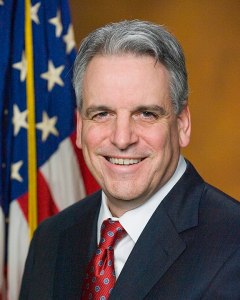
There’s a bit of news in Boston Globe editor Brian McGrory’s message marking the paper’s 150th anniversary today: he writes that the Globe now has “about 250 staffers in its newsroom and on the editorial pages.”
That’s up significantly from a few years ago. In 2018, the Globe had a full-time staff of about 220 journalists, which means that the size of the newsroom has increased by nearly 14% over the past four years. Regular readers know that the paper has been boosting its coverage of climate change and technology, among other topics.
McGrory and owners John and Linda Henry deserve to take a bow for the Globe’s renaissance in recent years. After buying the paper from the New York Times Co. in 2013, the Henrys compiled an uneven record in rebuilding the Globe as a sustainable business. When I checked in with John Henry in mid-2018, the paper was still losing money and had fallen short of its goal of selling 100,000 digital subscriptions. Henry was forced to declare that he had no plans to sell.
Six months later, Henry said the Globe had finally become profitable. Today the paper has some 235,000 paid digital subscribers, making it a leader among large regional newspapers, and has far more reporting capacity than most of its peer news organizations, many of which are owned by cost-obsessed hedge funds.
I’ve been a Globe reader for nearly 50 years. It’s a very different institution compared to the pre-internet glory days, when it covered national and international news with its own reporters and had a staff — at its 2000 peak — of about 550 full-timers.
Yet it remains one of the best, most deeply staffed papers in the country. It’s also evidence that committed, deep-pockets local ownership can be the difference between a thriving journalistic enterprise and a decimated newspaper hanging on for survival.
A Rhode Island law that was the subject of a 2021 GBH News Muzzle Award has been struck down by that state’s Supreme Court.
The Associated Press reports that Rhode Island’s “civil death” law, under which anyone serving a life sentence was regarded as dead with respect to having access to the justice system, “deprives those persons imprisoned at the ACI for life of their right to bring civil actions in our state courts.” (The ACI is the Adult Correctional Institutions.) The bizarre law stated:
Every person imprisoned in the adult correctional institutions for life shall, with respect to all rights of property, to the bond of matrimony and to all civil rights and relations of any nature whatsoever, be deemed to be dead in all respects, as if his or her natural death had taken place at the time of conviction.
Last July I awarded a New England Muzzle to Rhode Island’s attorney general, Peter Neronha, a Democrat, for his overzealous defense of a law that didn’t exist in any other state. Among other things, Neronha argued that life in prison — or, for that matter, the death penalty — are more severe punishments than civil death yet pose no constitutional issues.
In fact, as the Rhode Island ACLU pointed out, there are punishments that many would regard as worse than life in prison, or even death. As the ACLU’s state executive director, Steven Brown, explained, civil death means that “an inmate … serving a life sentence could be waterboarded, beaten mercilessly by guards, or held in a cell and denied all food and water, but have no access to our state courts to challenge these egregious violations of his constitutional rights.”
In a press release, the Rhode Island ACLU hailed Wednesday’s decision as “an important victory for the principle that the courts should be open to all for redress.”
The dichotomy at the heart of any State of the Union address was on full display Tuesday night. The president’s annual message to Congress is a major news event. Yet it is fundamentally a political exercise.
So when serious news from the outside world intrudes, cognitive dissonance ensues. That was surely the case during President Joe Biden’s first State of the Union as well as in the subsequent coverage.
How did the pundits handle it? For the most part, they treated it as two speeches — a sober, even stirring call to support the Ukrainian people as they fight desperately to hold off an unprovoked invasion by Russian forces, and a domestic-policy address aimed at shoring up Biden’s miserable poll numbers.
“It was as inspiring as any section of a State of the Union, in large part because it was about something bigger and more compelling than politics as usual,” wrote Washington post columnist Jennifer Rubin of Biden’s opening, which focused on Ukraine. “Moreover, it was a rare display of bipartisanship, and a reminder that in facing external threats we can rise to the occasion…. From there on out, bipartisanship receded.”
The real-news-versus-politics divide was particularly acute in the way the war in Ukraine and the State of the Union address were played on the front pages of our three leading newspapers. The New York Times, The Washington Post and The Wall Street Journal all led with Ukraine. The Journal didn’t even place Biden’s address above the fold.
Originality was hard to find in my post-speech scan of the coverage. One exception was Ezra Klein of the Times, who noted that Biden did little — nothing, really — to prepare Americans for the economic effects of the tough sanctions that he and other Western leaders have imposed on the Putin regime.
“For all Biden’s resolve on Tuesday night, he did not try to prepare Americans to sacrifice on behalf of Ukrainians in the coming months, if only by paying higher prices at the pump,” Klein wrote. “Instead, he said, ‘my top priority is getting prices under control.’ That’s the tension Putin is exploiting.”
Divisions on the right were apparent in both the House chamber and in the subsequent commentary. During Biden’s speech, far-right Reps. Lauren Boebert and Marjorie Taylor Greene disgraced themselves by interrupting the president just as he was about to invoke the memory of his late son, Beau Biden, whose death from brain cancer may have been related to his exposure to toxic fumes while he was serving in the military.
Writing for the ultraconservative PJ Media site, Matt Margolis made the same point somewhat more artfully, criticizing Biden for talking about his dead son rather than the 13 American soldiers who were killed by terrorists during last summer’s chaotic withdrawal from Afghanistan. There was, Margolis said, “not a single word about the withdrawal” in Biden’s speech. “Not a single word to honor those who died because of his incompetence.”
At National Review, a more mainstream conservative publication, Dan McLaughlin praised Biden on Ukraine but dismissed the rest of his address, writing, “You could tell the pandemic is really and truly over when we saw a return to Democrats demonizing the pharma companies that gave us life-saving vaccines.”
McLaughlin also attempted to turn the Big Lie on its head, taking Biden to task for speaking out against voter-suppression efforts fueled by pro-Trump Republicans who dare not question the former president’s false assertions that he actually won the 2020 election. “This is hardly the first time Biden has cast doubt on the legitimacy of our elections,” McLaughlin wrote in a truly mind-bending line.
Meanwhile, Jonathan V. Last, writing for The Bulwark, a Never Trump conservative site, summarized the moment in a pre-speech assessment beneath a headline that read “The West Is Winning, Russia Is Losing, and Biden Is Doing a Good Job.”
Although Biden noticeably did not move to the center, doubling down on popular but stalled-out ideas such as a $15 minimum wage, child-care assistance and controls on drug prices, he nevertheless invoked the moderate, unifying appeal that carried him to victory over Trump.
David A. Graham of The Atlantic wrote that “rather than try to convince Americans not to believe what they’re feeling, or claim credit for things they don’t see, Biden offered them a promise that things are about to get better. To make the case, he tacked toward the middle — with a few pointed detours — delivering a speech that hews closer to the ‘popularist’ movement in the Democratic Party than to its more progressive contingent.”
“Popularism,” in case you’re unfamiliar with the term, is the idea that the Democrats should de-emphasize the more divisive aspects of their agenda in favor of those with broad support. Examples offered by Graham were Biden’s calls for more police funding and keeping kids in school during COVID-19 surges.
According to a snap poll conducted by CBS News, the speech was popular with those who were watching, with 78% saying they approved of his speech and just 22% disapproving. But, CBS cautioned, “As we’ve seen with previous presidents’ State of the Union speeches, those who watched tonight are more likely to be from the president’s own political party, boosting approval of the speech.”
In other words, whatever political benefit Biden receives from his address is likely to be short-lived. His popularity — and, thus, the Democratic Party’s prospects in the upcoming midterm elections — are likely to be grounded in matters that are largely beyond his control, such as the outcome of the war in Ukraine, the ongoing battle against COVID and the persistence of inflation in an otherwise strong economy.
For one night, though, the stage was his. It’s fair to say that he made the most of it.
A former Knight Ridder executive, Doctor recently rejoined the ranks of working journalists. He’s the founder and CEO of Lookout Local, a digital local news site in Santa Cruz, California. Ken hopes that Lookout Local can provide a model of what works in the local news ecosystem. He says he wants to change the conversation.
In Quick Takes for the week, I share my crowdsourced research on independent news organizations in Massachusetts, and Ellen Clegg unpacks a study published by an economic think tank in Cambridge that quantifies the impact when hedge funds acquire local newspapers.
This is what I’m worried about. Russia screwed up and lost the first week of the war. But they have endless capacity to ratchet things up and unleash wave after wave of hell on the people of Ukraine. From Talking Points Memo:
The Russian military is still holding a lot of their capacity in reserve. Even if things are going relatively poorly after a week they have lots of capacity to intensify their assault, lots of ability to make the onslaught much more brutal and effective.
Boston Mayor Michelle Wu. Photo by Lex Weaver / The Scope
Loud, angry protests outside the homes of elected officials have become a staple of the uncivil times in which we live. And Boston Mayor Michelle Wu is taking a few cautious steps toward doing something about it.
As my GBH News colleague Adam Reilly reports, Wu has filed an ordinance that would ban protests outside individual residences between 9 p.m. and 9 a.m. — four fewer hours than the current law allows, which runs from 11 p.m. to 7 a.m. Under the new hours, Wu would have left for work before the anti-vaccine, anti-mask protesters could arrive outside her Roslindale home, where they have been harassing her family and her neighbors.
“We are putting reasonable parameters around the time of day,” Reilly quoted Wu as saying, “because this is where it really comes up against quality of life, and ensuring that we are supporting residents in our neighborhoods to be able to have the health and well-being of getting sleep at night and in the morning.”
I fully support the First Amendment right to protest, and this is a troublesome issue. It seems to me that the protesters ought to have the decency to picket at her public appearances rather than at her home, but decency has little to do with it. Loud, obnoxious protests outside Gov. Charlie Baker’s home in Swampscott may even have played a role in his decision not to seek re-election, though Baker himself has not said one way or the other if that’s the case.
As Adam notes, another, more draconian restriction is being considered on Beacon Hill. State Rep. Steven Howitt, a Seekonk Republican, has proposed that protesters be banned from doing there thing less than 100 yards from an elected official’s home.
Over the weekend, Baker told Jon Keller of WBZ-TV (Channel 4) that the 100-yard limit might be a good idea. “We have neighbors,” Baker said. “For our neighbors who never ran for office, never got elected to anything, this was a nightmare.” (And what’s up with The Boston Globe, which credited an interview that Wu gave to WBUR’s “Radio Boston” program but dismissively described Baker’s appearance on “Keller at Large” as “a television interview”?)
As I wrote recently, Mayor Wu has faced two First Amendment tests in her brief time in the corner office. Fortunately, she and her staff appeared to back off from “media guidelines” that were intended to keep the press at a distance as city workers cleared the homeless encampment at Massachusetts Avenue and Melnea Cass Boulevard.
The protest issue, though, is a knottier one. I think she’s wise to take this in small steps. If the 9-to-9 ordinance helps, great. If not, then more drastic measures may be called for.
Sunday’s “60 Minutes” episode on the local news crisis was a worthy if unoriginal treatment focusing on the depredations of Alden Global Capital, the hedge fund that is our worst newspaper owner. Viewers are also introduced to Report for America, the organization that’s placing journalists in underserved communities around the country. If you didn’t get a chance to see it, you can tune in here.
This week, on the second “Beat the Press” podcast, we talk about the latest mishegas at CNN, as number-two executive — make that former number-two executive — Allison Gollust walks the plank.
Other topics include a discussion of how much responsibility Spotify should take for Joe Rogan’s vaccine disinformation and n-word-spewing mouth; privacy concerns over the death of comedian Bob Saget; and a conversation with civil-liberties lawyer Harvey Silverglate, the co-founder of FIRE, the Foundation for Individual Rights in Education.
Plus: Rants & Raves are back!
Hosted, as always, by Emily Rooney, with Jon Keller, Lylah Alphonse and me. You can listen to “Beat the Press” on Apple and wherever fine podcasts are found.
Gannett’s recent move away from local news is not taking place in a vacuum. Financial prospects for the country’s largest newspaper chain continue to deteriorate — and the company’s insistence on degrading its journalism rather than building it up is going to make it that much harder to attract new readers.
As I reported last week, the chain is reassigning staff reporters at most of its Massachusetts weeklies to cover regional beats rather than local news. Although Gannett officials have not commented, I’m told that the three exceptions will be the Cambridge Chronicle, the Old Colony Memorial in Plymouth and the Provincetown Banner. I’m also told that a few weekly reporters will be reassigned to Gannett’s dailies rather than to regional coverage of issues such as climate change and racial justice.
What we still don’t know is what, if any, coverage the Gannett weeklies will provide of such basics as governmental meetings and elections. Maybe part-timers will be used. Maybe they’ll just skip it. There were already a number of Gannett weeklies without any real local coverage, so that’s nothing new.
Meanwhile, the chain’s business continues to slide at its 100 or so daily newspapers and 1,000 weeklies and other properties, according to Poynter business analyst Rick Edmonds. Revenue for the fourth quarter was $827 million, a decline of 5.5%, as its much-ballyhooed increase in digital subscriptions appears to be driven by steep introductory discounts.
Edmonds writes that “as Gannett targets reaching 2 to 2.2 million digital subscriptions by the end of 2022, it faces the double challenge of holding the introductory subscribers as they move up to higher rates while also continuing to quickly add new subscribers.” And rather than invest in journalism, Gannett is putting money into sports gambling and marketing services.
It’s an ugly tale. For Massachusetts readers, it’s a tale that extends back to the early 1990s, when Fidelity began rolling up community newspapers in Eastern Massachusetts. From Fidelity to the Boston Herald to GateHouse Media, which morphed into Gannett, it’s been 30 years of cuts, with very little in the way of good news.