How a minority of voters killed a plan to extend the Minuteman Bikeway

A proposal to extend the Minuteman Bikeway from Bedford Depot to the Concord line was defeated earlier this week even though an overwhelming majority of residents voted in favor of it. And that’s a good excuse to rant a bit about how difficult it is to build anything these days.

Bedford, which has an open town meeting, voted by a margin of 350 to 258 to spend $1.5 million on the project — then voted 363 to 235 in favor of taking by eminent domain the easements needed to expand and pave the dirt trail that’s currently there. As Mike Rosenberg reports in The Bedford Citizen, that’s 60% — a substantial margin, but short of the necessary two-thirds.

Now, New England town meetings have been voting down needed spending plans for generations. When I was a kid growing up in Middleborough, town meeting delayed building a new high school for years, resulting double sessions. But the just-say-no mentality appears to have gotten worse.

New York Times columnist and podcast host Ezra Klein has explored on several occasions why we have given a veto to a minority of loud NIMBY types. We are dealing with a pretty horrendous housing shortage in this country and especially in this state, yet it’s proven nearly impossible to build more-dense developments near transportation hubs. Those who want to preserve their two-acre lots in the suburbs turn out to have a louder voice — and more power — than the rest of us.

As I understand it, the eminent domain takings in Bedford weren’t going to result in any houses being removed. I’ve ridden along the dirt path that’s there now — it’s called the Reformatory Branch Trail because it used to run all the way to the Concord prison — and it’s in the middle of the woods.

And I’m not saying that opponents didn’t have at least an argument to make. A lot of trees would be removed, and the dirt trail, currently underpopulated, would probably become as crowded as the rest of the Minuteman. Which is to say, very. Moreover, the improved Minuteman would end at the Concord line, as there are no plans to extend the Reformatory Branch through Concord to the center of that town. The presence of the Great Meadows National Wildlife Refuge would probably make it impossible in any case.

Yet I’m told that the Reformatory Branch becomes a mud bowl whenever it rains — something I haven’t experienced, since I’ve only ridden it on sunny days. Some residents have also pointed out that a paved path would be more accessible to people with disabilities. In the end, none of that mattered to the minority of voters who wanted to stop the project. And that’s where we are.

Rosenberg describes the proposal as being “on life support.” Ready for interment is more like it.
Is Putin seriously ill?

There are reports on Twitter from credible sources like Julia Ioffe that an independent Russian media outlet is claiming that Vladimir Putin is being treated for thyroid cancer. That would explain a lot of things — the puffiness, the extreme germophobia, the paranoia and irrationality.

An odd and very remote encounter with racism. Or was it? To be continued.

I’ve got a ton of good stuff to blog about, and I hope to get to some items over the next few days. Right now, though, I’ve got to say something about a weird experience I had yesterday.

I was on the train back to Boston, cleaning up the transcript of an interview I’d done in New Jersey, where I was reporting on a nonprofit news organization called NJ Spotlight News. I paid more than I usually do so that there would be a human set of eyes looking it over before sending it back. The quality was excellent — but there was a section in which my subject and I were talking about race. Every reference to “White” was uppercase and every reference to “black” was lowercase.

If you’ve been following changes in news style over the past few years, you know that some pretty significant shifts have been implemented. The Associated Press, The New York Times and The Boston Globe all decided to start uppercasing Black but not white. Here’s how Globe editor Brian McGrory explained the paper’s reasoning in January 2020:

Effective immediately, we’re updating the Globe stylebook to put the word Black in uppercase when it is used to describe a person’s race. After consulting with leaders in the Black community, we’re making this change to recognize that the word has evolved from a description of a person’s skin color to signify a race and culture, and as such, deserves uppercase treatment in the same way that other races — Latino being one example — are capitalized. Unless otherwise requested by a person we’re writing about, we’ll use Black, which is considered to be more inclusive, rather than African-American.

Why not “white”? As the AP described it, “white people in general have much less shared history and culture, and don’t have the experience of being discriminated against because of skin color.”

The Washington Post took a different position, uppercasing both “Black” and “White,” explaining, “Stories involving race show that White also represents a distinct cultural identity in the United States.” That’s fine, and I suspect that at some point others may follow suit.

But referring to uppercase White people and lowercase black people is something you’d expect from the racist dark reaches of the internet. I was kind of startled to see it come from a reputable transcription service — and no, I’m not going to name them, so don’t ask. I might let them know (now I’ll have this blog post to send them), and if I get a response, I’ll tell you what they said.

Tech thinker Jody Brannon on the digital future and the dangers of monopoly

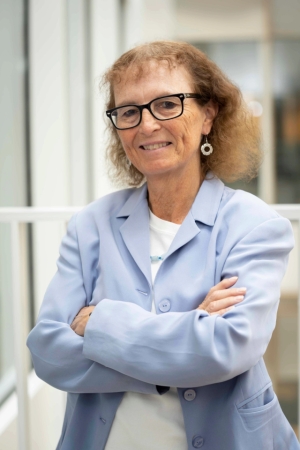
Jody Brannon

The new “What Works” podcast is up, featuring Jody Brannon, director of the Center for Journalism & Liberty at the Open Markets Institute. Brannon started her career in print in her native Seattle. Never one to shy from a challenge (she’s an avid skiier and beamed in from the snowy mountains of Idaho), she transitioned to digital relatively early on in the revolution. She has had leadership or consulting roles at washingtonpost.comusatoday.com and msn.com, as well as the tech universe.

She served on the board of the Online News Association for 10 years and holds a Ph.D. in mass communication from the University of Maryland. The Center for Journalism & Liberty is part of the Open Markets Institute, which has a pretty bold mission statement: to shine a light on monopoly power and its dangers to democracy. The center also works to engage in grassroots coalitions, such as Freedom from Facebook and Google and 4Competition.

My Quick Take is on an arcane subject — the future of legal ads. Those notices from city and county government may seem pretty dull, but newspapers have depended on them as a vital source of revenue since the invention of the printing press. Now they’re under attack in Florida, and the threat could spread.

Ellen weighs in on a mass exodus at the venerable Texas Observer magazine, once a progressive voice to be reckoned with and home to the late great columnist Molly Ivins.

You can listen to our conversation here and subscribe through your favorite podcast app.

A new and disturbing wrinkle to Philip Morris’ ads in The Boston Globe

Update (April 4): The Boston Globe has issued a statement responding to the CommonWealth article. CommonWealth editor Bruce Mohl has issued a counter-response. Read them both here.

Colman M. Herman has a scorcher for CommonWealth Magazine: “Scientists object to inclusion in Globe’s Philip Morris ads.” It seems that a number of scientists were interviewed for what turned out to be sponsored content — that is, paid advertising — without their knowing that’s what they were doing. Herman writes:

The Boston Globe is facing a growing chorus of criticism from public health advocates and media critics for working with Philip Morris to create and publish stories featuring interviews with prominent scientists, many of whom say they were never told the true purpose of the interviews — for inclusion in Philip Morris ads.

Herman writes that Globe executives declined his repeated efforts to obtain comment. This is just a mess. Herman interviewed me; and, as I wrote last June, neither the Globe nor any other media organization ought to publish ads from tobacco companies, especially all these years after they stopped accepting cigarette ads.

False rumors about Wu’s mental health recall attacks on Michael Dukakis in 1988

Then-Massachusetts Gov. Michael Dukakis in 1987. Photo (cc) City of Boston Archives.

Today’s Boston Globe story about the right-wing whispering campaign suggesting that Boston Mayor Michelle Wu has suffered from serious panic attacks while in office (there is no evidence) calls to mind the rumors about Michael Dukakis’ mental health that circulated during his 1988 presidential campaign.

Dukakis’ Republican opponent, then-Vice President George H.W. Bush, helmed one of the dirtiest campaigns in the modern era. Everyone remembers the racist Willie Horton ad, but there were also rumors — grounded in nothing — that Dukakis suffered from depression.

As recalled in this retrospective by Dylan Scott in Stat News, President Ronald Reagan got in on the act, pushing into the mainstream a conspiracy theory that emanated from LaRouchie right:

In early August, in those pre-Twitter days, Reagan made the gossip front-page news. The president said at a White House press conference, in response to a question about Dukakis, that he didn’t want to “pick on an invalid.”

Reagan quickly apologized, but the story was off and running. The New York Times and Washington Post wrote editorials denouncing the attacks. The Los Angeles Times, Chicago Tribune and Miami Herald published lengthy stories about the rumors and their source.

Dukakis’ 17-point polling lead over Bush collapsed, and, of course, Bush went on to win that November. As Dukakis said, “you don’t drop eight points in a week for nothing.”

The claim may have resonated because there was just enough there for the conspiracists to dig into. Dukakis’ wife, Kitty Dukakis, had long suffered from depression, and, as the Stat piece noted, biographies of Dukakis said that “he had been unhappy after his brother died in 1973 and, again in 1978, after he lost his reelection for governor.” Nothing unusual about that, of course.

So, too, with Wu. Her mother has struggled with mental illness. And in January the Globe published a story that included this line: “A decade ago, when Wu first mentioned to someone outside her close circle that she was considering a run for office, she had a panic attack; she had to walk across the room and crouch down to calm herself.” In other words, years ago and hardly unusual behavior — and also a long way from landing in the hospital, as the current rumors claim.

The false rumors about Wu have almost but not quite broken into the mainstream, according to the Globe’s Emma Platoff. Greg Hill of WEEI Radio (93.7 FM) mentioned them sympathetically, perhaps unaware that there was nothing to them. Platoff also cites a column in late January by the Boston Herald’s Joe Battenfeld, who wrote: “Unfortunately for the Harvard-educated Wu, there isn’t an Ivy League seminar or class to learn how to grapple with these anxiety-inducing problems.” But having read Battenfeld’s column in its entirety, I don’t agree that he was making any reference to the rumors.

One unanswerable question about all this is whether a major media outlet like the Globe should amplify the rumors. Platoff addresses that:

There are those who believe this Globe story will worsen the problem. Experts say it can be a mistake to mention this kind of misinformation in a reputable newspaper; that even debunking a rumor grants it oxygen. But as this false claim spreads through the city’s power centers, it has already leaked into public discourse. And the mayor, who has been open about her mother’s struggle with schizophrenia, was glad to correct the record, saying it was important to call out both mental health stigma and misinformation.

She also quotes Wu herself, who says it’s better to address the rumors head-on than to let them fester. “I want to be transparent about the presence of these tactics, even today, because we need to acknowledge it to be able to change it,” Wu told Platoff. “It does feel connected to larger trends in politics and international politics: If you just repeat something that’s false enough times, at least you can sow a little doubt in the broader public’s mind. And that’s a really dangerous place to be.”

I don’t know whether putting it out there is a good idea or not. As Wu herself acknowledges, it’s already partly out there, so perhaps it’s better to address it head-on. Still, people are going to believe what they want to believe. We are long past the time when facts made any difference. We weren’t even there in 1988.

‘Beat the Press’ takes on Putin’s U.S. media enablers

Putin admirer Tucker Carlson. Photo (cc) 2018 by Gage Skidmore

On the latest “Beat the Press” podcast, we talk about Putin’s media pals in the U.S.; TikTok influencers getting the White House treatment; right-wing lies and libel; that New York Times editorial on free speech; and media outlets that adopt the language of advocacy. Plus our Rants & Raves.

Hosted, as always, by Emily Rooney, with Experience magazine editor Joanna Weiss, media strategist Susie Banikarim and me. Available on Apple and wherever fine podcasts are found.

The Washington Post is phasing out its once-revolutionary blue app

Forgotten but not quite gone

I was surprised — but not shocked — to discover recently that The Washington Post is phasing out its blue app, which at one time it called the “National Digital Edition.”

The app, which debuted in 2015, was an important part of the Post’s strategy during the early years of Jeff Bezos’ ownership. I wrote about it in my 2018 book, “The Return of the Moguls.” Available on phones and tablets, it provided readers with a colorful, magazine-like experience. The National Digital Edition was also cheaper than the Post’s other digital products; it was marketed to a national audience and omitted all news from the Washington area. That way, Washingtonians couldn’t save money by choosing the blue app unless they were willing to do without any local news.

The blue app had a lot to do with the Post’s meteoric growth in digital subscriptions, especially after the paper offered it to Amazon Prime members for free for six months, earning hosannas from a wide cross-section of media observers. Media analyst Ken Doctor, a recent guest on our “What Works” podcast, called it “potentially game-changing.”

Even as the Post was marketing the National Digital Edition, though, it continued to evolve its black app and, of course, its website. Those provided readers with a more traditional experience, including a home page, which the blue app lacked, as well as local and regional news. At some point, too, the Post abandoned its different pricing schemes. The blue app, despite its attractiveness, always seemed a bit lite, and eventually most people just moved away from it.

I hadn’t checked the blue app in ages until the past week. When I did, I got a message that said “this app soon will no longer be available” and pushing me toward the black app instead.

The National Digital Edition served its purpose, boosting paid circulation at a time when Bezos was trying to catch up quickly with The New York Times. As of last October, according to The Wall Street Journal, the Post’s circulation was around 2.7 million. That’s well behind the Times’ 10 million (which, to be fair, includes subscriptions to non-news products such as its cooking app and crossword puzzle), but it’s impressive nevertheless.

What The New York Times gets wrong — and right — in its editorial about free speech

Photo (cc) 2007 by Hossam el-Hamalawy

Whenever The New York Times takes on as large and amorphous an idea as freedom of expression, it quickly escalates into a war of words about the Times itself. That was certainly the case with a nearly 3,000-word editorial it posted last Friday under the headline “America Has a Free Speech Problem.”

The piece launched a thousand hot takes, many of them dripping with mockery and sarcasm. I certainly don’t agree with everything in the editorial, and I find a lot of what the critics are complaining about — especially the paper’s patented “both-sides-ism” — to be right on target. But in the spirit of contrarianism, and in recognition that this is a Major Statement by our leading newspaper, I’m at least going to take it seriously.

Read the rest at GBH News.