The Miranda exception and why I’m not concerned

I’ve been debating on Facebook with several people whose views I respect about the decision by law-enforcement officials to invoke the “public safety” exception and question Dzhokhar Tsarnaev without first reading him his Miranda rights.

I think it was the right call. The idea behind the public-safety exception is that the investigation must take precedence over the prosecution — that the paramount interest is to obtain any information that could protect the public. Consider:

  • There have been reports that the Tsarnaev brothers may have planted other bombs. Pete Williams of NBC News reported that police detonated an IED near the Berklee College of Music on Friday morning. Are there more? Where?
  • The Tsarnaev brothers may not have acted alone. Last night, police took into custody three people in New Bedford to question them about their possible ties to the surviving brother. Was the Boston Marathon bombing part of a larger plot?
  • We need to know what if any ties the Tsarnaevs might have had to foreign extremist organizations. We know that Tamerlan Tsarnaev had spent quite a bit of time overseas. The New Yorker’s David Remnick paints a chilling portrait of both brothers, and of Tamerlan in particular.

Despite all this, Emily Bazelon of Slate writes that even though she supports the public-safety exception, she opposes it in the case of Dzhokhar Tsarnaev. Her argument is inconsistent and illogical. If it’s all right to use it in investigating a major terrorist attack, and we just experienced a major terrorist attack, then what is the issue exactly?

Now, I’m not going all Dick Cheney here. If Tsarnaev’s lawyer argues later that his client’s non-Miranda-ized statements shouldn’t be used against him at trial, I will probably find myself in agreement. In any case, Tsarnaev could likely be convicted solely on the basis of the physical evidence.

But the whole purpose of the public-safety exception is to keep Tsarnaev talking and not plant the idea in his head that he ought to shut up. Not while there are so many unanswered questions about dangers that may still be out there.

David Carr: Trusted sources thrive in times of crisis

Image (1) B_Kirtz.jpg for post 10773

By Bill Kirtz

New York Times media columnist David Carr sees a video future for traditional newspapers and trouble for mid-sized publishers.

Talking at MIT Wednesday night, he called the Internet “a perfect distribution machine and a perfect machine for destroying journalism business models.”

He said news consumers are in a “golden age” of self-selection. But the problem is, “when the choices are infinite, the price drops to zero. The newspaper and magazine business is built on scarcity.”

Carr said the Internet works if you’re huge or tiny, but regional newspaper franchises are imperiled.

In crisis situations like the Boston Marathon bombings, he said, “it wouldn’t be a pretty picture without the Globe,” whose website he depended on. “There’s a natural impulse to go to a trusted source.”

In an earlier MIT talk, former George W. Bush and John McCain campaign adviser Mark McKinnon expressed a similar view. He said he hoped that in the current plethora of information offerings, there will be a  “greater premium placed on good journalism [and] trusted brands and aggregators.”

Carr praised his paper’s push to create the Web’s best news site and one that’s not afraid to break news online before its print edition. He called the Times’ Pulitzer Prize-winning “Snow Fall” text, video and graphics package an example of the payoff for “spending a lot to be innovative in ways to present information.”

Top journalism brands like the Times, the Wall Street Journal and the Globe will have to figure out video, he said.  “We’ll end up in that business whether we like it or not.”

The problem is the reliance on anonymous sources

On Wednesday afternoon, as the media were having a nervous breakdown over the bombing suspect who was/was not in custody, I received a private message over Twitter from a friend who’s a longtime newspaper reporter:

They were saying they had multiple sources. You know what the problem is, they don’t name their sources. If you had no anonymous sources, then whoever gave them the information would be on the hook. Only in extreme cases do we use anonymous sources!

Leaving aside the obvious fact that this really is an extreme case, my friend is exactly right. Every time there’s a huge breaking news story, it seems, news organizations report developments that turn out to be wrong — and that were based on anonymous law-enforcement sources.

Maybe that could be justified a generation ago, when such leaks were used to develop reliable stories. But now the pressure to publish/broadcast/tweet immediately is so overwhelming that a bombshell from an anonymous source leads not to more reporting but, rather, to an immediate, breathless update.

CNN got most of the attention on Wednesday, and, as a repeat offender, it really ought to be more careful. The Associated Press got it wrong, too, and that matters because editors generally don’t double-check the AP — they’re paying for the service, after all, and the AP is treated as an extension of their own newsrooms.

The Boston Globe, the Boston Herald and local TV and radio stations got it wrong, too. The Herald has a useful timeline on page 4 today. I couldn’t find it on the paper’s website, but I’ll add a link if someone has it.

So was the source or sources normally reliable, which is the argument we’re hearing from some of those who got burned? I think that’s the wrong question. It’s the reliance on anonymous sources that’s the problem, not whether those sources were right or wrong. That may be the way it’s always been done. But if Wednesday didn’t prove that there’s something wrong with the old model, then what will?

Washington Post media blogger Erik Wemple has a good take on what happened Wednesday, including the full text of the FBI smackdown. At Poynter, Andrew Beaujon and Mallary Jean Tenore put together a Storify that tracks how the initial news and the embarrassing walkback played out on Twitter.

Friends of Media Nation reflect on the tragedy

I’ve seen a lot of worthwhile, heartfelt commentary written by friends and colleagues in the last day and a half. I’ve retweeted some, “liked” others, but I thought I should try to pull some of them together here. The following is a highly idiosyncratic list; the only unifying principle is that I am friendly with the writers. I’m probably forgetting a few, but I can always post more later. Click on the names to read their essays in full.

Amy Derjue: “As I’m about to get on the train or back in the car after visiting my Mom, she says she puts me in a bubble when I leave. In the bubble, nothing bad can happen to me when I’m out of her sight. It’s how she can deal with me riding the subway to work, living in a city, driving a car. We all put ourselves and our loved ones in these bubbles every day. Boston’s bubble doesn’t feel very strong right now. But we’ll be OK. We’ll keep going about our business and doing what we love because a life lived in all-encompassing fear isn’t life.”

Taylor Dobbs: “The bombs sounded like fireworks. The screams sounded like the cheers that had poured through my open window for hours. It wasn’t until I saw ‘explosion at the finish line’ on Twitter that I took out my camera bag, snapped on my zoom lens and ran out the door, shoes untied and sockless.”

Azita Ghahramani: “Finally, safely at home, I made the mistake of turning on the news to hear updates on what had happened. When someone reported that the first casualty was an 8-year-old-boy, I heard my son gasp. A child, not much younger than him, hadn’t been spared the nightmare my son thought he had narrowly escaped. That gasp is the other moment I’ll never forget.”

William Bradford: “I have lived in Boston for almost four years now and this was the first time I had decided to be a spectator of the marathon, and to partake in the revelry of Patriots Day. In truth, I did not really want to go downtown. When you stand butt-high to the average citizen, crowds tend to be an annoyance. But there were two of my people running in the race and I wanted to greet them at the finish line. It was to be a monumental day: the first time in race history that two people with dwarfism would not only be qualified to run the race, but also finish it. Or so I hoped. I am the Senior Vice President of Little People of America, the nation’s largest support and advocacy group for people with dwarfism, and it was a proud moment for our organization. I felt a duty to be there in solidarity. As it turned out, it was the solidarity of strangers, Good Samaritans, that bore me through a time of crisis.”

Josh Stearns: “I have no doubt that my sons will have to confront violence in our media and our world, but I see no benefit to introducing it at such a young age. Children under the age of six witness media coverage of disasters as live events, happening before their eyes (ears) and so to children, the ongoing repeated coverage feels as though the disaster is in fact happening over and over again. At a time when the news stories can shift from budget debates and bombings, the news is full of emotional landmines.”

Charles P. Pierce: “Ultimately, many of the lost and the confused and the separated found themselves and their loved ones at the Boylston Street end of the Public Garden. There was a general milling about and, for a moment, it almost seemed as though the spirit of the day had been recaptured, until you realized that a lot of this joy was about finding out your wife or your son wasn’t maimed, and until you saw the people sitting alone, their backs against the trees, staring up through the branches as if they were hanging prayers on every one of them.”

Lloyd Schwartz (added Wednesday): “More people have lost their lives at stampedes at other sporting events in other parts of the world. But I’m heartbroken about the eight-year-old boy killed returning to the stands after running into the street to greet his father who was crossing the finish line. For the new amputees, some of them runners. For the dancer who sustained critical leg injuries. For Boston. It’s heartbreaking.”

Steve Krause (added Wednesday): “I’ve heard a lot in the past two days about how tough Bostonians are … and how resilient. I don’t know if we’re any tougher, or any more resilient, than anyone else whose city has been torn apart by a terror attack. The dichotomy of all this is that the most depraved acts we can think of often result, in their aftermath, in some of the most astounding examples of human kindness and nobility of spirit. I’d like to bottle it up if I could and let some of it out down the road when the shock wears off and people return to acting the way they normally do.”

Michael Jonas (added Wednesday): “Yesterday, as was true a dozen years ago, the security drill struck me as a fairly desperate effort to bring at least a thin veneer of order and security to a world with risks we simply are not able to eliminate. But once the office buildings are secured, what about the shopping malls? Downtown Crossing at midday? My Red Line ride home? Or anyplace, for that matter, where a dozen people might congregate close together, an inviting ‘soft target’ for someone bent on the mayhem that transformed the scene at the Boston Marathon finish line in an instant from a celebration of human perseverance to a sidewalk killing field.”

Our “greatest day” turns to horror

When Northeastern journalism student Taylor Dobbs heard the explosions, he writes, “I grabbed my camera and ran out the door.” For more of Dobbs’ photos, please click here. (Published with permission.)

I was going through my Twitter feed Monday morning when I came across this: “Happy greatest day of the year, #Boston!” And so it is. Or was, until about 2:50 p.m., when explosions near the finish line of the Boston Marathon transformed a celebration into a scene of carnage.

What matters now, needless to say, are the victims — the dead, the injured and their families and friends. But if you are looking for some insight into Boston at this horrible moment, it helps to understand why our marathon matters and where it fits into our civic psyche. Why it was, until Monday, our greatest day of the year.

Read the rest at CNN.com.

Two runners with dwarfism to compete in marathon

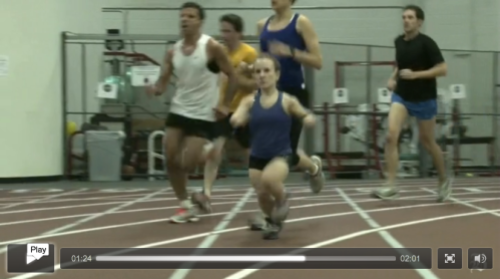
Click on image to watch video

Two people with dwarfism are running the Boston Marathon tomorrow, and today’s Boston Globe profiles them in a front-page feature. Globe reporter David Abel interviews Juli Windsor, who lives in the South End, and John Young, a teacher from Salem. His story is accompanied by a terrific video of Windsor produced by Thea Breite.

I don’t know Windsor, but I do know Young. He and his wife, Sue, and their son, Owen, are fixtures at Little People of America events, and we ran into them at a district conference in North Conway just a few weeks ago. Here is his blog. Young tells Abel:

The people who support and encourage me are the ones that get me to the starting line, while the ones who doubt or ridicule me are the ones that carry me to the finish line. Whenever I really start to hurt, I think of someone laughing, pointing, and saying, “You can’t do that!” and it seems to give me the strength to carry on.

Best of luck to Juli and John!

Carly Carioli is now tweeting for Boston.com

More good news from the land of the former Phoenicians: Carly Carioli, the last editor of the Boston Phoenix, has been hired by Boston.com, the Boston Globe’s free website. “I’m working on new projects aimed at attracting younger readers,” he tells me.

Carly is as smart as they come and did a great job of steering the Phoenix through its last couple of years — including its final incarnation as a glossy magazine. You can (and should) follow him on Twitter at @carlycarioli.

Michael Sullivan’s tired, uninspired debate performance

Dan Winslow and Gabriel Gomez at least seemed interesting in tonight’s Republican Senate debate, sponsored by WBZ and the Boston Globe. But Michael Sullivan, who’s way ahead in some polls, came across as old and cranky, a garden-variety right-winger who couldn’t even bring himself to support the gun-control compromise announced in Washington today.

It seems to me that either Winslow or Gomez could at least make the Democratic nominee — Steve Lynch or, more likely, Ed Markey — break a sweat. If either of them gets a chance, that is.

And, oh, the Massachusetts Republican Party has come to this: both Sullivan and Gomez attacked Winslow for being part of a governor’s team that raised taxes and passed Romneycare. If Willard Mitt Romney is now too liberal for Republican primary voters, then their candidate is headed off an electoral cliff.

A pair of heartfelt tributes to the Boston Phoenix

I want to share with you two extraordinary reflections on the Boston Phoenix and what its loss means to the city and the region. There have been a lot of such reminiscences, and many of them have been terrific. But I look at these as putting a cap on it, unless I decide to expand on my own recent effort, which came off as more sterile than I would have liked.

Harvey Silverglate
Harvey Silverglate

The first, by Harvey Silverglate, appeared late last month in the final, online-only edition of the Phoenix. Harvey is a friend and an occasional collaborator. (We are currently brainstorming ways to keep the Phoenix Muzzle Awards alive, and we hope to have an announcement within a month or so.)

Harvey began writing his civil-liberties column for The Real Paper in the early 1970s. When Stephen Mindich, the Phoenix owner, absorbed The Real Paper into the Phoenix later in the decade, Harvey’s column was renamed “Freedom Watch,” the name it carried up until the end. I had the privilege of editing Harvey in the early 1990s. He writes in his final column:

It’s no surprise to me that assaults on freedom — the mainstay of my long-running column — have outlasted the newspaper I could always count on to publish even my harshest critiques of the criminal justice system. Unlike, it seems, the institutions that work hard to subjugate others, newspapers, which are essential to free the subjugated, are not immortal.

Make sure you read the whole thing — and check out the photos, taken by his wife, Elsa Dorfman, a wonderful portrait photographer.

Al Giordano
Al Giordano

The second piece, which I’ve been anticipating since the end of the Phoenix was announced, finally popped into view on Tuesday — a 4,000-word-plus reflection by Al Giordano, who covered politics (among other things) for the paper in the mid-1990s. I was the news editor for the early part of Al’s time at the Phoenix. We struggled over Al’s radical, activist inclinations and the more mainstream direction the Phoenix was then taking, and he describes those struggles accurately and fairly.

I always respected Al, and my admiration for him only grew after he left the paper, moved to Mexico and launched NarcoNews.com, which covers the so-called war on drugs from a Latin American perspective. When Al writes about the Phoenix crusading in his defense after he got sued by “narco-bankers,” he is referring in part to this article I wrote in 2001.

Al’s essay on the demise of the Phoenix is impassioned and, in parts, poetic. It was not meant to be excerpted, but I’ll take a shot at it anyway:

My success at manipulating daily newspapers had stripped from me any sense of myth or magic that dailies had so carefully cultivated among the reading public. I liked reporters but felt badly for them: Their mothers thought they were powerful, but they were really slaves to the daily deadline, which more often than not denied them the time to ponder or think about a story before having to put their name on it. Spared from the popular illusion that anyone could be Woodward and Bernstein if he could just get to a big-enough daily, I pointed my ambition elsewhere: The Phoenix job, for me, was the pinnacle, top of the heap. It was all I had aspired to be.

Al is a force of nature, and had a hugely positive influence on the newsroom and what readers saw every week. By the time he left, I had moved into the media columnist’s slot. I was sorry to see him go. But, as he writes, he “never stopped being part of the Phoenix family.”