Morgyn Arnold is a natural cheerleader. She grew up supporting her six older siblings at sporting events in Utah and followed in her father’s and sister’s footsteps by becoming a cheerleader herself.
For Morgyn, who has Down syndrome, being on the Shoreline Junior High School cheer squad gave her a chance to make friends and feel included after transferring to the school last summer.
But when the school yearbook came out a few weeks ago, Morgyn, 14, was not in the team’s photo or listed as part of the squad. The school has since apologized for what it called an “error,” but Morgyn’s sister Jordyn Poll said she believed that the exclusion was intentional.
It sounds like it wouldn’t have happened if the kids were in charge.
Bipartisan legislation has been introduced in Congress that would provide some government support for local news. The ubiquitous Steve Waldman, the co-founder of Report for America and the chair of the Rebuild Local News Coalition, writes that the bill “would provide more help for local news than any time in about a century, yet it’s done in a very First-Amendment-friendly way.”
Waldman has the details, so I’ll just hit the highlights:
It would provide a tax credit of up to $250 each year for subscriptions or donations to local news — a measure Waldman has been talking about for quite a while.
Payroll tax credits would be available to publishers for hiring or retaining journalists.
Small businesses would receive a tax credit for advertising in local news outlets.
The bill, known as the Local Journalism Sustainability Act, is co-sponsored by Reps. Dan Newhouse, R-Wash., and Ann Kirkpatrick, D-Ariz.
My reservation about this legislation is that would benefit chain-owned papers as much as it would independent papers and websites. I guess that’s OK, and it’s hard to imagine how to cut out the corporations while keeping benefits for independents. But I’m concerned that the legislation might freeze in place the advantage already held by corporate-owned legacy outlets without providing them much in the way of an incentive to improve their journalism.
On the other hand, I agree with Waldman that the legislation is ingenious in the way that it would provide government support for local news without making news organizations dependent on currying favor with the very people they’re covering. Another smart move: benefits would be limited to organizations with fewer than 750 employees, which would leave out the large national newspapers.
Overall, it’s a pretty interesting step that might help ease the local news crisis. I don’t see this as a comprehensive solution, but even a boost on the margins would help.
Painting by Frederic Schopin (1804-1880) depicting the First Crusade — “Battle delivered under the walls of Antioch between the crusaders led by Bohemond and the army of Karbouka, general of the Sultan of Persia, June 1098” (via Time.com)
In the spring of 2016, as it was beginning to look like Donald Trump might actually win the Republican presidential nomination, I attended a talk at the Harvard Kennedy School by Michael Ignatieff, a prominent Canadian politician and academic. He was appalled by Trump’s rise, as were we all. But I was struck by his peculiarly Canadian analysis.
“Politics,” he said, “should be boring.”
American politics for the past half dozen years has certainly not been boring. Rather than simply voting (or not) and otherwise paying little attention to what’s going on in Washington, we have been riveted by the spectacle — elated when our candidates win, horrified when they lose.
You might even say we now approach politics with something approaching a religious fervor. And, in fact, that is exactly what is going on. As the country becomes increasingly secular, too many of us have turned to politics in our search for meaning.
“Americans overall are moving away from organized religion, particularly the mainline faiths,” writes Linda Feldmann in The Christian Science Monitor. “And that shift has dovetailed with the rise of an intense form of partisan politics that some see as quasi-religious, providing adherents with a sense of devotion, belonging, and moral certitude.”
This is not a healthy development. Political life is important. As Barack Obama once said, “Elections have consequences.” All kinds of issues depend on who wins and who loses — reproductive rights, public health, tax policy and whether children will be separated from their parents at the border and locked in cages, to name just a few.
But a society in which we can get along and work cooperatively with one another depends on keeping a certain distance from politics. If we come to believe that politics, like religion in its more fundamentalist manifestations, is a clash between good and evil, and that our side is always good and the other is always evil, then it becomes impossible to reconcile ourselves to defeat, to acknowledging that the other side is legitimate and has a right to wield power. No wonder we are so polarized.
Politics-as-religion comes in several different varieties. The most potent and dangerous can be seen on the Trumpist right, which has come to regard the former president as someone who is fulfilling God’s destiny. A poll cited by the Monitor found that the proportion of church-going white Protestants who believe Trump had been “anointed by God” rose from about 30% to nearly 50% between May 2019 and March 2020.
Now, this might seem like the opposite of a move away from religion. But I would argue that it’s part of the increasing secularization of society. Rather than embracing the purely spiritual, Trump-supporting Christians are finding meaning by rallying around a corrupt, womanizing charlatan because he makes them feel good about themselves.
Nor is that the only sign that this particular brand of Christianity is becoming more secular. The New York Times reported on Sunday that the leadership of the overwhelmingly white Southern Baptist Conference is facing a challenge from the right. Among the issues: the right-wingers are upset at the conference’s embrace of critical race theory. It’s hard to imagine a more worldly, less spiritual concern than that, but it’s certainly in keeping with evangelical Christianity’s alliance with the Republican Party.
What is happening on the left is quite different but nevertheless cut from the same politics-as-religion cloth. The left has been becoming increasingly secular for years, and many have turned to working on social-justice issues — not only because they believe in them, but because such work fills a space that religion once filled.
“A lot of people my age have found our spiritual home in the movement to restore and expand civil rights,” Bentley Hudgins, a transgender activist from Atlanta, told the Monitor. Then there is the left’s emphasis on language and the ideology of “cancel culture” — exaggerated by its critics, perhaps, but nevertheless a real phenomenon.
Now lest you think I’m engaging in bothsides-ism, painting the right and the left with the same brush in terms of their move away from religion and toward politics, let me assure you that I’m not. As Molly Worthen, a historian at the University of North Carolina at Chapel Hill, writes in the Times, “It should be possible to hold one party responsible for voter suppression and the Capitol riot while recognizing that pseudoreligious ideologies and purity cults have multiplied on both ends of the political spectrum.”
But I do think we would all benefit if both sides turned down the temperature and stopped viewing politics in apocalyptic terms that are better suited to religion than to co-existing in a common culture.
Writing in The Atlantic, Shadi Hamid makes a provocative argument — that religion can offer a less fraught way of looking at the world than politics “by withholding final judgments until another time — perhaps until eternity.”
“Can religiosity be effectively channeled into political belief without the structures of actual religion to temper and postpone judgment?” he asks. “There is little sign, so far, that it can. If matters of good and evil are not to be resolved by an omniscient God in the future, then Americans will judge and render punishment now.”
The great gonzo journalist Hunter S. Thompson used to say that he would pull a Gideons Bible from the nightstand at whatever hotel he was staying in and page through Revelation looking for inspiration.
“I have stolen more quotes and thoughts and purely elegant little starbursts of writing from the Book of Revelation,” he once said, “than from anything else in the English language — and it is not because I am a biblical scholar, or because of any religious faith, but because I love the wild power of the language and the purity of the madness that governs it and makes it music.”
But though Thompson may have been melding politics, journalism and religion, he was aiming for a purely literary effect. Today, the politically engaged — let’s call them over-engaged — are moving past the religion but keeping the fervor. It’s not good for them, and it’s not good for us.
A couple of stalwarts on the Boston Globe’s copy desk are retiring. The following is an email to the staff from Mary Creane, the Globe’s senior assistant managing editor for production. The last line is key: “We will be filling both jobs.” What follows is the text of her email, which someone forwarded to me a little while ago.
Hi All
Bob Scherer-Hoock has decided to hang up his pica pole, proportion wheel, and non-repro blue pen (look them up).
Bob has been a rock on every iteration of the copy desk for many years. He helped with the implementation of four (maybe five) content management systems and still finds ways to make Methode do things that baffle many of us.
If he has touched a story, it has come out better. If he has laid out a page, it is uncluttered and clean.
We will miss his skills, but also his dry and penetrating wit and his compassion.
Bob’s last shift with us is July 8.
ALSO
John Harrington is leaving us as well. John has been a stalwart on the desk with a speciality in Business and Boston.
He knows where everything is in Boston and can tell you where to eat and what to get when you get there.
Stories edited by John are more clear and have fewer extraneous words than when he started.
We will miss his broad knowledge of the city and its history as well as his humor and haikus.
John’s last shift with us is July 15.
We will find a way to say goodbye properly, in the meantime, ask Bob all your Methode questions now and get John to give you a dining recommendation….
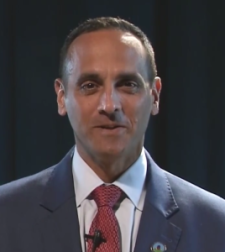
Joe Curtatone. Photo (cc) 2019 by the Somerville Media Center.
The state Supreme Judicial Court on Monday issued an important — and, to me at least, surprising — clarification of the Massachusetts wiretapping law, ruling that it’s not necessary to obtain someone’s consent before recording them. All that’s needed, the court said, is to inform the second party that they’re being recorded. That doesn’t change even if the person making the recording lies about their identity. Here’s Travis Andersen’s account in The Boston Globe.
The case involves Kirk Minihane of Barstool Sports, who in 2019 recorded an interview with Somerville Mayor Joe Curtatone by claiming to be Globe columnist Kevin Cullen. Minihane then played the interview on his podcast. Curtatone sued, arguing that he would not have agreed to being recorded if he had known he was speaking with Minihane rather than Cullen. Justice Frank M. Gaziano writes:
Minihane did not secretly hear or record the challenged communication within the meaning of the act, because the plaintiff knew throughout the call that his words were being heard and recorded. The identity of the party recording the communication or, indeed, the truthfulness with which that identity was asserted is irrelevant; rather, it is the act of hearing or recording itself that must be concealed to fall within the prohibition against “interception” within the act.
And here’s Gaziano’s conclusion:
Because Minihane did not secretly record his conversation with the plaintiff, the challenged recording does not fall within the statutory definition of an “interception” within the meaning of the Commonwealth’s wiretap act. The plaintiff thus has not made factual assertions sufficient to state a cause of action upon which relief can be granted.
The first indication of where the case might be headed came earlier this year, when the ACLU and the Reporters Committee for Freedom of the Press filed a brief in support of Minihane and Barstool.
Massachusetts has often been described as a “two-party consent” state when it comes to recording conversations. But even before Minihane recorded Curtatone, it was clear in some legal circles that the word “consent” was misleading. For instance, here is an explanation of the law published several years ago by the now-defunct Digital Media Law Project at Harvard’s Berkman Klein Center for Internet & Society:
Massachusetts’s wiretapping law often referred to is a “two-party consent” law. More accurately, Massachusetts makes it a crime to secretly record a conversation, whether the conversation is in-person or taking place by telephone or another medium…. Accordingly, if you are operating in Massachusetts, you should always inform all parties to a telephone call or conversation that you are recording, unless it is absolutely clear to everyone involved that you are recording (i.e., the recording is not “secret”). Under Massachusetts’s wiretapping law, if a party to a conversation is aware that you are recording and does not want to be recorded, it is up to that person to leave the conversation.
Even after Monday’s SJC ruling, the law in Massachusetts remains unusually strict. According to the law firm Matthiesen, Wickert & Lehrer, 38 states plus the District of Columbia merely have a “one-party consent” law. Since the person making the recording has obviously given their consent, that means recording someone secretly in those states is legally permissible.
I tell my students that if they want to record an interview, whether in person or by phone, to ask for the subject’s consent. Then, after they turn on their recorder, tell them that they’re now recording and ask if that’s all right. That way, not only do they have the interview subject’s permission, but they have that permission on record. Minihane’s victory doesn’t change the ethics of recording someone without their knowledge.
One aspect of Monday’s ruling worth thinking about is that two-party consent, even under a looser definition of “consent,” can make it harder to engage in certain types of investigative reporting. Minihane obviously was just recording Curtatone for entertainment purposes. But undercover reporting, though less common than it used to be (thanks in part to the Food Lion case), can be a crucial tool in holding the powerful to account.
In Massachusetts, it remains illegal for a reporter to secretly record someone. The SJC’s decision doesn’t change that.
Photo (cc) 2014 by the National Museum of American History
This essay was first published in the Media Nation member newsletter. To become a member for $5 a month, please click here.
Like many of us, I worry about the state of our democracy. I write about it from time to time, but what concerns me especially is that it’s almost impossible to see any way out of our dilemma. That’s because we need systemic reform in order to move toward democracy. Not only is it in the interest of Republicans to oppose that reform, but there’s also no way of overcoming their opposition.
Obviously a lot of attention has been focused on Democratic Sen. Joe Manchin’s opposition to getting rid of the filibuster, which means that President Joe Biden won’t be able to pass any of his non-budget priorities through a simple majority. But we all know the problem goes deeper than that, because the Constitution is heavily tilted toward the small-population states, which are overwhelmingly Republican.
At the presidential level, we need to get rid of the Electoral College, a vestige of slavery that resulted in the elections of George W. Bush in 2000 and Donald Trump in 2016 even though they lost the popular vote. Yes, the Electoral College has always been with us. But before Bush, the last time a candidate was elected president despite losing the popular vote was in 1888. Because of shifting demographics, such outcomes have become increasingly likely.
Nor is the problem solely at the presidential level. The 50 Republican senators represent just 43.5% of the electorate, according to calculations by the Daily Kos, whereas the 50 Democratic senators represent 56.5%. That’s an enormous gap, yet between the filibuster’s requirement of 60 votes to move forward on anything and the small-state advantage, Chuck Schumer might as well hand his gavel over to Mitch McConnell.
The House is at least theoretically democratic since districts are drawn on the basis of population. But partisan gerrymandering has resulted in Republicans having more seats to which they should be entitled. That will certainly prove to be a factor in the midterm elections, when the Republicans will in all likelihood regain their majority.
And I haven’t even mentioned Republican efforts across the country to pass voter-suppression laws that would disproportionately affect people of color.
This state of affairs would be bad enough if Republicans were committed to our democratic system. But we can see that they’re not, and their willingness to repeat the Big Lie that Trump won re-election last fall has become a loyalty test within the party.
We can all think of ways to solve these problems, but even to write about them seems like an exercise in futility. The Republicans would block any changes that would diminish their power. And we will continue to move deeper into minority rule.
Journalism is a field overrun with prizes. But the Pulitzers still matter — and the recognition shown The Boston Globe on Friday was impressive.
As you no doubt have heard, five current and former Globe journalists won in the Investigative Reporting category “for reporting that uncovered a systematic failure by state governments to share information about dangerous truck drivers that could have kept them off the road, prompting immediate reforms.” That’s the first time the Globe has been recognized for its investigative work since it won the Public Service Award in 2003 for its coverage of the pedophile-priest crisis in the Catholic Church.
The Globe was also a finalist in Editorial Writing for its commentary on a zoning battle in Newton, and its sister publication Stat was a finalist in Breaking News for its coverage of COVID-19. One of the three Stat finalists was Sharon Begley, who died of lung cancer earlier this year.
In a video accompanying the Globe’s own coverage, editor Brian McGrory addressed a topic of vital importance — the role of a regional news organization in the powerful to account. Here’s part of what he said.
I was asked last night at a panel I was on about the lack of relevance, and how major metro newspapers are becoming decreasingly relevant in a really tough media age. And I thought about it for a minute, and I came to realize — not for the first time — I’ve been here 30-something years, and the Globe has never felt more relevant to the community than it does now. And all you have to do is look at the work we do day in and day out. The work that’s unfolding right now on the police department, on City Hall, on state government. Name a topic, and it’s every department firing on all cylinders.
Indeed, the Globe is driving the conversation on all of those stories, even amid fine work by other news organizations, including my friends at GBH News, WBUR, CommonWealth Magazine, The Bay State Banner, The Dorchester Reporter, DigBoston, local TV stations and others.
Ownership matters
Unfortunately, the Globe is unusual by the standards of 2021. Take a look at the list of Pulitzer winners. Overwhelmingly, the prizes went to news organizations with solid ownership. The Globe, of course, has been owned for the past seven-plus years by John Henry and Linda Pizzuti Henry, who have steered it to profitability and stability while maintaining the paper’s reporting capacity.
The Star Tribune of Minneapolis is owned by another wealthy business person, Glen Taylor, who has revived a paper that was on the ropes not too many years ago. The Tampa Bay Times is owned by the nonprofit Poynter Institute — a situation that hasn’t been entirely happy, but that has resulted in more robust coverage than if it were owned by a for-profit chain.
The Marshall Project is a well-funded nonprofit. The New York Times, though a publicly traded company, has been controlled by the Ochs-Sulzberger family since 1896. The Atlantic is largely owned by Laurene Powell Jobs, who inherited the late Steve Jobs’ fortune. BuzzFeed News is run as much for love as for profit.
I could go on, but you get the picture. All across the country, newsrooms at regional and local newspapers are being ravaged by corporate chains and hedge funds. The Pulitzers demonstrate, as I have said over and over, that it doesn’t have to be that way.
Speaking truth to power
There had been some buzz in recent weeks that a Pulitzer ought to be awarded to Darnella Frazier, the then-17-year-old who turned her smartphone camera toward George Floyd as he was being murdered by police officer Derek Chauvin.
The Pulitzer judges were thinking the same thing. Frazier was awarded a Special Citation “for courageously recording the murder of George Floyd, a video that spurred protests against police brutality around the world, highlighting the crucial role of citizens in journalists’ quest for truth and justice.”
Rarely has a Pulitzer been more deserved. But it will be for naught if that’s the end of it. Frazier’s work should inspire people everywhere to stand up for what is right. Without her bravery, Chauvin might still be on the beat, terrorizing the citizens of Minneapolis.
Jeffrey Toobin, who was suspended seven months ago after he was caught masturbating on a Zoom call, is back at CNN. Lukas I. Alpert reports for The Wall Street Journal that the legal analyst appeared on TV Thursday afternoon with anchor Alisyn Camerota. He called his behavior “deeply moronic and indefensible” but repeated his longstanding claim that it was accidental. “I didn’t think I was on the call,” he said. “I didn’t think other people could see me.”
Well, now. What are we to make of this? In addition to his CNN perch, Toobin was a high-profile writer for The New Yorker, and it was during a meeting with colleagues at the magazine that he decided to fondle himself. The New Yorker fired him. There have been no public signs that there’s been any thought given to reversing that decision.
Although Toobin’s quotes from his CNN appearance Thursday come across as contrite and sincere, he did say he thought his firing by The New Yorker was “excessive punishment,” which suggests that he still doesn’t get it.
I believe in second chances. The problem with Toobin is that his suspension — for truly appalling behavior — didn’t even last a year, and he’s picking up right where he left off rather than being asked to regain the viewers’ trust in a less visible spot. I will say that his commentary is first-rate.
Writing in today’s CNN “Reliable Sources” newsletter, Brian Stelter says, “There were a wide range of reactions to the news on Thursday afternoon. But by nightfall, I pretty much sensed that the social media conversation had moved on to other subjects.” That may be true, but I don’t think Stelter should take it as an indication that people are OK with it. Many, I’m sure, are disgusted.
Count me with Poynter media analyst Tom Jones, who writes, “Regardless of Toobin’s intentions and past history, this feels like something so egregious that it simply can’t be dismissed. Frankly, I’m stunned CNN brought him back.”



.png)