Being The New York Times’ Jerusalem bureau chief is right up there when the same story gets you called both a self-hating Jew and a Zionist mouthpiece.
After three and a half years in the hot seat, Jodi Rudoren leaves more concerned than ever about the “dueling narratives” that prevent Israelis and Palestinians from understanding each other.
“There’s a growing sense of hopelessness on both sides,” she told a Northeastern University audience last week, and “very few agreed-upon facts.”
Rudoren, who will become a deputy editor on the Times’ foreign desk, is no news novice. She’s been the paper’s education editor, deputy metropolitan editor, and Chicago bureau chief after six years at the Los Angeles Times.
But she still finds it “bizarre” to be excoriated for writing too much about people who commit acts of violence. “This is myopic,” she said. “We have to know their motivations. We humanize them. We don’t glorify them.” Referring to the shooter in the recent Colorado Springs attack on a Planned Parenthood clinic, she asked, “Don’t you want to know who Robert Dear was?”
She called empathy a key to being a journalist—and being a human being: “If empathy’s only for one side we’re in big trouble.”
Rudoren rebutted critiques of Times stories that are based on numbers or the ratio of victims to attackers. She called it “simplistic. Numbers don’t tell the whole story.” She said it’s more important to write about the few who perpetrate violence than about their many random victims.
One of her stories drawing intensive fire from both sides profiled a family of Palestinian stone throwers.
“Children have hobbies, and my hobby is throwing stones,” she quoted one as saying.
Some pro-Israeli readers mistakenly thought that she thought it was a hobby, Rudoren said.
But not to worry: Palestinians hated the story too, she said.
Reporters are routinely chastised for not doing the impossible: putting a complicated story into full context.
Recalling critiques for not going back in Middle Eastern history every time she’s on a tight deadline and word count, she quipped that every 800-word story should note, “Abraham had two sons.”
Bill Kirtz is an associate professor of journalism at Northeastern University.
According to the latest ABC News/Washington Post poll, 32 percent of registered Republicans and voters who lean Republican favor Donald Trump. And 34 percent of registered Democrats and Democratic leaners support Bernie Sanders.
Why am I telling you this? Because members of the political press are having a collective nervous breakdown over their inability to shake Trump’s support despite his lies about “thousands and thousands” of Muslims in New Jersey celebrating the 9/11 attacks, his mocking of a disabled reporter, and his overall thuggish behavior. So keep those poll numbers in mind, because I’ll come back to them in a few moments. First, though, I want to discuss the angst that has broken out within the pundit class.
The redoubtable media observer Jay Rosen, author of the blog PressThink, wrote about the Trump phenomenon earlier this week. “The laws of political gravity” never actually existed, Rosen argued, and the Trump campaign has merely exposed that fact:
The whole system rested on shared beliefs about what would happen if candidates went beyond the system as it stood cycle to cycle. Those beliefs have now collapsed because Trump “tested” and violated most of them—and he is still leading in the polls…. The political press is pretty stunned by these developments. It keeps asking: when will the “laws of political gravity” be restored? Or have they simply vanished?
In an interview Sunday on Effective Radio with Bill Samuels, New Yorker media critic Ken Auletta expressed the conventional view of how the media have enabled Trump’s rise—the “embarrassing” amount of attention they’ve given him in order to goose ratings and the obsessive attention paid to polls at a time when few ordinary Americans can even name non-celebrity candidates such as Chris Christie or John Kasich. “You’ve just got to give it time,” Auletta said, “but the press is so desperate to create narrative and to make competition exciting.”
Trump’s making fun of a disabled reporter, Serge Kovaleski, and his easily debunked claimthat he didn’t know Kovaleski was disabled, seems to have struck nerve. No, it wasn’t the first time Trump had gone after a journalist. Earlier he had attacked Megyn Kelly of Fox News and Jorge Ramos of Univision. But Trump’s cruel imitation of Kovaleski’s twisted hands was so outrageous that—to return to Rosen’s theme—it would have ended his candidacy if the “laws of political gravity” actually existed.
In a commentary for the NewsGuild of New York website, union president Peter Szekely urged his fellow reporters to stay away from the “he said-she said” treatment. “Here’s my message to reporters covering Trump,” Szekely wrote. “The reporter-mocking incident will be regurgitated numerous times going forward. When you report on it, you’ll need to mention that Trump denied it, of course. But you saw the video. You heard the words. You know the truth. Don’t hide from it.”
Now, of course, Trump’s rise has been real—more real than I and most other political observers had expected. But let me offer some perspective. In fact, what we are seeing is the acceleration of a trend in the Republican nominating process that began in 2008, when the establishment candidate, John McCain, was nearly hounded out of the campaign for insufficient wing-nuttery before coming back to win the nomination.
Four years ago, Michele Bachmann had a few moments in the sun before fading. The front cover of Newsweek for October 24, 2011, featured a smiling image of Herman Cain(remember him?) giving the thumb’s-up. The cover line: “Yes We Cain!” Well, no he couldn’t.
Which brings me back to those poll numbers. On the Democratic side, Bernie Sanders is trailing Hillary Clinton by the considerable margin of 60 percent to 34 percent. In other words, Sanders, a self-described democratic socialist, has consolidated the one-third of Democratic voters who will always support the most left-wing candidate. Unlike Trump, Sanders is a serious person with serious ideas. He also seems to have succeeded in pushing Clinton to the left of her comfort zone. But no one except true believers expects Sanders to be sworn in on January 20, 2017.
Trump, if you ignore the margin of error (and you shouldn’t, but never mind), is actually doing less well among Republicans than Sanders is among Democrats. But on the Republican side, with a huge field of contenders, 32 percent is enough to lead the field. At some point, establishment support is going to coalesce around one or two candidates, and Trump’s hold on a quarter to a third of the Republican electorate is going to look a lot less impressive. Marco Rubio would appear to be the most likely beneficiary of this process. But even Jeb Bush looks no more hapless than Mitt Romney did in late 2011.
In a recent analysis for The Wall Street Journal, Dante Chinni, a political scientist at Michigan State University, found that support for the establishment Republican candidates during the current campaign mirrors Romney’s in late 2011. It wasn’t until January 2012, Chinni noted, that Romney started to achieve liftoff.
“If that establishment vote comes together by January,” Chinni wrote, “the leading establishment candidate can win delegates in the early primaries and caucuses, which start in February, and build momentum.”
In September, Trump told a crowd gathered in Washington to oppose the nuclear agreement with Iran, “We will have so much winning when I get elected that you will get bored with winning.”
So much winning. In fact, Trump is not winning, and he’s not going to win. Members of the political press may wring their hands over their inability to convince Trump’s supporters that his lies, his outrageous statements, and even his flirtation with fascismshould disqualify him from the presidency. But the overwhelming majority of the public wants nothing to do with Trump.
I don’t think the media deserve the credit for Trump’s low ceiling. But I certainly don’t believe the press should be blamed for Trump’s continuing support among a minority of one of our two major parties. To paraphrase what Joseph Kennedy once said about his son Bobby (as reported by Robert Caro), they love him because he hates like they hate. That’s not going to change—but neither is it going to get him elected.
It’s now becoming clear that Robert Lewis Dear Jr., the suspect in the Planned Parenthood shootings in Colorado Springs, was motivated by opposition to abortion. NBC News, citing “sources,” was the first to report that Dear used the phrase “no more baby parts,” and both The Washington Post (citing “a law enforcement official”) and The New York Times (“a senior law enforcement official”) say they’ve confirmed it.
This is not surprising, of course. Planned Parenthood has been under siege for months following the release by anti-abortion-rights activists of what Vox properly calls “deceptively edited videos” that make it appear Planned Parenthood is “selling baby parts” for profit. Republican presidential candidate Carly Fiorina’s lies upped the ante.
Still, it’s important for journalists and, frankly, anyone who cares about the facts not to get ahead of the story. Since Friday evening, I’ve been appalled at the number of people who’ve taken to Twitter to condemn the anti-Planned Parenthood campaign on the assumption that the shooter’s motivations were political. It wasn’t until Saturday night that proof began to emerge.
The Colorado Springs tragedy, which claimed the lives of three people, hits several toxic cultural touchstones — abortion rights, gun rights, and irresponsible behavior by politicians (to be clear: Republican politicians) that can put people’s lives in danger. The last thing we need is to leap to conclusions before the facts become known.
The dispute between Boston College spokesman Jack Dunn and the makers of “Spotlight” is escalating. “Spotlight,” as you no doubt know, is a movie about The Boston Globe’s Pulitzer Prize-winning reporting on the pedophile-priest scandal in the Catholic Church.
For the past few days, starting with a Kevin Cullen column in Sunday’s Globe, Dunn has been making media appearances claiming that he was falsely portrayed in the movie as uncaring toward victims at BC High School. The filmmakers have pushed back hard, arguing that the depiction of Dunn is accurate and that it was vetted by Globe reporters Walter Robinson and Sacha Pfeiffer.
According to an exchange of letters that I obtained this evening, Dunn’s lawyers are accusing the filmmakers of portraying Dunn in a way that is “defamatory” as well as “false, malicious and fabricated.” The letter on behalf of Dunn, addressed primarily to screenwriters Tom McCarthy and Joshua Singer (McCarthy is also the director), says in part:
In general, the film, in dramatic fashion, divides the individuals it depicts into those who heroically searched for the truth about the horrific sexual abuse of children by members of the clergy and those who sought to suppress facts about the abuse. In a critical scene in the film, which is nearly entirely fabricated, Spotlight squarely and falsely places Mr. Dunn in the category of those who actively attempted to interfere with and thwart the efforts of the Boston Globe reporters to unearth and report on the abuse scandal.
In their answer, the filmmakers’ lawyers “respectfully, but vigorously, disagree with your allegation that the film defames Mr. Dunn.” Here’s a key excerpt:
Most importantly, the film’s portrayal of Mr. Dunn is substantially true. It is based on the recollections of Walter Robinson and was vetted by him and Sacha Pfeiffer. Mr. Dunn’s overarching concern for Boston College High School (and Boston College) is reflected in contemporaneous and later media accounts. Indeed, there is no evidence that Mr. Dunn was an outspoken advocate for transparency or accountability before the Boston Globe broke the story, or that he came forward on his own to initiate an investigation into abuse at BC High before the Globe’s coverage forced the school to act.
I am posting these rather lengthy documents in the interest of putting them before the public in advance of what could be a significant legal battle.
Click here (pdf) for the full letter (with exhibits) from Dunn’s lawyers, David H. Rich and Howard M. Cooper of the Boston firm Todd & Weld.
Click here (pdf) for the full letter (also with exhibits) from the filmmakers’ lawyer, Alonzo Wickers IV of the Los Angeles firm Davis Wright Tremaine. No, I do not know why parts of it have been highlighted in yellow.
For background and some relevant links, see my commentary for WGBHNews.org, which has been updated with a statement from the filmmakers.
Update: The Globe has now published an article on the dispute.
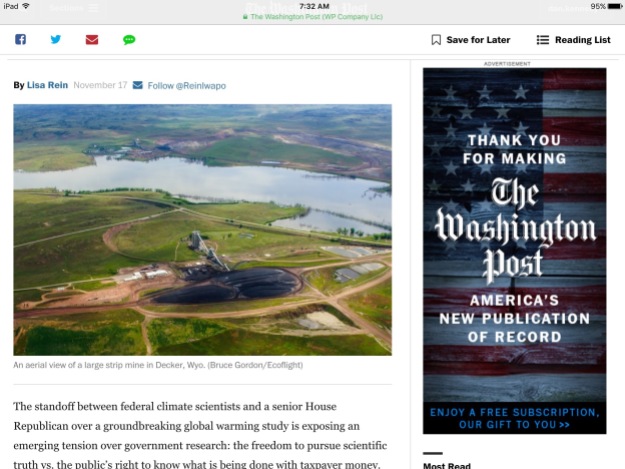
I caught this house ad earlier today while reading The Washington Post. It comes shortly after Post owner Jeff Bezos told Charlie Rose on “CBS This Morning” that the Post is “working on becoming the new paper of record.”
Bezos added: “We’ve always been a local paper, and just this month The Washington Post passed The New York Times in terms of number of viewers online. This is a gigantic accomplishment for the Post team. We’re just gonna keep after that.”
Bezos’ complete remarks about the Post have been transcribed by Laura Hazard Owen of the Nieman Journalism Lab. Just click here.
And speaking of the Post, Baxter Holmes has a piece at Esquire headlined “Is Martin Baron the Best News Editor of All Time?” Yes, it’s over the top in its praise of the Post’s executive editor and former Boston Globe editor. But Baron may well be the best American newspaper editor working today, and Holmes’ story is well worth your time.
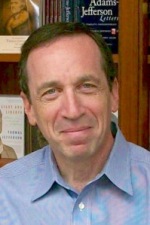
Longtime Boston Globe reporter Michael Kranish is leaving for The Washington Post, where he will be reunited with former Globe editor Marty Baron, now the Post’s executive editor. Kranish is currently deputy chief of the Globe’s Washington bureau. Here’s the Post’s announcement:
We’re thrilled to announce that Michael Kranish will join The Washington Post as an investigative political reporter, bringing his formidable reporting and writing talents to what is already the best politics staff in American journalism.
Michael is known for anchoring the Boston Globe’s peerless in-depth biographical explorations of presidential candidates and for an impressive body of work that combines a strong focus on accountability with a gift for narrative writing. Currently deputy chief of the Globe’s Washington bureau, he has covered Congress, the White House and national politics for more than 25 years.
He was a co-winner of the 2013 Dirksen award for a series on Washington dysfunction for which he was a project leader, writing many of the stories and editing others, and has been the main writer of the Globe’s excellent 2015 series, “Divided Nation,” which has explored income inequality, racial disharmony and other areas of American discord.
His definitive piece this year on Jeb Bush’s colorful time at Andover drew a wide readership and was all the more remarkable because Michael produced it under a tight, self-imposed deadline, driven by concern that The Post might scoop him on an important political story in the Globe’s backyard. “Let’s just say I needed every one of the eight days I had,” he says.
Michael is a co-author of books that Globe reporters produced on John Kerry and Mitt Romney. He’s also the author of a work of history, “Flight from Monticello: Thomas Jefferson at War,” published by Oxford University Press in 2010.
Before moving to Washington in 1988, Michael covered New England from a bureau in Concord, N.H. and business from the Boston newsroom. His run at the Globe was preceded by jobs at the Miami Herald, where his reporting helped prompt Miami Beach to abandon its plan to tear down part of what is now known as the historic Art Deco district in South Beach, and the Lakeland Ledger in Lakeland, FL.
A DC-area native and a devoted cyclist, Michael enjoys rolling with the peloton up MacArthur Boulevard early on weekend mornings. He and his wife, Sylvia, are the parents of two daughters and live in Silver Spring.
Michael will start Jan. 4. Please join us in welcoming him to our new newsroom.
Update: And here is Globe editor Brian McGrory’s memo to the staff:
Consider the contradictions posed by a movie that’s based on a true story. The events are presented as real, yet they are compressed and exaggerated for dramatic effect. The characters — many of them, anyway — are stand-ins for their real-life counterparts, sharing their names and, depending on the skill of the actors, their appearance and mannerisms. Yet the words that come out of their mouths are not things they actually said; rather, they are things the filmmakers imagine they might have said.
Or, as at least four people in the film Spotlight claim, things that they never said, never would have said, and that tarnish their reputations.
Update: Open Road, the distributor of Spotlight, has issued a statement defending the accuracy of the portrayal of Boston College spokesman Jack Dunn. See details at the end of this post.
In fact, there is nothing new or unusual about such complaints. They are inherent to the genre of “true life” stories, quotation marks used advisedly. Spotlight is a terrific movie — maybe the best film about journalism since All the President’s Men. That doesn’t excuse smearing the names of good people, if that is indeed what has happened. But it does underline the problems that can arise in the making of fact-based fiction rooted in real events and real people.
The most aggrieved of the Spotlight four is Jack Dunn, the spokesman for Boston College and a trustee at Boston College High School. Dunn’s character is seen as minimizing the pedophile-priest scandal in a meeting attended by Boston Globe reporters Walter Robinson and Sacha Pfeiffer. It was, Dunn said in a column by the Globe’s Kevin Cullenand in an interview on WGBH’s Greater Boston, the opposite of the approach he took.
“The dialogue assigned to me is completely fabricated and represents the opposite of who I am and what I did on behalf of victims,” Dunn told Cullen, adding that he literally threw up after seeing the movie. “It makes me look callous and indifferent.”
The others who’ve spoken out are Eric MacLeish, a lawyer for many of the victims, who is cast — wrongly, he says — as helping to cover up the scandal by reaching secret settlements with the church; longtime investigative reporter Steve Kurkjian, who comes across as a skeptic of his colleagues’ work; and former Globe publisher Richard Gilman, who, in a commentary for the Arizona Daily Star, debunks a scene in the movie in which he is seen telling editor Marty Baron about his worries that going after the Catholic Church might hurt the paper’s bottom line. Gilman puts in a good word for Kurkjian as well.
Kurkjian is someone I know and respect. So I sympathize with him when he says (as he told Jack Encarnacao of the Boston Herald), “They sort of put words in our mouth. You can’t do that and not have your motives and your professionalism called into question.”
Yet such complaints are hardly unique to Spotlight. Indeed, they were an issue in All the President’s Men, the last time a movie about investigative reporting commanded the national stage. In her 2007 book Woodward and Bernstein: Life in the Shadow of Watergate, Alicia Shepard writes that fictional elements of the movie resulted in deep wounds in The Washington Post’s newsroom — wounds that, in some cases, never fully healed.
In particular, Shepard tells us, top editors Barry Sussman and Howard Simons suffered “permanent psychic damage” — Sussman for being left out of the film altogether despite playing an important role in the early days of the Watergate story, Simons for coming across as a reluctant warrior who had to be prodded by executive editor Ben Bradlee when, in fact, the opposite was true, at least early on. Shepard continues:
Bradlee and Simons had been such close friends that they had promised to take care of each other’s children if anything ever happened to one of them. Yet Simons became so embittered by the movie version co-opting the truth that their friendship was never the same, though they did make peace before Simons died in 1989.
My own encounter with the limitations of the true-life genre came in the late 1990s with the release of A Civil Action, a second-rate movie starring John Travolta that was based on a first-rate book of the same name written by the journalist Jonathan Harr. The book and movie told the story of a 1986 trial in federal court over contaminated wells in Woburn that had been linked to a number of childhood leukemia cases, some fatal. I spent years covering the story, including the trial and its aftermath, for The Daily Times Chronicle of Woburn.
The film took numerous liberties with the facts, and I wrote about some of them for The New Republic. Among other things, the judge, Walter Jay Skinner, was presented as an ogre who was out to destroy the families’ lawyer, Jan Schlichtmann. The Skinner I observed during the 78-day trial was a fair-minded jurist who occasionally became angry over Schlichtmann’s frantic, clumsy courtroom presentation. The trial didn’t end well for Schlichtmann or his clients, but that had much to do with the limits of 1980s science, not with Judge Skinner.
As for Spotlight, I suspect the controversy will blow over rather quickly. Jack Dunn has hired legal help and is demanding that the movie be edited (not likely) and that he receive an apology (possible).
“These are hard cases, emotionally and legally,” Robert Bertsche, a prominent First Amendment lawyer with the Boston law firm Prince Lobel, told me by email. “If they pressed their claims in court, those who claim they are injured by their portrayal in this film would have to prove that the depiction of them was not protected opinion, and not based on facts that are substantially true. Thirteen years later, that will be an immensely difficult task.”
The thing is, Spotlight is a hell of a movie that tells some important truths about the role of journalism in holding powerful institutions to account. You should see it.
But a movie such as Spotlight is not a documentary. It is a work of fiction, based on true events. “Jack Dunn” is not Jack Dunn. What happened to him, Eric MacLeish, Steve Kurkjian and Richard Gilman has happened to many others in many movies over the course of many years. It may not be fair. But that’s show biz.
Update: Open Road, the distributor of Spotlight, issued a statement to The Wrap earlier this week defending the accuracy of its portrayal of Jack Dunn. “The production believes in everyone’s right to speak their minds on the complicated legacy of this important story,” a spokesman is quoted as saying. “Jack Dunn is no exception. However, we disagree with his characterization of the scene as misleading.”
The statement goes on to say that Walter Robinson and Sacha Pfeiffer reviewed the scene in question, and that they believe it reflects “the substance of what occurred during this initial interview at BC High.” The statement continues that the scene “portrays Mr. Dunn acting as any reasonably cautious representive of BC High would have during a first meeting, especially one who is a public relations professional, alumnus, and trustee.”
Update II: Lawyers for Jack Dunn and for the filmmakers have exchanged letters as the war of words heats up. The Globe has now published an article on the dispute as well.
Newspaper analyst Ken Doctor takes a look at The Boston Globe’s strategy of charging 99 cents a day for digital access and pronounces it promising. Indeed, at a time when advertising in print newspapers is on the decline and digital advertising seems unlikely ever to make up the difference, it seems clear that large regional newspapers like the Globe have got to persuade their audience to pick up a bigger share of the tab if they’re going to survive.
The article is well worth reading in full. Here are a few takeaways.
1. As Doctor notes, The New York Times now has more than 1 million digital-only subscribers. The Globe has just 65,000. That’s not a gap — it’s a chasm. Yet the Globe has proved to be the most successful regional paper in the country at selling digital subscriptions. Doctor attributes the difference to dramatically less interest in local and regional news than in national and international news.
Doctor adds: “The Globe, under editor Brian McGrory’s direction, produces a high volume of high-quality content each day.” True. Unfortunately, you can pick up the regional paper in nearly any city and find a lot less than what you’ll find in the Globe, which would make the dollar-a-day strategy a dubious proposition in most places.
2. Who exactly is paying 99 cents a day for the digital Globe? Not me. We’ve been subscribers since the 1980s. We currently receive the Sunday print edition, which gives us seven-day digital access. The price has crept up gradually, but we’re still paying just $19.96 a month. That works out to a little less than 66 cents a day.
My point is that the Globe does not have 65,000 readers paying 99 cents a day for digital access. Some percentage of them are paying less than that. Doctor does make it clear that there’s a transition in the works, but he doesn’t break down the numbers. Eventually, he adds, the Globe needs to hit 200,000 digital subscribers in order to claim success.
3. The big question, which Doctor doesn’t broach, is whether anyone under 40 is even interested in an aggregated news package, or if instead they’re content to get news from a variety of different sources such as Facebook or Apple News. By far the biggest challenge faced by the news business as we used to know it is not the shift from print to digital, but from reliance on a few branded news organizations to a cacophony mediated by tech companies.
In other words, what the Globe is doing may well work for older subscribers like me. But what happens when people in their 20s and 30s, whose main exposure to the Globe is through social sharing, enter their 40s and 50s? Are they going to change their news consumption habits? Probably not.
In case you haven’t heard, there’s big news about the late, great Boston Phoenix and its related properties — WFNX Radio, Boston After Dark, the Phoenix papers of Portland, Providence and Worcester, and Stuff and Stuff at Nite magazines.
On Friday, The Boston Globe reported that Phoenix publisher Stephen Mindich is donating all of the archives to Northeastern University. The performance of the Phoenix’s website, which is still live, should improve over time. The long-term vision is even more exciting: We hope that every print edition of the Phoenix/Boston After Dark going back to 1966 will be digitized in a searchable format.
Mindich’s gift has been in the works for a year (I’ve dropped hints here and there), and we are finally able to go public. The Globe story is more than kind regarding my own modest role. I put Stephen together with Northeastern archivist Giordano Mecagni, and they did the rest. I am so proud of the 14 years I worked for Stephen, and I’m excited that this incredible resource will be available for years to come.
Here is an excerpt from Stephen’s farewell message, published in the Phoenix’s final issue on March 14, 2013:
What I can and will say is I am extremely proud, as all of you should be, of the highest standards of journalism we have set and maintained throughout the decades in all of our areas of coverage and the important role we have played in driving political and socially progressive and responsible agendas; in covering the worlds of arts and entertainment, food and fashion — always with a critical view, while at the same time promoting their enormous importance in maintaining a healthy society; and in advocating for the recognition and acceptance of a wide range of lifestyles that are so valuable for a vibrant society.
Judging from the tone of coverage, it’s hard to tell whether the Massachusetts House’s unanimous approval of public-records reform legislation Wednesday was a step forward or a setback. But it sounds like the already-watery bill under consideration has been diluted still further.
The problem is that even though Massachusetts’ public-records law is among the worst in the country (the Center for Public Integrity recently gave the state an “F” for public access to information), the bill passed by the House both giveth and taketh away. Here’s Wallack:
The legislation includes a measure designed to reduce the fees for copies. It orders government agencies to publicly designate someone to handle public records requests, and it gives citizens the opportunity to potentially recoup their legal fees if they successfully sue to obtain records….
But the bill also gives agencies significantly more time to respond to requests, allows them to outsource some requests to vendors, and did not go as far as some advocates had hoped to rein in labor charges and penalize officials who flout the law.
The bill also continues to exempt the governor’s office, the judiciary and the Legislature itself from the provisions of the law. A commission is going to study that — although, needless to say, it would be a major surprise if we ever heard about it again.
The only hope now is that the Senate will strengthen the legislation when it comes up for consideration early next year. The danger is that Gov. Charlie Baker will sign a weak bill into law, officials will pat themselves on the back for a job well done, and meaningful reform will be put off for another generation.
 By Bill Kirtz