Food journalism as regional news: Our conversation with Hanna Raskin

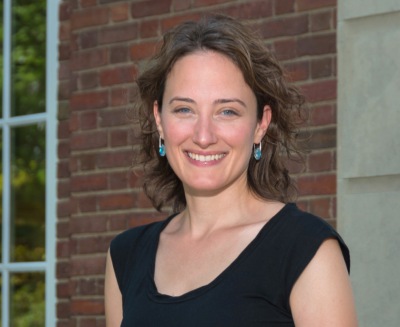
Hanna Raskin, allegedly. Photo by Allisyn K. Morgan.

On this week’s “What Works” podcast, Ellen Clegg and I talk with Hanna Raskin, founder and editor of The Food Section, a Substack newsletter devoted to covering restaurants and trends in food across the South. Before starting her Substack last year, Hanna was food editor and critic for eight years at the family-owned Charleston Post and Courier in South Carolina.

Raskin also covered food for alternative weeklies, including the Mountain XPress in Asheville, North Carolina, and Seattle Weekly.

I offer a Quick Take on The Baltimore Banner, a nonprofit news project that finally made its long-awaited debut. I wish them all good luck but have some issues with their business model, which includes a hard paywall — not entirely compatible with a nonprofit’s public-service mission.

Ellen’s Quick Take is on a Pew Research Center study on trends in digital circulation at locally focused publications. The bottom line: digital is trending up, print circulation continues to tank, and readers are spending less time on site.

You can listen to our conversation here and subscribe through your favorite podcast app.

Meredith Clark on race, power and why the media have fallen short on diversity

Meredith Clark. Photo by Alyssa Stone / Northeastern University

On the brand new “What Works” podcast, Ellen Clegg and I talk with Professor Meredith Clark, our colleague at Northeastern University. Dr. Clark is an associate professor in the School of Journalism and the Department of Communication Studies at Northeastern as well as founding director of the university’s new Center for Communication, Media Innovation and Social Change.

Before arriving at Northeastern, she was a faculty fellow at Data & Society, an independent nonprofit research organization based in New York that examines some of the questions being raised by the massive increase in the use of data in all aspects of society.

Dr. Clark’s research is on the intersections of race, media and power, and she’s studied everything from newsroom hiring and reporting practices to social media communities. Her media diet is wide-ranging and eclectic. Our interview touches on many cultural icons, including poet Audre Lorde and Captain Olivia Benson, the fictional “Law & Order SVU” crime-solver.

Meredith is perhaps best known in news circles for her work in trying to revive an annual diversity census conducted by the News Leaders Association, an effort that fell short earlier this year after just 303 media outlets responded out of the 2,500 that were asked to provide data. Ellen and I asked Meredith why so few were willing to participate — and what can be done to encourage diversity at small start-up news organizations.

In Quick Takes, I discuss Gannett’s recent move to dismantle some of the chain’s regional editorial pages, which I see as not entirely a negative, and Ellen tips the hat to two of the 2022 recipients of the prestigious Freedom of the Press Award: Wendi C. Thomas, founding editor and publisher of MLK50: Justice Through Journalism, and Mukhtar Ibrahim, founding publisher and CEO of Sahan Journal.

You can listen to our conversation here and subscribe through your favorite podcast app.

Axios Boston enters the crowded local newsletter fray with a solid debut

The Axios Boston newsletter made a solid debut today with the help of Gov. Charlie Baker, who sat down with Mike Deehan for an interview about his priorities during the final weeks of the legislative session.

Steph Solis has an update on the override of Baker’s veto of a bill that would grant driver’s licenses to undocumented immigrants. Also online are the controversy over our racist state flag, the state of tourism, a decline in college enrollments and, from Maxwell Millington, guides to drinking (always welcome) and AirBNBs. In addition, there are sponsored-content ads from CEO Action for Racial Equity and from Axios itself. The newsletter is free.

I’m sure we’ll see more variety in the days ahead. For one thing, there’s no round-up of news items from other media outlets, which is a standard feature at (for example) Axios Denver. Overall, though, it was substantive and entertaining, with lots of Axios’ patented indents and bullet points, intended to — well, I’m actually not sure what they’re intended to do.

Axios invited mockery last year when, in announcing that it would expand its Axios Local network, published a story headlined “Axios vows to save local news.” (I wrote about it for GBH News.) Axios Boston isn’t going to do that. But it’s a good subway read — it’s designed for mobile — and may connect with younger professionals who aren’t currently tuned in to local coverage of any kind.

Axios Boston is elbowing its way into a pretty crowded newsletter environment in Greater Boston. Other general-interest morning offerings include “The Wake Up,” from GBH News; “WBUR Today,” from you-know-who; and “BosToday,” from 6AM Cities. Political newsletters include “Massachusetts Playbook,” from Politico; “Masster List,” from State House News Service; and “The Daily Download,” from CommonWealth Magazine.

Oddly, The Boston Globe doesn’t have a human-generated morning newsletter despite a pretty wide array covering everything from the day’s headlines to baseball. The Boston Herald offers Morning Memo.

A programming note: Ellen Clegg and I have scheduled Deehan and Solis for an upcoming episode of our “What Works” podcast. Listen for it!

Memphis newspaper legend Otis Sanford on the rise of a new media ecosystem

Otis Sanford at his 2014 induction into the Tennessee Journalism Hall of Fame

This week on the “What Works” podcast, Ellen Clegg and I talk with Professor Otis Sanford, who is something of a journalistic legend in Memphis. As a general assignment reporter at The Commercial Appeal in 1977, Sanford covered the death of Elvis Presley. He also covered courts, county government and politics before being promoted into management. After stints at the Pittsburgh Press and Detroit Free Press, Sanford returned to The Commercial Appeal. In 2002 he was named managing editor and in 2007 he became editorial page editor.

As opinion editor in Memphis, Sanford launched a Citizens Editorial Board. While that was a number of years ago, Sanford was ahead of the curve in terms of community engagement.

In 2011, Sanford joined the University of Memphis Department of Journalism faculty. He holds the Hardin Chair of Excellence in Economic and Managerial Journalism. He still writes a column on politics and events in Memphis. It’s published in The Daily Memphian, a thriving startup founded by journalists and business people who were disappointed by the rounds of layoffs at The Commercial Appeal.

The Daily Memphian is one of two digital newsrooms launched by journalists who left The Commercial Appeal. The other newsroom is the award-winning MLK50, started by Wendi C. Thomas, to cover income inequality, race and justice issues.

I’ve got a quick take on the latest from The Baltimore Banner, a digital start-up that will be competing with the Baltimore Sun, acquired last year by the notorious hedge fund Alden Global Capital.

Ellen looks at the new Votebeat site, a Chalkbeat spinoff that just might help election integrity.

You can listen to our conversation here and subscribe through your favorite podcast app.

Kara Meyberg Guzman talks about her Santa Cruz start-up and life after Alden

Kara Meyberg Guzman

Our latest “What Works” podcast features Kara Meyberg Guzman, CEO and co-founder of Santa Cruz Local in California. Before the Local, she was managing editor of the Santa Cruz Sentinel. In 2018 she left her job at the Sentinel, which is owned by Alden Global Capital’s MediaNews Group, citing differences with the company’s management.

Kara then connected with another former Sentinel reporter, Stephen Baxter, and the two of them hatched a plan for the Local. They focus on public policy issues that affect the whole county, like housing, development and public health. The Local is a private company, owned by the co-founders. The revenue model is a mix of memberships, business sponsorships, grants and advertising. But the mission is simple. As the website puts it: “We strive to understand Santa Cruz in all of its complexity.”

Santa Cruz may turn out to be the most talked-about community on our podcast. Not long ago we interviewed Ken Doctor, the longtime media analyst who launched a high-profile, well-funded project called Lookout Santa Cruz. It is encouraging to see that in a region whose legacy newspaper has been hollowed out by vulture capitalism, two digital start-ups are working to fill the gap.

I’ve got a Quick Take on a new report by LION Publishers that contains some really positive findings about funding and sustainability for local news startups. Anyone who’s thinking about starting a community news project ought to take a look at it. Ellen Clegg highlights the work of Katherine Massey, a columnist who was killed in the racist massacre at the Tops grocery store in Buffalo.

I also tip the hat to Anne Galloway, the founder and executive editor of VTDigger, who has announced that she’s giving up the editor’s position and is returning to the reporting ranks. She’ll be an editor-at-large focusing on investigative reporting. Galloway started Digger 13 years ago as a one-woman operation after she was laid off by the Rutland Herald. Today, Digger has 32 full-time employees and is regarded as one of the leading digital sources of regional news in the country.

You can listen to our conversation here and subscribe through your favorite podcast app.

With Gannett in retreat, could Patch step up? Or how about the TAPinto model?

I’m not going to keep doing this, but it’s only Week 2 of The Transcript & Journal. My capacity for outrage hasn’t faded away yet. So here it is.

The T&J, owned by the Gannett chain, is sent to people in Medford and Somerville who previously subscribed to the Medford Transcript or the Somerville Journal. There’s not a single Medford-specific story on the front, and the story about rats only glancingly mentions Somerville. The inside consists of press releases, a story about a dog park in Billerica, a report from State House News Service and an obit from Cambridge. Nothing on the mayor’s office, the city council, the school committee or the police department — not even a civil-rights complaint filed against the police several weeks ago, which even Patch managed to write up.

It would be amazing if Patch saw this as an opportunity to go back to its old formula, at least in some communities — one full-time journalist and a modest freelance budget. I doubt that’s going to happen, though. They seem happy with their current, profitable model in which one person produces content for multiple cities and towns. But who knows? I thought this was pretty encouraging:

I’d also love it if someone wanted to start a TAPinto site in Medford. TAPinto is a franchise model that allows entrepreneurs to get up and running very quickly with a local news site. Ellen Clegg and I recently interviewed TAPinto founder and CEO Michael Shapiro on the “What Works” podcast. If anyone wanted to start such a project here, I’d be happy to make introductions.

Encore! Encore! Julie Reynolds talks about how Alden Global Capital destroys newspapers

Julie Reynolds

In this Encore Edition of “What Works,” freelance investigative journalist Julie Reynolds talks about her singular pursuit of the truth about Alden Global Capital, the secretive New York hedge fund that has gobbled up newspapers across the country, stripping assets and firing reporters. Reynolds connects the dots from Alden to Cerberus Capital Management, the “shadow bank” that backed Alden’s 2021 takeover of Tribune Publishing.

In Quick Takes, I explore pink slime news sites, and Ellen Clegg reports on some good news for newspaper readers in the town that inspired Frostbite Falls, home to Rocky and Bullwinkle.

Ellen and I interviewed Julie in October 2021, but her research is still valid today — an unfortunate circumstance for the future of independent local journalism. We’ll be back with fresh content next week.

You can listen to our conversation with Julie here and subscribe through your favorite podcast app.

Jonathan Dotan on deep fakes, blockchain technology and the promise of Web3

Jonathan Dotan

The new “What Works” podcast features Jonathan Dotan, founding director of The Starling Lab for Data Integrity at Stanford University. The lab focuses on tools to help historians, legal experts and journalists protect images, text and other data from bad actors who want to manipulate that data to create deep fakes or expunge it altogether.

He has founded and led a number of digital startups, he worked at the Motion Picture Association of America, and he was a writer and producer for the HBO series “Silicon Valley.” While he was working on “Silicon Valley,” a character invented a new technology that got him thinking: What if everyday users could keep hold of their own data without having to store it in a cloud, where it is open to hackers or the government or other bad actors? That, at least in part, is what blockchain technology is all about, and it’s a subject about which Dotan has become a leading expert.

Dotan also shares a link to a valuable resource for anyone who wants to gain a deeper understanding of Web3.

I’ve got a rare rave for Gannett, which is rethinking the way its papers cover police and public safety. And Ellen Clegg unpacks a recent survey about violent attacks against broadcast reporters.

You can listen to our conversation here and subscribe through your favorite podcast app.

Poynter’s local media watcher, Kristen Hare, talks about what’s new and what’s next

Kristen Hare

Kristen Hare is a journalist, media watcher and faculty member at the Poynter Institute in Florida. Hare not only documents trends in our beleaguered industry, but she also teaches local journalists the critical skills they need to cover their communities effectively. Before joining Poynter’s faculty, she spent eight years covering local news for Poynter’s website. In addition to all of this, she also spent two years with the Peace Corps in Guyana, in South America.

At Poynter, she writes a weekly newsletter about local news called Local Edition. She’s also got experience in a number of local newsrooms. She has reported for the St. Louis Beacon and the St. Joseph News-Press in Missouri, and she still keeps her hand in by writing feature obituaries for the Tampa Bay Times, which is owned by Poynter in a for-profit/nonprofit partnership.

I’ve got a Quick Take on a tax credit for news subscribers in Canada, which apparently isn’t working all that well. Maybe it’s something in the permafrost. My co-host, Ellen Clegg, looks at a fight for control at the Chicago Reader, a 50-year-old alternative paper.

You can listen to our conversation here and subscribe through your favorite podcast app.

A network of community news franchises: Mike Shapiro on what makes TAPinto click

Mike Shapiro

Mike Shapiro is the founder and CEO of TAPinto, a network of more than 90 online local news sites, most of them in New Jersey and with a few in New York and Florida. Shapiro launched TAPInto in 2008. Back then it was called TheAlternativePress.com, and the goal was to build a network of hyperlocal news sites covering New Jersey towns.

His core idea is relatively simple. Would-be editors and publishers are actually franchisees. They pay a fee to buy into a turnkey operation that gives them access to technology and marketing resources. Shapiro’s team provides training and maintains the infrastructure, but these publishers are responsible for maintaining and growing their readership. Some have journalism backgrounds, but some join because they love their communities and want to become small business owners. The name was changed as the network grew: Shapiro no longer sees it as an alternative to just one newspaper, but as a way to “TAPinto” any community.

I’ve got a Quick Take on a new survey by the Medill School of Journalism at Northwestern University that finds that news consumers in Chicago aren’t willing to pay for local content, and my co-host, Ellen Clegg, nerds out on a recent NiemanLab report on the importance of local coverage of science.

You can listen to our conversation here and subscribe through your favorite podcast app.