Fact-checking in the Age of Trump: Why false equivalence is harming democracy

Image (cc) by PolitiFact

Previously published at WGBHNews.org.

Have the media engaged in false equivalence when it comes to political lying? Do fact-checkers nitpick statements by Democrats in order to seem fair and balanced when they go after President Trump’s numerous and blatant falsehoods?

That proposition might seem ludicrous. After all, The Washington Post last month announced that Trump had made more than 12,000 false or misleading statements since his inauguration in 2017. Daniel Dale of CNN tracks every Trumpian falsehood — writing, for example, that the president “made at least 26 false claims” at a rally in New Mexico on Monday. PolitiFact has rated fully 69 percent of Trump’s public utterances as false to some degree, and 14 percent as being so at odds with reality that they have earned the coveted “Pants on Fire” rating.

And that’s just the tip of the journalistic iceberg. Indeed, if the media have told us anything about Trump over these past few years, it’s that he spews lies so freely that his every word and every tweet is suspect. So what do Democrats have to complain about?

This: Despite the media’s admirably tough-minded stance on Trump’s falsehoods, they are nevertheless holding Democrats to a much higher standard. Most politicians exaggerate, butcher the facts or shade the truth, and journalists should take note when they do. But the press should also be careful to point out the difference between standard-issue rhetorical excesses and the sort of gaslighting that Trump engages in on a daily basis.

Last week Michael Calderone of Politico wrote an important story about Democratic complaints regarding the fact-checkers’ embrace of false equivalence. He began with the example of Bernie Sanders’ claim that “500,000 Americans will go bankrupt this year from medical bills.” The Washington Post’s Fact Checker column awarded three Pinocchios (out of a possible four) to Sanders — not because he was completely wrong, but because medical bills were only one factor in those 500,000 bankruptcies. Meanwhile, Calderone noted, the Post also gave Trump three Pinocchios for claiming that large swaths of his border wall have been already built when, in fact, none of it has.

The Sanders example is a matter of factual interpretation. The Trump example is somewhere between a hallucination and a lie. Yet they each got the same rating. How can this be?

One explanation is that journalism, steeped as it is in notions of fairness and balance, is unequipped for the extraordinary challenge of the Trump era. Calderone offered several other instances of Democrats’ words being parsed for shades of nuance so that they could be labeled as lies. He also wrote that “several prominent fact checkers said they don’t believe their job has changed when it comes to holding politicians accountable for their words on the stump and in TV studios, despite Trump’s persistence falsehoods.” And he quoted PolitiFact editor Angie Drobnic Holan as saying, “Two wrongs don’t make a right.” OK. But everything is not the same.

Consider an example that Calderone didn’t cite: Joe Biden’s recent mixing up of three separate stories about honoring a heroic soldier who had tried to save a comrade in Afghanistan. Yes, Biden botched it pretty badly, but the essential truth of what he was trying to say came through. Yet The Washington Post headlined it, “As he campaigns for president, Joe Biden tells a moving but false war story.” False? Not really. More like Biden being Biden, lacking the discipline to master the details and not understanding why it matters.

Or how about two years of obsessing over Hillary Clinton’s private email server while the news that Trump uses an unsecured cell phone, reported last October in The New York Times, got about two minutes’ worth of attention — even though Chinese and Russian spies were reportedly listening in on Trump’s calls.

Those last examples aren’t about lies and fact-checking. But all of this is grounded in a larger, more enduring issue — accusations of liberal bias on the part of conservatives, and the duck-and-cover response from too many journalists whose politics may indeed be liberal but who bend over backwards to torment liberal politicians. Eric Alterman, in his 2003 book, “What Liberal Media?,” called it “working the refs,” and it goes back at least to Spiro Agnew’s famous nattering nabobs of negativism speech of 1970.

In 2012 — a more innocent time — I wrote in The Huffington Post that one of the big problems with fact-checking was that politicians’ false or partly false statements were rarely full-blown lies, but that ratings like Pinocchios or “Pants on Fire” suggested that every falsehood was a lie. “The fact-checkers are shifting from judging facts to indulging in opinion, but they’re not necessarily doing it because they want to,” I wrote. “They’re doing it because politicians don’t flat-out lie as frequently as we might suppose.” Now we have a president who lies so promiscuously that the fact-checkers seek out minor factual discrepancies among Democrats so it won’t seem like they’re picking on Trump.

In a report for Harvard’s Shorenstein Center, Thomas Patterson found that press coverage of Hillary Clinton in the 2016 campaign was actually more negative than that of Trump. In other words, her emails were treated the same as or worse than her opponent’s racist outbursts, the “Access Hollywood” tapecorruption at the Trump Foundation and so much more.

“Indiscriminate criticism has the effect of blurring important distinctions,” Patterson wrote. “Were the allegations surrounding Clinton of the same order of magnitude as those surrounding Trump? It’s a question that journalists made no serious effort to answer during the 2016 campaign. They reported all the ugly stuff they could find, and left it to the voters to decide what to make of it.”

Now we are moving into yet another presidential election season. The problem for 2020, as it was for 2016, isn’t that the media won’t report negative information about Trump. It’s that they will report negative information about his opponents in such a way that it all looks the same. In that respect, Democratic complaints about fact-checking that may seem trivial are actually emblematic of a much deeper problem with journalism: the primal urge to treat both sides equally, to be seen as fair, to avoid accusations of liberal bias.

It’s going to be an ugly, brutal campaign, and Trump’s going to drive the agenda once again. Are the media up to the challenge? The evidence suggests that the answer to that question is no.

Talk about this post on Facebook.

Three questions still to be answered about the meltdown of the MIT Media Lab

Joi Ito. Photo (cc) 2017 by the MIT Media Lab.

Previously published at WGBHNews.org.

An ethical breakdown at one of our great universities. A media maelstrom involving secret emails and possible conflicts of interest. And hints that there may be more to come.

The weeks-long drama over former MIT Media Lab director Joi Ito’s financial entanglements with the late financier Jeffrey Epstein, who recently committed suicide while facing charges that he had sexually abused underage girls, came to a sickening head over the weekend. Ito resigned after Ronan Farrow reported in The New Yorker that Ito and the Media Lab had taken more money from Epstein than he had previously admitted to, and had gone to great lengths to conceal the source of that money — with lab employees referring to Epstein in emails as “Voldemort” and “he who must not be named.”

Despite Ito’s departure, we may be still closer to the beginning of this story than the end. Many unanswered questions remain. Here, then, are three lines of inquiry that I hope will be pursued in the days and weeks ahead.

• How did Ronan Farrow manage to do it again? Followers of the technology journalist Xeni Jardin knew The New York Times was working on a major story about Ito’s ties to Epstein. Those ties became a public issue in mid-August, at which point one of the lab’s most prominent researchers, Ethan Zuckerman, announced he would leave in protest. Adding to the buzz about the impending Times story was Ito’s status as a member of the New York Times Co.’s board.

The Times’ story came out last Thursday. In the main, it was sympathetic to Ito, who was cast as apologetic for his ties to Epstein. Ito also made it clear he was angry that the lab’s co-founder, Nicholas Negroponte, had strongly defended Ito’s decision to take Epstein’s money, a move that Ito believed had undermined his own attempts to make amends. The Negroponte angle had been reported the day before by the MIT Technology Review.

A day later Farrow, who has broken a number of #MeToo stories, blew Ito out of the water with documents provided by a whistle blower, former Media Lab employee Signe Swenson. Farrow’s article contained some harrowing details. One that struck me in particular was that, while Epstein was touring the lab, female employees talked about what they should do if one of the two attractive young women who had accompanied Epstein came to them and asked for help.

Within hours of publication on The New Yorker’s website, Ito had resigned from MIT and from the Times Co.’s board.

How could it be that the Times did not have the documents or the details that Farrow had? “I told the @nytimes everything,” tweeted Jardin. “So did whistleblowers I was in touch with inside @MIT and @Edge [another organization she’s been keeping tabs on]. They printed none of the most damning truths. @joi is on the board of the NYT. THANK GOD FOR @RonanFarrow.”

https://twitter.com/xeni/status/1170352857952002048

Was Jardin saying that the Times had the same emails and documents as Farrow but had chosen not to report on them? Not explicitly — but New York University journalism professor Jay Rosen, a prominent media observer, thought that’s what she meant, and he said so on Twitter. It turned out that was not the case, and Rosen responded by issuing a retraction and correction. Rosen was then called out by the Times’ Michael Barbaro, host of “The Daily,” who tweeted at Rosen: “How about doing a lot more reporting and a lot less tweeting.”

There but for the grace of God etc. I was among those who retweeted Jardin’s “THANK GOD FOR @RonanFarrow” tweet, although I refrained from publicly assuming the Times had the documents. Still, that seemed to be a reasonable interpretation of what Jardin was saying.

So what’s next? I think the Times owes us an explanation about what it had and what it didn’t have. I don’t believe the news side would cover for a board member (if anything, the reporters and editors would probably have liked to claim a pelt), but the fact remains that the Times got beaten on an important story with a tie to its own corporate board and that it had devoted considerable resources to.

• Was Ito’s behavior an aberration — or business as usual? Not to give Ito a pass on dealing with someone as uniquely awful as Epstein. According to all reliable accounts, Epstein destroyed the lives of many girls and young women. Still, Ito is hardly the first person to accept money from dubious sources.

For instance, MIT (and Harvard) have played host to Crown Prince Mohammed bin Salman of Saudi Arabia, believed by U.S. intelligence to be responsible for the murder of Washington Post journalist Jamal Khashoggi. (The visit took place before Khashoggi’s death, but bin Sultan was already developing a reputation as a tyrant.) Some of the top cultural and educational institutions in the country have wrestled with what to do about donations from the Sackler family, whose fortune derives from sales of OxyContin.

It’s probably fair to say that within the world of philanthropy, there is an overall sense that one person’s money is as green as another’s, and that there’s no reason not to take it as long as donors understand they are not buying influence. Few hands are clean. For instance, the late David Koch was, for a time, a member of WGBH’s board, a matter of some controversy given his and his brother Charles’ well-funded campaign on behalf of climate-change denial.

A friend of Ito’s, Harvard Law School professor Lawrence Lessig, went so far as to write an essay defending not just Ito’s decision to take Epstein’s money but to maintain Epstein’s anonymity as well. Lessig comes across as genuinely anguished over the events of the past month, so I don’t want to suggest that he made light of the donations. But he does make an interesting argument: that anonymity, rather than being additional evidence of sleaze, was actually appropriate because it prevented Epstein from using his donations to improve his public image.

“I think that universities should not be the launderers of reputation,” Lessig wrote. “I think that they should not accept blood money. Or more precisely, I believe that if they are going to accept blood money …, they should only ever accept that money anonymously.”

Taking a more conventional (and, frankly, more defensible) view was New York Times technology columnist Kara Swisher, who describes herself as a friendly acquaintance of Ito’s. “Mr. Ito’s plummet this weekend was much deserved, certainly swift, and also shocking,” she wrote, adding: “These corner-cutting ethics have too often become part and parcel to the way business is done in the top echelons of tech, allowing those who violate clear rules and flout decent behavior to thrive and those who object to such behavior to endure exhausting pushback.”

Seth Mnookin, a science journalist at MIT, said the Ito-Epstein connection should prompt some soul-searching. “Instead of viewing this as an isolated incident,” Mnookin wrote for Stat, “universities, colleges, and cultural institutions should use it as an impetus to take a difficult look at their own fundraising efforts. Refusing money from a convicted pedophile should be a no-brainer, but it’s time that the larger academic and scientific communities examine our willingness to accept money from donors whose actions directly oppose our values and missions, even if they’re not overtly criminal.”

Some good, tough-minded journalism could help move that process along.

• What are they doing over there? Since its founding some three decades ago, the Media Lab has been celebrated for its innovative spirit. Electronic ink, technology used in the original Amazon Kindle, was developed at the lab. Nicholas Negroponte popularized the idea of the “Daily Me,” a virtual newspaper tailored the interests of the individual reader. Negroponte was also well-known for his “One Laptop Per Child” initiative to bring computer access to poor children around the world.

But what, exactly has the lab done lately? I’m not sure I know. Several years ago Ethan Zuckerman was the co-author of a much-cited study showing that media polarization was mainly caused by right-wingers sealing themselves off from mainstream sources of information. It was important work. But, in general, it strikes me that the lab has a lower profile today than it did at one time.

And that lower profile may be the least of its problems. Several days ago, Business Insider reported that a “personal food computer” developed at the lab does not actually work, and that “staff were told to place plants grown elsewhere into the devices” before they were shown off to unwitting visitors. Is that an anomaly? Perhaps it’s an extreme example. But Justin Peters, a journalist who says that at one time he was smitten with the lab and its ethos, argued in Slate that questionable projects carried out on behalf of its corporate sponsors have become a defining characteristic.

“I realized that the things I had once found so exciting about the Media Lab — the architecturally distinct building, the quirky research teams, the robots and the canisters and the exhibits — amounted to a shrewd act of merchandising intended to lure potential donors into cutting ever-larger checks,” Peters wrote. “The lab’s leaders weren’t averse to making the world a better place, just as long as the sponsors got what they wanted in the process.”

The Business Insider report represents a good beginning. But now it’s time for other news organizations to look into what is actually taking place at the lab — and, more broadly, what happens when academic research is bent to serve the agenda of the titans of industry who fund it.

Talk about this post on Facebook.

The Boston Globe makes an unconventional hire to run its opinion pages

Bina Venkataraman (via LinkedIn)

The Boston Globe’s next editorial-page editor, Bina Venkataraman, is an unconventional hire for some interesting reasons. She’s young (39), a person of color, an outsider (notwithstanding a brief stint at the Globe some years ago), an academic associated with MIT and Harvard, and a woman (as were her two predecessors, though it’s still unusual enough to be worth noting).

More than anything, though, her intellectual orientation is very different from the politics-and-powerbrokers style that is typical of editorial-page editors generally. She’s a science journalist who’s worked for The New York Times. She was also a senior adviser for climate-change innovation in the Obama administration and is the author of a new book, “The Optimist’s Telescope: Thinking Ahead in a Reckless Age.”

This is an enormously important hire. The editorial-page editor, like editor Brian McGrory, reports directly to publisher John Henry and managing director Linda Henry. I’d be very surprised if Linda Henry, in particular, was not a driving force in bringing Venkataraman back to the Globe.

Opinion journalism is everywhere these days, though much of it can’t really be considered journalism. In an interview with the Globe, Venkataraman showed that she gets it, saying, “There are a lot of opinions in our media environment right now, and a lot of people are able to offer their opinions, so it raises the bar for what we produce.”

Venkataraman’s predecessor, Ellen Clegg, who retired a little more than a year ago (disclosure: we are research partners on a project we’re not ready to announce), oversaw a vibrant redesign of the print pages, innovative and controversial projects on gun violence and a fake front page about a possible Trump presidency, and the expansion of digital-only content. After Clegg left, business columnist Shirley Leung filled in for a few months as interim editorial-page editor but didn’t really have time to leave her mark.

I would expect to see Venkataraman lead the Globe opinion pages in a more science-based direction, especially with regard to solutions-oriented journalism about climate change. I’d also like to see further expansion of digital-only content — two print pages with lots of white space really isn’t enough.

One big question is the future of the Ideas section, which will be part of Venkataraman’s portfolio. Earlier this year a sharp-eyed observer found a job ad suggesting that the Globe was going to morph it into more of a traditional Sunday week-in-review section — perhaps similar to the old Focus section that Ideas replaced, though it would need considerable updating.

Whether Ideas stays or goes, I think it needs to be made more relevant and rooted in the news. As it stands, many of the pieces strike me as too obscure. That may be a reflection of my own pedestrian tastes, although I don’t think I’m alone in that assessment. We’ll see what Venkataraman does.

Venkataraman begins in November. You can find out more about her in this online bio.

Talk about this post on Facebook.

Bernie Sanders proves you don’t have to like journalists in order to love journalism

Bernie Sanders campaigning in Phoenix. Photo (cc) 2015 by Gage Skidmore.

Previously published at WGBHNews.org.

Bernie Sanders is an unlikely savior of journalism.

The iconoclastic senator has long had a prickly relationship with the press in his home state. According to Paul Heintz, a staff writer with the alt-weekly Seven Days, Sanders hasn’t granted a full-fledged interview in more than four years to the paper, which touts itself as the state’s largest. And Seven Days is not alone. “I would say that it’s highly unusual for an elected official in Vermont to not regularly speak to Vermont reporters,” Heintz said. “I think it’s problematic.”

Then, last month, Sanders claimed without evidence that The Washington Post covered him critically because of his attacks on Amazon, whose founder and chief executive, Jeff Bezos, also owns the Post. “The remark sounded an awful lot like the kind of criticism leveled by someone else,” said NPR’s Domenico Montanaro. That someone else: President Trump.

But apparently you don’t have to love the media to appreciate its vital role in a democracy. Because last week Sanders, an independent socialist who is once again seeking the Democratic presidential nomination, outlined a solid media-reform proposal in an essay for the Columbia Journalism Review.

“Real journalism requires significant resources,” he wrote. “One reason we do not have enough real journalism in America right now is because many outlets are being gutted by the same forces of greed that are pillaging our economy.”

Sanders devoted much of his piece to rehashing the financial crisis that has brought news organizations to their knees, especially at the local level. But he also offered some specific ideas that fall into three categories:

• Opposing media mergers such as the proposed combination of the GateHouse Media and Gannett newspaper chains as well as the CBS-Viacom deal. Media companies would be required to detail how many journalism jobs would be lost in such mergers. Employees would have an opportunity to buy their media companies. Unions would be strengthened. And ownership caps would be re-imposed on broadcast outlets for the first time since 1996 in the hopes of restoring localism and diversity.

• Swinging the antitrust club at Google and Facebook, which, as Sanders observed, now vacuum up some 60 percent of all digital advertising revenues. It’s not clear how any actions Sanders might take against the two internet giants would benefit journalism. He doesn’t help his cause by citing a flawed study claiming that, in 2018, “Google made $4.7 billion off reporting that Google did not pay for.” (Well, no, not really.) But there’s little question that both companies have benefited from free content provided by newspapers and other media outlets. At the very least, Sanders seems likely to support a temporary antitrust exemption that would allow the news business to negotiate some sort of revenue-sharing deal.

• Taxing targeted advertising — that is, ads served up based on the data that has been collected about you — and using it to fund “nonprofit civic-minded media.” This is an idea that has been promoted by the media-reform organization Free Press “to support local-news startups, sustain investigative projects, seed civic-engagement initiatives, and lift up diverse voices that have long been excluded from traditional media coverage.” Government funding of journalism is bound to be controversial, even though it already takes place to a limited degree with public radio and television. But there are ways to insulate such funding from political interference — though skepticism is certainly warranted.

Sanders’ proposal drew instant mockery from the libertarian-conservative end of the political spectrum, with Jack Shafer of Politico writing that it “folds on itself and collapses.” Jeff Jacoby of The Boston Globe added: “When you’re Bernie Sanders and your only tool is socialism, every problem looks like a capitalist to be bashed.”

But parts of Sanders’ plan are likely to resonate with the public — especially his targeting of Google and Facebook, which are increasingly unpopular for violating our privacy and harming democracy. Indeed, Sanders’ rival Elizabeth Warren beat Sanders to the punch by many months in proposing to break up Google, Facebook and Amazon.

One way that corporate media owners succeed in defending their turf is by controlling the terms of the debate. Thus you will hear that Sanders proposes to impose new regulations on an industry that, for the sake of the First Amendment, ought to be as unregulated as possible. But as the media scholar Robert McChesney has observed, the alternatives are not regulation or deregulation; rather, they come down to what kind of regulation we want — in the public interest, or in the corporate interest?

This is especially true in the case of broadcast media, which must be regulated because there are only a limited number of frequencies available. Sanders, to his credit, is not proposing the return of anti-free-speech policies such as the Fairness Doctrine and equal-time provisions. Rather, he seeks to ensure diversity of ownership while letting the content take care of itself.

Sanders may not like journalists very much, but he understands the importance of journalism. Far from being radical, his plan pulls together some strands that have been around for quite a while. Teddy Roosevelt would praise his stance against mergers and in favor of taking some sort of action against the monopolistic practices of Facebook and Google.

Whether Sanders becomes our next president or not, his proposals amount to a serious attempt to wrestle with the forces that have harmed journalism and have concentrated media power in the hands of a few. Voters and his fellow candidates should take notice.

Talk about this post on Facebook.
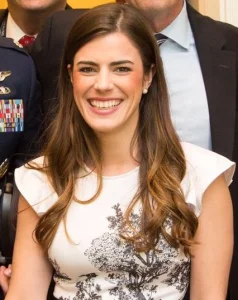
Only the best people

Madeleine Westerhout

The story of Madeleine Westerhout, the 28-year-old aide to President Trump who was fired for sharing nasty gossip about the Trump family after having a few drinks with reporters, is fascinating (the original Politico story is here; some background from The New York Times is here).

Westerhout reportedly despised Trump so much that she burst into tears the night he was elected. Yet she went to work for him, brought into the White House by former chief of staff Reince Priebus despite an exceedingly thin résumé. She grasped for more power. And she showed no loyalty to the president whatsoever.

These are the kinds of people Trump surrounds himself with, because no one with integrity will have anything to do with him.

It would be interesting to learn how her off-the-record remarks became public. Daniel Lippman of Politico, who broke the story, wasn’t there, so he’s in the clear. Trump ally Arthur Schwartz, he of the media attack squad, has pointed the finger at Philip Rucker of The Washington Post, who was there. His editor issued a statement vouching for Rucker’s integrity without quite denying that Rucker was the source. Rucker has not written about the incident.

Most likely we’re not going to get to the bottom of this.

Talk about this post on Facebook.

Outrage fades quickly over Trump fanboy’s campaign to embarrass the media

Meet the press. 2019 White House photo.

Previously published at WGBHNews.org.

We’ve become accustomed to Trump outrages that seem OMG in the moment only to fade quickly into obscurity — replaced, as such things inevitably are, by the next insult, outburst or tweet. But even by those standards, a New York Times story reporting that Republican operatives with White House ties were seeking to embarrass President Trump’s adversaries in the media had an unusually short half-life.

Yes, there were stern condemnations from the usual suspects. Times publisher A.G. Sulzberger posted a memo to the staff calling it “an unprecedented campaign,” saying of the operatives: “Their goal is to silence critics and undermine the public’s faith in independent journalism.” A CNN spokesman said that when government officials and their allies “threaten and retaliate against reporters as a means of suppression, it’s a clear abandonment of democracy for something very dangerous.”

Others, though, were less impressed with this latest so-called threat to the First Amendment. Will Sommer of The Daily Beast tweeted, “This piece sure makes a big deal about a couple of guys using Twitter Advanced Search.”

CNN’s Oliver Darcy wrote that another Daily Beast reporter, Maxwell Tani, had actually revealed the existence of the campaign, and of Trump fanboy Arthur Schwartz’s involvement, many months ago. And Jack Shafer of Politico saw no problem with digging up social-media dirt on journalists, citing similar efforts by watchdog groups such as Media Matters for America on the left and, many years earlier, Accuracy in Media on the right.

“As much as I would like to sympathize with my fellow journalists,” Shafer wrote, “it doesn’t strike me as unreasonable to ask them to own or repudiate vile or impolitic things they might have stated in the past. Nor is it remotely unfair for the president’s supporters to demand that journalists, who are forever denouncing him as a racist (because he is), be held accountable for their bigoted speech, on Twitter or anywhere else.”

Here’s the background according to the Times story, reported by Kenneth P. Vogel and Jeremy W. Peters. Schwartz, an ally of Donald Trump Jr. and former Trump-whisperer Steve Bannon, has reportedly gathered material on journalists at several news organizations perceived to be hostile to the president, including the Times, The Washington Post, and CNN. The fruits of Schwartz’s labors were on display recently when a Times editor named Tom Wright-Piersanti was forced to apologize after Breitbart reported that he had posted anti-Semitic tweets many years earlier.

The Breitbart hit, in turn, was supposedly in retaliation for a Times story on the checkered past of Trump’s new press secretary, Stephanie Grisham, who reportedly has a history of unethical workplace behavior as well as two drunken-driving arrests.

“If the @nytimes thinks this settles the matter we can expose a few of their other bigots,” Schwartz tweeted after the Breitbart story on Wright-Piersanti was published. “Lots more where this came from.”

What’s fair is fair? Not quite. There are, in fact, some troubling aspects to all this. Unlike Shafer’s examples, Media Matters and Accuracy in Media, Schwartz’s shop has ties to the White House. It’s not entirely clear how close those ties are, but they’re close enough that we ought to be concerned. The First Amendment, after all, was designed to protect the press so it could monitor the powerful, not protect the powerful so they can monitor the press.

Moreover, we expect our leaders and the people who work for them to meet certain basic moral and ethical standards, or at least we used to. Journalists, on the other hand, are judged by their work. If what they report is true and fair, then it should be irrelevant whether they drink to excess, jaywalk, or posted embarrassing and offensive tweets years ago.

Tom Jones put it this way in The Poynter Report: “Yes, absolutely, the media should be held accountable, too. But stories published or aired by reputable news organizations stand up to scrutiny through the use of facts, sources and citations. Because this [Schwartz’s] operation can’t discredit such stories, the next best thing to do is discredit the journalists and outlets by combing through tweets and Facebook and Instagram posts from years gone by.”

As attacks on the media go, this is fairly small. It’s not as serious as calling news organizations “Enemies of the People,” or banning reporters from the White House, or putting the safety of journalists at risk by whipping up angry mobs at Trump rallies.

But it erodes the norms of democracy around the edges, contributing to Trump’s meta-narrative that the press is just another partisan player that his devoted followers need not take seriously.

Talk about this post on Facebook.

The Guild’s response to Boston Globe management

Management’s statement.

And here is the NewsGuild’s response to Boston Globe management. I have redacted the names.

Dear members

You may have seen the company’s email regarding the status of our contraction negotiations.

Here’s what’s really been happening:

The Guild asked the company to start negotiations in Sept. 2018. Company officials did not make themselves available until December 6.

On that day the company, represented by Trish Dunn of Jones Day, presented us with a proposal that would, among many, many problematic things:

  1. Give the company the ability to outsource our jobs.
  2. Eliminate overtime for most members.
  3. Strip us of seniority in layoffs.
  4. Remove wage steps that guarantee annual pay increases for employees who otherwise would receive no raises unless their managers agreed to them.
  5. Take away our ability to defend ourselves against abuses.
  6. Take away our ability to fight back if the company denies an employee’s claim of harassment against a supervisor.
  7. Remove the clause in our current contract that would require any future owner from honoring the bargaining agreement.
  8. Weaken, if not cut entirely, language in our contract that calls on the Globe to recruit and promote women and minorities.
  9. Slash our severance.

What would we get in return? Two percent annual wage increases for two years and a 401k match increase of 3 percent that came with a huge draw-back.

The company proposed language that would allow it to reduce and even eliminate the match without having to negotiate with the Guild, which it must do under our current contract.

Yes, the company has proposed changes to healthcare that would reduce costs for some members. But according to the Guild’s calculations, the changes would significantly increase healthcare costs for many of our other members, a fact we have reminded the company of repeatedly at the table.

The company wanted us to agree to this lopsided deal within two months. Then, when their deadline passed, the Globe withdrew its previous proposal and replaced it with one that would still cut our rights under the current contract but without any increases to our wages or 401k match.

As for the ten-week family leave we now have, the company seems to have forgotten that it was Guild members who proposed this to management in 2017 and had to prod the company for 18 months before it would join the ranks of other news organizations and provide a decent family leave package. This finally happened at the negotiation table after the Guild agreed to give up some of its sick days.

Since December, the Guild has continued to meet and schedule new dates for negotiations at a steady pace. The Guild has made proposals and movement, while the company has barely budged off of any of the major concessions it has demanded. These actions are in large part why the Guild has been compelled to file a bad faith bargaining charge against the Globe for violating the National Labor Relations Act.

In its email, the company accused us of failing to schedule enough meetings and abruptly canceling on Tuesday.

This requires some context. The company was unable to meet for a three-week stretch in July because one person on its seven-member team was on vacation. And at the most recent negotiating meeting, the company did not make a single proposal, saying it had nothing for us, even though the company owed us responses on several proposals.

The Guild did cancel one bargaining session, the first such cancellation during eight months of negotiations, because the Guild’s president, Scott Steeves, a critical member of our bargaining team, had to fill in for his manager, who has recently left the company and  has yet to be replaced.

The Guild’s negotiating team did meet on its own this week to draft more proposals and responses that will be provided to the company at the next bargaining session in September. The company knows this.

We’ve asked the company repeatedly to explain how provisions in the current contract are an impediment — financial or otherwise — to the Globe’s sustainability and growth. We are repeatedly met with the same vague response: “We want to be more flexible and nimble.”

Well, that’s not good enough. It’s not good enough for employees who have tirelessly worked for this company even as it made monumental mistakes that threatened the health and future of the Globe. We were there for the company when its short-sighted decision to switch newspaper delivery vendors failed spectacularly and we were there for the company when the faulty printing machines it purchased led to delays in putting out the paper.

And we were there for the company even when our lives were threatened by a heavily armed man in California.

We’re not asking for much in return. But the company is demanding too much of people who have still not recovered from the drastic wage cuts the New York Times imposed in 2009.

We hope this helps set the record straight. We invite you to approach our team with questions or comments. Your feedback is critical to us.

And if you’d like to share your thoughts with the company’s negotiating team, here are their names and contact information:

In Solidarity,

The Guild Bargaining Committee

Talk about this post on Facebook.

Globe management’s latest statement on negotiations with the NewsGuild

The Guild’s response.

Boston Globe executives sent a memo of more than 1,300 words to the staff last Friday giving them their side of the ongoing negotiations between the paper and the NewsGuild, formerly known as the Newspaper Guild. A trusted source sent it along earlier this morning, and I’m posting the full text below.

The email comes several weeks after the Guild filed a complaint with the National Labor Relations Board claiming unfair labor practices “given the slow pace of contract negotiations and the insulting strong-arm tactics used by the company’s lawyers.” The union staged a brief walkout as well. Interestingly, management now claims that it’s the union that’s dragging its feet.

Given that the Globe claims to have achieved profitability at the end of 2018, it strikes me as fair to ask why staff members, who’ve sacrificed in order to improve the Globe’s bottom line, shouldn’t share in that success. In the memo, management replies that those profits will disappear if costs aren’t kept under control.

“As we communicated in our 2018 year-end note to staff,” the email says, “we ended the year in the black precisely because we aggressively targeted savings across many facets of our business and carefully managed expenses to stay ahead of the structural declines we continue to see in our industry, including continued circulation and revenue declines. Most of that expense reduction has come from our production side, and it is not sustainable to continue significant cuts to the operations and staff that print, assemble and distribute the Globe every day. Rather, we must continue our vigilance in looking for efficiencies and identifying areas of real and sustainable growth in our editorial and commercial departments as well, just as all media companies are doing in today’s world to remain viable and relevant.”

The full text of the memo follows:

Dear Colleagues,

In an effort to keep you apprised of our negotiations with the Guild, we want to share an update on the current status of the negotiations after 19 bargaining sessions over eight months.

As we noted back in January, we provided the Guild’s bargaining committee with two complete contract proposals for consideration on December 6, 2018 — our first bargaining session. The first was a traditional proposal without any economics embedded, but with important operational and cleanup changes. The other was called a conditional alternative proposal, which included the same important operational and cleanup changes, but also included guaranteed annual wage increases of 2% for everyone, a 3% increase in the current 2% 401k company match, and 10 weeks of paid parental leave. The alternative proposal would have added up to 5% annually to employees’ compensation through wage increases and an increased 401k match. This alternative proposal was contingent on getting the contract settled quickly in early 2019.

The proposed 2% annual wage increases in the alternative proposal were in line with, or exceeded, annual increases at other major newspaper companies. The proposed 5% 401k match exceeded the match that most other major newspaper companies offer. The Guild rejected both, ending the possibility of an early 2019 contract settlement. At that time, we made it clear to the Guild that the Globe would not be willing to make any wage and benefit increases later agreed upon retroactive to January 1.

The one exception to that was paid parental leave. In its December 2018 proposals, the Globe offered, and the Guild accepted, 10 weeks of paid parental leave on the same terms as non-represented employees. In January, the Globe moved ahead with providing all of its employees with up to 10 weeks of paid parental leave.

The Globe has also put forth proposals to:

  • Continue providing employees with generous paid time off for vacations, sick leave and holidays — up to 47 paid days off a year, in excess of most other large city newspaper companies. Those 47 days are in addition to paid bereavement leave or short-term disability benefits, which the Globe also provides.
  • Provide the same health insurance benefits that it provides to its managers and other non-union employees, with a progressive premium cost-sharing arrangement that would allow lower paid employees to pay just 17% of the premiums and higher paid employees to pay 25%-30% of the premiums. The Globe’s proposed premium shares are, in most instances, lower than what other major newspaper companies require employees to contribute to their premiums. And, they compare favorably to national averages where employees pay about 29% of the premiums for family coverage and 18% of the premiums for single coverage (according to the Kaiser Family Foundation Survey of Employer Health Benefits).

Together, the Globe and the Guild have made progress in negotiations. We achieved tentative agreements on four full articles within the contract — including union security and dues check off that protect the Guild — and more than fifty tentative agreements on subsections, including those relating to:

  • Grievance rights
  • Grievance procedures
  • Protection of grievants
  • Parental leave
  • Sick leave
  • Union security
  • Union leave
  • Anti-discrimination
  • Diversity commitment
  • Career development and training
  • Labor Management Committee
  • Joint Committee on Workplace Equity and Diversity
  • Work week
  • Vacation pay
  • Reduced work week policy
  • Part-time employees’ sick leave
  • Part-time employees’ vacation
  • Dangerous conditions policy

The Globe has consistently tried to schedule regular meetings to bargain the contract. On Tuesday, the Guild committee cancelled this week’s bargaining session — a session that had been on the books since June 6. Moreover, they have been refusing to book regular bargaining dates through the rest of the year and has made its committee available only one or two dates each month, even though the Globe’s negotiators have requested to meet weekly. In fact, in our August 9th session, the Guild’s chief negotiator told us at the table that the Guild committee has only one single date available in October and has “nothing else to offer” for bargaining in October. The result: the Guild committee is available just three days for on-the-record bargaining between now and the end of October, after cancelling this week’s session.

We all share the common big picture goal of strengthening our newsroom and company for the challenges and opportunities we face in an ever-changing media industry. In the past few years we have undertaken a lot of new initiatives, made big investments for the long term sustainability, and went through all of our costs to be as efficient and focused as possible on fulfilling our mission. This hard work and patient endurance of a lot of change by each of us worked, with the company having revenues exceed expenses for the first time in 2018 after many, many years of operating at a loss. This is a major step towards the long-term sustainability of this institution that we are all striving for. However, we are not fully there. This step was a result of cost control, not revenue growth. We are working on new revenue generation opportunities and we need to be creative, nimble, and efficient to get there. No small part of the work we need to do is to ensure our collective bargaining contracts are structured in a way that both allows us to operate in this kind of a nimble, flexible way and provides the kinds of protections and security that the Guild is seeking.

To that end, as we have told the Guild leadership, our primary goal has not changed: modernizing our labor contract to match the realities of our business and to more closely mirror the terms of our peers in the media industry so that we can remain operationally flexible and competitive. The changes sought by the company have been accepted by unions, including the Guild, in other newsrooms in Boston and across the country. In addition, we continue to seek in negotiations to eliminate provisions in the contract that impede our commitment to diversity as the use of seniority in layoffs does; to treat our professional staff as professionals by providing strong total compensation packages, classifying employees appropriately and in alignment with others in our industry; and to have policies in place that reflect our support of working parents at BGMP [Boston Globe Media Partners, the Globe’s owner of record]. We’ve made concrete proposals to address the Guild’s concerns about our proposal to eliminate overtime for creative professionals. Keeping in perspective that most unit employees work no overtime, our proposals provide for comp time and premium pay when employees are required to work on their days off and make a commitment to adjust the salaries of some staff members who are consistently called upon to work longer hours.

To achieve these goals, Globe management is committed to continuing to bargain in good faith to reach an agreement that will allow the company to remain focused on the important work with which our community and region have entrusted us. We have and will always respect all bargaining units across our organization as we continue to drive the kind of transformation required to be a dynamic media company with a sustainable future for all our employees.

As we communicated in our 2018 year-end note to staff, we ended the year in the black precisely because we aggressively targeted savings across many facets of our business and carefully managed expenses to stay ahead of the structural declines we continue to see in our industry, including continued circulation and revenue declines. Most of that expense reduction has come from our production side, and it is not sustainable to continue significant cuts to the operations and staff that print, assemble and distribute the Globe every day. Rather, we must continue our vigilance in looking for efficiencies and identifying areas of real and sustainable growth in our editorial and commercial departments as well, just as all media companies are doing in today’s world to remain viable and relevant.

We will continue to be transparent as we proceed, just as we will continue to push for the ability to be nimble and flexible as an organization given the pace of change in our industry. We look forward to continuing to discuss these important proposals with the Guild.

Thank you,

The Globe’s Bargaining Committee

Talk about this post on Facebook.


Thunder on the left: The New York Times gets an earful from its most loyal readers

Photo (cc) 2009 by Dan Kennedy

Previously published at WGBHNews.org.

It has been an extraordinary few weeks for The New York Times.

From an outcry over a headline that blandly reported President Trump’s denunciation of racism in El Paso without acknowledging his own history of racist comments, to the demotion of an editor for several racially clueless tweets, to a fraught meeting with the staff called by executive editor Dean Baquet, the Times has found itself in an unaccustomed position: under fire from its core audience of liberal readers.

In sifting through Baquet’s remarks as well as those of the Times’ critics and defenders, it strikes me that the dispute is over two conflicting views of journalism’s role in covering a uniquely awful and dangerous presidency. The two sides are talking past each other, in large measure because much of what they say sounds similar. That is, they are on parallel tracks that never quite meet.

The Baquet side is that the Times is aggressively covering a terrible president, and is now in the midst of shifting from the Russia investigation to race. In this view, the coverage has been relentlessly harsh and negative (and accurate) but based on traditional journalistic values such as the respect accorded any president and the reality that Trump’s supporters need to be understood and explained.

“Our role is not to be the leader of the resistance,” Baquet said at the town hall meeting. In fact, that’s pretty much the same view expressed by Washington Post executive editor Marty Baron when he said, “We’re not at war with the administration, we’re at work.” Like many other observers, I give the Post higher marks than the Times in not normalizing this most abnormal of presidents. But, fundamentally, Baquet and Baron are on the same page.

The critics’ view is that even tough-minded accountability journalism is not enough for a president who regularly expresses racist opinions and enacts racist policies, who gladly accepted foreign intervention in the 2016 election, and who is undermining democratic norms through his lies, his attacks on the media, and his false claims that the electoral system is rigged against him.

As Ashley Feinberg put it in Slate, “the problem for the Times is not whether it can navigate social-media controversies or satisfy an appetite for #resistance-based outrage, both of which it can tell itself are not a newspaper’s job to do. It’s whether it has the tools to make sense of the world. On this point, Baquet was not reassuring or convincing.”

Liberal criticism of the Times may have reached the point of absurdity with Sunday’s unsparing profile of Stephen Miller, the architect of Trump’s thuggish anti-immigration policies. The headline in the print edition, “Shift Against Immigration Lifted a Young Firebrand,” drew howls from the left for not clearly labeling Miller a racist. The comedian Frank Conniff tweeted: “NY Times today called Stephen Miller a ‘young firebrand.’ Also once described Norman Bates as the ‘reclusive iconoclast of the hospitality industry.’”

In fact, the headline wasn’t nearly as bad as the one from El Paso that caused such an uproar earlier this month: “Trump Urges Unity Vs. Racism.” And, as with that first headline, the digital version was better, if more neutral than Trump critics might like: “How Stephen Miller Seized the Moment to Battle Immigration.” Besides, the story, by Jason DeParle, was first-rate.

The real issue over the two headlines may be the declining importance of the print product as well as the difficulty of writing good headlines in small spaces. As Baron once said, “ I mean newspaper headlines are terrible, right? They all have to be constrained within column sizes, so if you have a one-column head it’s all headline-ese. People don’t speak in headline-ese.”

There are larger forces at work in the liberal critique of the Times as well. As New York University journalism professor Jay Rosen observes, the Times, like all newspapers, is far more dependent on revenues from its readers as it shifts its business model from advertising to digital subscriptions. And many of those customers have taken to social media to let the Times know it when they don’t like what they see.

More to the point, the Times may very well have gotten Trump elected because of its obsession with Hillary Clinton’s use of a private email server for official business. The Times’ coverage of the email story reached its ludicrous apogee with an over-the-top front page after then-FBI Director James Comey announced he had reopened the investigation just before the election — a blow from which her campaign did not recover, even after Comey said “never mind” a week later.

In Rosen’s view, the Times’ coverage of Clinton amounts almost to an original sin, and the paper has never come to terms with its readers — who, he writes, “are appalled by Trump and want to see his dark sides further exposed. They want the Times to be tougher on his supporters and more relentless in calling out his lying, his racism, his misogyny, his xenophobia. They want Times journalists to see what they see — an assault on democratic institutions — and to act accordingly. And they want a reckoning with the coverage of Hillary Clinton in 2016 because they know that somehow this is in the way of all other things.”

Of course, the reason that the Times has come under fire from liberals is that they see it as their paper. Whatever criticisms they give voice to are mild compared to the vitriol from the right — as we’ve experienced in recent days with the reaction of Newt Gingrich and others to the Times’ 1619 Project, marking the 400th anniversary of slavery in what became the United States. The 1619 Project promises to be a landmark achievement for the Times, which makes it all the more appalling that right-wing critics would rather defend white supremacy than come to terms with slavery’s legacy.

As Baquet said during the meeting with his staff, “Look, we are scrutinized. I ran another newspaper [the Los Angeles Times]. I’ve never seen anything like this. We are scrutinized more than any other news organization in the country, in the world probably. To be frank, some of that comes with being the biggest and, I would argue, the best. And as hard as it is to do this, I think we have to accept it.”

Baquet is right. As good as The Washington Post and The Wall Street Journal are, the Times is still our best, most comprehensive general-interest newspaper. It is far from perfect. I’m still angry about the way it covered the run-up to the war in Iraq, the Whitewater non-scandal, and, yes, the 2016 campaign. If you’d like to go back a century, Walter Lippmann wrote that it blew the Russian Revolution and its aftermath as well.

But the Times’ journalistic values — offering a tough but straight report on what its editors have judged to be the most important news of the day — are always going to clash with the wishes of some of its audience to see their opinions and beliefs affirmed rather than challenged.

The Times has gone too far in normalizing Trump and Trumpism, and it often falls short on tone and emphasis. But you know what? We can adjust for that. It’s worth it.

Talk about this post on Facebook.