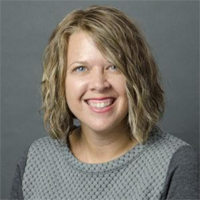
Jonathan Dotan on deep fakes, blockchain technology and the promise of Web3

Jonathan Dotan

The new “What Works” podcast features Jonathan Dotan, founding director of The Starling Lab for Data Integrity at Stanford University. The lab focuses on tools to help historians, legal experts and journalists protect images, text and other data from bad actors who want to manipulate that data to create deep fakes or expunge it altogether.

He has founded and led a number of digital startups, he worked at the Motion Picture Association of America, and he was a writer and producer for the HBO series “Silicon Valley.” While he was working on “Silicon Valley,” a character invented a new technology that got him thinking: What if everyday users could keep hold of their own data without having to store it in a cloud, where it is open to hackers or the government or other bad actors? That, at least in part, is what blockchain technology is all about, and it’s a subject about which Dotan has become a leading expert.

Dotan also shares a link to a valuable resource for anyone who wants to gain a deeper understanding of Web3.

I’ve got a rare rave for Gannett, which is rethinking the way its papers cover police and public safety. And Ellen Clegg unpacks a recent survey about violent attacks against broadcast reporters.

You can listen to our conversation here and subscribe through your favorite podcast app.

A New York Times editor will take charge of the Globe’s opinion section

The day after The Boston Globe was named a Pulitzer finalist in editorial writing, the paper has announced that it’s hired a new editorial page editor — James Dao, a senior editor at The New York Times. The announcement, reported in the Globe this afternoon, was made by chief executive Linda Henry.

Dao replaces Bina Venkataraman, who stepped down several months ago and is now a Globe editor at large. Venkataraman was involved in the launch of The Emancipator, the racial-justice website the Globe publishes jointly with Boston University.

I don’t know much about Dao except that, according to the Globe, he had a role in the Times’ decision to publish an op-ed piece by Sen. Tom Cotton in 2020 arguing that military force should be used against violent Black Lives Matter protesters. The episode led to the departure of editorial page editor James Bennet after it was revealed he had not read the Cotton op-ed before it was published. Dao stepped down as deputy opinion editor and took a high-ranking editing job in the newsroom.

Also of significance is that Dao is 64. I’m not saying that’s old (hey, he’s younger than I am), but he’s at an age where he probably wouldn’t be seeking to settle in for a lengthy stint. Perhaps Henry is hoping that he’ll identify and mentor a possible replacement. Henry’s full statement, forwarded to me by a trusted source, follows.

Hi team,

I am thrilled to announce that James Dao will be the Globe’s next editorial page editor, effective on July 5.

Jim brings great perspective to the Globe from his vast leadership experience across three decades and multiple news desks at The New York Times. Most recently, as the Metro editor, he oversaw coverage of one of the most consequential mayoral races in New York City’s history while leading a team of over 60 journalists in covering the ongoing challenges of the pandemic on the nation’s largest city. Previously, he oversaw the paper’s Op-Ed section and has served roles in leadership and in the trenches as an editor on the National desk, as the Times’s Albany bureau chief, a Washington correspondent, national correspondent and military affairs writer.

He is an award-winning journalist and has a passion for pushing the envelope on multimedia storytelling, an area in which we too, are deeply investing in as we aim to reach new audiences and amplify our powerful journalism in new media. Jim’s 2011 multimedia series, “A Year at War,” about the yearlong deployment of an Army battalion in Afghanistan, won numerous awards — including an Emmy — and he also was executive producer on the Netflix documentary, “Father Solider [sic] Son,” which was based on the life of an Amy sergeant first profiled in his series.

I’ve had the great honor of diving deep into conversation with Jim, and in that time, he has shared that his priorities in this role are bringing new approaches — from newsletters to podcasts — to an already outstanding opinion report. He plans for our editorial page to be at the forefront of sharing the groundbreaking ideas and innovation unfolding in our region, while continuing to hold our leaders accountable to the high standards that we expect.

As a proud Editorial Board member, I see first-hand the thoughtful dedication and passion our board has for the work that it does each day and the impact it has all across our region. In the last two years alone, Globe Opinion writers Alan Wirzbicki & Shelly Cohen and Abdallah Fayyad have been recognized as Pulitzer Prize finalists in Editorial Writing – truly remarkable accomplishments, and a testament to the talent and incredible contributions at all levels on this team.

I am grateful to Bina Venkataraman for her bold approach and leadership in this role over the last two years. Globe Opinion has grown and strengthened the editorial board, launched The Emancipator with BU, and has drawn national attention to further the impact of our content and voices. Thank you to the entire team for their commitment and patience while we conducted this thoughtful process to find the next leader who will steer Globe Opinion forward in new and exciting ways. Everyone stepped up, but I would like to particularly thank Marjorie Pritchard and Alan Wirzbicki for their leadership and extra effort to keep Opinion sharp and relevant.

Jim will now lead the charge in this exciting new chapter for the board, and we are so excited to have him get started in early July. He is copied on this note, so please join me in welcoming him to the Globe; he would welcome local bike route suggestions.

Thank you,

Linda
The Globe is named a Pulitzer finalist for editorials about post-Trump reforms

Photo (cc) 2021 by Brett Davis

A great editorial should persuade and effect change. But what if there is little or no chance that urgently needed reforms will be enacted? That was the challenge facing The Boston Globe editorial board last year when it published a series of essays arguing that the loopholes enabling Donald Trump’s corruption as president need to be closed so that nothing like it can happen again.

The editorials, by board member Abdallah Fayyad, were recognized Monday with a Pulitzer Prize finalist’s citation for “a persuasive editorial series arguing that the president of the United States could be prosecuted for crimes committed in office.” It was the closest that the Globe came to winning a 2022 Pulitzer. As Fayyad wrote:

Presidents in a democratic system of government are not meant to be able to extract personal profits from government service — or hand out pardons to imprisoned buddies, pervert justice, or foment an insurrection. That’s the promise of democracy: that it will be superior to these authoritarian tendencies of tyrants and kings. When these laws and norms are violated, they should be backed up by severe consequences if that democracy is to maintain its integrity. But right now, as it stands after Trump’s four years in office, American presidents can, in fact, commit all those abuses — and suffer little more than losing their Twitter account.

Nothing has changed. And given Trump’s continued vice grip on the Republican Party, which exercises effective veto power over any reform Congress might try to enact, nothing is going to change — at least not anytime soon.

Still, it’s worth laying down some markers. It was undeniably a good thing for a major journalistic institution like the Globe to explain why Trump was able to get away with all of it, and what it would take to prevent a future president (perhaps Trump himself) from engaging in the same kind of misconduct.

In the Globe’s own coverage of Monday’s announcement, Fayyad said: “It was surreal seeing my name up there on the broadcast alongside such great journalists. But I knew the project was deserving of this recognition because it wasn’t just my work; it took a whole team to make the series what it was — an amazing team at that.”

By the way, it looks like even the minor slap on the wrist Trump received by having his Twitter account canceled was only a temporary setback. Elon Musk, who’s poised to buy Twitter, said earlier today that he would allow the former president back onto the platform.

Gannett rethinks the public safety beat. Good. But keep an eye on the bottom line.

Photo (cc) 2017 by Raymond Wambsgans

Whenever I write about Gannett, our largest newspaper chain, it’s usually because they’re cuttings staff and closing papers. At the same time, though, the company has been a leader in rethinking how we cover law enforcement, which has emerged as a vitally important issue in the Black Lives Matter era. We know what the problems are:

  • Until recently, it was routine practice at many news outlets, especially smaller ones, simply to run stuff from the police log and from press releases issued by law enforcement without doing any actual reporting. The idea was that it’s a public record, so let’s get it out there.
  • A lack of follow-up: If charges were dropped or a suspect was acquitted, that often didn’t get reported.
  • Now that everything is digital, it’s very easy to Google someone applying for a job or whatever and find that they’d been arrested for something. Given that Black men, in particular, are disproportionately charged with crimes, it had the racist effect of denying opportunities to people of color.

So what is Gannett doing? As part of the Knight-Lenfest Newsroom Initiative, the chain has come up with a Public Safety Mission Statement that tries to get at some of these issues. Four Gannett journalists recently wrote up what they’ve been doing in an essay for the American Press Association’s Better News website. Here are some of the ideas they offered:

  • Gannett newspapers have stopped running mug shots, including mug-shot galleries, “recognizing instead that law enforcement pick and choose the crimes they announce and the mug shots they release, capturing people on their worst days in their worst moments, often in situations that may not reflect the full story.”
  • At the Rochester Democrat and Chronicle in upstate New York, reporters stopped rewriting routine police press releases and are trying to include community voices in public safety stories.
  • At The News Journal in Wilmington, Delaware, the staff is producing deeper stories on crime and policing that have led to more readers and new subscriptions. Examples of such stories include reporting on how a community was affected by a police standoff and how secrecy on the part of law enforcement prevents news outlets from reporting on allegations of excessive force.

These are all positive steps, and they follow earlier Gannett initiatives, such as making it possible for people to request that negative stories about them be removed from Google search. A number of other news outlets, including The Boston Globe, followed with similar programs.

This being Gannett, though, we should regard these initiatives with at least some degree of skepticism. Given the ongoing shrinkage of staff, it’s become increasingly difficult for the chain’s newspapers and websites to keep up with goings-on in muncipal government, public schools and public safety. Moving away from day-to-day police coverage and weighing in with an occasional piece that takes a look at broader issues may be good journalism — but it might be a money-saver as well. I say that not just theoretically but as the reader of a Gannett weekly (soon to be merged with another weekly) whose only full-time reporter is being moved to a regional beat.

So kudos to Gannett. But let’s keep an eye on what this looks like moving forward.

Why the pending destruction of Roe is a failure of our outmoded Constitution

Constitution Hall in Philadelphia. Photo (cc) 2016 by Dan Kennedy.

With the Supreme Court on the brink of overturning Roe v. Wade, it’s a good opportunity to remind ourselves of the extent to which our democracy has lurched off the rails.

Three of the five anti-Roe justices — Neil Gorsuch, Brett Kavanaugh and Amy Coney Barrett — were nominated by a president who lost the popular vote and were confirmed by senators who represented far fewer Americans than those who voted against confirmation. Gorsuch occupies the stolen seat that should have gone to Merrick Garland. Barrett was rushed through at the last minute following the death of Ruth Bader Ginsburg.

This is not democracy. A few years ago, I laid it out at GBH News — and addressed the falsehood you’ll often hear that our system was designed to protect minority rights from majority rule. (The Bill of Rights is what protects the minority.) I hope you’ll give it a read. We are long overdue for a thorough-going update to our 18th-century constitution, which, quite simply, no longer works.

The New York Times is about to kill off its Today’s Paper web app

Some will mourn. Most probably didn’t even know it existed.

The New York Times is sunsetting its Today’s Paper web app on May 16. A simple listing of every story in that day’s Times, with a minimum of distractions, the app — which works on computers and tablets, but not on phones — has been a solid platform for readers who like to view the paper as it was published that day without a steady stream of updates and extra, non-print content.

I use it occasionally, but it’s been obvious for a while that no development resources were being put into it. The app looks pretty much the same (OK, exactly the same) as it did when it was unveiled in late 2013. The photos are muddy, too. There are better ways to access a listing of today’s Times — here’s one way, and there’s a section in the tablet and mobile apps as well. (There’s also a really bad replica edition that’s almost impossible to access.)

Here’s part of what Dante D’Orazio wrote at The Verge when the Today’s Paper app made its debut:

The web app seems designed for readers who appreciate the benefits offered by digital but miss the experience of reading a definitive daily edition. By limiting itself to content that’s selected to go into the paper each day, Today’s Paper should appeal to those who feel a bit overwhelmed by the full breadth of The New York Times‘ reporting. And for purists of the print edition, the app brings the Times‘ true sections, like the once-weekly “Sunday Styles” and “Science Times,” to the fore (the paper’s website and traditional apps are split into many generic sections). As a nice touch, users are presented with an image of each day’s print edition when they open the app, and select one to download for offline reading. Each section, meanwhile, offers a small glimpse at what the print layout looks like.

I believe there’s great value in offering that day’s paper, fixed in time. The Boston Globe offers two — count ’em! — replica editions, one accessible from the website and one as a standalone app. I’d give both of them a B-plus; they’d get a higher grade if you got a better view when you tapped on a story to read it. The Globe’s got a Today’s Paper listing on its website as well, but I never use it because it’s always missing things, like corrections.

The best Today’s Paper replica edition is offered by The Washington Post on its mobile and tablet apps — it’s smooth, and when you tap on a story, it opens up into a beautifully rendered article with photos. I wish every paper would do something like it.

The Boston Herald unveils a subtle print redesign

The print edition of the Boston Herald has been redesigned. It seems pretty subtle. The only difference I can detect on the front is that the headline type is blockier.

Executive editor Joe Dwinell calls it a “sharper look” that offers “a much richer reading experience.”

Some of the headlines now appear in italics.

The news section looks cleaner. Staff reporters have their email addresses listed.

The Herald’s last full redesign, as I recall, came in 1998. The paper was remade to look like a tabloid version of USA Today, and it was beautifully done. Over the next few years, as circulation began to slide, the paper was tarted up. I don’t know if I’d call this a complete redesign, but it appears to be an improvement.

Poynter’s local media watcher, Kristen Hare, talks about what’s new and what’s next

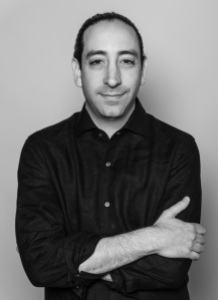
Kristen Hare

Kristen Hare is a journalist, media watcher and faculty member at the Poynter Institute in Florida. Hare not only documents trends in our beleaguered industry, but she also teaches local journalists the critical skills they need to cover their communities effectively. Before joining Poynter’s faculty, she spent eight years covering local news for Poynter’s website. In addition to all of this, she also spent two years with the Peace Corps in Guyana, in South America.

At Poynter, she writes a weekly newsletter about local news called Local Edition. She’s also got experience in a number of local newsrooms. She has reported for the St. Louis Beacon and the St. Joseph News-Press in Missouri, and she still keeps her hand in by writing feature obituaries for the Tampa Bay Times, which is owned by Poynter in a for-profit/nonprofit partnership.

I’ve got a Quick Take on a tax credit for news subscribers in Canada, which apparently isn’t working all that well. Maybe it’s something in the permafrost. My co-host, Ellen Clegg, looks at a fight for control at the Chicago Reader, a 50-year-old alternative paper.

You can listen to our conversation here and subscribe through your favorite podcast app.

Politico’s extraordinary scoop on the end of Roe signals dark days ahead

Photo (cc) 2014 by Thomas Hawk

A few words about the extraordinary scoop broken Monday evening by Politico that the U.S. Supreme Court has put together a draft opinion overturning Roe v. Wade, thus freeing states to ban abortion.

First, we all make fun of Politico. I make fun of Politico. It succeeded by taking the horse-race approach to politics and amping it up on steroids, which hasn’t been good for anyone. But Politico is a large news organization with many talented journalists, most definitely including Josh Gerstein and Alexander Ward, who broke the Roe story. It is possible to both generalize about Politico’s shortcomings and praise it when it produces extraordinary work.

Second, Brian Stelter, writing for CNN’s “Reliable Sources” newsletter, flagged a tweet from SCOTUSblog that is worth pondering: “It’s impossible to overstate the earthquake this will cause inside the Court, in terms of the destruction of trust among the Justices and staff. This leak is the gravest, most unforgivable sin.

Good. If the right-wing majority is going to turn back the clock on reproductive rights by 50 years, then let the entire court descend into scorpions in a bottle. The interests of society as a whole may be better served by the spectacle of a court in chaos. We all need to understand that this is now a rogue institution, undone by Donald Trump’s illegitimate choices of Neil Gorsuch, who holds the seat that should have gone to Merrick Garland, and Amy Coney Barrett, rushed through at the last minute.

Third, the draft decision cites the 1896 Plessy v. Ferguson as a case whose outcome was so egregiously wrong that it had to be overturned in its entirety. Plessy failed to recognize the rights of Black Americans under the 14th Amendment and was in fact reversed in Brown v. Board of Education 58 years later. The decision to overturn Roe, though, is more like Plessy than Brown in that it takes away long-established constitutional rights.

Historian Heather Cox Richardson compares the draft opinion to the infamous Dred Scott decision, the 1857 Supreme Court case that took away what few rights Black Americans had at that time and paved the way for the Civil War. She writes in her newsletter:

And so here we are. A minority, placed in control of the U.S. Supreme Court by a president who received a minority of the popular vote and then, when he lost reelection, tried to overturn our democracy, is explicitly taking away a constitutional right that has been protected for fifty years. Its attack on federal protection of civil rights applies not just to abortion, but to all the protections put in place since World War II: the right to use birth control, marry whomever you wish, live in desegregated spaces, and so on.

The decision isn’t final yet, but I don’t see how we can expect it to change. This is a dark day in American history — the latest in many dark days. God help us all.

The Times’ Tucker Carlson series is a triumph of explanatory journalism

Tucker Carlson. Photo (cc) 2020 by Gage Skidmore.

Yes, I read The New York Times’ massive deep dive into Tucker Carlson, whose Fox News program was dubbed — accurately — as “what may be the most racist show in the history of cable news.”

Something as lengthy and detailed as this defies summary. If you don’t have the time or the inclination to slog through the whole thing, the “key takeaways” sidebar is quite good. I also recommend that you interact with the digital version of part three, in which you’ll hear Carlson’s own words, taken from more than 1,100 episodes.

Times reporter Nicholas Confessore has done a remarkable job of combing through Carlson’s past and present in an attempt to explain his rise from stylish but obscure magazine writer and failed television host to the most powerful force in cable. And Confessore offers partial answers, at least, to some aspects of the Carlson phenomenon. For instance:

Did Carlson change? Or has he always been this way and we just didn’t see it? Several years ago I wrote a piece for GBH News in which I recounted my own long-ago experience with Carlson, who came across as a charming raconteur with mainstream conservative-libertarian views.

Confessore’s answer, I think, is that Carlson really did change, although the seeds of his transformation were always there. His childhood sounds like it was truly miserable. And, in looking back, I have to say that my only personal experience with him was in how he interacted with a fellow white man. It doesn’t sound like he’s spent much time at all with people of color.

Does he really believe the terrible things he says? Or is it all an act? This comes up in conversation with friends and associates all the time — again, mainly because he seemed to be someone entirely different a generation ago. Confessore’s answer: it’s a little of both.

I thought Confessore was especially strong in his explanation of Carlson’s attempt to reinvent himself after his failed stints at CNN and MSNBC by launching The Daily Caller, a conservative news outlet that moved increasingly to the fringe right. Carlson comes across as someone who embraced extremism partly out of conviction and partly as a way to amuse himself. He does not seem like someone who ever gives much thought to the consequences of what he writes and says.

He is also portrayed as really, really wanting to make it in television, and he was probably willing to do just about anything to make his Fox gig a success. The late Fox impresario Roger Ailes reportedly once said that Fox was Carlson’s “last chance.” So Carlson’s shtick could be seen as a poisonous combination of his own flirtation with extremist ideas; delight at provoking the “elites” whom he hates; and desperate ambition.

What’s next? Would Carlson run for president? Confessore doesn’t get into that, even though he portrays Carlson as the logical successor to Trump — “Trumpism without Trump,” as he puts it. I don’t see why Carlson would take the next step given the riches and fame that have already come his way. But we don’t know whether he lusts for power, just as we didn’t know that Trump would aspire to authoritarian rule once he got past the novelty stage of what started out as a celebrity candidacy in 2015.

Confessore also does a good job of explaining how Fox has overcome the problems with advertisers that Carlson has experienced, and the role played by Lachlan Murdoch, who is far more ideological and extreme than his cynical, greed-crazed father, Rupert. The Times has produced a triumph of explanatory journalism.