Herald questions Globe over account of cab accident

In case you missed it, in part three of the Boston Globe’s Spotlight Team series on the Boston cab industry we learned that Globe staff member Bob Hohler got in an accident while driving a taxi in the course of his reporting:

Before his stint behind the wheel ends, the reporter will see what it means to be cheated by a taxi company and his ­passengers. And he will survive a harrowing crash — a ­not-uncommon occupational hazard — after a motorist runs a red light near Copley Square. The collision will send the reporter and his passengers to the hospital and destroy the taxicab.

Today the Boston Herald comes back with a front-page story by Matt Stout questioning the Globe’s account of the accident as well as Hohler’s hands-on reporting technique:

A Boston Globe reporter masquerading as a Hub taxi driver gave a disputed version of a two-car crash that sent him and his two passengers to the hospital in a front-page story yesterday that’s raising questions about liability and whether he misrepresented himself.

The Herald also quotes a statement from the Globe that appears to deny Hohler was under cover — it says Hohler identified himself to Boston Police and his passengers. It’s a little unclear, though, whether that was before or after the accident. [Update: The police knew ahead of time, but the cab company didn’t, though Hohler says he would have identified himself if asked.]*

Coincidentally, last week I had an opportunity to spend some time with New York University journalism professor Brooke Kroeger, who argues in her book “Undercover Reporting: The Truth about Deception” that such techniques have gotten an undeserved bad rap. Kroeger, among other things, is the biographer of Nelly Bly, the ultimate undercover reporter.

I am reasonably sure that John Carroll will weigh in on the latest Globe-Herald dust-up later today. Should make for interesting reading.

*More: Hohler talks about the experience in a Globe video.

Still more: John Carroll takes his first cut, but appears to be withholding his judgment for the time being.

More and more: Earlier today, I had the following Twitter exchange with the redoubtable Seth Mnookin:

https://twitter.com/dankennedy_nu/status/319415805542539264

Now Carroll has taken his second cut, and characterizes Mnookin and me as taking the position that the Herald’s reporting is “totally without merit.” In fact, I wouldn’t characterize it that way. I was agreeing with Mnookin as to why the Herald jumped into the fray, but I didn’t mean to imply that the tabloid was shooting nothing but blanks.

Essentially, I agree with Carroll: the Herald raised a legitimate question, but overplayed it, as is its wont.

Local journalism and the perils of retail chains

IMG_1095One of the arguments I make in “The Wired City” is that the viability of local journalism depends on the vibrancy of the local communities it serves. Among the projects I look at is The Batavian, a for-profit online-only news site that serves Genesee County in western New York, about halfway between Buffalo and Rochester.

The Batavian is a free site, though publisher Howard Owens is experimenting with a membership model to provide extra benefits to readers who choose to pay. But what really makes The Batavian work, and has allowed it to prosper despite co-existing with a local daily newspaper, is the persistence of locally owned businesses. The site is packed with ads from car dealers, florists, pizza shops, hair salons, doctors’ offices, funeral homes and much more.

So I was intrigued when Owens posted a story on Friday reporting that a Dick’s Sporting Goods may be moving in to a former Lowe’s location — and that more than $1 million in tax incentives may be used to make it happen. Dick’s, of course, is a large corporate-owned chain, and it would compete directly with locally owned sporting-goods dealers.

One of those local business people, Mike Barrett of Batavia Marine, compared such tax incentives to “using your own tax money to put yourself out of business.”

There are, of course, other considerations. WBTA Radio, which has a content-sharing arrangement with The Batavian, reports that Dick’s would bring 120 much-needed jobs to the area. The Batavian’s competition, the Daily News (which, citing an anonymous source, reports that it’s a done deal), quotes a local official named Gregory Post as saying, “Anytime we can convert empty space and bring in a retailer of that magnitude is good. This will be fantastic for our town.”

In the long run, though, the spread of corporate chains and big-box stores leads to the demise of locally owned businesses. That’s bad for communities and for the news organizations that serve them. Owens, a dedicated localist, gets it.

Photo (cc) 2009 by Dan Kennedy. Some rights reserved.

Tom Menino’s days of future past

Future_468x80

My one extended interview with Boston Mayor Tom Menino came in the summer of 1997 as part of a package I was doing for the Boston Phoenix on “The future of Boston.” (Check out Kristen Goodfriend’s enhancement of John Singleton Copley’s Paul Revere portrait.)

I remember showing up in Menino’s brightly lit City Hall office overlooking Faneuil Hall on a warm afternoon. Given his famed struggles with the English language, I found myself surprised and relieved at how articulate he was. Why, I asked myself, do people say this guy can’t talk?

Later, when I started to transcribe the tape, I realized I had a mess on my hands: without the mayor’s facial expressions and hand gestures, at least half the meaning was gone. Menino is a master of non-verbal communication, and here I was trying to cobble together a Q&A for print.

I did the best I could. As you’ll see, he said nothing particularly startling that day. He put forth some fairly bold ideas, and not all of them came to pass — expanding Copley Square to the edge of the Boston Public Library and remaking the Stalinesque City Hall Plaza, to name two.

“People get mad when I say this, but visionaries don’t accomplish anything,” Menino told me that day. “You have to have an idea of how you want to move the city forward.” Hmmm … isn’t that the definition of a visionary? Never mind.

Ex-Phoenician David Bernstein’s big Menino win

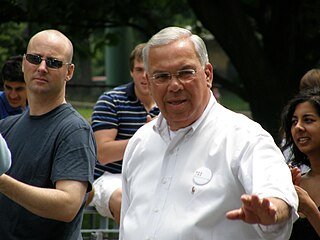
Tom Menino in 2008

My former Boston Phoenix colleague David Bernstein, now looking for work, scored a big win on Wednesday, reporting before anyone that Mayor Tom Menino would not seek re-election. With the Phoenix now history, Bernstein posted the news on his blog — first as rumor, later as confirmed fact.

Given that Menino gave major interviews Wednesday to the Boston Globe and the Boston Herald, it strikes me as exceedingly likely that a media embargo was in place — and I received additional, direct confirmation of that this morning. Which just goes to show the futility of embargoes in the Internet age. Good for Bernstein for operating outside the system, even if it’s not by his own choice. News organizations might consider rethinking their participation in such attempts at media manipulation.

Both the Globe and the Herald offer excellent coverage of the Menino era today. And how about Globe editor Brian McGrory jumping back into the fray by interviewing Menino and writing a column? McGrory was the Globe’s signature voice for years. Returning to the trenches for one day was a smart move.

More: Andrew Beaujon of Poynter has a nice Storify on how Bernstein’s scoop played out on Twitter.

Photo (cc) by Dan4th Nicholas and published under a Creative Commons license. Some rights reserved.

Tom Scholz loses libel case against Boston Herald

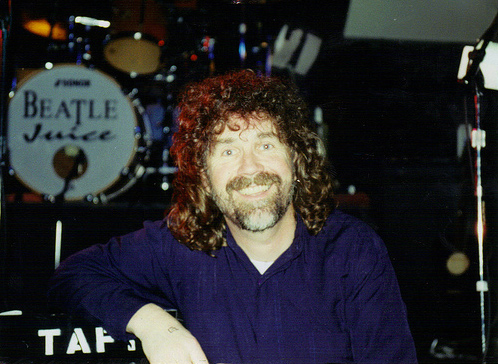
Brad Delp

Tom Scholz, founder of the band Boston, lost his libel suit against the Boston Herald on Wednesday. Suffolk Superior Court Judge ­Frances McIntyre ruled that the Herald’s reporting on what drove Scholz’s former bandmate Brad Delp to suicide was a matter of opinion, which is protected speech under the First Amendment. Boston Globe coverage here; Herald coverage here.

Delp killed himself in 2007, and the Herald’s “Inside Track” gossip columnists, Gayle Fee and Laura Raposa, subsequently reported that Delp’s ex-wife Micki Delp blamed his death on his falling-out with Scholz. I have not had a chance to read McIntyre’s decision, but according to the news coverage, she ruled that Micki Delp could not prove that she did not make that statement, and that, in any case, what led to Brad Delp’s suicide was a matter of opinion.

Raposa recently left the Herald to pursue other interests.

Scholz is reportedly considering an appeal. I hope he won’t. On the face of it, McIntyre’s decision seems like a sound one. As a public figure, Scholz would have to prove the Herald knew that its report was false, or that it strongly suspected it was false and published it anyway. By citing the opinion privilege, McIntyre removed the dispute beyond the realm of fact and into an area of speech that enjoys full constitutional protection. Enough.

Earlier coverage.

Photo (cc) by Craig Michaud and published under a Creative Commons license. Some rights reserved.

Moment of truth draws closer for debt-riddled GateHouse

Since coming together in the middle of the last decade, GateHouse Media has been struggling with $1.2 billion in debt that it took on to assemble a chain of more than 300 community newspapers.

In 2008, I wrote in CommonWealth Magazine that company officials claimed they had no problems making debt payments — yet they were in the midst of dramatically downsizing their operations, including at about 100 newspapers in Massachusetts.

A year ago, Jack Sullivan, also in CommonWealth, found GateHouse was warning shareholders that bankruptcy was an option, even as the company was paying out $1.4 million in bonuses to top executives.

Now, it seems, the moment of truth is at hand. According to Emily Glazer and Mark Spector of the Wall Street Journal, GateHouse appears likely to undergo a “prepackaged bankruptcy” with the cooperation of its creditors in the hopes of emerging from the proceedings debt-free. (Non-subscribers may read the Journal story by searching for it on Google News. Don’t worry: Rupert already knows, and he says it’s OK.)

If GateHouse could put itself on sounder financial footing, that would certainly be good news for employees and readers of papers such as the Patriot Ledger of Quincy, the Enterprise of Brockton, the MetroWest Daily News and the myriad weekly papers the company continues to operate.

How the decline of community helped kill the Phoenix

For the Boston Phoenix, the decline lasted years — but the end came swiftly.

Last Thursday afternoon a local journalist called to ask if I’d heard rumors that the 47-year-old alt-weekly was about to go under. I hadn’t. Within an hour, Boston.com was reporting that the Phoenix would cease publication immediately. One more issue — online only — will be posted this week. After that, the Phoenix, my professional home for 14 years and an important part of my life since the 1970s, will go dark.

Read the rest at PBS MediaShift.