Stephen Glass — yes, that Stephen Glass, of “Shattered Glass” infamy — has been touched by God. I don’t know how else to put it. No spoiler alerts, so just read this.
Sponsored content helps drive 10% boost in ad revenues at the Globe, says internal memo

A recent memo from Boston Globe Media’s chief commercial officer paints a rosy picture about advertising at the Globe. According to the memo, from Kayvan Salmanpour, ad revenue will increase by more than 10% in 2021 as compared to 2020. I’d like to see a comparison with 2019, the last pre-pandemic year, but growth is growth.
Much of Salmanpour’s message, provided to me by a trusted source, concerns sponsored content — that is, story-based advertising produced in collaboration with the Globe’s sales staff. Such ads send some media critics reaching for the smelling salts, but they don’t bother me as long as they’re properly labeled. The Globe’s sponsored content comes with multiple disclosures.
I also chuckled at Salmanpour’s reference to the Globe’s advertising partnership with the Red Sox. I’m pretty sure the paper has an in with the Sox; I’ll get back to you if I find out otherwise.
Still, this is good news for the Globe and, thus, good news for readers. Along with its success in digital subscriptions, the paper is growing and hiring. And it recently achieved labor peace as well.
The full text of Salmanpour’s memo follows.
Dear Colleagues,
I’m excited to share some of our year-end advertising highlights and achievements with all of you. Before I dive into the specifics, the most important and meaningful observation I can share is that Boston Globe Media is a truly special media brand. We have a unique ability to tell powerful stories in creative ways, and our clients value the deep connection we bring with the communities that we serve. More and more brands are noticing the work that we’re capable of producing and are proactively reaching out to engage us. Over the last 24 months, the advertising team has witnessed a remarkable turnaround, culminating in a pivotal feat: In 2021, the Globe will grow advertising revenue by more than 10 percent year over year.
Honestly, we’re not sure the last time this happened at the Globe — our memories don’t go back that far. But we do know this success is the product of a herculean effort from the sales team, and the result of a smart strategy that has brought the Globe’s advertising business much closer to top players in the media industry.
As we all know, the advertising marketplace has been radically disrupted. Amazon, Google and Facebook together take up 64% of all digital advertising spending in the US. Many advertisers have shifted to programmatic buys — an automated auction of internet advertising inventory that’s sold at a steep discount. Add in more and more channels and constantly evolving technology like ad blockers,, and you can understand why advertising revenue has been declining.
The entrepreneurial team in the Globe Sales department found a way to adapt and thrive after doing some intense market analysis, innovative planning, investing in the team, and then deploying bold new strategies.
After a deep analytics audit of our advertising business, we calculated that 42% of our clients accounted for just 4% of revenue. On the other side of the spectrum, 65% of our revenue came from just 12% of our clients. The lesson? We were spending too much time servicing small deals, and we were spending too little time building resources for larger deals. To tackle this, we reorganized our local, corporate, marketplaces sales teams to a system that is aligned with how much an advertiser was spending. We invested in new technology and structured our advertising strategy around the following:
Tier 1 – Smaller advertising buys/high-volume: We are deploying an efficient, automated process to serve our smaller advertisers at scale and provide a great user experience at optimum pricing. We’re investing in a self-serve platform that will allow for a seamless transition for these advertisers.
Tier 2 – Mid-dollar advertising buys/mid-level volume: We’ve created compelling and complementary advertising opportunities for clients in danger of leaving their Globe mid-tier print spend for good. We are transitioning many of them to newsletter sponsorships, where revenue has increased by 77% over last year. We rolled out paid social posts as a new product and brought in direct sponsorships for newsroom projects. Our long-standing themed print sections have rebounded through clever print/digital combos.
We have created a system that has proved that we can grow revenue, not just sustain it.
Tier 3 – High-dollar amount/low volume: This is the pricing tier that will ultimately be a big factor in our future success. More media advertising departments are functioning like storytelling agencies with a guaranteed audience (they are serving fewer but larger clients and employ a more consultative approach with clients). Many of our deals in this tier are “bundled” multimedia products, so we’ve invested heavily in supporting the sales team with the resources to put these packages together.
Since implementing this structure and investment, the team has closed a number of impressive deals, including a multi-year deal with Harvard Pilgrim, in partnership with the Red Sox. This was the first of many collaborative deals with the Red Sox, as sponsors/advertisers want to be more than just sponsors, they want to be mission-driven storytellers like us.
I have seen firsthand how impressed the Red Sox team has been with the work that comes out of the Globe’s creative ad dept, Studio B. Every day, we surprise people with our creative branded storytelling (a huge factor in our continued success); Studio B has grown branded content products by more than 55% year over year, and is poised to grow even more next year. This will be a large factor in Globe.com sales success, as sponsored content makes up more than 63% of the revenue for that platform.
Finally, the ad department and the events team are in sync more than ever, as more of our deals become bundled multimedia packages that involve media, branded content, display, event sponsorships, and email. It has not only allowed us to increase our deal sizes, but also showed to the market how we can adapt to a client’s needs. Events has grown from a lower volume, smaller deal size enterprise to an operation in which the programming, sponsor collaboration and revenue has us playing with the majors.
Events revenue grew 81% over last year as previous clients returned to do more with us while 68% of event revenue this year is from new advertisers.
One of the best parts, however, is that 75% of this revenue came from events featuring our journalists — the heart of what we do as a news media company.
You may have noticed what’s not in this memo so far — any mention of the pandemic. Yes, the economic impact of Covid-19 dramatically impacted our print business, as it did across the industry. Our goal for 2022 is to hit our original budgeted number of 2020 (again, growing year over year), and yet the composition of that number will be so much healthier than it was back then.
Ultimately, I am most proud of this department’s mindset shift, especially under intense pressure of the revenue challenges of the local news industry. There are too many people to thank here, but a big credit to the sales executive team who are such exemplary leaders, the sellers who are such a great representation of our department and brand, and the sales support team who work so tirelessly everyday to make sure the train is running ahead of schedule.
We are, without a doubt, a mission-driven team, and we are driven by the fact that we are contributing, through revenue, to the world-class journalism produced by the Globe newsroom.
Thank you to our editors and newsroom for keeping us inspired to do our work.
Best,
Kayvan
—
Kayvan Salmanpour
Chief Commercial Officer
GBH News’ just-announced political show conjures up ties with The Boston Phoenix
 As an alumnus of “Beat the Press,” which was canceled over the summer, I’ve been curious about what GBH-TV (Channel 2) would do about filling the Friday 7 p.m. time slot.
The station ran a local politics show during the fall that was supposed to end on Election Day but was instead extended through the rest of the year. Now it looks like that show is being made permanent, with a new name — “Talking Politics.” The show will be focused on the suddenly hot Massachusetts gubernatorial race.
Although I don’t know whether it’s deliberate (I suspect it was), the name conjures up the connections between GBH News and the late, great Boston Phoenix. The host, Adam Reilly, used to be the Phoenix’s “Talking Politics” columnist. GBH News senior editor Peter Kadzis, who’ll be part of the new show, was the editor of the Phoenix for many years.
Other Phoenix alums associated with GBH News include former “Talking Politics” columnists Jon Keller and David Bernstein as well as civil-liberties columnist Harvey Silverglate. And, of course, yours truly. Might we consider renaming my GBH media column “Don’t Quote Me”?
The full press release follows.
BOSTON (December 2, 2021) – GBH News today announced the launch of Talking Politics, a new weekly show that will take a deep dive into local politics, with a special focus on the 2022 Massachusetts gubernatorial race. Hosted by GBH News politics reporter Adam Reilly, the panel-based series will feature conversations with local political newsmakers, influencers, analysts and activists. GBH News City Hall reporter Saraya Wintersmith, Statehouse Bureau reporter Mike Deehan and politics editor Peter Kadzis will also be key contributors. Talking Politics debuts on Friday, December 3 at 7:00 p.m. on GBH 2 and streaming on the GBH News YouTube Channel.
“Audiences throughout Massachusetts know that the issues being debated on Beacon Hill have the potential to directly impact their lives. And it’s not just the issues, but the individuals who are shaping these discussions,” said Pam Johnston, general manager of news at GBH. “With this week’s announcement from Governor Baker that he will not seek reelection, the race to lead Massachusetts is wide open. Talking Politics will bring audiences compelling conversations and deeply reported local journalism about political issues across the Commonwealth with the 2022 gubernatorial race at center stage.”
Talking Politics builds on the foundation created by Boston’s Race Into History, the pop-up television show integral to GBH News’ multi-platform initiative focused on the 2021 Boston Mayoral Race. In each week’s half-hour episode, Talking Politics will take a broader look at state and local politics and their impact on the issues that matter. The series will investigate a wide range of political developments across the Commonwealth including the unfolding gubernatorial race, the new leadership in place in key Massachusetts cities, and the administration of Boston Mayor Michelle Wu.
The debut episode will look at Massachusetts Gov. Charlie Baker’s decision to not seek reelection in 2022 after leading the Commonwealth for two terms. Host Adam Reilly and guests will also provide an update into the campaigns of the race’s declared candidates, Republican Geoff Diehl, and Democrats Danielle Allen, Ben Downing, and Sonia Chang-Díaz.
Audiences can stay up-to-date with local political coverage by subscribing to the GBH News politics newsletter. GBH News has been expanding its political coverage over the past year including a multi-platform journalism initiative focused on Boston’s mayoral race and regular appearances by elected officials on Boston Public Radio.
With Alden on the prowl again, it’s time to stop hedge funds from destroying newspapers

Previously published at GBH News. It’s rather late in the game to ask whether hedge funds can be stopped from buying up every last one of our local newspapers. After all, about half of us are already stuck with a paper that is owned by, or is in debt to, the likes of Alden Global Capital (Tribune Publishing and MediaNews Group), Apollo Global Management (Gannett) and Chatham Asset Management (McClatchy).
Still, with Alden having now set its sights on Lee Enterprises, a chain that owns 77 daily newspapers in 26 states, we need to take steps aimed at preventing what is already a debacle from devolving into a catastrophe.
So what can be done? Steven Waldman, the co-founder of Report for America, which places young journalists in newsrooms, has some ideas. At the top of his list: redefining antitrust law.
“In general, antitrust law for the past three or four decades has focused on whether mergers would hurt consumers by raising prices or reducing competition,” Waldman wrote recently for the Washington Monthly. “But before that, antitrust regulators looked at mergers more broadly, including whether they would hurt communities. And that’s what needs to happen here.”
Waldman would also provide tax incentives for nonprofit organizations seeking to buy newspapers as well as tax credits to make it easier for news organizations to hire or retain journalists. That latter provision is part of the Build Back Better legislation, whose uncertain fate rests in the hands of Sens. Joe Manchin and Kyrsten Sinema.
“This will strengthen local news organizations of all shapes and sizes, making them less vulnerable to vultures,” Waldman argued. “The legislation could be a powerful antidote to the sickness spreading within local communities.” Trouble is, the tax credits would benefit the Aldens and the Gannetts just as much as they would the independently owned news organizations that are struggling for survival. Still, it seems like a step worth trying.
The problem with hedge funds owning newspapers is that such funds exist solely for the purpose of enriching their investors. Newspapers, of course, aren’t exactly lucrative. But they still have advertising and circulation revenues, even if they are much smaller than they were, say, 20 or 30 years ago. Cut expenses to the bone by laying off reporters and selling real estate, and you can squeeze out profits for the enrichment of the owners.
Alden is notorious for being the most avaricious of the bunch. Which is why shock waves ripped throughout the journalistic community last week when Rick Edmonds of the Poynter Institute reported that Alden — just months after feasting on Tribune’s nine major-market dailies — was making a bid for Lee, whose papers include the St. Louis Post-Dispatch, The Buffalo News and the Arizona Daily Star. (Julie Reynolds, an investigative reporter who has been dogging Alden for years, recently spoke about the hedge fund with Ellen Clegg and me as part of our podcast, “What Works: The Future of Local News,” at Northeastern University.)
Lee’s papers also include the Omaha World-Herald, and therein lies a sad story. The World-Herald was at one time the flagship of hometown boy Warren Buffett’s newspaper chain, which he began assembling in 2012. But despite Buffett’s self-proclaimed love for newspapers, he failed to invest in their future, cutting them repeatedly and eventually selling out to Lee. Now they face the possibility of a much worse fate.
Or not. Several days after Alden offered to buy Lee in a deal valued at $141 million, the Lee board of directors adopted a poison pill provison. As reported by Benjamin Mullin in The Wall Street Journal, Alden — which currently holds about 6% of Lee stock — would be forbidden for the next year from increasing its share above 10%. If nothing else, the move provides some time for other buyers to emerge. Perhaps the chain will be broken up, with some of Lee’s papers being acquired by local owners.
As Waldman suggests, there is nothing inevitable about local news being destroyed at the hands of venture capital. About two and a half years ago, I wrote about The Salt Lake Tribune, acquired from Alden by local interests and converted into a nonprofit news organization. Now, according to Lauren Gustus, the Tribune’s executive editor, the paper is adding staff and resources. “We celebrate 150 years this year and we are healthy,” she wrote in a message to readers recently. “We are sustainable in 2021, and we have no plans to return to a previously precarious position.”
Alden’s acquisition of Tribune Publishing (not The Salt Lake Tribune; I realize there are a lot of Tribunes to keep track of here) was an avoidable tragedy, made possible by a board that placed greed above the public interest. Since closing the deal, the hedge fund has been hacking away at Tribune newspapers that were already much diminished, including the Chicago Tribune, New York’s Daily News and the Hartford Courant.
Yet some good may come out of it, too: Stewart Bainum, a hotel magnate who had competed with Alden for Tribune, is starting a well-funded nonprofit news site, The Baltimore Banner, that will compete with Tribune’s Baltimore Sun. Maybe that will lead to similar efforts in other Tribune cities.
Meanwhile, Lee Enterprises’ newspapers are safe, at least for now. What will happen a year from now is anybody’s guess. But as long as the vulture can be kept outside the cave, there is hope for the millions of readers who depend on a Lee newspaper to stay informed about what’s happening in their community.
Chris Cuomo has left the building
From Oliver Darcy and Brian Stelter of CNN:
CNN said Tuesday that it has suspended Chris Cuomo “indefinitely” after new documents released this week indicated that the anchor was more intimately involved than previously known in helping his brother, former New York Gov. Andrew Cuomo, craft a defense amid a flurry of sexual misconduct allegations.
I can’t imagine Cuomo will be back, but who knows?
Earlier: CNN needs to punish Chris Cuomo severely — and to consider firing him
Talking local news with Michael Azevedo
On the podcast “Making Media Now,” host Michael Azevedo and I talk about the local news crisis and what to do about it. Please give it a listen.
CNN needs to punish Chris Cuomo severely — and to consider firing him
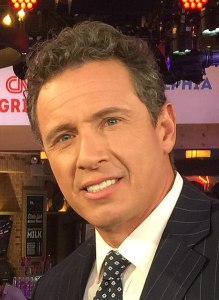
I’ve been defending CNN’s Chris Cuomo ever since we learned that he had been advising his brother, former New York Gov. Andrew Cuomo, about how to respond to allegations of sexual harassment and assault.
It’s not that I like his program especially; I don’t. It’s that the misguided decision to let Chris host Andrew during the early days of the COVID pandemic was more a failing by management than it was something that could be blamed on Chris, and that it wasn’t fair to criticize him for acting like a brother.
No more. Monday’s revelations show that Chris Cuomo went beyond giving his brother advice, and even went beyond strategizing with other members of Andrew Cuomo’s team. According to the newly released documents, Chris Cuomo abused his position at CNN, and for that he needs to pay a steep price — maybe a long suspension, maybe termination.
Become a member of Media Nation for just $5 a month!
“How in the world does Chris Cuomo survive this?” asks Tom Jones of Poynter, taking note of the sordid details:
According to documents released Monday by the New York attorney general’s office, Chris used his media sources to seek out information about women who accused his brother of sexual misconduct. He then relayed some of that information to his brother’s top advisers.
Writing in The Atlantic, David A. Graham — who believes that Chris Cuomo should resign or be fired — offered this:
When Chris Cuomo simply offered advice to staff members, he failed to observe the rules CNN had set for his private behavior. But by gathering information from “sources” and passing it to his brother’s staff, Cuomo committed the more egregious step of directly mixing the journalistic work of calling sources and gathering information with his personal, familial commitments. He was wise not to go further into the realm of “oppo research” [something Chris told investigators he did not do], but he still went far beyond the bounds of propriety.
Chris Cuomo hosts an opinionated talk show that is only peripherally tied to journalism. But as Graham notes, he does, in fact, act as a journalist, and people are going to return his calls when he tells them that he’s working on a story. His behavior violated multiple rules of “The Elements of Journalism,” including reporting the truth, maintaining independence from those we cover and serving as an independent monitor of power.
I tuned in Cuomo’s show Monday at 9 p.m. to see whether he’d be on and if he’d address it. There he was, but he made no mention of the revelations — not at the beginning, not at the end.
Well, now. Not only is Chris Cuomo on tonight, but he’s talking about Omicron as if there was nothing else for him to address.
— Dan Kennedy is on Threads (@dankennedy_nu) November 30, 2021
I’ll give him this much — he seemed every bit his normal self, even though he had to know his career was hanging in the balance.
CNN seems to be taking the new allegations seriously. “The thousands of pages of additional transcripts and exhibits that were released today by the NY Attorney General deserve a thorough review and consideration,” CNN said in a statement. “We will be having conversations and seeking additional clarity about their significance as they relate to CNN over the next several days.”
The next step is to act. I doubt that we’ll see Chris Cuomo in the anchor chair tonight. The question is whether we’ll ever see him there again — or should.
Northeastern’s School of Journalism backs bills to address the local news crisis

Our faculty at Northeastern University’s School of Journalism recently voted unanimously to support two pieces of legislation aimed at addressing the local news crisis — a bill to make it easier for newspapers to become nonprofit organizations and a resolution that asks Congress to help reverse the decline of community journalism.
The bills were introduced in the House today by U.S. Rep. Mark DeSaulnier, D-Calif., and co-sponsored by Reps. Ed Perlmutter, D-Colo., Jamie Raskin, D-Md., and David Cicilline, D-R.I.
“As local newspapers are being bought up and taken over by large corporations, it is incumbent on Congress to act to protect this public good,” said DeSaulnier in a press release. “My legislation would do just that and ensure newspapers in every community can continue to provide high-quality local coverage that millions of American rely on and deserve.”
Professor Jonathan Kaufman, director of Northeastern’s School of Journalism, said, “The hollowing-out and disappearance of local news organizations imperils journalism, communities and our democracy. These measures provide a financial lifeline and tools for the next generation of journalists to pursue new models and innovation that bring more local news to communities.”
The bills are not related to the Local Journalism Sustainability Act, which would provide tax credits to subscribers, advertisers and publishers. The tax credit that would benefit publishers is part of President Biden’s Build Back Better legislation. DeSaulnier’s bills, by contrast, would address the problem that journalism is not among the activities that qualifies for nonprofit status, even though the IRS has approved such status for many news organizations over the years.
The full press release issued by Rep. DeSaulnier’s office follows.
Congressman DeSaulnier Introduces Legislative Package to Support and Preserve Local Journalism
Washington, D.C. – Today, Congressman Mark DeSaulnier (CA-11), along with his colleagues Congressman Ed Perlmutter (CO-07), Congressman Jamie Raskin (MD-08), and Congressman David Cicilline (RI-01) introduced two pieces of legislation aimed at supporting and protecting local journalism, and honoring its role in bolstering our democracy, holding government accountable, and informing the electorate. The Saving Local News Act (H.R. 6068) would make it easier for newspapers to become non-profits, allowing them the flexibility to focus less on maximizing profits and more on producing quality content. The local news resolution (H.Res. 821) recognizes the importance of local media outlets to society and expresses the urgent need for Congress to help stop the decline of local media outlets.
“Local journalism has been the bedrock of American democracy for centuries. I have seen firsthand how journalists for local newspapers have kept our community informed, educated voters, and held power to account,” said Congressman DeSaulnier. “As local newspapers are being bought up and taken over by large corporations, it is incumbent on Congress to act to protect this public good. My legislation would do just that and ensure newspapers in every community can continue to provide high-quality local coverage that millions of American rely on and deserve.”
“Local and accurate sources of news are becoming more and more important for our community and our country. I believe Congress has a role to play to ensure legitimate media outlets are able to better adapt to the changing media landscape and continue to inform Americans in every community,” said Congressman Perlmutter.
“An informed American public is essential to strong democracy,” said Congressman Raskin. “We cannot allow worldwide propaganda and conspiracy theories to replace hard local news based on local reportage. I’m proud to join Rep. DeSaulnier in introducing this important legislation that will give local news the flexibility it needs to thrive in a dangerously toxic media environment.”
“Over the past 15 years, one in five newspapers have closed, and the number of journalists working for newspapers has been slashed in half. We now live in a country in which at least 200 counties have no local newspapers at all,” said Congressman Cicilline. “This crisis in American journalism has led to the crises we are seeing today in our democracy and civic life. We cannot let this trend continue because if it does, we risk permanently compromising the news organizations that are essential to our communities, holding the government and powerful corporations accountable, and sustaining our democracy. I’m proud to support this resolution and the Saving Local News Act and thank Congressman DeSaulnier for his leadership and partnership in this work.”
“We commend Congressman DeSaulnier for introducing this important piece of legislation that recognizes the importance of nonprofit journalism to the American society. At a time when news deserts are a growing concern, we must ensure that we support all newsrooms in their efforts to provide high-quality journalism to their local communities. This journalism bill that would allow non-profit newsrooms to treat advertising revenue as nontaxable income could be helpful to a number of publishers,” said David Chavern, President and CEO, News Media Alliance.
“Community newspapers are exploring many new models for sustainability. Our newsrooms realize that without us, whole communities will lose their center of gravity. A nonprofit model is one that can work in some communities, but just establishing this status isn’t enough to keep the doors open and journalists at work. The need for revenue from a variety of sources, including local advertisers, remains acute. NNA supports the Saving Local News Act and thanks Congressman DeSaulnier for his work on behalf of local communities,” said Brett Wesner, Chair, National Newspaper Association and Publisher, Wesner Publications, Cordell, OK.
“Honest, truthful reporting is essential to informing our democracy at all levels. Without it, we won’t remain a nation of the people, by the people, for the people. Bills that help sustain local reporting that informs people about what their government representatives are up to, will help keep the citizens in charge of our country,” said George Stanley, President of the News Leaders Association.
“News organizations are looking at multiple ways to fund their organizations while continuing to deliver local journalism that is fundamental to a thriving Democracy. If news organizations want to pursue the nonprofit business model; it should be as accessible for established organizations as it is for news startups. Our members are known and trusted in the communities they serve and removing the hurdles to find philanthropic support would allow newsrooms to focus on serving their communities,” said Brandi Rivera, Publisher, Santa Barbara Independent and Board Member, Association of Alternative Newsmedia.
“Community newspapers are woven into the fabric of American society and provide accurate and trusted information that improves the lives of individuals in the communities they serve. It is no secret that newspapers face an increasing number of existential threats from online competitors which have left them with a decreasing number of revenue opportunities. This measure would provide news organizations with the means to better rise to these challenges and continue to play a vital role in their communities by holding the feet of the powerful to the fire and giving voice to the powerless,” said Jim Ewert, General Counsel, California News Publishers Association.
“Free Press Action supports this important legislation and applauds Congressman DeSaulnier for recognizing the importance of building, supporting and sustaining local nonprofit news operations,” said Craig Aaron, President and co-CEO of Free Press Action. “In too many places, corporate media have shrunk newsrooms or abandoned communities entirely. Nonprofit news has emerged as the future of local journalism, and it’s our best hope for keeping reporters on the beat focused on the needs of local communities, serving communities of color, and reaching so many people who have never been well served by the media. This bill will remove obstacles to nonprofit journalism, help launch more of these outlets, encourage more existing outlets to go nonprofit, and create more of the kind of high-quality journalism we need to inform our communities and keep our democracy thriving.”
“The hollowing-out and disappearance of local news organizations imperils journalism, communities and our democracy. These measures provide a financial lifeline and tools for the next generation of journalists to pursue new models and innovation that bring more local news to communities,” said Professor Jonathan Kaufman, Director of the Northeastern University School of Journalism.
“The health of the news industry is so precarious, all efforts to strengthen an industry so instrumental to democracy are well received. Thanks to Rep. DeSaulnier for stepping up,” said Jody Brannon, Ph.D., Director of the Center for Journalism and Liberty at the Open Markets Institute.
“The U.S. tax code needs this important update to make it easier for nonprofit news organizations to grow across our country. We’ve lost tens of thousands of local journalists over the last decade. That’s meant fewer journalists covering local government meetings, local business and even high school sports. Journalists are essential to holding power to account, watching over our democracy and providing a voice to the voiceless. We applaud Rep. DeSaulnier’s support of journalism. Our country was founded under the principle that a free press was the best way to make sure we have a robust democracy by having an informed electorate. We all have to fight now to save local news,” said Jon Schleuss, President of NewsGuild-CWA.
“The newspaper business model is broken. At a time when local journalism has never been more essential, journalists are losing their jobs across the country, leaving important stories untold. Compelling, original journalism does continue to drive significant advertising revenue—just not for newspapers. Big Tech giants, like Google and Facebook, have used their monopoly power to capture huge swaths of the digital advertising market, making it nearly impossible for many papers to chart a path forward in the digital age. This has allowed hedge fund vulture capitalists to scoop up scores of newspapers across the country—all of whom have been reduced to shadows of their former glory by a short-sighted cut, cut, cut approach. We welcome and applaud efforts to help news outlets continue to cover of the communities they serve. This legislation will create a path that communities can use to save their local papers. Local news is a key piece of American democracy, and while addressing the underlying problems Big Tech has created for journalists is complex, we have to do everything we can to allow for news to thrive,” said the Save Journalism Project.
“PEN America applauds the introduction of the Saving Local News Act – and the accompanying resolution on the importance of local news – as a welcome and needed step to support America’s journalism ecosystem. By making it easier for news organizations to become nonprofits, Congressman DeSaulnier’s legislation will open up a sustainable financial pathway for quality local journalism, recognizing its value as a public good. Enacting this bill will strengthen a fundamental pillar of our democracy, encouraging diverse reporting, civic engagement, and access to essential community information,” said Nadine Farid Johnson, Washington director of PEN America.
Since 2017, estimated daily newspaper circulation fell 11 percent from the previous year (Pew Research Center). Congressman DeSaulnier established a working group of dedicated Members of Congress from areas affected by a drought of high-quality journalism. Together they have been working to highlight this crisis and bring attention to the need to promote local journalism, including by holding a Special Order on the floor of the U.S. House of Representatives and introducing the Journalism Competition and Preservation Act (H.R. 1735), a bill to create a temporary safe harbor from anti-trust laws to allow news organizations to join together and negotiate with dominant online platforms to get a fair share of advertising profits.
Congressman DeSaulnier’s bill and resolution are supported by: News Media Alliance, National Newspaper Association, News Leaders Association, Association of Alternative Newsmedia, California News Publishers Association, Free Press Action, Faculty of the School of Journalism at Northeastern University, Local Independent Online News (LION) Publishers, Save Journalism Project, PEN America, Center for Journalism and Liberty at the Open Markets Institute, and NewsGuild-CWA.
Why you should become a member of Media Nation

More than two centuries ago, Samuel Johnson explained why you should become a member of Media Nation: “No man but a blockhead ever wrote except for money.”
Nearly a year ago I added a membership option to Media Nation. Partly it was an experiment. Partly it was a chance to offer members something different — a weekly newsletter with exclusive early content, a round-up of the week’s posts, photography and a song of the week. Mainly, though, it seemed to me that I was cranking out a lot of stuff here and that it was only fair that I get paid for it.
So far, I’d pronounce the experiment a success. But I’d like it to be an even bigger success. If you’re a Media Nation reader — and you must be since you’re reading this — I hope you’ll consider becoming a member for just $5 a month. All you need to do is click here.
Thank you.
Democratic leaders roll the dice with assistance for local news organizations

The Local Journalism Sustainability Act (LJSA), which I’ve written about rather obsessively here, is built upon the foundation of a three-legged stool: a tax write-off for individuals of up to $250 for subscription fees or donations to local news organizations; a tax credit for advertisers in local news outlets; and a payroll tax credit for publishers that hire or retain journalists.
Now the payroll credit has been carved out and added to the Build Back Better bill, which has passed the House and now faces uncertain prospects in the Senate. Marc Tracy reports in The New York Times that the provision would add up to nearly $1.7 billion over the next five years for newspapers, digital operations and broadcast operations.
Tracy notes — rather huffily, if I’m reading him accurately — that large newspapers like the Times would be excluded because they employ more than 1,500 in one location, but giant newspaper chains such as Gannett and those owned by Alden Global Capital would stand to benefit. As I’ve said before, I wish there were a way of restricting the benefits to independent owners; still, this strikes me as worth trying.
What I’m more concerned about is the political wisdom of adding just one part of the LJSA to Build Back Better, which — despite the optimism voiced by President Biden and other Democratic leaders — could be doomed given the seemingly endless demands made by Democratic Sens. Joe Manchin and Kyrsten Sinema.
There is at least some bipartisan support for the LJSA. Moreover, the tax write-off for subscriptions and donations strikes me as more interesting and creative than simply handing money to publishers for not laying people off. If Build Back Better passes, it will be with just 50 Democratic votes and Vice President Harris breaking the tie — and at that point it seems likely that the other two legs of the stool would disappear. If Build Back Better goes down to defeat, proponents of the LJSA will have to start from scratch.
Even so, the benefits that would be provided by the payroll tax credit are not insignificant. Art Cullen, editor of Iowa’s Storm Lake Times, tells The New York Times that the credit would mean $200,000 in just the first year for his struggling newspaper. “We’d be walking in tall cotton,” he’s quoted as saying. (Ellen Clegg and I spoke with Cullen recently on our podcast, What Works: The Future of Local News.)
Providing government assistance to journalism is fraught with concerns about the First Amendment and the need for an independent press. Yet journalism has always benefited from government help, starting with postal subsidies in the late 1700s. The LJSA is worth trying. I just hope that Democratic leaders haven’t outsmarted themselves by splitting up a bill that stood a decent chance of passing and grafting it onto a large package that they just can’t seem to get done.