There may be less to the Florida blogger bill than meets the eye

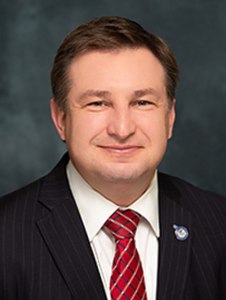
Sen. Jason Brodeur

I want to question the prevailing wisdom about the so-called Florida blogger bill, which would require independent paid bloggers to register with the state if they write about top elected officials, including Gov. Ron DeSantis. The proposal has been described as an outrage against the First Amendment, with Noah Lanard of Mother Jones going so far as to say that the bill was inspired by Hungary’s right-wing authoritarian prime minister, Viktor Orbán.

But what if there’s something else going on here? I was struck by this article in the Tampa Bay Times in which the sponsor of the measure, Republican state Sen. Jason Brodeur, compared bloggers to “lobbyists.” The bill would require bloggers to disclose who paid them for posts about elected officials and how much they received. Failure to comply could result in fines of $25 for every day they’re late, up to $2,500.

Brodeur would exempt bloggers for news organizations, and that may help explain his intent. Kirby Wilson, who interviewed Brodeur for the Times via text message, wrote that when he asked if the bill could cover journalists who write for digital-only outlets, Brodeur replied: “If they’re paid to advocate a position on behalf of a special interest, yes.”

It seems to me that what’s going on here is that Brodeur wants to require bloggers to disclose where they’re getting their money from if they’re being paid by political campaigns and other politically oriented organizations. This is not remarkable. By law, political campaigns and lobbyists must disclose their spending. A few years ago the Federal Trade Commission was threatening to go after food bloggers who were accepting freebies to write nice things without any disclosure.

Of note is that Jacob Ogles of the website Florida Politics forthrightly portrays Brodeur as targeting “pay-to-play blog posts” and quotes Brodeur as saying: “Paid bloggers are lobbyists who write instead of talk. They both are professional electioneers. If lobbyists have to register and report, why shouldn’t paid bloggers?”

Now, let’s be clear: Brodeur is no friend of the press. He recently filed a bill that would weaken libel protections for news organizations. And the blogger bill is apparently something of a mess, with Wilson observing that the actual language contains nothing that would protect independent bloggers who aren’t lobbying on behalf of a special interest. Brodeur hasn’t even been able to find a sponsor in the Florida House.

But there may be less here than meets the eye. After all, there’s a considerable distance between requiring lobbyists who blog to disclose their political activities and the repressive tactics of Viktor Orbán’s Hungary.

Please support this free source of news and commentary by becoming a member of Media Nation for just $5 a month.

The New York Times applies extreme life-saving measures to its print edition

1942 photo via the Library of Congress

How bad does The New York Times want you to keep subscribing to the print edition? We have been seven-day digital plus Sunday print subscribers for a number of years, but our wonderful delivery person left us a note today that she was giving up the job. We decided that was a good time to cancel the Sunday paper.

I contacted the Times, and they offered us a lower price for the next 16 weeks to keep what we’ve got than to switch to all-digital. They are literally paying us to keep Sunday print. So we’ll do that until the 16 weeks are up, and then we’ll see if they come back with yet another offer.

It does make sense that they want people to keep looking at the Sunday ads, and the Times isn’t alone. There are some local papers, including The Provincetown Independent, that charge more for digital-only than they do for print-plus-digital.

Are you a news publisher? A budding enterpreneur? Please come to Medford.

Are you an independent newspaper publisher? A budding entrepreneur? I’d like to point you to a great opportunity. Medford, a city of about 62,000 just a few miles north of Boston, has been without any reliable news coverage since March 2022, when the giant chain newspaper owner Gannett merged the Medford Transcript and the Somerville Journal. The new paper, the Transcript & Journal, is devoted almost entirely to regional news, with little in the way of what’s taking place in local government, public safety, schools or youth sports.

Medford is a relatively affluent community. We’re not as well off as Marblehead, Concord, Lexington, Newton or Brookline, where nonprofit startups have been launched or are in the process of being launched in response to Gannett’s cuts. But we have a lot going for us. Medford’s median household income of nearly $108,000 is higher than the state’s ($89,000). We have five business districts with restaurants and retail establishments. We are also at least somewhat diverse — although nearly 71% of Medford residents are white, there also are Black (8.4%), Asian (10.6%) and Hispanic/Latino (8.4%) residents as well. (Income and demographic data come from the U.S. Census Bureau.)

In 2020 I wrote about some ideas for how to bring reliable news to Medford — anything from a for-profit newspaper to a nonprofit website. There are conversations taking place about attempting to start a nonprofit, but I can’t help but think that Medford would be a great place for a for-profit venture.

One for-profit model I especially like is a free weekly print newspaper, distributed at high-traffic locations throughout the city, with a free website. Anne Eisenmenger has had great success with that model with four papers in Southeastern Massachusetts.

Another model is a subscription-based venture combining online and print. There are a number of examples, but one particularly vibrant outlet is The Provincetown Independent, begun several years ago by the husband-and-wife team of Ed Miller and Teresa Parker. The Independent also has a nonprofit arm that funds certain types of public interest journalism.

If you have any interest in setting up shop in Medford, I would be happy to connect you with people in the city and with people like Anne, Ed and Teresa. Feel free share this widely. Medford is a wonderful community with a lot of news, most of which isn’t being covered. And it’s got the economic base needed to build a news business. Please come to Medford.

Media critic Dan Froomkin unloads on The Washington Post’s opinion section

Jonathan Capehart, right, with civil-rights leader Dr. Clarence B. Jones. Photo (cc) 2015 by The Communications Network.

Back when I was reporting and researching “The Return of the Moguls,” my 2018 book about The Washington Post, The Boston Globe and the Orange County Register, I had a dilemma. My goal was to write about how the business models of those papers were changing under wealthy ownership. The Post and the Globe were producing excellent journalism as well — and the Register, at least before it all went bad, was improving.

Support this free source of news and commentary for just $5 a month.

But what to do about the Post’s opinion section? The Post is our second- or third-most influential newspaper (depending on where you rank The Wall Street Journal), but its editorial pages under the late Fred Hiatt were problematic — dull and dumb, with a few notable exceptions, and pro-war besides. Since I didn’t intend to write a book of media criticism, I decided to punt, describing the section as “moderately liberal with a taste for foreign intervention.”

Well, the Post is going off the rails in all sorts of ways lately. Sara Fischer of Axios reported earlier this week that Jonathan Capehart, one of those notable exceptions, had quit the editorial board, leaving it with precisely zero people of color. (Capehart, who appears weekly with New York Times columnist David Brooks on the “PBS NewsHour,” remains a staff writer and video host with the Post’s opinion section.)

And now Dan Froomkin, an independent liberal media watchdog, has weighed in with a scorching commentary headlined “The Washington Post opinion section is a sad, toxic wasteland.” Yikes! It’s a long piece — worth reading in full — but essentially Froomkin’s argument is that the section has actually gotten worse under Hiatt’s successor, David Shipley. Froomkin writes:

The New York Times opinion section regularly publishes absolute tripe – most recently, a barrage of virulent and ignorant anti-trans rhetoric and panicking about wokeism. Several of its columnists are well past their sell-by date. Some are just trolls.

But there’s no denying that overall, it remains intellectually stimulating, ground-breaking, and consequential.

The Post’s opinion section doesn’t come in for remotely as much criticism as the [New York] Times’s — but that’s because nobody cares about it enough to criticize it.

It offers a regular megaphone to some of the most retrograde ninnies in the business, and has had no impact on the national discourse since torture ended (they were for it).

I found Froomkin’s assessment to be overstated (yes, he does disclose that Hiatt fired him) but fundamentally correct. At a time when Jeff Bezos’ Post is losing money and shrinking after years of profits and growth, the opinion section could stand out as a way to attract new readers. Instead, he allows it to languish, dragging down a (still) great news organization that’s slipping further and further into the shadow cast by its ancient rival to the north.

Melvin Miller sells The Bay State Banner to a Black-owned independent group

Today brings some incredibly good news for independent community journalism in the Boston area. Melvin Miller, the legendary founder, publisher and editor of The Bay State Banner, has decided to sell the paper. Miller, 88, has been a stalwart in covering the Black community since he launched the paper 57 years ago. But as he says, he’s not getting any younger — and not only is the Banner remaining independent and Black-owned, but there are plans to expand as well.

The Banner will be acquired by a group headed by Ron Mitchell, an editor and video journalist at WBZ-TV, and Andre Stark, a filmmaker whose credits include GBH-TV and its national programs “Frontline” and “Nova.” Yawu Miller, Mel Miller’s nephew, will stay on as senior editor, and Ken Cooper, who recently retired from a top position at GBH News, will serve as an editorial consultant overseeing the addition of three regional editions north of Massachusetts, in Connecticut and in Rhode Island. Colin Redd, who’s worked as business development manager at Blavity, a website popular with younger African Americans, will oversee a digital expansion.

Mel Miller was quoted as saying:

I’ve been looking for some time for someone to step up and take over the job. I think the Banner is needed more than ever. Both Ron and Andre are from old Roxbury families with deep ties to the community. They know the people, know the streets, know the issues we face. I have every confidence they will carry on the great work we’ve done for close to 60 years.

The Bay State Banner is a Boston institution. Miller has been performing a great service to the community since 1965 — and he’s performing another one now by leaving it in what sounds like very good hands.

How public radio can help solve the local news crisis: A response to Thomas Patterson

1946 photo by the Department of the Interior

Could public radio help solve the local news crisis? Perhaps. But first we have to determine what we mean by local news, and whether the folks who bring you national programs such as “All Things Considered” and “Morning Edition” are suited to that mission.

In late January, Thomas Patterson, the Bradlee Professor of Government and the Press at the Harvard Kennedy School, published a “discussion paper” exploring that very question. The purpose of discussion papers, according to the introduction, is “to elicit feedback and to encourage debate.” Consider this my small contribution. (Patterson, I should disclose, was acting director of Kennedy School’s Shorenstein Center during my 2016 fellowship there and provided me with valuable advice for my 2018 book “The Return of the Moguls.”)

At the outset, Patterson writes that he seeks to answer two questions:

  1. “Do local public radio stations have the capacity to provide reasonably comprehensive news coverage of the communities they serve? Do they have the news staff needed to meet that requirement? And if not, what level of investment could put them in that position?
  2. “Do local public radio stations have the capacity to reach enough members of their local community to make a substantial contribution to its information needs? And if not, what would be needed to substantially expand their audience reach?”

The answers to those questions come from 215 public radio stations that answered an online survey — a response rate of 89%. A majority of executives at the stations themselves saw their operations as a leading — or even the leading — source of news in their communities.

Read the rest at What Works.

The Boston Globe leads in pocketing money from Facebook’s news project

A new study by the Tow Center at the Columbia School of Journalism has found that The Boston Globe was the top recipient of Facebook’s miserly efforts to help fund local journalism.

The study found that the Meta Journalism Project, announced in 2018 and now winding down, provided 564 news organizations with $29.4 million spread across 17 programs. Nearly half of them got the minimum of $5,000. The Globe, though, did considerably better, receiving three grants totaling $390,000, of which $240,000 was for assistance with building and retaining digital subscriptions.

No. 2 on the list is Long Island’s Newsday ($375,000) and No. 3 is The Seattle Times ($355,000). Coming in at No. 4 is a real head-scratcher — the Chicago Tribune, under the chaotic ownership of Tribune Publishing for many years and, since 2021, the notorious hedge fund Alden Global Capital. Rounding out the top five is the Star Tribune of Minneapolis.

The Globe, Newsday, the Times and the Star Tribune are all independently owned — although Newsday has received some unwelcome attention recently for being asleep at the switch while George Santos was lying his way into Congress last fall.

Veteran editor Greg Moore on local news, diversity and life after Alden Global Capital

Greg Moore. Photo (cc) 2021 by Dan Kennedy.

On the new “What Works” podcast, Ellen Clegg and I talk with Greg Moore, former managing editor at The Boston Globe and longtime editor of The Denver Post. During his 14 years at the Post, the paper won four consecutive Pulitzer Prizes. He’s led coverage of major stories, including the Aurora movie theater shooting in Colorado and the case of Charles Stuart in Boston. Greg is now editor-in-chief of The Expert Press, which helps connect specialists with media. He’s still in Denver.

As one of the most senior Black journalists in the country, Greg has been at the forefront of advocating for more diversity in the media and for a new path forward for local and regional news. In fact, Greg resigned his position at The Denver Post in 2016 after he decided he couldn’t tolerate any more cuts to his newsroom at the hands of the Post’s hedge-fund owner, Alden Global Capital. As he put it in an essay for the Pulitzer Prize board, of which he is the former chair:

Local journalism is where accountability journalism matters most. It is focused on how dollars are spent and how priorities are set on the local level. It is often that base level reporting that becomes the seed corn for bigger national stories with datelines from the heartland and the tiniest suburbs.

In the Quick Takes portion of the podcast, I’ve got some bad news: people don’t like us. There’s been yet another survey showing that public trust in the news media is at an all-time low. But there are some problems with the survey, as there usually are — and those problems underline why the trust issue isn’t quite the steaming pile of toxic waste that it might seem, especially for local news.

Ellen has some good news for folks in Akron, Ohio. A local news startup called the Akron Signal has launched with a $5 million grant from the Knight Foundation.

You can listen to our latest podcast here and subscribe through your favorite podcast app.