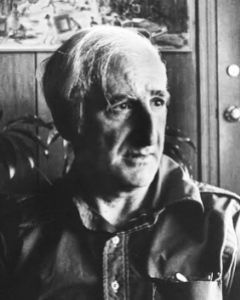
Very sad news tonight as The Boston Globe is reporting that one of its former editors, Jack Driscoll, has died. Among other things, Mr. Driscoll was among the most distinguished journalism graduates of Northeastern University — back before we had a formal journalism program.
Mr. Driscoll retired from the Globe in 1993 and had a long, productive retirement at the MIT Media Lab and as a pioneering citizen journalist. Kevin Cullen has the details.
It’s easy to imagine how Jill Abramson’s new book might have turned out differently. In “Merchants of Truth: The Business of News and the Fight for Facts,” the veteran journalist follows the fortunes of four media organizations. BuzzFeed and Vice are young, energetic, willing to break rules and try new things. The New York Times and The Washington Post are stodgy, sclerotic giants trying to grope their way toward a digital future. We all know how that’s going to turn out. Right?
Well, something unexpected happened on the way to the old-media boneyard. Within the past couple of years BuzzFeed and Vice, which had made strides toward becoming major players, fell short of revenue projections and had to cut back on their ambitions. This was owing partly to hubris, partly because Google and Facebook were hoovering up every digital advertising dollar in sight.
Meanwhile the Times and the Post — the latter supercharged by its mega-wealthy owner, Amazon founder Jeff Bezos — moved toward economic viability by rethinking coverage and convincing a generation of readers brought up on free online content that quality news was worth paying for, particularly in the age of Trump.
Abramson, a former executive editor of the Times who now teaches at Harvard, has written a big, ambitious chronicle of the past decade. Her method involves a series of revolving chapters that examine the ups and downs of each organization in turn, as well as a chapter on Facebook. (Disclosure: In her bibliography Abramson cites two of my books and an academic paper I wrote.)
Some have criticized Abramson for favoring the legacy newspapers over the digital start-ups. There may be something to that. She goes into great detail about BuzzFeed founder Jonah Peretti’s research-driven pursuit of clicks and viral content and about Vice’s culture of alcohol, drugs, and sexual harassment. Vice founder Shane Smith comes off as a shambling egomaniac, although later in the book he is depicted as trying to clean up his act.
But those sections strike me as warranted and fair. After all, BuzzFeed was built on a foundation of cat videos and listicles, and Vice’s chaotic, testosterone-fueled internal culture is surely relevant. Besides, Abramson is generous in acknowledging the importance of their best journalism, including Craig Silverman’s groundbreaking work for BuzzFeed on fake news and Elle Reeve’s mini-documentary for Vice about the deadly neo-Nazi protests in Charlottesville, Va.
The chapters on the Times and the Post cover ground that will be familiar to many media observers. Abramson traces the Post’s decline during the last few years of Graham family stewardship and its revival under Bezos. The Times’s journey was more harrowing — bailed out by the Mexican billionaire Carlos Slim, forced to sell its gleaming new headquarters, and casting off its non-Times properties, including The Boston Globe. Abramson criticizes both newspapers for smudging the line that had traditionally separated news from business operations, a line that she observes doesn’t even exist at BuzzFeed or Vice. Mostly, though, she praises the Times’s and the Post’s reinvention efforts.
In the most awkward section of the book, Abramson deals with her 2014 firing as executive editor of the Times. She uses the occasion to do some score-settling against the then-publisher, Arthur Sulzberger Jr., and her successor, Dean Baquet. But her account strikes me as fundamentally honest and reflective, as she blames her demise on a combination of sexism and her own shortcomings as a manager.
“Merchants of Truth’’ spawned controversy even before the book was published.
First, Howard Kurtz of Fox News reported that Abramson had criticized the Times for liberal bias. And yes, Abramson writes, “Given its mostly liberal audience, there was an implicit financial reward for the Times in running lots of Trump stories, almost all of them negative.” But it’s not quite that simple. For instance, she lauds both the Times’s and the Post’s tough coverage of the Trump administration, reserving especially fulsome praise for her former employer: “The depth and intensity of the coverage was masterful. On most days it outshone the Post’s. The news report as a whole had never been stronger.” By leaving out that context, Kurtz created a misleading impression.
More problematic were revelations of errors in the uncorrected galleys. Vice reporter Arielle Duhaime-Ross complained that Abramson had made multiple mistakes about her, including her gender identity. Danny Gold of the “PBS NewsHour” tweeted that Abramson’s description of his past reporting for Vice about Ebola in Liberia included “a straight up lie.” Errors in galleys are common, but they generally involve typos and spelling mistakes. And not all of the problems were addressed in the final version of the book.
Inaccuracies notwithstanding, “Merchants of Truth” is a valuable and insightful survey. It ends on an optimistic note, with one caveat: Abramson acknowledges that the relative good fortune of the four media organizations she profiles stands in contrast to the implosion of journalism at the local level. The media scene Abramson describes remains in turmoil. Witness the deep cuts at BuzzFeed that took place late last month. Whether journalism will outlive the wobbling vessels in which it is carried remains a fundamental question for the future of democracy.
How sleazy is Roger Stone? After the on-again, off-again Trump operative was arrested last week and charged in connection with special counsel Robert Mueller’s investigation, news reports invariably brought up Stone’s boasts that he and Richard Nixon were thisclose. Once again, we were subjected to those appalling photos of the Nixon tattoo that adorns Stone’s back. And the Nixon Foundationsprung into action on Twitter:
Mr. Stone, during his time as a student at George Washington University, was a junior scheduler on the Nixon reelection committee. Mr. Stone was not a campaign aide or adviser. Nowhere in the Presidential Daily Diaries from 1972 to 1974 does the name "Roger Stone" appear. 2/2
When even an organization devoted to “the consequential legacy and relevance” of the original unindicted co-conspirator wants nothing to do with you, it may be safely assumed that you are no ordinary political dirty trickster. And surely no one would call Stone ordinary.
What we should call Stone is the man who, more than anyone else, inflicted the presidency of Donald Trump upon us. It is easy to dismiss Stone as a foppish buffoon. But in rewatching the Netflix documentary “Get Me Roger Stone” this week, I was reminded of how crucial Stone was to the entire Trump political enterprise — starting in the late 1980s, when Trump visited New Hampshire at Stone’s instigation.
“The Trump candidacy was a pure Roger Stone production,” says Jeffrey Toobin, who wrote a profile of Stone for The New Yorker and is one of the principal talking heads in the 2017 film, directed by Dylan Bank and Daniel DiMauro.
By Stone’s own telling, his dirty tricks extend all the way back to elementary school, where he rigged a mock election between his candidate, John F. Kennedy (Stone was not yet a Republican), and Richard Nixon.
“I went to the cafeteria, and as each kid would go through the cafeteria line with their tray, I would tell them, ‘You know, Nixon has proposed having school on Saturdays,’” Stone recalls. “Well, then the mock election was held, and to the surprise of the local newspaper, Democrat John Kennedy swept this mock election. For the first time ever, I understood the value of disinformation.” With a slight smirk he adds, “Of course, I’ve never practiced it since then.”
Stone has somehow managed to convince himself that he has political convictions that go beyond notoriety and cashing in. Yes, at one point we learn that he holds libertarian views on issues such as reproductive choice, same-sex marriage, and the legalization of marijuana. What really motivates him, though, are the same inchoate resentments that have helped elect the Republican presidents he’s served.
“Those who say I have no soul, those who say I have no principles, are losers. Those are bitter losers,” he says, sitting in a limousine in a pinstriped suit, wearing a lavender hat and his trademark round dark glasses. “Everything I have done, everything I have worked for, is to propel ideas and a political philosophy that I want to see dominate in government. Donald Trump has now elevated the issues that I believe in: anti-elitism that was first identified by Richard Nixon, mined by Ronald Reagan, and now Donald Trump.”
Anti-elitism as a “political philosophy.” Well, it carried Trump to the presidency, and it continues to resonate with his base. In Stone’s world, as in Trump’s, winning is its own justification.
The range of dirty tricks attributed to Stone, often exaggerated by the man himself, is breathtaking. Arranging for a campaign donation from a phony socialist group to Pete McCloskey, Nixon’s 1972 Republican primary opponent. Destroying Pat Buchanan’s 2000 presidential campaign by means too complicated to explain here (Trump played a cameo), thus helping to ensure the election of George W. Bush. Instigating the “Brooks Brothers Riot” that stopped the 2000 Florida recount. Breaking the Eliot Spitzer prostitution scandal. Possibly even supplying CBS News with the George W. Bush National Guard documents that led to the departure of several journalists from the network, including anchor Dan Rather, after they were shown to be fake.
Toobin again: “Roger is unique in my opinion because he embraces infamy. He doesn’t worry that you’ll think he’s a sleazeball. He wants you to think he’s a sleazeball.”
Among other things, “Get Me Roger Stone” demonstrates that the Trump campaign had its origins many years ago, tying together such nefarious figures as Roy Cohn, Paul Manafort, Stone, and Trump himself. Trump and Manafort spoke extensively to the filmmakers, with Manafort saying, “Roger’s relationship with Trump has been so interconnected that it’s hard to define what’s Roger and what’s Donald.”
It seems likely that Stone would have been regarded as more of a real player and less of a sideshow freak if he hadn’t gotten caught up in a sex scandal of his own while working for Bob Dole’s 1996 presidential campaign, thus relegating him to the shadows. Indeed, in the film we see Stone in such ridiculous situations as yelling into a megaphone while wearing a Shepard Fairey-style T-shirt of Bill Clinton emblazoned with the word “Rape” and holding forth on Alex Jones’ conspiracy-mongering “Infowars” program.
Roger Stone may come across as an absurd character. But as the film makes clear, he’s also one of the most important political operatives of the past four decades. As “Get Me Roger Stone” winds down to its conclusion, his unseen interlocutor asks, “What message would you have for the viewers of this film who will loathe you when the credits roll?” Stone’s answer: “I revel in your hatred. Because if I weren’t effective, you wouldn’t hate me.”
Recently we learned that the worst of the bottom-feeding newspaper chains, Digital First Media, was seeking to acquire Gannett Co., which owns USA Today and about 100 other publications. Now the New York Post is reporting that the deal could flip the other way: Alden Global Capital, the hedge fund that owns Digital First, might sell to Gannett instead.
On a 1-10 scale of whether this is good news or bad news, I’d give it a 5.1. As I argued in a recent column for WGBHNews.org, anything is better than Digital First. No doubt Gannett ownership would be a marginal improvement for Gannett’s three Massachusetts papers — the Boston Herald, The Sun of Lowell and the Sentinel & Enterprise of Fitchburg.
But Gannett virtually invented the business model for chain newspapers of cutting journalism to the bone while driving up profit margins for the benefit of Wall Street. Just last week Gannett tore through another round of cuts at its newsrooms across the country. So let’s not get too excited.
Last weekend I spent an hour or so with The Boston Globe’s amazing Valedictorians Project, which tracked more than 100 Boston valedictorians from about a dozen years ago to see how they are doing today. Like all great digital presentations, it’s hard to imagine why anyone would prefer the print version. The integration of videos and data, as well as the ability to access short bios of every valedictorian, really make the digital version stand out.
Of course, there’s a lot of important reporting here, too. There is much to contemplate, but what struck me more than anything was the cultural shock that many of these young people experienced when they made the transition from the Boston Public Schools to college. We all need to do better.
I could go on and on, but I’ll close with this: Two of our students in the School of Journalism at Northeastern were among those providing research assistance: Zipporah Osei and Patrick Strohecker. A third Northeastern student, Alexander Lim, is with the newly renamed Khoury College of Computer and Information Sciences. Congratulations to all!
BuzzFeed News reports that “two federal law enforcement officials” have seen evidence that President Trump “directed” his former lawyer Michael Cohen to lie under oath when he testified before Congress about a Trump Tower project in Moscow. Special counsel Robert Mueller takes the unusual step of having his spokesman denounce the story as “not accurate.” BuzzFeed’s reporters and their editor vociferously insist that they and their unnamed sources are standing behind their account.
Within 24 hours last week, what looked like a serious threat to the Trump presidency had collapsed into one big honking mess. Nor does it appear that we’re any closer to resolution. A number of media observers have pointed out that no other news organization has been able to confirm BuzzFeed’s reporting. That’s significant, of course. But no one has been able to knock it down, either.
So what is going on? Let me offer a speculative answer, based on the belief that Mueller’s office, BuzzFeed’s journalists, and their sources are all trying their best to tell the truth: everyone is right. BuzzFeed’s story is essentially accurate, but is flawed in some important way that hasn’t been explained. Mueller, worried that Trump might blow up the investigation, took advantage of those flaws to discredit the entire story. If that was Mueller’s intention, it worked, as Trump praised him after the statement was released.
In the past few days we’ve heard much about the famous mistake that Bob Woodward and Carl Bernstein made when they were hammering away at the Watergate story for The Washington Post: They attributed an otherwise accurate account of corruption within the Nixon White House to grand jury testimony that did not exist. Their error was seen as so damaging that they offered their resignations.
“Look, reporters make mistakes. News organizations make mistakes. In Watergate, we made a mistake, a very serious mistake,” Bernstein said this past Sunday on CNN’s “Reliable Sources.” But, he continued, within days the Post was vindicated when it became clear that the information they had reported was true.
The parallels between BuzzFeed’s story and Woodward and Bernstein’s erroneous attribution, though, only go so far. I think a closer analogy involves James Comey’s testimony in June 2017 before the Senate Intelligence Committee shortly after Trump had fired him as FBI director. Comey was asked about a Times story that had been published four months earlier claiming that members of Trump’s campaign “had repeated contacts with senior Russian intelligence officials in the year before the election.” Comey replied that “in the main, it was not true.”
As with the BuzzFeed report, no details were offered as to what was wrong with the Times story. Here we are, more than a year and a half later, and we still don’t know what Comey was referring to. Was it the sourcing? The underlying facts? The Times article reporting on Comey’s complaint noted that there was considerable evidence of contacts between the Trump campaign and the Russian government even then. Today, of course, there is far more evidence, going all the way up to Trump’s extremely guilty campaign manager, Paul Manafort.
If we assume that the basic facts of BuzzFeed’s report are correct, then what might have gone wrong enough for Mueller to issue his extraordinary statement? Writing at Talking Points Memo, Josh Marshall speculated that the information came not from the special counsel’s office but, rather, from the U.S. attorney’s office for the Southern District of New York. The BuzzFeed story specifically cited the special counsel’s office, but Marshall pointed out that it’s not always clear who is doing what. “The SDNY is notoriously more porous to the press than the Special Counsel’s Office,” Marshall wrote. “So we have a kind of information that seems more likely to come out of New York and an office there that seems considerably more likely to leak.”
National security blogger Marcy Wheeler, while praising the BuzzFeed report in some respects, was also critical of it for making “an absurd claim that this is the first time we’ve heard that Trump told someone to lie.” She added: “The BuzzFeed story is important for the concrete details it adds to a story we already knew — and these reporters deserve a ton of kudos for consistently leading on this part of the story. But it has unnecessarily overhyped the uniqueness of Trump’s role in these lies, in a way that could have detrimental effect on the country’s ability to actually obtain some kind of justice for those lies.”
The journalists who worked on the BuzzFeed story are first-rate. Jason Leopold, despite some serious ethical lapses early in his career, is a dogged investigative reporter who was a finalist for a Pulitzer Prize in 2018. Anthony Cormier, whose byline also appeared on the story, won a Pulitzer for investigative reporting in 2016 when he was with the Tampa Bay Times. BuzzFeed News editor Ben Smith is well regarded.
And yet there was one obvious shortcoming. According to The Washington Post, BuzzFeed’s outreach to Mueller spokesman Peter Carr for comment before publication was unacceptably vague: “Importantly, the reporter made no reference to the special counsel’s office specifically or evidence that Mueller’s investigators had uncovered.” When the story was published a short while later, the Post continued, “it far exceeded Carr’s initial impression.”
If BuzzFeed failed to give the special counsel’s office fair notice of what was coming, that would help explain the controversy that broke out after they hit “publish.” But it still doesn’t tell us what, if anything, BuzzFeed got wrong — or whether we’ll ever know.
Last night on “Beat the Press” (above) we took on the BuzzFeed News blockbuster and talked about how much credence the media should give to a story that they hadn’t independently verified. Among other things, I said that BuzzFeed News has a good reputation and that it has owned the Trump Tower story. I’ll stand by that.
Then, a few hours later, the office of special counsel Robert Mueller denied the story, which claimed that President Trump had personally directed his former lawyer Michael Cohen to lie to Congress under oath about plans to build a Trump Tower in Moscow. The Washington Post’s account is brutal:
Inside the Justice Department, the statement was viewed as a huge step, and one that would have been taken only if the special counsel’s office viewed the story as almost entirely incorrect. The special counsel’s office seemed to be disputing every aspect of the story that addressed comments or evidence given to its investigators.
BuzzFeed News editor Ben Smith said that he stands behind the story.
In response to the statement tonight from the Special Counsel's spokesman: We stand by our reporting and the sources who informed it, and we urge the Special Counsel to make clear what he's disputing.
First, this reminds me of James Comey, shortly after he’d been fired as FBI director, testifying before the Senate Intelligence Committee and claiming that The New York Times had gotten an important Trump-Russia story wrong. Comey offered no specifics, and we still don’t know what he was referring to. Likewise, Mueller’s spokesman did not say what BuzzFeed News had gotten wrong — other than “every aspect,” as the Post suggests.
Second, there’s been some well-informed speculation by Josh Marshall (sub. req.) and others that BuzzFeed’s sources are in the U.S. attorney’s office for the Southern District of New York, not the special counsel’s office. National security blogger Marcy Wheeler believes that BuzzFeed “unnecessarily overhyped the uniqueness of Trump’s role in these lies,” and that Mueller issued his statement in order to take the temperature down and keep his investigation on track.
Third, BuzzFeed News does, in fact, have a good reputation. Smith is a fine editor. As you may have heard, one of the two reporters on the story, Jason Leopold, was caught in several ethical lapses earlier in his career, and it’s not unfair to take that into account. But there have been no reported problems since 2006, and in 2018 he was a finalist for a Pulitzer Prize. The other reporter, Anthony Cormier, won a Pulitzer in 2016 when he was at the Tampa Bay Times.
Smith, Leopold and Cormier knew what the stakes were before this story was published. I would imagine that even BuzzFeed chief executive Jonah Peretti was involved in the decision to hit “publish.” There may turn out to be some significant problems with the story. But unless we see evidence to the contrary, I think it’s likely that everyone involved satisfied themselves that they had the goods. Did they? I hope we’ll find out.
Rudolph Giuliani tells @CNNSotu that Trump may indeed have spoken to Michael Cohen about his congressional testimony beforehand. "And so what if he talked to him about it?" Denies Trump told Cohen to lie.
And here’s BuzzFeed reporter Anthony Cormier refusing to back down:
BuzzFeed reporter @a_cormier_ on his story: “I have further confirmation that this is right. We are being told to stand our ground … The same sources that we used in that story are standing behind it, as are we.” https://t.co/rejBGLYLqCpic.twitter.com/Oe3yz5G0Dk
In late 2015 I paid a visit to Burlington, Vermont, to survey the damage wrought by Gannett Co., the newspaper chain that owns the Burlington Free Press. Paid weekday print circulation at the state’s largest daily had fallen from about 50,000 to 16,000. The editorial staff, which at one time was close to 60 journalists, had shrunk to around 25.
“Obviously it’s a little tougher and you do have to pick your spots,” the legendary Free Press reporter Michael Donoghue, who had just retired, told me. “We were always thought of as the newspaper of record because everything would be in there. I’m not sure there’s a newspaper of record technically in Vermont anymore.”
To be fair, what happened to the Free Press was not much different from what has happened to newspaper after newspaper across the country. Fortunately other media organizations in Vermont arose to fill the gap — Seven Days, a vibrant alt-weekly; VT Digger, a well-funded statewide nonprofit investigative project; and Vermont Public Radio, which had boosted its local coverage. Still, the Free Press and its corporate overlords at Gannett had failed at their mission of holding government and other institutions to account.
I offer this story because now we are being asked to save Gannett from the ravages of something much worse. And we should. The Wall Street Journal’s Cara Lombardo reported on Sunday that Digital First Media, the Death Star of newspaper chains, is seeking to acquire Gannett, which owns USA Today as well as about 100 other publications. Digital First owns about 50 dailies, including three in Massachusetts: the Boston Herald, The Sun of Lowell, and the Sentinel & Enterprise of Fitchburg.
Why should we care when Gannett has been doing such a poor job? Because things can always be worse. Gannett ownership has been awful in the usual way. Digital First, controlled by the hedge fund Alden Global Capital, is uniquely awful. Its decimation of the papers it owns sparked what proved to be a futile insurrection last year at its flagship, The Denver Post. Newsrooms have literally been closed, with journalists forced to fend for themselves, from the Fitchburg paper to, most recently, The Record of Troy in upstate New York.
Executives at chains such as Gannett and GateHouse Media, hardly beloved at the local level, nevertheless seem to be trying to figure out a long-term plan. Gannett has remained committed to investigative reporting. GateHouse has set up a business-services and marketing division known as ThriveHive, which, if nothing else, suggests that the company is committed to staying in business. Digital First, by contrast, appears to be engaged in what economists refer to as “harvesting” — that is, taking as much money out of the shrinking newspaper business as possible before closing the doors and turning off the lights.
“The dirty little secret that DFM [Digital First Media] learned is that — at least for now — it can sell longtime readers an inferior (or, to use the technical term, crappier) newspaper and only 10 percent each year will cancel,” writes Philly.com columnist Will Bunch. “Do the math, though, and it’s clear that much of America outside the biggest cities will become news deserts by the early 2020s.”
And to think that at one time Gannett was considered the poster child for greedy corporate newspaper chains. In his classic series of books dating back to the 1980s called “The Media Monopoly,” the late media critic Ben Bagdikian labeled Gannett as “the largest and most aggressive newspaper chain in the United States,” noting that the profit margin at some of its local papers was an “astonishing” 30 percent to 50 percent. Bagdikian also described Gannett as “an outstanding contemporary performer of the ancient rite of creating self-serving myths, of committing acts of greed and exploitation but describing them through its own machinery as heroic epics.”
So here we go again. Gannett, as bad as it has been for the communities it serves, is being held up as an exemplar of local journalism that must be saved. Talk about defining deviancy down. The newspaper analyst Ken Doctor, writing at the Nieman Journalism Lab, reports that Gannett executives may seek to wriggle out of Digital First’s hostile takeover attempt by delivering themselves into the arms of Tribune Publishing, the company formerly known as tronc. Tribune, like Gannett, is known more for its cost-cutting than for its journalism. But anything is better than Digital First.
There is a certain irony in the dilemma now facing Gannett. The company’s model of downsizing newsrooms and driving up profits helped create the crisis that faces the newspaper business today. As newspapers became less comprehensive and less interesting, they lost readers, thus prompting repeated rounds of cuts to keep those profit margins up. Not to push this theory too far — the decimation of advertising-funded news at the hands of digital media is a much larger factor. Still, Gannett-style slash-and-burn management played a role.
Now Gannett is reaping what it sowed. We should all hope that Gannett’s board is successful in fighting off Digital First. But we should also understand that this is strictly a choice between the lesser of two evils. Democracy deserves better.
It’s hard to imagine worse news for the beleaguered business of local journalism. The Wall Street Journal reported (sub. req.) on Sunday that Digital First Media, the hedge-fund-owned chain notorious for squeezing out the last drop of blood from its newspapers, is trying to buy Gannett. Brian Stelter has posted an update at CNN.com.
Gannett is best known for publishing USA Today — which, though it’s a perfectly fine paper, it’s mainly something to look at when you’re in a hotel. The real story is its vast chain of local newspapers, which are listed here. New England is a nearly Gannett-free zone, with the Burlington Free Press of Vermont being its only holding. By contrast, New Jersey, with eight Gannett local news properties, would be devastated. Digital First owns three papers in Massachusetts: the Boston Herald, The Sun of Lowell and the Sentinel & Enterprise of Fitchburg.
According to USA Today, Gannett had not received an offer from Digital First as of Sunday night. But it’s for real, as Jeff Sonderman of the American Press Institute tweeted:
The proposal from Digital First Media to acquire Gannett has been published: https://t.co/E7epJn8YFG DFM's argument to investors could be summarized as "We would cut more costs, maximize cash flow, and kill all digital investments." pic.twitter.com/xrz8kD68IT
Not to praise Gannett too much. Back when the newspaper business was considerably healthier than it is today, media critics like the late Ben Badgikian reported that Gannett insisted on profit margins of 30 percent, 40 percent or more, cutting considerably into their public service mission. In recent years, Gannett has cut the Burlington Free Press to the bone. In “The Return of the Moguls,” I wrote about an alternative media ecosystem in Burlington that had grown in response to the decline of the Free Press. It’s only gotten worse at the Free Press since I did my reporting in late 2015.
But Gannett, a publicly traded company, and GateHouse Media, another hedge-fund-owned chain, at least seem to be in the business of trying to chart a path to the future. Digital First and its owner, Alden Global Capital, by contrast, appear to be in what economists refer to as “harvesting” mode, taking the last few dollars out of their shrinking newspapers before shutting them down or selling them off.
I’ve written about Digital First several times. Most recently, I wrote for WGBHNews.org about a report from the University of North Carolina called “The Expanding News Desert,” which was highly critical of Digital First and GateHouse. In 2014, I tracked the history of Digital First in New Haven for The Huffington Post — from bankruptcy to a fascinating experiment under the visionary leadership of John Paton and then back to bottom-line-oriented cost-cutting.
Let’s just hope the Gannett board decides to fight rather than give in.
Update:Ken Doctor writes at the Nieman Journalism Lab that Gannett may try to escape Digital First’s clutches by running into the arms of Tribune Publishing, known until recently as tronc.
Stephen King is no longer singing the local-book-review blues. Photo (cc) 2013 by the USO.
This is a hoot. After the Portland Press Herald made it known that it would drop freelance-written reviews of local books as a cost-saving measure, Maine’s favorite author, Stephen King, lodged a protest on Twitter and urged his followers to do the same.
The Press Herald responded that if King could persuade at least 100 people to buy digital subscriptions, they would restore the reviews to the Sunday edition, known as the Maine Sunday Telegram:
These are challenging times for newspapers. But here’s an offer: If you can get 100 of your followers to buy digital subscriptions to the @PressHerald, we will reinstate the local book reviews immediately. Use the promo code KING. Deal? https://t.co/5eoqjQ2psVhttps://t.co/8QfGJOXdjP
It worked, and the book reviews will return next Sunday. “It’s a Stephen King story with a happy ending,” publisher Lisa DeSisto told The New York Times. (I worked with DeSisto at The Boston Phoenix many years ago, and she makes a cameo in “The Return of the Moguls.”)
Let me pour just a small amount of lukewarm water on all this. First, cutting local book reviews without consulting readers makes as little sense as, oh, slashing the Sunday funnies. Second, I hope this doesn’t become a habit. Hey, let’s tell everyone we’re going to stop covering restaurants unless we can sell 1,000 more subscriptions.
Still, this is a great story. I’m glad King’s influence did the trick.
Clarification: There was no public announcement that the Press Herald was planning to drop local reviews, but freelance contributors were made aware of it. I’ve rewritten the top to reflect that.
Monday update: Publishers Weekly has an especially detailed account of what went down. Also, King’s gambit did not save jobs elsewhere at the Press Herald:
Some related news: book reviews may be saved, but local data journalism is not. The Press Herald gave me (and several others in the newsroom) a pink slip on Friday. https://t.co/Arw56EnBZy