Aretha Franklin represents something of a quandary for me. She was, without question, one of the greatest singers of the 20th century — never mind calling her the “Queen of Soul,” which diminishes her universality. Her 2016 show at the Blue Hills Bank Pavilion was among the great concerts I’ve ever had the honor of attending.
But albums? For me, Aretha wasn’t about albums so much as a string of incredible singles that she recorded in the late 1960s and early ’70s. I could have chosen “Aretha’s Gold,” her 1969 compilation that includes hits like “Chain of Fools,” “Think” and, of course, “Respect.” (Has a cover ever surpassed the original as thoroughly as Aretha’s “Respect” exceeds Otis Redding’s?)
A few years ago, though, I heard “Amazing Grace” for the first time. Released in 1972, it became Franklin’s biggest hit as well as the top-selling gospel album of all time. Listening is a challenge for someone like me, a mostly secular aging white guy who likes a strong beat. “Amazing Grace” consists mainly of Aretha’s voice soaring above the Southern California Community Choir, with a band led by the Rev. James Cleveland on piano.
My appreciation of “Amazing Grace” deepened after we saw the 2019 documentary of the same name. It mostly tracks with the album, but to see her perform takes it to an entirely different level and offers a deeper perspective on the material. There’s more of her father, the Rev. C.L. Cleveland, than there is on the album as well. And look! There’s Mick Jagger!
“Amazing Grace” is one of those aspirational albums that I keep going back to. I hear something new every time I play it. And if I keep at it long enough, I might finally get it.
When I was researching “Little People,” my book about dwarfism, one of the things I learned was that Josef Mengele was dumb as a rock. His experiments were not just crimes against humanity; they were also completely unscientific. He became a Nazi because it offered a chance for career advancement that wasn’t otherwise available to him.
This review by Adam Gopnik of The New Yorker gets into all of that.
I know this because I was looking into the Ovitz family, a troupe of Hungarian-Jewish dwarf entertainers who were saved by Mengele, but who suffered horribly, after they were sent to Auschwitz. Incredibly, all of them survived.
Winona LaDuke. Photo (cc) 2014 by Sustainability at Portland State University.
The late activist-journalist Danny Schechter was a friend and inspiration to many of us, and his voice is deeply missed. Fortunately, his spirit lives on in the form of the DANNY Awards, which honor those who combine excellence in journalism with social activism. What follows is a press release announcing that this year’s award will go to Native American activist Winona LaDuke. And here is an accompanying essay by Schechter’s business partner, Rory O’Connor.
NEW YORK — The Global Center, a nonprofit educational foundation dedicated to developing socially responsible media, is pleased to announce that the Native American leader Winona LaDuke is the recipient of the fifth annual Danny Award. The award, which honors the life and work of the late Danny Schechter, the “News Dissector,” is given each year to those who best emulate Schechter’s practice of combining excellent journalism with committed social activism. It includes a $3,000 grant to further the recipient’s work.
An environmentalist, economist, author and activist, LaDuke has already written six nonfiction books and has a new one, “To be A Water Protector,” coming out this fall. She’s also written “Last Standing Woman,” a novel about an American Indian reservation’s struggle to restore its culture. Her writings are widely published and cited in academic writing. A graduate of Harvard University, LaDuke has worked extensively in Native and community-based organizing and groups. In 1985 she helped establish the Indigenous Women’s Network, dedicated to “generating a global movement that achieves sustainable change for our communities,” and then, with the proceeds of a humanrights award, founded the White Earth Land Recovery Project to help the Anishinaabeg Indians regain possession of their original land base.
In the 1990s LaDuke became involved with the Green Party and was presidential candidate Ralph Nader’s running mate in both the 1996 and 2000 elections. Today she is the executive director of Honor the Earth, a Native environmental advocacy organization she co-founded in 1993 with the folk-rock duo the Indigo Girls. The organization played an active role in the Dakota Access Pipeline protests and remains a key opponent to proposals by the Canadian multinational corporation Enbridge to bring more tar sands to the United States. LaDuke continues to write and speak in support of water protectors and in opposition to other pipelines and mega projects near Native land and waters.
Among her many previous honors and awards, LaDuke was chosen by Time magazine as one of America’s 50 most promising leaders under 40 years of age; won a Reebok Human Rights Award and a Thomas Merton Award; was named the Ms. Magazine Woman of the Year for her work with Honor the Earth; and has been inducted into the National Women’s Hall of Fame.
Whether or not activism and journalism should mix remains controversial, but in the face of allegations of “fake news,” the invention of “alternative facts,” charges that the news media is an “enemy of the people,” and outright police assaults on reporters covering protests, it has increasingly become embraced by professional practitioners. To Matt Pearce of the Los Angeles Times, “Journalism is activism in its most basic form.” Wesley Lowery, who left The Washington Post in a dispute over his own activism, says the core value of news organizations “needs to be the truth, not the perception of objectivity.”
America’s “view-from-nowhere, ‘objectivity’-obsessed, both-sides journalism is a failed experiment,” Lowery has said. “We need to rebuild our industry as one that operates from a place of moral clarity.” A NewsGuild spokesperson added, “When people in power are sowing doubt about basic facts, journalism looks like activism.” And Lowery concludes, “Journalists perform acts of activism every day. Any good journalist is an activist for truth, in favor of transparency, on the behalf of accountability.”
Decades ago, pioneering journalists like Danny Schechter took a stance toward such controversial topics as apartheid in South Africa and human-rights abuses around the world that led to being branded with a metaphoric scarlet letter – A for Advocate – and told that his activism meant that he really wasn’t a journalist at all. As one of the first to marry the two, Schechter often faced scorn for combining journalistic endeavors with advocacy and activism in support of causes for the social good. While at CNN and later ABC News, he pushed against the constraints of cable and broadcast news. He left ABC to partner in the independent production company Globalvision and began producing programming about such topics as apartheid in South Africa and human rights abuses around the world.
Schechter knew from firsthand experience at CNN and ABC that the commercial media world was not then open to such coverage. So he offered it instead to public television. Rather than being welcomed, he was told by top PBS executives that opposition to the racist regime in South Africa was too controversial and that human rights was “an insufficient organizing principle” for a television program. The PBS reaction, combined with deceitful right-wing protests, led to being told that advocacy on behalf of human rights meant that he wasn’t a journalist at all.
Sadly, such views, while not universally held, are still somewhat prevalent in today’s media world. But as the pace of change within the field of journalism continues to accelerate, many are raising questions about the role of advocacy and the concept of objectivity. Journalists with strong points of view are now giving us news and insights we can’t find elsewhere — even within so-called “mainstream” media. Should we even bother any more trying to distinguish between so-called “objective” journalism and advocacy? Many experts now say no.
“We might have passed the point where we can talk about objectivity in journalism with a straight face,” Patricia Aufderheide, founder of the Center for Media & Social Impact at American University, has noted. “Objectivity was always a shortcut. It was a useful little shortcut of a concept to say you should be fair, you should be honest, you should have integrity, you should tell people accurately and responsibly what you think are the important things about what you saw or researched. If what we’re doing is advocating for the public, that’s our job.”
And if a piece of journalism “isn’t advocacy, it isn’t journalism,” declares Jeff Jarvis, director of Tow-Knight Center for Entrepreneurial Journalism at CUNY’s Craig Newmark Graduate School of Journalism. “Isn’t advocacy on behalf of principles and the public the true test of journalism? The choices we make about what to cover and how we cover it and what the public needs to know are acts of advocacy on the public’s behalf. Don’t we believe that we act in their interest? After all, what is a journalist, if not an advocate on behalf of the public?”
Perhaps the last word for now should go to someone who epitomizes the so-called mainstream media, New York Times publisher A. G. Sulzberger. While “we’re not retreating from the principles of independence and objectivity,” Sulzberger recently told his paper’s media columnist, “we don’t pretend to be objective about things like human rights and racism.”
The Board of The Global Center congratulates Winona LaDuke and applauds her for both her exemplary reporting about women’s and indigenous rights and sustainable development and for advocating for change in the spirit of the late News Dissector, Danny Schechter.
ABOUT THE GLOBAL CENTER: The Global Center is a nonprofit educational foundation dedicated to developing informative and socially responsible media and a new type of journalism in which the reporting of events and conditions is done in conjunction with those most affected by those events. In addition to operating its own projects, the Center also acts as a fiscal sponsor for outside media efforts that fit within its mission and guidelines.
ABOUT THE DANNY: The Danny Schechter Global Vision Award for Journalism & Activism is given annually to individuals who best emulate Schechter’s practice of combining journalism with social activism and advocacy. In addition to the award, announced each June, recipients receive $3000 to support future work. Previous winners include Jose Antonio Vargas, Patrice O’Neill, the reporters and editors of the Eagle Eye, the student newspaper of Marjory Stoneman Douglas High School in Parkland, Florida, and Wikileaks founder Julian Assange.
There is no way to apply for the DANNY. Recipients are chosen from a pool of qualified candidates. Those interested in contributing to the award can make tax-deductible donations to The Global Center. Please send contributions to:
The Global Center
P.O. Box 677
New York, NY 10035 Contact Rory O’Connor: roc@globalvision.org
Grace Episcopal Church. Photos (cc) 2020 by Dan Kennedy.
We just got back from a huge Black Lives Matter protest and march organized by Mobilize Medford. A crowd that I’d estimate at well over 1,000 people gathered in front of City Hall to protest against racism and police brutality. Afterwards, the protesters marched and chanted along High Street — Paul Revere’s route — to West Medford. We left the march at Grace Episcopal Church, where we’d parked our car. It was an impressive turnout for an important cause.
We’re living through a historic moment. Following the lead of many others, I’ve decided to start keeping a COVID-19 diary. Don’t expect anything startling — just a few observations from someone stuck at home, lucky to be working and healthy.
One of the best parts of moving back to West Medford five years ago was that we were able to reduce our dependence on driving. When one of our cars died, we decided not to replace it. Now my wife drives literally 10 minutes through residential streets to get to her job, and I rely on public transportation, supplemented by Lyft and an occasional Zipcar.
COVID has upended that. As all of us at Northeastern ponder how we’re going to return to campus this fall, I’m wondering how I’m going to get there. Will I feel safe on the commuter rail and subway? What about possible virus left behind by previous Lyft riders? I’ve thought about riding my bike, but that’s not a comprehensive solution — I’m not going to do it when it’s raining or dark, and I don’t want to wrestle with cars and trucks on a regular basis, either.
As for what Northeastern is going to look like this fall, that still feels a bit up in the air, even though plans are being made to open on time in September. I’ll be teaching one class entirely online. The other will be taught using what’s being referred to as the hyflex model — or, in Northeastern-speak, “NUflex.”
With hyflex, you’re dealing with three separate groups of students. Some of them are in the classroom with you. Another group — maybe they had visa problems, maybe they’re on quarantine — joins the class via video conferencing. And a third group watches a recording of the class at a later time, possibly because of illness or time-zone differences. It sounds like quite a challenge. Our student newspaper, The Huntington News, has the details.
Some faculty members at Boston University are up in arms over the idea of returning to campus at all, according to The Boston Globe and CommonWealth Magazine. I haven’t heard any similar dissension at Northeastern, but maybe I’m not listening in the right places.
What I do know is that COVID is surging nationally once again — and the numbers in Massachusetts don’t inspire a lot of confidence, either. People make plans, but the virus makes its own, abetted by human folly. We’ll see whether anyone is actually back on campus this fall. I hope we are, but it’s hardly a given.
Sarah Ellison of The Washington Post profiles Heath Freeman, the undertaker-in-chief for Alden Global Capital’s MediaNews Group, the worst newspaper chain in the known universe.
Alden is notorious for destroying good newspapers like The Denver Post and The Mercury News of San Jose, and is now making a play for Tribune Publishing, which owns big metros like the Chicago Tribune and The Baltimore Sun. In Massachusetts, Alden owns the Boston Herald, The Sun of Lowell and the Sentinel & Enterprise of Fitchburg.
“I would love our team to be remembered as the team that saved the newspaper business,” Freeman tells Ellison. She follows up with this withering paragraph:
This is what Freeman’s approach to saving the newspaper business looks like in St. Paul, Minn.: A local sheriff blew his budget by $1 million and there was no Pioneer Press reporter available to cover the county board meeting. In San Jose: There was no reporter on the education beat at the Mercury News when the pandemic started closing schools. In Denver: In the aftermath of the 2012 Aurora movie theater mass shooting, the editor was asked to slash staff to improve the next month’s budget numbers. In Vallejo, Calif.: There is exactly one news reporter left at the Times-Herald to cover a community of 120,000 people.
The best thing that could happen for those communities is for MediaNews Group to collapse. The papers would still be there, and they would almost certainly have a brighter future on their own.
I had just started this exercise when we were all sickened by the police killing of George Floyd and then turned our attention to the Black Lives Matter protest movement that quickly grew out of it. For a while, writing about my favorite albums seemed beside the point. But music is important, and it’s also important that we not keep ourselves in a continual state of rage over events that we have a limited ability to control. So — back to the list.
Lucinda Williams’ “Car Wheels on a Gravel Road,” released in 1998, is a near-perfect album that combines rock, country and, yes, suicide. It sounds as fresh today as it did 22 years ago. From the upbeat, sexy opener, “Right in Time,” to the evocative closer, “Jackson,” “Car Wheels” is one of those proverbial take-it-to-the-island albums.
After “Car Wheels,” I started anticipating Williams’ new albums, and listened to “Essence” (2001) and “World without Tears” (2003) as soon as they came out. There are some good tracks on both, but she wasn’t quite able to recapture the magic. Her singing became increasingly mannered, too.
But “Car Wheels” is one for the ages. I do want to listen to her latest, “Good Souls Better Angels.” And she’s on my bucket list of musicians I want to see — if we can ever get back to going to concerts.
The pandemic was spread not just by germs but by politics. The virus would have killed many Americans in any case. But a demagogue occupied the White House, and measures that could have reduced the number of victims — a ban on large gatherings, for instance, as well as an honest reckoning with the public — were discouraged at the highest levels. In the end, a tragedy that was the result of natural forces was made immeasurably worse by human failure.
You may think I’m describing President Donald Trump’s response to COVID-19. In fact, I’m referring to Woodrow Wilson and the influenza pandemic of 1918. According to John M. Barry’s 2005 book “The Great Influenza: The Story of the Deadliest Pandemic in History,” a considerable amount of suffering and death could have been prevented were it not for Wilson’s messianic mobilization for war.
“America had never been and would never be so informed by the will of its chief executive, not during the Civil War with the suspension of habeas corpus, not during Korea and the McCarthy period, not even during World War II,” Barry writes. “He would turn the nation into a weapon, an explosive device.
“As an unintended consequence, the nation became a tinderbox for epidemic disease as well.”
One example of how Wilson’s embrace of total war worsened the pandemic will suffice. In Philadelphia, the inept public health director, Wilmer Krusen, refused to take action even after the flu began to rip through the city — spread, as was so often the case, by troops being shipped around the country.
At the same time, Wilson’s propaganda chief, George Creel, exerted enormous pressure on Americans to buy Liberty Bonds in order to pay for the war effort — an outgrowth of Creel’s chilling mantra, “100% Americanism.” The newspapers didn’t dare question the official line, which was that the flu was no big deal. And so Philadelphia went ahead with a parade to promote Liberty Bonds, an event that turned out to be a major vector in the spread of the disease.
All told, about 20,000 people died in the Philadelphia outbreak — and, as described by Barry, death from the 1918 flu was gruesome, with victims turning deep blue as their lungs became unable to process oxygen and with blood pouring out of every orifice.
In all, about 675,000 people in the U.S. died from the 1918 flu (the equivalent of nearly 2 million today), and perhaps as many as 50 million worldwide.
By failing to level with the public, according to Barry, Wilson made a bad situation much worse. Barry writes that “as horrific as the disease itself was, public officials and the media helped create that terror — not by exaggerating the disease but by minimizing it, by trying to reassure…. In 1918 the lies of officials and of the press never allowed the terror to condense into the concrete. The public could trust nothing and so they knew nothing. Society is, ultimately, based on trust; as trust broke down, people became alienated not only from those in authority, but from each other.”
And here’s where the parallels to our current situation are especially telling. Trump wanted to minimize COVID in order to save the stock market — not, as Wilson would have it, to make the world safe for democracy. Nevertheless, both Wilson and Trump played down the seriousness of the invisible enemy that had invaded our shores. As reported by The Washington Post, Trump dithered for more than two months — a time when the threat was becoming increasingly clear, and when steps could have been taken to minimize COVID’s spread.
According to scientists at Columbia University, some 36,000 lives could have been saved in the U.S. if social-distancing had been put in place just a week earlier — on March 8 instead of March 15.
Moreover, although the press isn’t under the threat of censorship today as it was in 1918, Trump has what is essentially his own media outlet — Fox News — which has been spreading disinformation from the start of the pandemic and cheering on the mask-disdaining anti-shutdown protesters who invaded statehouses a few weeks ago. Pandemic disease has become just another manifestation of the partisan divide. The result: More than 110,000 Americans have died, one-quarter of the worldwide total.
The analogies between 1918 and 2020 aren’t perfect, of course. Despite Wilson’s many flaws, he probably couldn’t have avoided entering World War I. The response to the influenza could have been managed better, but there were limits to what could be done during wartime.
Trump, on the other hand, has been an active impediment to anti-COVID measures by spouting false information about drugs and (lest we forget) bleach, by refusing to wear a mask in public and by interfering with state efforts to obtain medical equipment and supplies.
Also unlike 1918, the media are reporting plenty of uncensored, reliable information. The problem today isn’t censorship; rather, it’s a parallel universe of right-wing media more dedicated to advancing Trump’s political prospects than to the truth.
Now we are in the midst of our darkest period in many years, as we deal not just with COVID and economic calamity but with the Black Lives Matter protest movement, a long-overdue response to racism following the police killing in Minneapolis of George Floyd, and of the deaths of numerous other Black men and women at the hands of police and racist vigilantes. As others have observed, we are simultaneously reliving the pandemic of 1918, the depression of the 1930s and the turmoil of 1968. A better, more just country may come out of this, but that doesn’t make the moment any easier to process.
One aspect of Barry’s book struck me as both unlike and yet resonant with the present crisis. At root, Barry tells a medical detective story, going into great detail about the lives of a small handful of scientists who attempted to find a vaccine and a cure for the flu. Modern medicine was in its infancy then. When a treatment for diphtheria was developed in 1891, it was the first time in history that any disease had been cured. A quarter-century later, the number of eminent scientists called to work on the 1918 influenza outbreak could be counted on two hands.
And they failed.
Today we know so much more — yet our experts have been groping for answers, too, changing their guidance on face masks and warning us that they may fall short in their frantic search for a vaccine and/or a cure.
Barry quotes one of the 1918 researchers, Victor Vaughan, as saying in disgust: “Doctors know no more about this flu than 14th-century Florentine doctors had known about the Black Death.”
It’s a lesson in humility and patience that we should keep in mind. After all, the flu pandemic eventually burned out of its own accord. COVID will, too. But coming up with solutions to racism, police brutality and economic injustice, the other unfinished business of 2020, is going to be up to all of us.
At least at the moment, I have little to add to the story of James Bennet’s departure as editorial-page editor of The New York Times beyond what Ben Smith of the Times, Tom Jones of the Poynter Institute and Jon Allsop of the Columbia Journalism Review have written, and what I wrote last week.
As Smith, Jones and Allsop point out, Bennet’s misguided decision to run Sen. Tom Cotton’s ugly commentary advocating violence against protesters should be seen as part of a larger story that encompasses Wesley Lowery’s unfortunate experience at The Washington Post, the resignation of Philadelphia Inquirer executive editor Stan Wischnowski over his paper’s horrendous “Buildings Matter, Too” headline, and the right-wing Pittsburgh Post-Gazette’s meltdown over Alexis Johnson, a Black reporter whom they claimed couldn’t be trusted to cover Black Lives Matter protests because of an innocuous tweet she had posted.
Because of the Times’ central place in our media culture, Bennet’s departure is the big story. As the coverage makes clear, Bennet lurched from one misstep to another during his time as editorial-page editor, so it would be a mistake to attribute his departure solely to the Cotton op-ed. I don’t think he ever fully recovered from his mishandling of a Bret Stephens column in which Stephens came very close to endorsing a genetic basis for intelligence.
Bennet will be replaced through the election on an interim basis by deputy editorial-page editor Katie Kingsbury, who won a Pulitzer when she was at The Boston Globe. Kingsbury is terrific, and I hope she’s given a chance to earn the job.
Finally, a semi-related incident involving the Globe. You may have seen this on the front of Sunday’s print edition:
There’s no question that the cover, which you can see here, would have been considered entirely inoffensive before a police officer killed George Floyd. Even now I’m not sure how many readers would have been outraged. Still, I think the Globe made the right call. An abundance of caution and sensitivity is what’s needed at the moment.
The New York Times may be rethinking its decision to publish Arkansas Sen. Tom Cotton’s terrible, offensive op-ed piece endorsing the use of military force to crush the violent protests that have broken out around the country following the brutal police killing of George Floyd in Minneapolis.
Though Cotton’s essay was posted online Wednesday, it doesn’t appear in today’s print edition. And, at least at the moment, you have to scroll to the bottom of the digital opinion section in order to find it.
Should it have run? On the face of it, an op-ed by an influential Republican senator deserves consideration no matter how awful it might be. By tradition, newspaper opinion pages in the United States are ideologically diverse. Though the Times’ editorial pages are liberal, they also feature conservative columnists and, on occasion, provocative right-wing outside contributors like Cotton. Not every piece can or should cater to the views of the Times’ mostly liberal readership.
Editorial-page editor James Bennet defended his decision to run the piece. “Times Opinion owes it to our readers to show them counter-arguments, particularly those made by people in a position to set policy,” he tweeted. “We understand that many readers find Senator Cotton’s argument painful, even dangerous. We believe that is one reason it requires public scrutiny and debate.”
But not every opinion deserves to be aired. Presumably the Times would not run an op-ed by a white supremacist calling for a return to Jim Crow laws, or a communist who wants to send billionaires to forced-labor camps.
Cotton’s piece isn’t quite that bad. But here are three reasons that it shouldn’t have run.
First, by calling for government-sanctioned violence against protesters, Cotton may be endangering lives. A number of Times employees took to Twitter to blast the piece. The Washington Post reports: “Several tweeted the same message — ‘Running this puts Black @nytimes staffers in danger’ — with a screen shot of the editorial’s headline, ‘Tom Cotton: Send In The Troops.'”
Second, just two days earlier Cotton took to Twitter and demanded, “No quarter for insurrectionists, anarchists, rioters, and looters.” As The Bulwark notes, “The phrase ‘no quarter’ means killing enemy combatants rather than taking any prisoners.” Cotton, a retired Army captain, presumably knows that’s a war crime. Bennet should have told Cotton he had disqualified himself when the senator came peddling his op-ed.
Third, Cotton makes a dangerous, unsubstantiated claim in his op-ed — that “cadres of left-wing radicals like antifa [are] infiltrating protest marches to exploit Floyd’s death for their own anarchic purposes.” That echoes rhetoric from President Donald Trump and Attorney General William Barr, but there is no evidence of it, according to The Associated Press. Again, where were Bennet and the other editors? As the oft-cited Daniel Patrick Moynihan rule would have it, you’re entitled to your own opinion, but not your own facts.
I thought Bina Venkataraman, The Boston Globe’s editorial-page editor and herself a Times alum, put it well in a thread Wednesday night, writing that “there is a distinction btw a ‘provocative’ opinion that ought to be aired & a dangerous point of view like Cotton’s that already had the largest megaphone in the country: the bully pulpit occupied by the president of the United States.”
She added: “The Cotton oped neither enriches understanding nor offers new ideas — nor does it even break news; everyone paying attention already knew the senator fell in line with the president.”
So no, Cotton’s piece shouldn’t have been published — not because Times readers shouldn’t be exposed to views with which they disagree, but because it was an ugly little screed that failed to meet basic ethical and journalistic standards.
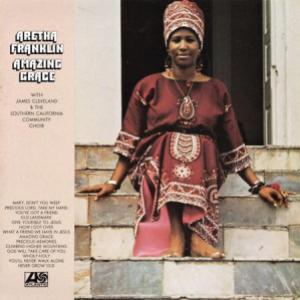 Aretha Franklin represents something of a quandary for me. She was, without question, one of the greatest singers of the 20th century — never mind calling her the “Queen of Soul,” which diminishes her universality. Her 2016 show at the Blue Hills Bank Pavilion was among the great concerts I’ve ever had the honor of attending.


