The proliferation of Republican-backed, secretive local-news sites is not a new story. We’ve talked about it on “Beat the Press” several times. Just a few weeks ago, I had to do some research to determine whether a digital newspaper I was writing about might be one such site. (It wasn’t.)
But a front-page story in today’s New York Times takes an unusually deep dive into the phenomenon. Davey Alba and Jack Nicas report that about 1,300 of these sites are under the control of Brian Timpone, “a TV reporter turned internet entrepreneur who has sought to capitalize on the decline of local news organizations for nearly two decades.”
Alba and Nicas carefully document what looks like something awfully close to “pay to play.” For instance, a Republican congressional candidate from Illinois named Jeanne Ives has paid Timpone’s operations $55,000 over the past three years. “During that time,” they write, “the Illinois sites have published overwhelmingly positive coverage of her, including running some of her news releases verbatim.” (Ives claims the money was for web services and Facebook ads rather than for favorable coverage.)
For me, the wildest angle was learning that Timpone is the guy who was behind Journatic, a much-loathed project that produced automated local news stories as well as content using grossly underpaid, out-of-town reporters — including cheap Filipino workers who wrote articles under fake bylines. As I wrote in 2012, Journatic’s work product was widely known as “pink slime” journalism, and it’s hard to see how Timpone’s news project is much better.
The new pink slime — which I should say is not limited to Republican sites, though they seem to comprise the overwhelming majority of them — takes advantage of the collapse of local news and the rise of news deserts throughout the country. Unsuspecting readers are no doubt grateful to run across some local news, and it’s only later (if at all) that they find out they’re reading propaganda. In that sense, Timpone’s operations are similar to Sinclair Broadcasting, which promotes a right-wing line but which, unlike Fox News, does so under the cover of a network of local television stations.
According to the map accompanying the Times story, there are 16 such pink-slime sites in Massachusetts. I’d love to see a list, and will add one if someone can point me to it.
Last spring I warned that the media might seek out dubious issues to even things up if former Vice President Joe Biden built a substantial lead over President Donald Trump. So far we haven’t seen much of that. But Biden’s reluctance to say whether he would try to expand the size of the Supreme Court has proved to be something of a speed bump for the Biden-Harris campaign.
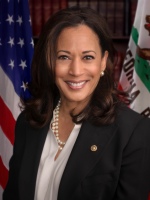
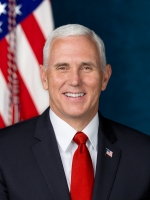
“Harris Dodges Questions on Support for Supreme Court Packing at Debate,” said CBS News following Sen. Kamala Harris’ encounter with Vice President Mike Pence. “Biden and Harris Need an Answer on Court Packing,” proclaimed The Atlantic. And they were hardly alone. (Thanks to Eric Boehlert’s newsletter, Press Run, for rounding up the headlines.)
The problem with this focus on “court packing” isn’t that it’s not a legitimate issue. We would all like to know if a Biden administration would seek to add seats. What’s really at issue, though, are matters of language and context.
“Court packing” sounds like an abuse of power rather than something the president and Congress can do as a matter of law. The context, of course, is that the Republicans, under Senate Majority Leader Mitch McConnell, stole one court seat by refusing to consider Judge Merrick Garland, President Barack Obama’s choice to replace Justice Antonin Scalia, even though the nomination came months before the 2016 election. And now McConnell is on the verge of stealing a second seat by ramming through the nomination of Judge Amy Coney Barrett to replace Justice Ruth Bader Ginsburg even as ballots in the presidential election are already being cast. Yet it is Biden who is facing questions.
“What makes this so especially bizarre,” writes Boston College history professor Heather Cox Richardson in her newsletter, Letters from an American, “is that it is Republicans, not Democrats, who have made the courts the centerpiece of their agenda and have packed them with judges who adhere to an extremist ideology.”
Once Barrett has been confirmed, and there is little doubt about that, Trump will have named three of the nine justices under the most undemocratic, unrepresentative circumstances imaginable.
As we all know, Trump lost the popular vote to Democratic nominee Hillary Clinton by 48% to 46%, a margin of more than 2.8 million. What’s less well known is that Republican senators represent fewer people than Democratic senators even though they hold the majority.
During the 2017-’08 session, for instance, when Justices Neil Gorsuch and Brett Kavanaugh were confirmed by slim margins, (54-45 and 50-48, respectively), the Senate’s 50 to 52 Republicans (the number changed several times) represented about 44% of the country’s population. Democrats and independents who caucus with them represented 56%. The 53 Republicans who will decide Barrett’s fate represent less than 47% of the country. (Click here for a chart breaking down the numbers. The 2017-’18 figures are based on 50 Republican senators.)
If you’re thinking this is not how we ought to conduct business in a democracy, well, you’re right. And yet there is reason to doubt that modern Republicans even support the idea that the majority ought to rule. Last week, for instance, U.S. Sen. Mike Lee, R-Utah, tweeted a message right out of the authoritarian playbook: “Democracy isn’t the objective; liberty, peace, and prospefity [sic] are. We want the human condition to flourish. Rank democracy can thwart that.”
Democracy isn’t the objective; liberty, peace, and prospefity are. We want the human condition to flourish. Rank democracy can thwart that.
And sure enough, new research by psychology professor Bob Altemeyer and Nixon administration alumnus John Dean shows that Trump supporters are increasingly eschewing elections in favor of the strongman system of government, according to The Washington Post. For instance, about half of Trump supporters agreed that “once our government leaders and the authorities condemn the dangerous elements in our society, it will be the duty of every patriotic citizen to help stomp out the rot that is poisoning our country from within.”
Which brings me back to where I started. A president who lost the popular vote will have nominated three Supreme Court justices, confirmed by a Senate controlled by a party that represents millions fewer Americans than the opposition Democrats. Two of those three justices, Gorsuch and Barrett, will owe their presence to Republican norm-shattering. And Republican support for democracy in general appears to be waning.
Given all that, the possibility that Biden may seek to enlarge the size of the court sounds like a good move.
Several years ago I offered a few ideas on how to fix the court — to repair the damage done by McConnell and restore its image as a trusted institution. The court is still in drastic need of fixing. So let me offer a few more — none original with me, but proposals I’ve gleaned following the death of Justice Ginsburg. More than anything, the court has become too important. The following steps would make every vacancy less a matter of life and death than it is now.
First, if Barrett is confirmed, Biden is elected president and the Senate flips to blue, Democrats should expand the court by two members. Some progressives have argued for four new seats, but that would be an overreach. Two new seats would restore the ideological balance of the court that existed before Justice Scalia’s death. Perhaps the number could move back to nine over time.
Second, justices should be subjected to term limits. Eighteen years sounds about right.
Third, each president ought to get the same number of picks per term. Two? If a president is re-elected, then yes, they’d get four picks, which is a lot. But the problem now is that there isn’t enough turnover, and what little there is takes place mainly because of death.
I’ll leave it to better minds than mine to figure out how to square two picks per term with an odd-numbered court of either nine or 11 members.
Our system is profoundly broken. The challenges we face don’t lend themselves to easy solutions. Applying the one-person, one-vote rule that is at the heart of democratic governance, for example, would require major constitutional changes in the form of abolishing the Electoral College and changing the way we choose senators. That’s not going to happen any time soon.
So let’s move beyond the gotcha issue of whether Joe Biden wants to “pack” the Supreme Court. We can reform the court by turning down the temperature and moving it out of its current central role in our political culture. Expanding the size of the court, perhaps temporarily, as well as imposing term limits and guaranteeing a regular rotation of justices, might return us to the days when all but the most extreme nominees were confirmed with consensus support.
Let me wade ever so gently into New York Times columnist Bret Stephens’ latest, in which he joins legions on the right in trashing his own newspaper’s Pulitzer-winning 1619 Project. Since I’m a firm believer in the adage that if there’s something rotten floating around the top of the barrel you need not go fishing underneath to see if there’s something better, I’ll just point to this one passage. Stephens writes:
Here is an excerpt from the introductory essay to the project by The New York Times Magazine’s editor, Jake Silverstein, as it appeared in print in August 2019 (italics added):
“1619. It is not a year that most Americans know as a notable date in our country’s history. Those who do are at most a tiny fraction of those who can tell you that 1776 is the year of our nation’s birth. What if, however, we were to tell you that this fact, which is taught in our schools and unanimously celebrated every Fourth of July, is wrong, and that the country’s true birth date, the moment that its defining contradictions first came into the world, was in late August of 1619?”
“1619 is not a year that most Americans know as a notable date in our country’s history. Those who do are at most a tiny fraction of those who can tell you that 1776 is the year of our nation’s birth. What if, however, we were to tell you that the moment that the country’s defining contradictions first came into the world was in late August of 1619?”
In an email, Silverstein told me that the changes to the text were immaterial, in part because it still cited 1776 as our nation’s official birth date, and because the project’s stated aim remained to put 1619 and its consequences as the true starting point of the American story.
Readers can judge for themselves whether these unacknowledged changes violate the standard obligations of transparency for New York Times journalism. The question of journalistic practices, however, raises deeper doubts about the 1619 Project’s core premises.
Pardon the long excerpt, but I wanted you to get the full context. Now, was anyone who read the original text somehow fooled into thinking that the United States was actually founded in 1619? Did anyone go running to Wikipedia to double-check on that 1776 thing? Of course not. It is ludicrous to think that the idea of 1619 as our country’s founding year is anything other than “a metaphoric argument,” as Nikole Hannah-Jones, who conceived of and produced the project, argues.
Echoing President Trump, Stephens complains that this supposedly adulterated history is being taught to school children. Well, the obvious response to that is that maybe the editors decided to tweak the language a bit because they knew kids who haven’t been exposed to this history might, in fact, take the 1619 date literally. So what?
All of this is pretty rich coming from Stephens, who less than a year ago offered a cryptic quasi-endorsement of the idea that Ashkanazi Jews are genetically more intelligent than others, and then got off with an Editor’s Note that didn’t quite acknowledge what he had done, as Jack Shafer of Politico pointed out at the time.
Great ride today on the south side of the Cape Cod Canal bike path, almost exactly a year after we rode the north side. We had to make our way through a stiff headwind on the way back, but otherwise it was a beautiful day with lots to see.
From the moment President Trump appointed Judge Amy Coney Barrett to the Supreme Court, the right has responded with the bogus allegation that opposition to her confirmation was grounded in anti-Catholicism. In fact, it is her right-wing views on reproductive rights and LGBTQ issues, and her membership in another organization, that has attracted notice.
On Thursday, The New York Times published an in-depth look at People of Praise, a religious group to which Barrett’s family has belonged for many years. I urge you to read it, because it strikes me that People of Praise fits at least a few of the definitions that cult expert Steven Hassan identified in his book “Combatting Cult Mind Control” some years back.
The two that come to mind are the group’s secrecy — to this day, Barrett has never confirmed her membership, although it seems pretty well established — and its method of keeping members in line by having others watch over them in what sounds like a pretty suffocating manner. Indeed, Barrett was at one time listed as a “handmaid,” in charge of keeping tabs on others, although the group has since dropped that unfortunate label.
“It wasn’t sinister, but there was a strong sense of membership, of being ‘You’re in or you’re out,’” a disillusioned would-be member named Annie Reed told the Times. “It made me wary.”
It’s hard to know what to make of this, and we shouldn’t get carried away. But if Senate Majority Leader Mitch McConnell insists on moving ahead with confirmation hearings before the election, we need to get a thorough airing of People of Praise and exactly how it has shaped Barrett’s beliefs.
A few minutes before the vice presidential debate started, it occurred to me that Mike Pence might not be all that broken up if President Trump loses. Rather than being trapped by the whims of a dictatorial incumbent, Pence could begin his 2024 presidential campaign.
I’m not saying that Pence tanked it Wednesday night. He made most of the points that he needed to make, and he did it more effectively than Trump did last week — which is to say that Pence didn’t suffer a meltdown on national television. But he struck me as lethargic and semi-engaged. He also looked terrible, with an unexplained red eye that was the talk of Twitter. It was almost as if he’d been around people with COVID-19. When was his last test?
I thought Kamala Harris was very good, especially in the first half-hour, when she dismantled the Trump’s administration’s horrendous record on the pandemic. She was also effective in calling out Pence for mansplaining and for disregarding the time limits. The debate probably won’t have much effect on the race, although Harris, as a newcomer and a woman of color, had to come across as a plausible president. And she did. A CNN instant poll showed that respondents thought Harris won by a margin of 59% to 38%, which is pretty much in line with Trump’s disastrous polling in recent days.
One area in which Pence had a clear advantage was in lying, according to David Leonhardt, who writes The New York Times’ morning newsletter. Leonhardt has a list. From taxes to health care, from climate change to mail-in voting, Pence lied about Trump’s record and Biden’s positions in a way that went well beyond what’s considered “normal” in political rhetoric, Leonhardt says.
The problem with such a blizzard of lies is that no candidate can call out all of them, and even when she does, the viewers’ takeaway is that they’re both lying.
The Boston Globe and The New York Times today endorse Joe Biden and Kamala Harris for president and vice president. No surprise, of course. But the two editorials — especially the Globe’s — are indications of how newspapers are trying to keep the hoary old tradition of endorsements relevant in the 21st century.
First, it’s early. Traditionally, newspapers endorse as close to Election Day as possible, partly for maximum impact, partly to reduce the number of days that their news reporters have to labor under the burden of reporting fairly on candidates whom their paper’s opinion pages had spurned.
No more. These days, Election Day is merely the last day that you can vote. Early voting and mail-in balloting are already under way. If endorsements are going to have any influence at all, they need to be published before the majority of people have voted. And that’s now.
Second, digital media often obliterate the distinction between news and opinion. At large papers like the Times and the Globe, the editorial and news operations are separate. And sure enough, the front pages of today’s print editions don’t even mention that their editorial pages are endorsing — not even in the teases at the bottom of the page.
Yet the Times home page notes that the editorial section is endorsing Biden, a function of the Times’ opinion highlights in the right-hand rail. And the Globe actually leads the home page with its endorsement (see above). Savvy news consumers, especially those who came of age during the print era, won’t be confused. But not everyone is a savvy news consumer.
Third, though the Times endorsement is pretty old-fashioned and straightforward, the Globe’s is innovative — an attempt, no doubt, to get beyond the reality that everyone knew the Globe was going to endorse Biden. They’ve given the editorial a vibrant digital treatment. More interesting still, they’ve got 12 separate mini-editorials addressing different types of voters — the “business voter,” the “disenchanted Trump voter,” the “religious voter” and the like.
I’ve always doubted that newspaper endorsements can sway voters in presidential races; they are more influential in less visible contests in which readers don’t necessarily know much about the candidates. But Globe editorial-page editor Bina Venkataraman and her crew deserve credit for breaking out of the box of the old-fashioned endorsement.
But given the gerontological cast of the two presidential candidates, tonight’s encounter between Vice President Mike Pence and his Democratic challenger, Sen. Kamala Harris, promises to be more significant than usual. Pence’s boss, President Donald Trump, is 74 and is currently recovering from COVID-19. The top of the Democratic ticket, former Vice President Joe Biden, is 77, and though his health seems fine, he would be the oldest person by far to be elected president. Thus Pence and Harris both give new meaning to the phrase “a heartbeat away from the presidency.”
The presidential campaign itself has been marked by more improbable twists and turns than a self-published mystery novel — from impeachment to stunning revelations about Trump’s taxes, from a worldwide pandemic to economic collapse. In recent days, though, with early voting already under way, it’s begun to seem like the final plot developments are slipping into place.
First, Trump’s catching COVID seems like a metaphor for his entire horrendous response to a disease that has now killed more than 210,000 of his fellow Americans. Just as with the country as a whole, he has shown blatant disregard for those in his immediate circle, resulting in what amounts to a mini-pandemic ripping through the White House and among top Senate Republicans.
He held indoor and outdoor events for his Supreme Court nominee, Judge Amy Coney Barrett, at which few people wore masks. Because of characteristic obfuscation and lying by him and his staff, we don’t know exactly when he was diagnosed or how sick he really is. He put his own Secret Service agents at risk by cruising around Walter Reed Hospital.
And let’s face it. Even though no decent person wants Trump to become seriously ill, it sent a terrible message to the country for him to announce, as he did on Monday after being discharged from the hospital, “Feeling really good! Don’t be afraid of COVID. Don’t let it dominate your life.” Not only is that an insult to the dead and those still struggling with the after-effects of the virus, but it’s also not the way to encourage mask-wearing and social-distancing.
Second, Biden may be on his way to a decisive if not overwhelming victory. Among media observers, the narrative in place since March has been that if Trump loses, it will be because of COVID and the economy. Don’t you believe it.
According to the RealClearPolitics polling average, Biden has held a steady lead over Trump since October 2019, which makes sense given that Trump is a historically unpopular president. That lead has been widening in recent days, with a Wall Street Journal/NBC News poll conducted after the first chaotic debate putting Biden ahead by a margin of 53% to 39%.
Of course, it’s not over till it’s over. Biden’s lead in the handful of states that will determine whether he can win an Electoral College victory is narrower than it is in the national polls, and we still don’t know how Republican efforts to suppress the vote will play out, or if with Russian propaganda will have an effect.
The most likely scenario, though, is that we’ll find ourselves looking back after the votes are tallied and see that our belief that Trump would somehow pull one last, ginormous trick out of a hat was grounded more on flashbacks to 2016 than on the last four years. Many of us have watched in amazement as Trump’s approval rating has never dipped much below 40%. The corollary, of course, is that it’s never risen much above that, either. Almost from the day he was inaugurated, more than half the country has has disapproved of Trump’s performance as president. And between now and Nov. 3, they can register that disapproval at the polls.
But first comes the encounter between Pence and Harris. Pence is easily caricatured as the ultimate Trump suck-up whose base doesn’t extend much beyond the evangelical vote. Four years ago, though, Hillary Clinton’s running mate, Sen. Tim Kaine, couldn’t put a dent in him. Pence is better at this sort of thing than his detractors imagine.
Fortunately for the Democrats, Harris is a considerably more nimble debater than the hapless Kaine. At one time I thought she might be her party’s strongest presidential candidate, but her uneven campaign took her out of contention. Despite that, she is a first-rate political talent, smart, personable and — the key, given Biden’s age — credible as a possible president.
Given that Biden, if he wins, would be 82 by the time his first term ends, it seems more than likely that both Harris and Pence will be running for president four years from now. Look at tonight as a rehearsal for 2024 — played out in the midst of one of the worst crises our country has experienced.
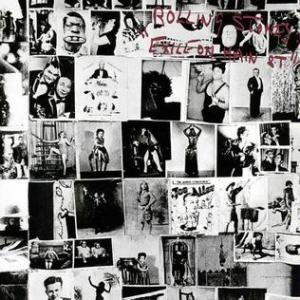
If this isn’t the greatest rock-and-roll album ever recorded, it’s pretty damn close. Disdained at the time of its 1972 release, “Exile on Main St.” today is regarded as the Rolling Stones’ best work — a chaotic double-record set comprising a few classic songs and a jumble of bits and pieces. There’s a lot of filler on “Exile” — but it’s great filler.
Now for a controversial assertion: “Exile” is not only the Stones’ best album, but it’s so much better than anything else they’ve done that you’re left gaping in wonder. I’ve said that about two other albums on the list — Derek and the Dominos’ (i.e., Eric Clapton’s) “Layla” (No. 6) and Van Morrison’s “Astral Weeks” (No. 12). But I think most people would agree with me in those cases. Making that same argument about any album by the Rolling Stones, though, flies in the face of classics like “Beggars Banquet” (1968), “Let It Bleed” (1969) and “Sticky Fingers” (1971) — not to mention the live “Get Yer Ya-Ya’s Out!” (1970), my second-favorite Stones album, largely on the strength of Keith Richards’ amped-up guitar.
Well, I’ll stick with it. Mick Jagger has a reputation for being a control freak, and the other albums, for all their raw power, are just a little too perfect. “Exile,” largely recorded while the band members were literally tax exiles holed up in France, is right on the verge of veering out of control, more Keith than Mick. Not to glorify drug use, but Richards had a raging heroin habit at the time, and that led to some weird lineups, such as guitarist Mick Taylor playing bass on “Tumbling Dice” instead of Bill Wyman.
Let me linger on “Tumbling Dice” for a moment, because I think it’s the Stones’ single greatest song — which is saying a lot. It opens with a classic Richards riff and features a gospel choir, supposedly inspired by Jagger’s attending the concert at which Aretha Franklin performed the songs that became her album “Amazing Grace” (No. 22). There are little touches that kill me every time I hear them. Charlie Watts marking time during the outro, only to come crashing back in. Keith’s now-you-hear-him-now-you-don’t harmonies. Mick’s wail seguing perfectly into a slide guitar. Something magical and desperate was captured that night. I’ve only seen the Stones once, but I’ve listened to “Tumbling Dice” on several live albums, and it’s flat and uninspiring by comparison. That’s really saying something for a band whose songs usually sound better live than in the studio.
Beyond that, it’s hard to pick favorites. “Rocks Off” for the great line “The sunshine bores the daylights out of me.” “Happy,” maybe Keith’s best vocal performance. “Hip Shake,” “Casino Boogie,” “Torn & Frayed,” “Turd on the Run,” “Ventilator Blues,” “Just Want to See His Face” — what we used to call deep album cuts, with a ragged, not-quite-finished quality. “Black Angel,” “Loving Cup,” “Let It Loose” and “All Down the Line” are all melodic and beautiful while still rocking hard.
The Stones recorded some fine albums after “Exile,” most notably “Black and Blue” (1976) and “Some Girls” (1978). And they’ve remained an excellent live band, not to mention a vibrant cultural force well into their 70s. From “Satisfaction” to their COVID song, “Living in a Ghost Town,” they have been a welcome presence in our lives for more than 50 years.
On “Exile,” though, they achieved something higher: transcendence.
The Boston Globe’s paid digital circulation has reached the 270,000 range, according to the annual publisher’s statements that appear in Sunday’s and today’s editions.
It was only in May that the Globe passed the 200,000 mark — a long-sought goal that had been seen internally as the benchmark for financial sustainability. Nevertheless, the new figure (268,337 as of Sept. 4) comes with a caveat. Like many papers, the Globe has been signing up new subscribers at a steep discount. The challenge will be holding onto them once they are asked to re-up at the full rate of $30 a month.
How quickly has the Globe added digital subscribers? The publisher’s statement says that the average for the previous 12 months was 199,172. And editor Brian McGrory said earlier this year that the digital circulation was about 145,000 just before the COVID pandemic hit. As devastating as COVID has been to advertising revenue, it’s clearly been very good for reader revenue.
Paid print Friday circulation was down to 81,579 as of early September, lower than the 12-month average by about 1,500. A similar slide was reported in the publisher’s statement that appeared on Sunday: print circulation was 139,307 as of Sept. 6, down nearly 10,000 from the 12-month average. Sunday digital circulation was reported at 271,401. Since digital subscriptions are generally sold by the month, I’m not sure why there’s a slight discrepancy between the Friday and Sunday figures.
Even if you add digital and print together, the Globe’s numbers fall considerably short of the 1970s-’80s heyday, when the paper sold more than 800,000 copies on Sundays and 500,000 on weekdays. Still, it’s an encouraging trendline that has been matched by few other papers below the national level.
*Apples-and-oranges update: In an email to the staff, a copy of which I obtained a little while ago, McGrory said the 270,000 figure can’t be compared directly to the 205,000 number that the Globe hit in May.
“We’ve got just under 223,000 direct digital-only subscribers — people who pay for a purely digital subscription with no print component,” he wrote. The 270,000 number includes subscribers who receive digital as part of their print subscriptions.
McGrory referred to the 223,000 figure as “extraordinary,” adding: “As extraordinary: We’ve been graduating our introductory, $1-for-six-month readers to a full rate at an astounding clip from August into October. In other words, our pandemic subscribers are staying with us at at a level that exceeds anything we’ve previously seen or imagined. So when you hear, or read, that our digital subscription numbers are boosted by a bunch of basically worthless introductory readers, that’s not true. The majority of our subscribers are paying full rate, and those who aren’t are very likely to be when their offer runs out.”