Joe Biden delivered a fantastic, powerful and uplifting speech. I’m blown away. It was perfectly suited to who he is. He may not be an orator on the level of Barack Obama, but Obama couldn’t have given a speech that was so personal and intimate.
Not only was it the best speech of Biden’s life, but I also thought it was the best speech of the week — outshining some truly terrific moments from both Obamas and from Kamala Harris. I don’t see how the Democrats could possibly have done any better than they did with their virtual convention.
A word we’ve heard a lot this week is “empathy.” I don’t think we’re going to hear it much next week. Or see it, for that matter. Can we finally bring the Trump nightmare to a close?
Among those of us who follow the business of local news, there is a tendency to lump the two most notorious corporate chain owners together. Gannett Co. and Alden Globe Capital, after all, are both notorious for slashing their newsrooms to the bone. Their newspapers and websites in too many instances fail to meet the information needs of the communities they purportedly serve.
Yet there is a difference. And I was reminded of that difference recently by Rick Edmonds, who analyzes the media business for the Poynter Institute.
After a decade’s worth of cuts, Gannett is planning to bolster its reporting corps in the near future, Gannett chief executive Mike Reed told Edmonds — although he didn’t provide any numbers. Currently, Gannett employs about 5,000 journalists at its properties, which include USA Today, about 260 regional dailies and many other weekly papers and websites, including dozens in Greater Boston.
“We need to get even better,” Reed was quoted as saying. Well, OK. I would replace “even” with “a lot.” Still, such talk would be unimaginable at Alden Global Capital, whose MediaNews Group chain of about 200 papers has sparked newsroom revolts as well as demands from 21 U.S. senators that the company stop its “reckless acquisition and destruction of newspapers,” according to a recent story by Sarah Ellison in The Washington Post.
The difference between how Gannett and MediaNews are perceived may have something to do with their ownership structures.
The current Gannett is the result of a merger late last year between Gannett and GateHouse Media. Despite keeping the Gannett name, it was clearly GateHouse that got the better of the deal: Reed was the chief executive at GateHouse before assuming the same position at Gannett. The new Gannett immediately embarked on an estimated $400 million in cuts in order to pay down the debt it had taken on in financing the merger, according to the media-business analyst (and newly minted entrepreneur) Ken Doctor at Nieman Lab.
Gannett is a publicly traded corporation, which means that Reed’s ultimate goal is long-term growth and sustainability — albeit with as little journalism as the company can get away with. Reed hopes to do that by leveraging Gannett’s media holdings with digital marketing subsidiaries the company owns as well as an events business, which is obviously on hold during the COVID pandemic.
If everything works out over time, it is possible to imagine Gannett’s local news outlets staffing up and providing better, more comprehensive coverage than they have in recent years. As good as what would be offered by independent newspapers and websites? Almost certainly not. But any improvements would be welcome.
Alden Global Capital, on the other hand, is a hedge fund. And as best as anyone can tell, the company has no strategy for MediaNews Group beyond extracting as much money as it can for as long as it can. Its Massachusetts papers, the Boston Herald, The Sun of Lowell and the Enterprise & Sentinel of Fitchburg, operate on a shoestring. The Fitchburg office was closed several years ago. The Herald’s office in Braintree was recently shut down as well, although it’s unclear whether that was a temporary, COVID-related move or something permanent.
In Ellison’s Washington Post article, Alden managing director Heath Freeman tried to portray himself as a savior of journalism. “I would love our team to be remembered as the team that saved the newspaper business,” he was quoted as saying. Ellison, though, ran through a list of MediaNews papers across the country that have been so gutted that they have virtually no one to cover the news.
“Don’t buy the idea that Alden is trying to save newspapers. I don’t think any idiot would buy that,” said Dean Singleton, the owner of an earlier iteration of MediaNews Group whose own reputation as a cost-cutter looks benign by today’s standards. Freeman’s retort: “We’ve saved the very newspapers that Dean Singleton ran into bankruptcy, so take his recriminations with a grain of salt.”
Stop me if you’ve heard me say this before, but quality local news can be a key to reviving civic engagement, which in turn could help us overcome the hyperpolarization that defines our culture nationally. According to a recent survey by Gallup and the Knight Foundation, 70% of Americans believe the news media play a “critical” (30%) or “very important” (42%) role “in making residents feel connected to their local community.”
“While national press was perceived by residents of all political backgrounds as distant, privileged, and dismissive of local culture,” she wrote, “it was not uncommon for residents to have first- or secondhand interactions with local reporters. So while participants could identify shortcomings, there was a base-level familiarity and trust.”
Those interactions are important — but they are becoming increasingly rare at the local news organizations being run by Gannett and MediaNews Group. At least there’s some reason to hope that the situation might improve at Gannett. As for MediaNews, a former reporter for the chain, Julie Reynolds, put it this way in The Nation several years ago: “Don’t just blame the Internet for journalism’s decline. Old-fashioned capitalist greed also strangles newspapers.”
I thought former President Obama and Sen. Kamala Harris offered an interesting juxtaposition tonight. Obama’s unsmiling speech was stark — appropriately so, given that we really are in danger of losing our democracy.
That gave Harris the chance to take a contrasting approach and end the night with a heavy dose of inspiration and uplift. And she delivered in the midst of an empty hall. You can only imagine what the reception would have been like if she’d been speaking in a packed convention center.
I also liked her reference to “the beloved community,” a phrase associated with the Rev. Martin Luther King Jr. that we hear in our church. It conjured images of a religious left, serving to remind viewers that the right doesn’t have a monopoly on faith.
We had a great time with friends Saturday on the rail trail in Salem, Windham and Derry, New Hampshire — 18 miles total. There was even a nice little outdoor lunch place along the way.
As with Tom Waits, Van Morrison and a few of the others on this list, I didn’t tune in to John Prine until his career was well under way. In 1991, songs from his remarkable album “The Missing Years” began popping up on the radio, and I liked them enough to buy the CD. It is a wonderful piece of work, warm, funny and wistful, showing off Prine at his best.
The title was in part a play on Prine’s five-year absence from recording — but it also echoes the last song on the album, “Jesus The Missing Years,” a hilarious meditation on what Jesus may have been up to during all those years between childhood and his public ministry. But that song is a trifle — the rest of the album consists of more substantial fare, alternating between solo acoustic songs and full-band workouts. The highlights are “All the Best,” “The Sins of Memphisto,” “Take a Look at My Heart,” “Everything Is Cool” … actually, everything on the album is pretty great.
“The Missing Years” was Prine’s first album since the death of his longtime friend and producer Steve Goodman. Howie Epstein, the bassist in Tom Petty and the Heartbreakers, lent Prine a crisper, more pop-oriented sound without sacrificing any of Prine’s rootsiness. Epstein also brought in a raft of guest singers, including Bruce Springsteen and Bonnie Raitt. Unfortunately, Epstein’s hack tendencies came to the fore on Prine’s 1995 follow-up, “Lost Dogs and Mixed Blessings,” which has some fine songs but is marred by a generic rock sound. (It does have the greatest album cover of all time.) Prine recorded only sporadically after that.
Prine was something of a legend from the beginning of his career in the 1970s, when he was hailed as a “new Dylan” — like so many others, including Springsteen. I had long been smitten with Bonnie Raitt’s version of his song “Angel from Montgomery.” “The Missing Years” sent me back into Prine’s catalog. But though he was a strong songwriter right from the start, I’d argue that “The Missing Years” is his best album. His singing, thin and unattractively smug when he was in his 20s, had mellowed into something deeper and more empathetic. And though the young Prine was justly celebrated for wise-beyond-his-years songs like “Hello in There,” he was also capable of cranking out a nasty piece of work like “Donald and Lydia,” which cruelly mocks two young losers for no discernible reason. By contrast, “The Missing Years” is the work of someone who sounds like you’d enjoy having a few beers with to discuss the meaning of life.
In poor health for many years, Prine died of COVID-19 back in April. We were fortunate enough to see him perform in Boston in 2018; he was in surprisingly fine voice and in even finer spirits. If you get a chance, check out his two albums of duets with female singers on classic country songs, “In Spite of Ourselves” (1999) and “For Better, or For Worse” (2016). Also worth a listen is his final album, “The Tree of Forgiveness” (2018), his last collection of original songs.
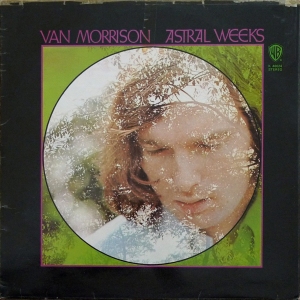
As far as I was concerned, Van Morrison was just a voice on the radio. I liked some of his stuff, not all of it. I wasn’t motivated to buy any of his albums. If I had to describe him, I’d have said he was, well, OK.
But I’d heard about an album he’d made near the beginning of his career that never got played on the radio and that supposedly established him as a genius on the order of Bob Dylan or the Beatles. So on the same day in 1990 that I was picking up Tom Waits’ “Franks Wild Years” in the used-CD bin at Tower Records, I decided to take a chance on Morrison’s “Astral Weeks.”
Released in 1968, “Astral Weeks” is mostly acoustic jazz/folk/rock with a first-rate band anchored by the bassist Richard Davis. It is an intensely spiritual record, explicitly on the title track, implicitly on the rest. The melodies are simple and repetitive, giving Morrison’s singing — improvisational and heartfelt — plenty room to stretch out. Morrison supposedly didn’t like the strings that were added later, but I disagree.
I’m nothing but a stranger in this world I got a home on high In another land So far away So far away Way up in the heaven
The most fully realized songs on “Astral Weeks” are the title track, “Cypress Avenue” and “Madame George,” which transport you — as Morrison sings — to “another time, in another place.” Overall, “Astral Weeks” is so much better than anything else Morrison recorded that you are left in awe, wondering where it came from. And we’re talking about a musician who’s recorded many fine albums over the years.
There’s a wild backstory to it as well. Morrison wrote and rehearsed much of the album while in Cambridge and Boston while in hiding amid a nasty dispute over the rights to his recordings following his big 1967 hit, “Brown Eyed Girl.” Ryan Hamilton Walsh wrote it up for Boston magazine in 2015; he later expanded it into a book.
As nearly every political observer has said, Kamala Harris was the “safe” choice to be Joe Biden’s running mate. And though that’s almost certainly true, it’s pretty amazing that the first Black woman named to a presidential ticket is also considered the least controversial.
“That a Black, first-generation American is described that way says everything about where the Democratic Party stands in 2020,” writes Boston Globe columnist Adrian Walker. “Harris wouldn’t have been the least bit safe four years ago.”
I think the reason that Harris is seen as the safe choice is that Biden had already promised to pick a woman — and, by the time he got around to making his pick, the moment had shifted in favor of a Black woman. The police killing of George Floyd and the revival of the Black Lives Matter movement combined to create an environment that was just right for Harris. Several other Black women were in the mix, but none had Harris’ stature, experience or, frankly, ideological flexibility, which sounds like a bad thing but really isn’t.
Way back when the presidential campaign was just getting under way, I thought Harris might make the strongest contender. Her trajectory, though, zig-zagged, then bottomed out. She started out well, faded, then revived her campaign with her attack on Biden at the first debate.
Then, at the second debate, she seemed unable to explain her own health-care plan. It only got worse from there. At one point Harris used her time in the post-debate spin room to demand that Elizabeth Warren join her in calling on Twitter to cancel President Trump’s account. Seriously.
But Harris is smart and charismatic. She should make a fine running mate, just as Biden did despite having two comically inept presidential campaigns on his résumé when Barack Obama chose him in 2008. I can’t wait to see her debate Mike Pence.
Two key moments bookended Tuesday night’s U.S. Senate debate between Democratic incumbent Ed Markey and his primary challenger, U.S. Rep. Joe Kennedy III. We probably won’t know for a few days whether either of those moments will matter. But with early voting under way and polls showing the race to be up for grabs, any edge could make a difference.
The first moment came early, when Kennedy brought up recent reports that the parents of Danroy “DJ” Henry Jr. had accused Markey of acting indifferently — even using the term “colored” — at a meeting over the 2010 killing of their son by a white police officer.
“You did nothing,” Kennedy said. “I have stood by that family for year after year through thick and thin.”
Presumably Markey, who has apologized to the Henry family, knew the matter would come up. But he seemed flat-footed, asserting over and over that he, Kennedy and Sen. Elizabeth Warren had all worked together to draft letters demanding an investigation by the U.S. Justice Department.
“When Congressman Kennedy says I did nothing, he knows it’s not true,” Markey said. “He knows it is a falsehood.”
But that merely created an opening for Kennedy, who retorted: “Let’s be very clear. It’s not my words that said you did nothing. It’s Mr. Henry’s words that said you did nothing.” Score one round for Kennedy on the crucial issue of racial justice.
The second moment came later. Markey complained that Kennedy’s twin brother, Matthew, is running a Super PAC — a campaign fund not directly affiliated with a candidate — that has been responsible for multiple attack ads against Markey.
Markey then speculated that Kennedy’s father, former congressman Joe Kennedy II, was helping to fund the Super PAC with money from fossil-fuel companies with which he’d done business.
“Is your father funding that Super PAC that is attacking me right now?” asked Markey.
“No clue, no idea,” Kennedy responded. He quickly tried to change the subject, pointing out that it was Markey who declined to sign a “People’s Pledge” keeping undisclosed outside money out of the campaign.
Markey lowered the boom: “I’m sure your father is watching right now. Tell your father right now that you don’t want his money to go into a Super PAC that runs negative ads.” As several people pointed out on Twitter, it might have been illegal for Kennedy to do as Markey had demanded, since candidates are forbidden from coordinating with Super PACs. Nevertheless, it was an effective bit of political theater.
And then Kennedy went too far, accusing Markey supporters of pushing social-media posts referencing Lee Harvey Oswald, the man who assassinated John F. Kennedy. Markey seemed genuinely offended at the accusation that toxic internet trolls were somehow tied to his campaign.
““No one affiliated with my campaign would ever say anything like that,” Markey said, dropping his voice. He added that it was “completely unacceptable.”
The debate, broadcast on WBZ-TV (Channel 4) and moderated by political analyst Jon Keller, was freewheeling, although much of it focused on small issues and even smaller differences between the two candidates.
With both candidates espousing progressive agendas, the campaign has come down to Markey’s legislative record, compiled during more than four decades in office, versus Kennedy’s contention that he would lead the fight for the values they share across the country.
“I have more than 500 laws on the books that have been signed by presidents,” Markey said. “That is what I do.”
Responded Kennedy: “The difference is: he’ll vote for it, I’ll fight for it.”
One particularly hot potato Keller dropped in their laps was a question about whether they would endorse a candidate of color next year against Boston Mayor Marty Walsh. It was an opportune moment, Keller said — not only is racial equity an issue that has risen to the top of the national agenda, but Democratic presidential candidate Joe Biden had just chosen U.S. Sen. Kamala Harris, a Black woman, as his running mate. But both men left the tin foil on the spud and tossed it harmlessly away.
“It’s impossible to predict the future. It just is,” Markey said. “You’re asking a hypothetical. Mayor Walsh is doing a good job.” Kennedy added, “Mayor Walsh certainly deserves a chance to make his case.”
The last day of voting (what we used to call primary day) is Tuesday, Sept. 1. Two Republicans are also seeking the Senate seat: Shiva Ayyadurai, a technology entrepreneur, and Kevin O’Connor, a lawyer. The Democratic and Republican nominees will face off to determine the winner on Nov. 3.
Philadelphia and its environs are emblematic of what’s gone wrong with local news. The area is served by a well-regarded metropolitan newspaper, the Philadelphia Inquirer, and a powerhouse public radio station, WHYY, as well as various television newscasts. But the focus of those outlets is regional, not local. At the grassroots neighborhood and community levels where people actually live, journalism is scarce and looked upon with suspicion.
Rebuilding local news in places like the Philadelphia area is the subject of Andrea Wenzel’s Community-Centered Journalism: Engaging People, Exploring Solutions, and Building Trust.