Let the sun shine in: It’s time to end the legislative exemption to the state’s public records law

Photo via Good Free Photos.

Previously published at WGBHNews.org.

It’s long past time to close a gaping loophole in the Massachusetts public records law: an exemption that allows the Legislature to conduct much of its business in secret. State agencies as well as cities and towns are required to turn over all manner of documents when members of the press and the public ask them to do so. Our elected lawmakers, though, operate under the cover of darkness.

With legislative business wrapping up during the next few weeks, it’s too late to expect anything to happen this year. But Robert Ambrogi, executive director of the Massachusetts Newspaper Publishers Association, said he expects bills aimed at rolling back at least part of the exemption to be filed next January. Unfortunately, he also expects those bills to die the same quick death that similar proposals have in previous years.

“The Legislature has no interest in changing the status quo,” Ambrogi said in an email. Justin Silverman, executive director of the New England First Amendment Coalition, added he was “fairly certain there is no appetite” on Beacon Hill for any serious effort at reform.

Spokespersons for the Legislature’s Democratic leaders, House Speaker Robert DeLeo and Senate President Karen Spilka, declined to comment.

What prompted this column was a tweet. Two weeks ago, WGBH News published the annual New England Muzzle Awards, which spotlight outrages against the First Amendment from across the region. Anthony Amore, a security expert who was the 2018 Republican candidate for secretary of state, posted on Twitter: “Somehow the Massachusetts Legislature and Robert DeLeo escaped notice despite the most glaring muzzle of them all, exempting themselves from public records requests.”

https://twitter.com/anthonymamore/status/1278765068096876545?ref_src=twsrc%5Etfw%7Ctwcamp%5Etweetembed%7Ctwterm%5E1278765068096876545%7Ctwgr%5E&ref_url=https%3A%2F%2Fwww.wgbh.org%2Fnews%2Fcommentary%2F2020%2F07%2F16%2Flet-the-sun-shine-in-its-time-to-end-the-legislative-exemption-to-the-states-public-records-law


Sadly, the exemption Amore was complaining about is hardly a shocker given the sorry state of open government in Massachusetts. According to a 2018 survey by the nonprofit investigative news project MuckRock, Massachusetts is just one of four states that do not subject their legislatures to public records laws. The others: Iowa, Minnesota and Oklahoma.

“In our state’s constitution, it says that the Legislature should be ‘at all times accountable to’ the people,” Mary Connaughton of the Pioneer Institute told MuckRock. “How can they be accountable if they are hiding behind closed doors or shielding their records from the people?”

MuckRock also pointed out that the four outliers are merely following the lead of Congress, which is exempt from the federal Freedom of Information Act. But that’s hardly an excuse. Let’s not forget that, in 2015, the Center for Public Integrity awarded Massachusetts an “F” for its miserable record of failing to provide public access to information.

The Legislature and Gov. Charlie Baker did approve an upgrade to the public records law in 2016. But though some progress was made in terms of fees and enforcement provisions, the loopholes remain. Indeed, not only is the Legislature exempt, but so is the judiciary. And a string of governors, including Baker, have claimed that they and their immediate staff also need not comply.

As Boston Globe investigative reporter Todd Wallack noted on Twitter earlier this week: “Massachusetts remains the only state where the courts, Legislature, and governor’s office all claim to be completely exempt from public records laws.”


Ambrogi said that, during negotiations over the 2016 bill, it was made clear to reform advocates that their efforts would be derailed if they targeted the legislative and gubernatorial exemptions. The bill did create a special legislators-only commission to study further changes — but that effort, according to Ambrogi, has barely gotten off the ground.

In testimony before the commission nearly two years ago, Ambrogi said, a coalition of advocates called for removing the exemption for the governor and for modifying the exemptions for the Legislature and the courts. He emphasized that the advocates have not asked that the legislative exemption be repealed in its entirety. Rather, he said, “we proposed subjecting certain legislative records to the public records law, such as financial reports, bills and resolutions, journals, certain internal memoranda, internal manuals and policies, meeting minutes, and more.”

In a recent point-counterpoint feature in The Boston Globe, Lawrence Friedman, a professor at the New England School of Law, defended the legislative exemption. “It is not difficult to imagine state representatives and senators censoring themselves out of concern that their words might be taken out of context,” Friedman wrote. “Perspectives about proposed laws and their implications could go unshared and, therefore, unconsidered.”

Yet 46 state legislatures somehow manage to conduct business without such secrecy provisions. As Friedman’s sparring partner, Justin Silverman, argued, “These types of records are used by community watchdogs, journalists, and concerned citizens throughout the country to keep their legislators accountable.” Silverman added that with the COVID-19 pandemic reducing access to government officials, being able to obtain records is more important than ever.

If state agencies, city councils, school committees and select boards can comply with the law, then so, too, can our legislators — and our governor and our court system as well. The law already contains a number of common-sense exceptions for such matters as protecting the secrecy of contract negotiations and, when warranted, the privacy of government employees.

There are a number of clichés you could invoke here — sunshine is the best disinfectant, the government works for us, the public’s business should be conducted in public, and the like. The bottom line, though, is that democratic self-government is impossible if our elected officials are shielded from having to tell us what they are saying and doing on our behalf.

The moment has come to bring this outrage to an end.

Talk about this post on Facebook.

Together, we can do something about local news coverage in Medford

Photo (cc) 2020 by Dan Kennedy

Last fall I asked the lone full-time reporter for the Medford Transcript if he would take part in the mayoral debate I was helping to organize for the Medford Chamber of Commerce. He told me that he would have liked to, but that he couldn’t because he’d be covering it. A reasonable answer, although it also spoke to the Transcript’s lack of resources.

Not long after, he left the paper. The debate was covered by a part-time stringer. And today, more than a year and a half later, that full-time position still hasn’t been filled.

The Transcript does assign stringers to cover a few stories. They do a good job, and nothing I write here should be taken as denigrating their work. But in a city of nearly 58,000 people, we have enough news for a staff of two full-time reporters. Or four. Even when we had one, the young journalists who filled that position managed to write some important stories before moving on to bigger and better jobs. Zero, though, is just untenable.

Today Medford is very close to being a news desert, joining hundreds if not thousands of communities across the country that have so little coverage that they lack the reliable news and information they need to participate in local affairs in a meaningful way. Instead, we rely on Facebook, Nextdoor, Patch (which does have a little bit of original reporting), email lists, messages from the mayor, texts from the police department and reports by citizens who have the time and the inclination to sit through public meetings on Zoom and write them up. (Update: Since publishing this essay, I’ve learned about a free paper called the Medford News Weekly. Despite its name, there’s a lot of Somerville news in it, and the content is mostly press releases. Still, it’s worth keeping an eye on.)

As a longtime journalist and academic who studies the business of news, I want to share some thoughts on what might be done to solve the problem. Over the past few years, I’ve had several conversations with people in Medford about how to fill the gap created by the hollowing-out of our local newspaper. But solving the problem is a daunting task and, frankly, those conversations didn’t lead anywhere. First, though, a bit on how we got here. Continue reading “Together, we can do something about local news coverage in Medford”

Album #18: Neil Young, ‘Decade’

I’m guessing that the idea behind the sprawling Neil Young anthology “Decade” was that his career was on an irreversible downward arc. Why not cash in while he still had some record-store cachet?

As it turned out, Young had a long way to go. “Rust Never Sleeps,” one of his best albums, was released in 1979, just two years after “Decade.” “Freedom,” another classic, came 10 years after that (“Decade II”?), and he remains active and relevant. Still, “Decade” is a great introduction to one of the most remarkable musicians of our time, taking us from his early years with the Buffalo Springfield to his long solo career, with and without Crazy Horse, with pit stops along the way for Crosby, Still, Nash and Young and, for a nanosecond, the Stills-Young Band.

Young has two modes: acoustic singer-songwriter and all-out rocker. I prefer the loud stuff with Crazy Horse, featuring Young’s cosmic guitar solos (definitely the triumph of feel over technique), but I’ll listen to either anytime. “Decade” covers both phases of his work; even though it comprises 35 songs over just 10 years, he was so productive during that period that it still manages to leave out some my favorites, like “Out on the Weekend,” from 1972’s “Harvest.” On the other hand, “Decade” includes a “Harvest” clunker, “A Man Needs a Maid,” anti-feminist claptrap with strings that may be the only song you’ll want to skip over. (Trust me on this, kids: Evolving sensibilities aside, he was criticized for it 48 years ago.)

On the acoustic side, there are so many great songs here that it’s hard to narrow them down. Some have suffered from too much radio time over the years, like “Sugar Mountain,” “Heart of Gold,” and “After the Gold Rush.” Try listening to them with fresh ears, because they are truly for the ages.

Of the rockers, again, the list is endless. My favorite is “Like a Hurricane,” among the loudest, longest, most guitar-drenched songs Young ever recorded. But it’s hard to go wrong with anything here other than “Maid.” It’s two and a half hours of love songs, drug songs, lost-youth songs, and songs that appear to be about everything and nothing.

Bob Dylan once sang: “I’m listening to Neil Young, I gotta turn up the sound/
Someone’s always yellin’ ‘Turn it down.'”

Nope. Turn that sucker up to 11.

Talk about this post on Facebook.

Contrary to buzz in the newsroom, Linda Henry says: ‘The Globe is not for sale’

Are John and Linda Henry looking to sell The Boston Globe? Folks in the newsroom have been wondering in recent weeks. But according to Linda Henry, the paper’s managing director, the answer is no.

Henry hosted a Zoom town hall for Globe employees earlier today. Among the questions she was asked, according to a source, was whether the departure of Boston Globe Media president Vinay Mehra last week was related to a possible sale. I contacted her a short time later, and she replied via email:

The question [at the town hall] was if Vinay’s departure had anything to do with our ownership status, which it absolutely doesn’t. This doesn’t affect our thinking or what we have said about stewarding this great institution. The Globe is not for sale, I’m pretty sure you would have picked up on if it was.

The idea that a sale might be under consideration gained steam recently when Sarah Betancourt reported reported in CommonWealth Magazine that — according to the Boston Newspaper Guild — the Henrys were “apparently insisting on the removal of a provision in the existing contract that would keep the contract terms intact if the newspaper is sold.” Management and the Guild have been enmeshed in acrimonious contract talks for quite some time.

Yet in most respects the Globe seems to be doing well, although its status as a profitable business probably came a sudden halt when the COVID-19 pandemic hit and advertising nosedived. The paper went over the long-hoped-for 200,000 mark in digital subscriptions recently, and hiring continues. Just today, editorial-page editor Bina Venkataraman announced that Kimberly Atkins would be leaving WBUR Radio and joining the opinion section as a Washington-based senior writer.

Editor Brian McGrory also announced ambitious plans just last week to improve the diversity of the Globe’s hiring, promotions and coverage.

Two years ago, John Henry responded to similar talk of a sale by saying: “I don’t think of selling any local assets during my lifetime. Linda and I love and are committed to this city.”

It sounds like that hasn’t changed.

Talk about this post on Facebook.

Album #19: Muddy Waters Day at Paul’s Mall

Muddy Waters with James Cotton in 1978. Photo via Wikipedia.

Like any suburban kid who ever picked up a guitar, I loved the blues. So when the old WBCN Radio announced that it would broadcast the Muddy Waters Day festivities live from Paul’s Mall, I was pretty excited. On June 15, 1976, I turned on my tape deck and managed to capture 48 minutes of musical magic.

No, you can’t buy the album. (Actually, maybe you can. See below.) But the Muddy Waters Day recording features the man born McKinley Morganfield at his finest, from the rollicking opener, “Caledonia,” to his stinging slide guitar on “Long Distance Call,” to his hits: “Mannish Boy,” “Hoochie Coochie Man” and, of course, his signature song, “Got My Mojo Working.” Waters grew up in Mississippi, the birthplace of the blues, and later moved to Chicago, where he was among the first blues musicians to go electric.

I’d long since ceased to have anything I could play the cassette on. But last year I bought a cheap little machine that converts old cassettes into MP3s. The tape was in better shape than I had imagined, and so now I can listen to it all over again. (To my surprise, it looks like you can buy it, along with a concert he gave at the Newport Folk Festival in 1960.)

Why no actual albums? Years ago I picked up the Johnny Winters-produced “Hard Again” as well as the Chess three-CD anthology. Good stuff, but just not as good. There was also a huge plus factor to the Paul’s Mall concert — I got to see him and his band the following night. So the tape — now an MP3 — also serves as a memento of a special night.

Waters was 63 when we saw him — an old man, we thought, though a little younger than I am now. He played for about half of a very long show, with his band taking the rest of it without him.

Toward the end of the night, he came up behind us and sat down as he waited to go back on stage. My friend and I suddenly realized we were in the presence of royalty. “Play ‘Mojo’!” my friend said excitedly. “Aw, you don’t want to hear that shit,” he replied.

He played “Mojo.” How could he not?

Talk about this post on Facebook.

The Mystic Valley Charter School is back in the news for how it treats Black students

The Mystic Valley Regional Charter School is back in the news for discriminatory behavior — this time for insensitive comments by a former trustee and flat-out racist remarks and disciplinary practices. The Boston Globe reports.

In 2017, we gave a WGBH News New England Muzzle Award to Mystic Valley for literally discriminating against Black hair.

You can tell a Mystic Valley administrator, but apparently you can’t tell them much.

Correction: My original post referred to comments by a trustee; he is in fact a former trustee who, until recently, remained involved in the school.

Talk about this post on Facebook.

The Globe, the Red Sox and a long-ago story of racism and sexual abuse

Now here’s an interesting media twist. Michael Rezendes, who did so much to expose Cardinal Bernard Law’s involvement in the Catholic Church’s pedophile-priest crisis when he was a member of the Spotlight Team at The Boston Globe, has written a new report about sexual abuse — this one involving the Red Sox, whose principal owner, John Henry, is also the owner of the Globe.

Rezendes, who’s retired from the Globe, now works for The Associated Press. His story was published on the Globe’s website today at 3:40 a.m. and presumably will be in Wednesday’s print edition.

The report is about former Red Sox clubhouse manager Don Fitzpatrick, who for years preyed on young Black clubhouse employees. Fitzpatrick left the Sox in 1991 — 10 years before Henry bought the team — and pleaded guilty to charges of sexual battery in 2002.

Although Fitzpatrick was long gone before the dawn of the Henry era, the team remains entangled in Fitzpatrick’s web. Victims are seeking compensation, suggesting that it’s hypocritical for the Red Sox to come to terms publicly with their history of racism (some of it pretty recent) while failing to reach out to Fitzpatrick’s victims.

One of Fitzpatrick’s alleged victims, Gerald Armstrong, told Rezendes, “Now would be a good time for the Red Sox to show everyone they mean what they say.”

Talk about this post on Facebook.

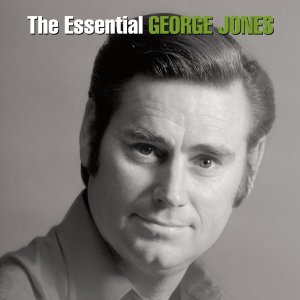
Album #20: ‘The Essential George Jones’

It’s a little embarrassing these days to say you once were a Don Imus fan. By the time he died earlier this year, he was thought of — to the extent that he was thought of at all — as a racist has-been. But for several years during the mid to late ’90s, his nationally syndicated radio show was a favorite of the chattering classes. I was an avid listener during my morning commute. And the one thing I don’t regret about it is that he introduced me to George Jones.

Which is why “The Essential George Jones” is on my list of top 25 albums. Somewhat different from the “Essential” album you’ll find on Spotify, with a different cover, the 1994 two-CD set features 44 songs from Jones’ long, booze-drenched career. I’m not a fan of his upbeat songs; the man just didn’t have the knack, and I find stuff like “White Lightning” and “I’m a People” pretty much unlistenable.

But those ballads. And that voice. From “Just One More” to “A Good Year for the Roses,” from “We Must Have Been Out of Our Minds” to “Bartender’s Blues,” Jones takes over a song with waves of depth and emotion.

Jones’ Mount Olympus is “He Stopped Loving Her Today,” which hit No. 1 in 1980. Often described as the greatest country song ever, it is so floridly sentimental, with swelling strings and a chorus by way of producer Billy Sherrill, that it would inspire laughs in lesser hands. Instead, Jones elevates it to something so fragile and heartbreaking that it’s almost unbearable.

I went to see him just today, oh but I didn’t see no tears / All dressed up to go away, first time I’d seen him smile in years.

Talk about this post on Facebook.