David Skok’s final day at the Globe will be this Friday

David Skok, the Boston Globe‘s managing editor and vice president for digital, will be leaving what he would probably prefer I not refer to as “the paper” this Friday. His departure was announced last July; though Friday will be his last day at the Globe‘s headquarters, he will continue to help editor Brian McGrory with the Globe‘s ongoing reinvention effort for a few more weeks. His farewell to the staff is below.

Hi all,

This Friday will be my last official day at the Boston Globe.

I have accepted a new position in my family’s hometown of Toronto that will begin in early November.

It has been the greatest privilege of my professional life to serve each and every one of you, our readers, the wider community, and of course, this wonderful institution.

You welcomed me with enthusiasm and open arms. From the hallway conversations, to the office visits, and the many meetings, you’ve always been infused with a curiosity that is the hallmark of any living, breathing newsroom.  For that, I say, thank you.

No one encapsulated this kindness better than my counterpart as managing editor, Chris Chinlund. From day one, Chris exhibited warmth, support, and respect for the new “digital guy.” I quickly came to understand that none of this was political, it’s just who she is: A graceful, brilliant editor, a generous mentor and friend, whom I will miss dearly.

Of course, I would never have been in this position had Brian [editor Brian McGrory] not plucked me from relative obscurity in Toronto. Watching and learning from Brian has been the thrill of my career. His passion and loyalty to this community and to all of you in this newsroom is an absolute joy to behold.

I only wish that you all could witness first-hand what I’ve been able to witness from the office next door to our editor. Brian’s courage, patience, tenacity, and most of all, his humanity, will continue to be an inspiration for me long after I’m gone from Morrissey Boulevard. I’ve never met anyone with better news judgment, a greater sense of fairness, humility and determination, than Brian. I count myself among the lucky ones to have worked alongside him, and we are all so lucky to have him in the corner office.

To all the others who I’ve had the pleasure of working with over the past three years, from the newsroom to the boardroom, the product team to the engineering team, thank you. A particular note of thanks to [BostonGlobe.com editor] Jason Tuohey, [product director] Lauren Shea, and [team leader/development manager] Joe George. Their leadership, dedication, and talent have made me look so good over the past few years, I’m forever grateful.

The last few months have been especially rewarding for me because I’ve gotten to sit at the helm of the reinvention project, watching, listening, and guiding, as this already talented, motivated, and sophisticated newsroom transforms itself into a newsroom of the future.  The reinvention project leaves me confident and assured that the Boston Globe newsroom has a tremendously bright future.

While I won’t be in the newsroom after Friday, Brian has asked me to remain involved in an advisory capacity on the reinvention project, through the week of October 14th.

I know that change can be hard and uncertainty can be difficult. All we can do is put one foot in front of the other until one day, we can look down from the top of the mountain and see how far we’ve come. This week, I get to do that, and the view is spectacular.

You have turned Globe.com into a powerhouse: Tripling readers and revenues all the while maintaining the fabric of this great journalism institution. Your journalism is vibrant, relevant, and interesting, on all platforms. Your reporting matters as much, if not more, than it ever has to the communities that you serve. You rightly put your readers and your users, first.

If I’ve managed to accomplish anything during my time here, it’s been to hopefully clear away the obstacles to your creativity. You get to paint a bright new future on that canvass.

It will be bittersweet to watch from afar, but I will, with enormous pride.

From the bottom of my heart, thank you. What an honor it has been

Please stay in touch

—David

Talk about this post on Facebook.

Debate prep: How to call out a lie without calling it a lie

Lester Holt. Photo (cc) 2016 by Hermann.

The big question going into tonight’s debate is whether moderator Lester Holt should call out blatant lies by the candidates—and especially by Donald Trump, whose relationship with the truth is tenuous, to say the least.

I don’t think it’s realistic for Holt or the moderators who come after him to act as a real-time fact-checking machine. He’ll have enough to do with keeping Trump and Hillary Clinton on track and making sure they’re both getting more or less equal time. But if someone—again, most likely Trump—tells a whopper, then Holt shouldn’t let it go. It’s all in how he does it. I’ll adopt the wisdom of my fellow Beat the Press panelists Callie Crossley and Jon Keller, who have both said that the way to do it is through tough follow-up questioning.

For instance, Candy Crowley took a lot of heat four years ago for essentially calling Mitt Romney a liar when Romney claimed that it took President Obama many days before he was willing to refer to the attack on Benghazi as “terrorism.” Given the pressures of the moment, I have no real problem with what Crowley said. But here’s what she could have said: “Governor Romney, didn’t the president refer to the attack as an ‘act of terror’ the next day?” Yes, that’s a loaded question, but it’s not an assertion, and Romney would have had an opportunity to respond.

In other words, fact-checking can be done with persistent questioning rather than by calling out BS. Even when it’s BS.

Talk about this post on Facebook.

Early voting? No. Elections are about community.

Photo (cc) 1935 by kheelcenter

Matt Viser reports in the Boston Globe that some people in Minnesota are already voting—before the first presidential debate has even been held. I don’t like it. I also don’t like absentee voting unless the voter can prove a genuine hardship. Online voting? Uh, no.

Yes, I know that most people have made up their minds about the presidential race, but that’s not the point. There are other races on the ballot. More important, voting is a time when we come together as a community to exercise our democratic rights.

There are ways to make the Election Day better. I’d make it a weekend-long event and ensure that there are enough poll workers in place so that it’s a good experience for everyone. But changing the system so that voting is something you do alone is not the way to go.

Talk about this post on Facebook.

LGBTQ history group to honor Susan Ryan-Vollmar

Susan Ryan-Vollmar
Susan Ryan-Vollmar

I am incredibly excited about this: On Wednesday, October 5, my friend Susan Ryan-Vollmar will be honored by the History Project for her pioneering leadership role in the history of the Boston LGBTQ community.

Susan, who currently runs her own communications consulting business, is a former news editor of the Boston Phoenix and a former editor of the LGBTQ paper Bay Windows. We worked together at the Phoenix for many years, and her time as news editor was the most rewarding and fun period of my 14-year stint.

It was Susan who oversaw Kristen Lombardi’s groundbreaking 2001 coverage of the pedophile-priest crisis in the Catholic Church. It was Susan who led the charge in the Phoenix‘s reporting on same-sex marriage in Massachusetts. And it was Susan who excelled at finding the lede in my stories—usually in the third-to-last paragraph of a 3,000-word screed.

From the press release:

From her role in helping bring to light the Boston Archdiocese’s coverup of the sexual abuse of children by priests, to her role as editor of Bay Windows during the public debates on marriage equality in Massachusetts, and her support of LGBTQ movements and issues, Susan displays a consistent dedication to advocacy for the LGBTQ community and a passion for uncovering and exposing the truth. The History Project celebrates the often unacknowledged lives of LGBTQ people throughout history; as the world celebrates those who built upon Susan’s solid, quieter work, we are thrilled to honor her as a true HistoryMaker.

The event will be held from 6 to 9 p.m. at Club Café, at 209 Columbus Ave. in Boston. I’m honored to say that I’ll have a small role. You can buy your tickets by clicking here.

We hate ‘The Media,’ but we love the media we choose

assistant_secretary_russel_addresses_reporters_after_meeting_with_south_korean_officials_in_seoul

Among journalists, last week’s news that public trust in the media has fallen to an all-time low was accompanied by the wringing of hands, the gnashing of teeth, and the rending of garments.

According to Gallup, just 32 percent of Americans surveyed in early September believe that the media “report the news fully, fairly and accurately.” That’s down from 40 percent just last year—and from 55 percent in 1999, when newspapers were profitable, the Big Three networks newscasts were inviolable, and the cable news networks had not yet hit upon partisan shoutfests as a formula for filling hours of airtime at very little expense.

Gallup’s findings, which we talked about last Friday on Beat the Press, are serious and disturbing for a craft that relies on credibility. At the same time, though, there’s less here than meets the eye.

Read the rest at WGBHNews.org. And talk about this post on Facebook.
In 2002, Jill Stein ran for governor. I was there.

25714557146_e26963e468_k
Jill Stein in Arizona earlier this year. Photo (cc) 2016 by Gage Skidmore.

To the extent that Green Party presidential candidate Jill Stein is known at all, it’s mainly for her ambiguous semi-embrace of the anti-vaccine movement, her Harambe tweet (and her subsequent criticism of how the media covered it), and her video confrontation with my WGBH News colleague Adam Reilly at the Democratic National Convention.

But long before Stein began her quadrennial, quixotic campaigns for president, she was a quixotic candidate for governor of Massachusetts. And I was there.

Read the rest at WGBHNews.org. And talk about this post on Facebook.

Thinking about news in the post-newspaper age

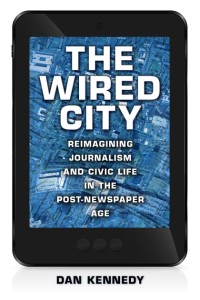
9781625340054Will the struggling newspaper business survive? No. And yes.

Let me explain. Several days ago, the New York Times media reporter Jim Rutenberg wrote an elegy for the age of newspapers, by which he meant ink spread across the reconstituted pulp of dead trees and trucked hither and yon to be deposited on the porches of grateful readers. News will survive, Rutenberg told us, but the medium through which that news appears will soon be entirely digital.

Yet, as Rutenberg also pointed out, here we are some twenty years into the era of digital news—and advertising revenue from print editions continues to be what keeps newspapers afloat. “I don’t think there’s anyone in the industry whose majority revenue is not still print,” theMinneapolis Star Tribune publisher Michael J. Klingensmith told him.

Read the rest at the UMass Press blog. And to leave a comment, visit the link to this post on Facebook.

The Times’s weirdly Putin-free first take on the NBC forum

Illustration (cc) by Michail Kirkov.

Here we go again. A week after the New York Times completely rewrote a story that initially portrayed Donald Trump’s trip to Mexico and subsequent hate-rally speech on immigration as a turn toward a softer, more statesmanlike candidate, the paper’s lead story omitted the biggest news coming out of Wednesday night’s NBC News “Commander-in-Chief” forum.

The story, like last week’s, was by Patrick Healy. And it contained not a single mention of Vladimir Putin, whom Trump praised fulsomely—even suggesting that he was a more impressive leader than President Obama. Here is the original article, posted on Wednesday night.

By this morning, Healy’s story had been updated to include a mention of Putin—in the fifth paragraph. Meanwhile, the Washington Post‘s three-reporter effort led with this:

Donald Trump defended his admiration for Russian President Vladi­mir Putin at a forum here Wednesday focused on national security issues, even suggesting that Putin is more worthy of his praise than President Obama.

That’s known as finding the lede and running with it. (Although I didn’t save the Post‘s first take on Wednesday night, I know it mentioned Putin prominently.) By the way, the Post also led the print edition with that story, under the headline “Trump Defends Praise for Putin.” The Times: “Candidates Flex Muscles During TV Forum.”

The forum itself was inexpertly moderated by Matt Lauer, who grilled Hillary Clinton with predictable questions about her damn emails while repeatedly letting Trump off the hook. Clinton, speaking first, pointed out that Trump has lied repeatedly about his initial support for the war in Iraq. Good thing—because when Trump lied again, Lauer sat there and said nothing.

As Dylan Byers writes at CNN.com:

Perhaps most notable were the questions Lauer did not ask of Trump. At an event geared toward national security and military veterans, the NBC co-host failed to ask a single question about Trump’s controversial remarks about Gold Star parents Khizr and Ghazala Khan, Sen. John McCain’s prisoner-of-war status or his deferments from the Vietnam War, among other issues.

All of this comes, of course, as a host of media and political observers are beginning to take loud notice—see my commentary earlier this week for WGBHNews.org—that the political press is pummeling Clinton while holding Trump to a much lower standard.

By the way (to return to the beginning), Times public editor Liz Splayd explained her paper’s Mexican misadventure by saying that Healy got caught up with deadline problems—the tone of the day changed significantly once Trump begin his ugly speech in Phoenix. OK. But again, the Post set the right tone in its very first take. It’s fair to ask what is going on at the Times.

Update: To be fair, a sidebar in the Times published Wednesday night made mention of Putin. And I’m told by Harvard’s Christina Pazzanese, though I didn’t see it, that Times reporter Alexander Burns had an even earlier take than Healy’s that did mention Putin. But my point stands. Anyone checking the Times‘s website or apps late Wednesday night would have seen Healy’s story as the big takeout—and there was no mention of Putin.

Update II: The Burns story has been disappeared from the Times website, but Susan Ryan-Vollmar found this.

To leave a comment, please visit the link to this post on Facebook.

Jay Severin tweets that he’s out at the Blaze

Remember when Jay Severin was the king of afternoon talk radio in Boston? Looks like he’s out at the Blaze and is seeking work.

As you may recall, “B+B” is a reference to “the Best and the Brightest,” which is how he refers to his audience. I’ve posted just two of his recent tweets, but if you go to his feed, you’ll find more.

To leave a comment, please visit the link to this post on Facebook.