My Northeastern colleagues Mike Beaudet and John Wihbey, along with some amazing students, have been studying ways to improve local television news. Their latest installment looks at how animation can increase viewer interest, attract younger viewers and make it easier to understand the essential facts of a story.
According to a summary of their findings that they wrote along with graduate student Anna Campbell for RTNDA.org:
After viewing the local news stories that took a fresh approach to animation and graphics, viewers preferred that style across the board, with audiences more likely to rate the animated stories as clear, compelling, and memorable. The graphically-enhanced stories were generally perceived both as more relevant in content and resonant in tone. Animation also captured positive descriptions in the open-ended questions we posed.
As you’ll see if you watch the video presentation above, animation essentially takes the place of irrelevant and boring B-roll. And when Beaudet, Campbell and Wihbey refer to animation, they don’t mean something you might see on “Adult Swim.” Rather, they’re talking about presenting visualizations that help viewers understand what they’re watching.
Media observers like me don’t always pay much attention to local TV news. But it’s incredibly important — it’s the second-most popular news medium that we have (the internet comes in first), and it’s more trusted than other forms of news. So congratulations to my colleagues and their students for finding ways to make it better.
You can find more of their work at Storybench, a School of Journalism web publication that covers media innovation.
Howard Kurtz was in high dudgeon. The Fox News media critic opened his Sunday program, “Media Buzz,” this past weekend by blasting the press for dismissing the possibility that COVID-19 had its origins in a leak from a lab in Wuhan, China. That possibility is suddenly very much on the table, and President Joe Biden has ordered an investigation.
“It was a whack-job theory, right? It was Looney Tunes. It was trashy Trump talk, surely not worthy of serious journalistic attention,” Kurtz said. He added: “If President Trump said it, the media dismissed it. If conservatives embraced it, liberal pundits mocked it. This just speaks volumes about our media establishment. Now, nothing’s been proven, but the circumstantial evidence is growing. Will there be any soul-searching about what amounted to media malpractice? Don’t hold your breath.”
Kurtz’s monologue oversimplified what we know, but he was largely correct. In fact, the media sloppily mashed together two different stories about Wuhan — a legitimate line of inquiry that the virus had accidentally escaped from the lab and a conspiracy theory that Chinese scientists at the lab were developing COVID-19 as a bioweapon.
As a result, with just a few lonely exceptions, the mainstream press over the course of the past 15 months has dismissed any suggestion that COVID-19 came from the lab as so ludicrous that it was unworthy of coverage. The media’s credibility is taking yet another hit — this one entirely legitimate — at a moment when it is already at an all-time low. And their “shameful dereliction of duty,” as conservative Washington Post columnist Marc Thiessen put it, may make it that much harder to persuade Trump supporters to get over their skepticism about vaccinations.
The media’s dismissive attitude toward the lab-leak theory was grounded in their distrust — often warranted — of anything that came out of President Donald Trump’s mouth. After all, during the course of the pandemic Trump dismissed the seriousness of COVID-19 repeatedly, pushed unproven, potentially dangerous remedies like hydroxychloroquine, and even suggested at one memorable press briefing that injecting bleach might help.
So when Trump would use racist terms like the “China virus” in referring to COVID-19, the media were already primed to accept the consensus view touted by Dr. Anthony Fauci and the World Health Organization that the disease had, in fact, jumped from bats to humans in China and from there spread throughout the world.
Indeed, the possibility that COVID-19 had its origins in a Wuhan lab came to be seen as so thoroughly discredited that Facebook began taking down posts about it on the grounds that it was misinformation. The social-media giant reversed itself recently.
A few journalists, including Washington Post columnist Josh Rogin, kept the lab-leak theory alive. Rogin exploded on Saturday with a bitter tweet complaining that most mainstream reporters “actively crapped all over it for over a year while pretending to be objective.”
Most MSM reporters didn’t “ignore” the lab leak theory, they actively crapped all over it for over a year while pretending to be objective out of a toxic mix of confirmation bias, source bias (their scientist sources lied to them), group think, TDS and general incompetence.
The tide finally started to turn when a pair of former New York Times reporters, first Nicholas Wade and then Don McNeil, wrote several weeks ago that they had come to regard the possibility of a lab leak as being as plausible as the bats-to-humans theory.
“I now agree with Nick’s central conclusion: We still do not know the source of this awful pandemic. We may never know,” McNeil wrote. “But the argument that it could have leaked out of the Wuhan Institute of Virology or a sister lab in Wuhan has become considerably stronger than it was a year ago, when the screaming was so loud that it drowned out serious discussion.”
Matthew Yglesias, a prominent member of the Substackerati, has offered what I think is the most useful and detailed analysis of what went wrong from a journalistic point of view. He traces much of it to inept reporting about U.S. Sen. Tom Cotton, an Arkansas Republican, who made some provocative statements early on about the possibility of a lab leak. Cotton is well-known as a China hawk, and pretty soon the media were falsely claiming that Cotton had touted the bioweapons fantasy, starting with a sensationalized account in Business Insider and then spreading from Politico and into the mainstream.
“At this point,” Yglesias wrote, “Cotton had achieved what’s really the greatest achievement possible for a Republican Party politician — he was unfairly maligned by the MSM.”
Also getting at an important part of what went wrong is Jonathan Chait of New York magazine, who points to Twitter as the place where mainstream journalists reinforced their views, making it that much harder to re-examine the lab-leak theory.
“Media coverage of the lab-leak hypothesis was a debacle, and a major source of that failure was groupthink cultivated on Twitter,” Chait said, calling the platform “a petri dish of tribalism and confirmation bias.”
So where does all this leave us? I’ll end where I began — with Howard Kurtz. Yes, he’s a conservative, and yes, he’s on Fox News. But he’s also a serious observer of the media who spent years at The Washington Post and CNN. His analysis can’t be easily dismissed. And I think he’s correct that animus toward Trump played a huge role in the media’s consensus that the lab-leak explanation for COVID was propaganda put out by the Trumpist right to deflect attention away from Trump’s numerous failures.
There’s a context that can’t be ignored, of course. Trump lied constantly. His horrendous mismanagement of the pandemic might go down as the greatest failure of any American president — unless you want to count his failure to abide by the results of a democratic election. It’s not difficult to see why journalists decided to accept Fauci’s word on the origins of the pandemic.
But they were wrong. The reality is that we don’t know where COVID-19 came from. The bats-to-humans explanation might be right. The lab possibility might be right. There’s a good chance that we’ll never know.
The whole point of journalism is to seek truth and report it. We failed to do that in this instance. And it ought to remind us of why we need to go about our jobs with humility and an open mind.
The Boston Globe has named an editor-in-chief for The Emancipator, the much-anticipated racial-justice website it is launching in collaboration with Boston University’s Center for Antiracist Research.
Amber Payne, a veteran journalist who recently finished a Nieman fellowship at Harvard, will spend the next several months “putting together an editorial plan and team for The Emancipator and launching it alongside her counterpart at BU’s Center for Antiracist Research,” according to an email to the Globe staff from editorial-page editor Bina Venkataraman, co-founder of The Emancipator.
The BU editor-in-chief has not been named yet, Venkataraman added. The other co-founder is Ibram X. Kendi, who directs the BU antiracism center.
What follows is Venkataraman’s full email (except for some personal information that I deleted), which I obtained from a trusted source:
Dear all,
It’s my pleasure to announce that Amber Payne joins the Globe today as the Editor in Chief of The Emancipator. Amber is an extraordinary person whose career in journalism has spanned broadcast, print, and digital.
Until recently, Amber was an executive producer at BET Digital, where she oversaw daily editorial and long form video content for BET.com. Previously, she served as executive producer of Teen Vogue and them., a vertical focused on LGBTQ+ stories. Payne also founded and launched NBCNews.com’s NBCBLK, a media vertical on Black identity, and worked on breaking news and features as an award-winning producer for “NBC Nightly News.” Her repertoire is vast and varied; she’s edited a multimedia story on an Alabama landfill that became a civil rights battleground, produced the feature-length documentary “Harlem Rising,” and made an engaging interactive on the sexist, racist history of the high school prom. She has covered stories throughout the U.S., Ecuador, and in parts of West and South Africa, including Nelson Mandela’s funeral, the royal wedding of Prince William and Catherine Middleton, the Vancouver Olympics, and Hurricane Katrina recovery.
Amber is fresh out of the Nieman fellowship where she has spent the past year deeply studying the history and present of race in America, examining how people from marginalized communities can share stories in ways that resonate across races, faiths, and cultures….
Over the coming months, Amber will be putting together an editorial plan and team for The Emancipator and launching it alongside her counterpart at BU’s Center for Antiracist Research (who is still to be named). She’s also eager to speak with many of you about your ideas for The Emancipator, to conspire with various teams at BGMP, and to find ways to showcase Globe journalists and their work through its channels.
Talking to Amber is fascinating and fun, and once you meet her, I think you’ll find that she’s just the person to take the helm of this historic and forward-looking publication at this moment. Please give her a warm welcome to the Globe and join me in cheering her on!
Bob Dylan with Allen Ginsberg. Photo (cc) 1975 by Elsa Dorfman.
A little over a year ago I began compiling a list of my favorite 25 albums. I finally finished last week. It was a fun exercise that forced me to think about the music that has meant the most to me over the years. My only self-imposed rule was to limit myself to one album per artist. Otherwise I’d probably have seven or eight Dylan albums here.
And how wonderful was it to find a photo by my late friend Elsa Dorfman that I could run with this.
If I did this again, I’m sure it would come out differently — but probably not too differently. Here, then, is the complete list, with links to what I wrote about each of them. Let the arguments begin!
The Hussman School of Journalism and Media at UNC. Photo (cc) 2020 by Mihaly I. Lukacs.
There’s been an important new development in the Nikole Hannah-Jones story. According to the veteran journalist John Drescher, writing for a North Carolina website called The Assembly, a “mega-donor” to the University of North Carolina opposed hiring Hannah-Jones, the Pulitzer Prize-winning New York Times journalist who conceived of the 1619 Project and who’s been denied tenure by the UNC board of trustees.
The donor is Walter Hussman Jr., the publisher of the Arkansas Democrat-Gazette, whose $25 million gift to the UNC journalism program in 2019 resulted its being named the Hussman School of Journalism and Media. Drescher reported that Hussman is so enamored of old-fashioned both-sides objectivity that he “relayed his concerns to the university’s top leaders, including at least one member of the UNC-CH Board of Trustees.” Among other things, Hussman wrote:
My hope and vision was that the journalism school would be the champion of objective, impartial reporting and separating news and opinion, and that would add so much to its reputation and would benefit both the school and the University. Instead, I fear this possible and needless controversy will overshadow it.
Hussman is no fan of the 1619 Project either, although he appears to be aligned more with historians who’ve criticized it than he is with those on the right who’ve attacked it.
Now, there are several curious aspects to Hussman’s opposition. First of all, Hannah-Jones is an opinion journalist who works for the Times’ opinion section. Her journalism is rigorously fact-based, informed by a strong point of view. Does Hussman really oppose such journalism? After all, the Democrat-Gazette has an opinion section. (All four of the ADG’s opinion journalists who warrant a headshot are white men, by the way.)
The other curious aspect is that Hussman doesn’t actually understand what objectivity is. The Assembly quotes from an op-ed that Hussman wrote for The Wall Street Journal in 2019:
Two years ago I heard a prominent journalist say she doesn’t believe in the “false equivalency” of presenting both sides, and that she sees her job as determining the truth, then sharing it with her audience. I decided then that I needed to let our readers know that we didn’t agree with those statements.
The problem is that objective reporting, as conceived by Walter Lippmann more than 100 years ago, is an open-minded and dispassionate pursuit of the truth, not balance or both-sidesism. “Seek truth and report it” is the way the Society of Professional Journalists’ Code of Ethics puts it.
Hussman, unfortunately, has embraced the caricature of objectivity. And Hannah-Jones has gotten caught up in his misunderstanding.
Addendum: In 2019 I wrote about a genuinely innovative idea at the ADG: the paper was giving iPads to its subscribers so it could stop printing the paper and save money. If you let your subscription lapse, it would stop working.
Nikole Hannah-Jones. Photo (cc) 2018 by Associação Brasileira de Jornalismo Investigativo
New York Times journalist Nikole Hannah-Jones is said to be considering a lawsuit over a decision by the board of trustees at the University of North Carolina not to grant her tenure. Hannah-Jones is the creator of the 1619 Project, a Pulitzer Prize-winning effort to recenter American history around slavery that has come under attack on the right.
I’m curious as to what a lawsuit would look like. If she could get a hearing, then perhaps it would be possible to force the trustees to explain their reasoning under oath. But my understanding of the tenure process is that you can be turned down at any stage for any reason.
The trustees of a college or university rarely get involved except to ratify whatever the president brings before them. But, in fact, they have the power to say no even to cases that have been approved by the department, the dean, the provost and the president. When I came up for tenure at Northeastern in 2014, I didn’t relax until the trustees had voted since I couldn’t be sure I hadn’t enraged one or more of them with something I’d written or said over the years as part of my work as a journalist.
Hannah-Jones is eminently worthy of tenure, and a nationwide pressure campaign is under way to push the trustees into reversing their earlier decision. She is being denied something she has earned because the right hates her work and her message. Hannah-Jones has been offered a five-year contract instead of tenure, something that the UNC can do without the approval of the trustees. But with tenure comes academic freedom, and it seems pretty clear that one of the trustees’ motives is to force an outspoken Black woman to be careful about what she says and writes.
Still, I have to wonder if a lawsuit would serve more as a distraction than as a way of overturning the trustees’ unjust vote.
I had a chance Thursday to talk about news deserts and ghost newspapers with Gina Baleria, the host of the podcast called “News in Context.” Baleria is a former radio journalist who’s now an assistant professor of journalism, media writing and digital media at Sonoma State University. You can listen to our conversation or grab the feed right here.
Here it is: Former “On the Media” co-host Bob Garfield will be podcasting as part of a project called BookSmart Studios, along with John McWhorter and Amna Khalid.
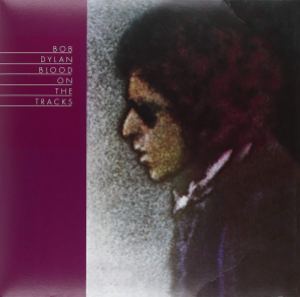
When I began compiling my list of top 25 albums a year ago, I already knew who it would end with: Bob Dylan, the master, one of the 20th century’s leading songwriters, Nobel Prize-winning poet, still going strong after turning 80 this past Monday.
But what album would I choose? Something from his early acoustic folkie years? Well, no. I prefer Dylan the rocker. His middle period, just after he’d gone electric but before the motorcycle crash that would end the white-hot-genius phase of his career? His mid-’1970s comeback? What about his entirely unexpected return to relevance, when he released three albums from the late 1990s through the mid-2000s that were just a half-notch below his greatest work?
My choice came down to two albums: “Highway 61 Revisited” (1965), the greatest rock-and-roll record ever made, and “Blood on the Tracks” (1975), his most personal album, a suite of songs about heartbreak and loss that is brilliant in its conception and execution. His singing, always wildly expressive, is at its best on both. So — how to choose?
For me, it has to be “Blood on the Tracks.” You might call this album my gateway drug into the larger world of Dylan’s music. It was released just as I was ready to listen. It’s accessible in a way that few of his albums are, devoid of the obscurantism that characterizes even some of his best work, including “Highway 61.” (That said, I’ve listened to “Lily, Rosemary and the Jack of Hearts,” one of the anchors on “Blood,” maybe a few hundred times over the years and I still can’t tell you exactly what’s going on, even though it seems fairly straightforward on the surface. I think it’s because it’s all foreground with virtually no background.)
My favorite song on the album, and a contender for my favorite Dylan song ever, is “Idiot Wind,” nearly eight minutes of vitriol dedicated, I guess you’d say, to his then-wife, Sara, from whom he was in the process of divorcing. The story he tells ain’t pretty, and I’m sure Mrs. Zimmerman didn’t deserve it. But it is great art. Dylan knows exactly how it’s going to land, so he eases into it with a hilarious shaggy-dog story and ends with a few unconvincing lines in which he attempts to cast himself as co-malefactor. But the middle — oh, my God. If I’m listening in my car, here’s the part makes me nearly drive off the road:
I noticed at the ceremony, your corrupt ways had finally made you blind I can’t remember your face anymore, your mouth has changed, your eyes don’t look into mine The priest wore black on the seventh day and sat stone-faced while the building burned I waited for you on the running boards, near the cypress trees, while the springtime turned Slowly into Autumn
The way Dylan stretches out and twists “slowly” kills me every time I hear it.
Every song on “Blood on the Tracks” is a revelation. It kicks off with “Tangled Up in Blue,” a strange song that mashes several different narratives together, centuries apart, and that serves as a commentary, I suppose, on the ’60s and what he was leaving behind. It would become one of his signature songs, along with “Blowing in the Wind” and “Like a Rolling Stone.” “You’re a Big Girl Now” and “If You See Her, Say Hello” depict Dylan at his most vulnerable. (Dylan has said “Blood on the Tracks” is not about him. But Dylan himself is a character played by Robert Zimmerman.)
Even the seeming trifles, which close what used to be sides one and two (they made these things out of vinyl, and you’d play them with a needle, and — well, never mind), serve their purpose. “You’re Going to Make Me Lonesome When You Go” anticipates his lover’s eventual departure even in the midst of their relationship. “Buckets of Rain,” which follows “Shelter from the Storm,” itself a kinder meditation on love, gives us a chance to just relax and come down a bit as we begin to process what we’ve just heard.
And then there’s a song that didn’t even make it onto the album — “Up to Me,” which popped up on the “Biograph” compilation in 1985. It sounds a lot like “Shelter from the Storm,” and it would have been a career highlight for almost any other artist.
If you love “Blood on the Tracks,” I’d recommend a book about its making called “A Simple Twist of Fate,” by Andy Gill and Kevin Odegard. It tells the story of Dylan’s early attempts to record the songs with studio musicians in New York and his decision to re-record most of it in Minneapolis with local musicians and the help of his brother, David Zimmerman. It was not a great band, despite what Gill and Odegard argue, but they bring a sense of urgency to the proceedings that was missing from the New York sessions.
If you’ve never quite gotten around to Dylan, I recommend you start with “Blood on the Tracks.” It might turn out to be where you end up, too.
Please consider becoming a paid member of Media Nation for just $5 a month. You’ll receive a weekly newsletter with exclusive content. Click here for details.
Alden Global Capital is wasting no time in taking a chainsaw to its newly acquired newspapers. NPR media reporter David Folkenflik tweeted a thread that contains some horrifying details about what the hedge fund has in store for Tribune Publishing:
$60MM of that debt carries a 13% rate – it was borrowed from Media News – Alden Global's other newspaper division.
h/t to @benyt for initial tweet about NYDNews & memo
— David Folkenflik (@davidfolkenflik) May 26, 2021
How about that? A $60 million loan with a 13% interest rate that Alden will pay to itself.
The cuts, by the way, will come on top of massive downsizing that took place in 2020, when Alden was a mere minority shareholder. Tribune’s Chicago Tribune reports:
Last year, Tribune Publishing employment fell by 30%, dropping from 4,114 employees at the end of 2019 to 2,865 employees at the end of 2020, according to the company’s annual reports. The company had a total of 896 newsroom employees across its eight markets entering this year.
Finally, the New York Post’s Keith Kelly writes that Los Angeles Times owner Patrick Soon-Shiong, who was in a better position than anyone to stop the sale of Tribune to Alden, is “taking a lot of heat” for not voting against it — or at least for not abstaining in a way that would have stopped the deal.
Kelly quotes an unnamed source who calls Soon-Shiong “second most despised man in newspapers today behind Heath Freeman,” Alden’s president. Nice quote. I wonder who said it?