An elected school committee that voted unanimously to condemn a newspaper reporter for tweeting out news from a public meeting. A sheriff who flashed his badge while asking store owners to remove posters for his political opponent. Officials in three New England cities who cracked down on panhandlers in clear violation of their free-speech rights.
These are just three of the stories that are featured in the 19th annual New England Muzzle Awards, our Fourth of July roundup of outrages against free speech. All that and Donald Trump, too.
First, though, some good news. Last year we called for reform of the notoriously weak Massachusetts public-records law, which had earned an “F” from the State Integrity Project. At long last, the legislature passed a reform bill, which was signed into law by Governor Charlie Baker on June 3.
The most important part of the law is that, finally, people whose public-records requests are wrongly ignored or turned down may receive expense money to cover their legal fees. The law also puts limits on how much money government agencies can charge for records and mandates that those records be made available electronically when feasible.
“This bill represents a significant step forward for transparency in Massachusetts,”said Bob Ambrogi, executive director of the Massachusetts Newspaper Publishers Association, in a statement. “It will do a lot to improve access to public records.”
The law is far from perfect. It still applies only to local government and executive agencies, exempting the governor’s office, the court system, and the legislature. It also extends the amount of time government agencies have to respond to public-records requests—perhaps a reasonable step given how widely ignored the old deadlines were, but something that will have to be monitored.
Another Muzzle note: As we were wrapping up this year’s list, Rhode Island Governor Gina Raimondo vetoed a bill outlawing the posting of so-called revenge porn. As Raimondo rightly observed, “The breadth and lack of clarity may have a chilling effect on free speech. We do not have to choose between protecting privacy rights and respecting the principles of free speech.” We’ll be keeping an eye on this to see if it raises its censorious head during the coming year.
The Muzzle Awards, launched in 1998, were published for many years in the late, great Boston Phoenix, which ceased publication in 2013. This is the fourth year they have been hosted by WGBH News. They take their name from the Jefferson Muzzles, begun in 1992 by the Thomas Jefferson Center for the Protection of Free Expression.
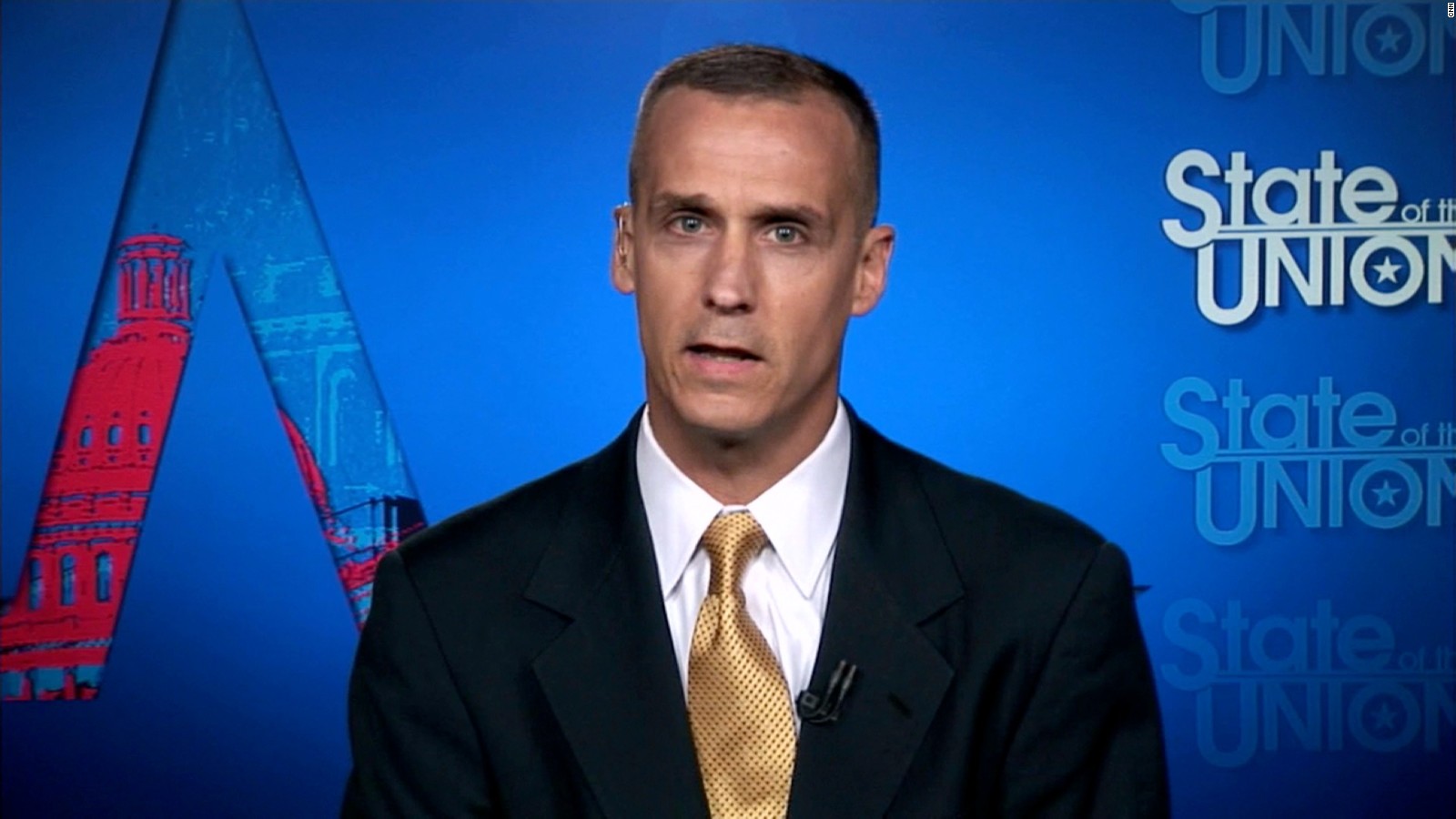
I don’t care that Corey Lewandowski is a partisan hack. And though it bothers me that he was Donald Trump’s thuggish enforcer, I don’t think it disqualifies him from sitting in front of a TV camera and extolling Trump’s alleged virtues.
But it does bother me—a lot—that CNN would give a platform to Lewandowski even though he may not be legally free to voice his honest opinion. That’s the least the network should get for the $500,000 it is reportedly paying him.
To recap briefly: Trump fired Lewandowski as his campaign manager a week ago Monday. Just two days later Lewandowski signed on with CNN to provide pro-Trump commentary. The hiring has been greeted with a considerable amount of outrage because of Lewandowski’s role in herding reporters into pens, banning certain journalists as well as entire news organizations from Trump events, and grabbing the arm of a female reporter hard enough that he was charged with assault. (The charge was later dropped.)
The real mind-bender, though, is that Lewandowski—who remains a true believer in Trump despite the firing—signed a non-disclosure agreement when he left the campaign. Even worse, he may also have signed a non-disparagement agreement. On the face of it, that would seem to mean there exists a legal document somewhere that says Lewandowski cannot criticize Trump. Now, maybe Lewandowski wouldn’t anyway. But there is an enormous difference between won’tand can’t. (We talked about the Lewandowski matter last week on WGBH-TV’s Beat the Press.)
Several of CNN’s on-air journalists have come up huge in holding their network to account. Last week Erin Burnett asked Lewandowski directly whether he had signed a non-disparagement agreement. Lewandowski did not answer the question. “Let me tell you who I am,” he said. “I am a guy who calls balls and strikes, I am going to tell it like it is.”
CNN media reporter Brian Stelter wrote about the situation last week and devoted a nine-minute-plus segment to it Sunday on Reliable Sources. Stelter, like Burnett, deserves credit for focusing on what exactly Lewandowski may have signed when he left the Trump campaign.
Should CNN run a disclosure every time Lewandowski opens his mouth? Yes, replied one of Stelter’s guests, Baltimore Sun media critic David Zurawick. But Zurawick added that CNN and other outlets should stay away from partisan commentators altogether. If they want to learn what’s going on inside the Trump campaign, he said, “let’s find out the old-fashioned way by reporting it, not paying weasels to tell you about it.”
Before Lewandowski’s hiring, CNN already had a pro-Trump commentator in its stable—Jeffrey Lord. And he told Stelter that he saw no difference between Lewandowski signing on with CNN, former George W. Bush consigliore Karl Rove going to work for Fox News, or former Bill Clinton apologist George Stephanopoulos being hired by ABC News.
Lord is right—or at least he would be right if it weren’t for the matter of what Lewandowski is legally free to say about his former boss. And you can roll any number of other hired guns into Lord’s critique. What do Democratic operatives Donna Brazile and Paul Begala add to our understanding when they appear on CNN? But such is the nature of political commentary on cable news, whose main imperative is to fill hour after hour as cheaply as possible. Yes, talking heads are cheap, even when they’re well-paid.
The sorry truth may be that CNN doesn’t want Lewandowski to criticize Trump even if he’s so inclined. During the 1990s Jeff Cohen, a left-wing media critic, got a tryout to fill the liberal seat on the late, unlamented Crossfire. Cohen didn’t get the job—and one of the reasons, he wrote in his 2006 book Cable News Confidential, was that he was unwilling to go along with a requirement that he defend Clinton come hell or high water.
No doubt Lewandowski will settle into his role without all that much additional controversy. Paul Fahri reported in the Washington Post on Monday that rumors of a revolt among CNN staffers had been greatly exaggerated. But something important has been lost, because CNN has gone beyond commentary, beyond partisanship, beyond the mindless recitation of talking points. With Lewandowski, we have no way of knowing whether he’s telling us what he really thinks or if he’s protecting the settlement he signed on his way out of Trump Tower.
That may not seem like much in a media environment in which we seem to hit a new low every week. But it’s one more reason why public distrust of the media is so widespread—and why it deserves to be.
My friend Danny Schechter, the progressive journalist and activist, died on March 19, 2015, at the age of 72. Today, on what would have been his 74th birthday, his longtime business partner Rory O’Connor announces the winner of the first Danny Schechter Global Vision Award for Journalism & Activism. The press release follows.
NEW YORK—The Global Center, a nonprofit educational foundation dedicated to developing socially responsible media, is pleased to announce Jose Antonio Vargas as the first recipient of a newly established annual award honoring the life and work of the late journalist and activist Danny Schechter, the “News Dissector.”
The Danny Schechter Global Vision Award for Journalism & Activism is awarded annually to an individual who best emulates Schechter’s practice of combining excellent journalism with social activism. The award includes a $3000 stipend to support future reporting and advocacy.
In 1993, when he was just 12, Vargas moved from his native Philippines to the United States. Four years later he learned he was an undocumented immigrant. By the time he turned 30, he had become a celebrated journalist: part of a Pulitzer Prize-winning team at the Washington Post, a top executive at the Huffington Post, a writer for the New Yorker, a documentary filmmaker. But even after this meteoric rise, Vargas was still running from his past. “I spent all of my 20s being scared of the government, scared of myself,” he recalls. “I didn’t know if I could keep going, if I could keep lying.”
So Vargas took a bold and dangerous step, going public with his status in a 2011 cover story in the New York Times Magazine entitled “My Life as an Undocumented Immigrant.” “After so many years of trying to be a part of the system, of focusing all my energy on my professional life,” he wrote, “ I learned that no amount of professional success would solve my problem or ease the sense of loss and displacement I felt…. I’m done running. I’m exhausted. I don’t want that life anymore. So I’ve decided to come forward.”
Vargas focused renewed attention to a volatile front in America’s ongoing cultural and political wars. His sudden flip from reporting to advocacy also led to greater recognition—within a year he and other undocumented immigrants were on the cover of Time magazine—but also to increased scrutiny and danger. Nevertheless he embraced his new role as an activist, even while expanding his efforts to reach people through journalism. Vargas says he always viewed his activism “as an act of journalism.”
To that end, he has added another title to his résumé: publisher. First came Define American, a nonprofit “using the power of stories to transcend politics and shift the conversation around immigrants, identity and citizenship in a changing America.” Most recently, he launched EmergingUS, an online news organization aimed at exploring the “evolving American identity” and creating“a new kind of journalism that represents all of us.”
What kind of journalism can we expect to see in the future from Vargas? One that is both factual and empathic. “Facts are to me, a religion as a journalist,” he says, but quickly adds, “I traffic in empathy. I try to be vulnerable with people so they can be vulnerable back.”
Boston Globe arts editor Rebecca Ostriker has sent the following response to my Tuesday post regarding cutbacks in the Globe‘s arts coverage. Ostriker makes some good points, and in retrospect I wish I had done more than simply link to other blogs.
Some misunderstandings regarding the Boston Globe’s arts coverage have been spreading online—including in your recent post—and I would welcome an opportunity to clarify our plans.
The Globe is dedicated to bringing our readers the best possible arts coverage, every single day, both in print and online. With an outstanding Sunday Arts section and a Friday Weekend section packed with arts and entertainment coverage, we will continue to showcase the superb work of our staff critics in every area of the arts, including Pulitzer Prize winners Sebastian Smee and Mark Feeney, Ty Burr, Jeremy Eichler, Don Aucoin, Matthew Gilbert, and Steve Smith. With the help of powerhouse arts reporter Malcolm Gay, we will continue to vigorously report on broader issues relating to the arts, often on the Globe’s front page. Few newspapers in the country can boast such a sparkling roster of staff writers exploring the arts, or more commitment to covering the arts in every form, from theater to art, music, movies, television, and dance.
Meanwhile, as we weigh our priorities when it comes to freelance coverage, we are shifting our focus to emphasize reported feature stories (the Jon Garelick piece you cited was an example; see others below, along with a couple of recent freelance reviews). There will certainly be exceptions to this, but our overall goal is simple: We’re looking to tell the most compelling stories that will appeal to readers in every area of the arts. We are encouraging artists, performers, and arts organizations of all kinds to share their best ideas for feature stories with us. And we will be counting on all of our terrific freelance writers to help us tell those stories.
Two of my Northeastern colleagues and I analyze the fallout from the House Democrats’ #NoVoteNoBreak sit-in over gun legislation. It’s a golden oldies get-together: one of my colleagues, Bill Fowler, was a professor of mine back in the day; and the piece was pulled together by Thea Singer, with whom I worked at the Boston Phoenix 25 years ago.
Corey Lewandowski gives an affectionate shove to reporter Michelle Fields earlier this year.
If CNN wants to hire Donald Trump’s thuggish ex-goon, Corey Lewandowski, as a commentator, well, let’s just say that I would expect nothing less. But I’m genuinely appalled that CNN would bring him aboard knowing that Lewandowski is legally bound not to say what he’s really thinking.
CNN media reporter Brian Stelter, who’s doing a great job covering his employer’s ethical lapse, writes:
There are also swirling questions about whether Lewandowski is still bound to Trump somehow.
Like other Trump employees, he signed a non-disclosure agreement that ensures he will not share confidential information.
The agreement likely included a “non-disparagement clause,” impeding his ability to criticize Trump publicly.
I could almost live with the non-disclosure agreement. That’s not much different from a reporter’s protecting a confidential source. But a “non-disparagement clause”? Seriously? If Stelter has that right, then it means Lewandowski can’t offer his honest opinion on anything to do with Trump. When the next Trump outrage takes place and Lewandowski says it’s just peachy, we won’t have any idea whether he means it or not.
CNN should walk away from this colossal blunder, but of course it won’t.
One of the few disadvantages of being a digital subscriber to the Boston Globe is that whenever there’s news regarding the print edition (except on Sundays), I’m usually the last to know.
So … today the Globe published a four-page wraparound of sponsored content from Children’s Hospital that looks like the front page, though it’s clearly labeled as advertising. I’ve seen half-page ad treatments in newspapers, which I’ve tried to emulate with the image in the middle. But I haven’t seen a full page (at left) before. The actual front page, which you get to once you pull off the wraparound, is at right.
The Children’s Hospital content is featured on BostonGlobe.com and Boston.com as well, although there’s nothing unusual about the online treatment.
The verdict: We all know this wouldn’t have flown 10 or maybe even five years ago. But there is no money in the newspaper business these days. I’m willing to be very understanding of any form of advertising as long as it’s properly labeled.
On the other hand, you don’t want to do anything that alienates your best customers—that is, your print subscribers. So, yes, I would have preferred it if the Globe had tried to talk Children’s into going for the half-page treatment instead.
The story is changing for the struggling newspaper business. After years of bad news, we seem to be moving on to (cover your eyes) even worse news. Paid circulation, advertising revenue, and newsroom employment are plunging in ways not seen since the Great Recession.
The gory details are contained within the Pew Research Center’s latest State of the News Media report. I’m not here to tell you that there’s a silver lining—there isn’t, as I argued in this space back in January. Nevertheless, there are some intriguing findings in the report that could point the way to a better future.
Essentially, there are three major pieces of information about digital media that all of us who care about journalism need to grasp:
Mobile has overtaken the desktop just as surely as digital overtook print some years earlier.
Some digitally native news organizations, such as Vox, BuzzFeed and the now-venerable Huffington Post, are doing reasonably well, although profitability remains elusive.
Third-party platforms such as Facebook, Apple News, and Google AMP (for Accelerated Mobile Pages) have become immensely important for the distribution of news, especially since they handle mobile better than do the news organizations whose journalism they are repackaging.
Perhaps the greatest challenge facing journalism is that the very services that now control so much of the distribution are also the beneficiaries of most digital advertising revenue. Consider, for instance, this tidbit from the report:
Five technology and social media companies—Google, Facebook, Yahoo, Microsoft and Twitter—continue to dominate the digital advertising market, accounting for 65% of all revenue from digital advertising in 2015, or $38.5 billion out of $59.6 billion. This is slightly higher than the share generated by the top five companies in 2014 (61%).
You may find yourself scratching your head, as I did, at learning that Yahoo and Microsoft are big players in digital advertising. Otherwise, though, this all makes sense, especially with respect to Google and Facebook. Google, as we know, does not share its ad revenues with the news organizations whose content it aggregates. The idea has always been that Google drives traffic to the originating site and that it’s up to the people who run that site to take advantage of the increased traffic by selling more ads. It hasn’t worked.
The situation is slightly better with Facebook, as publishers are cutting deals with the mega-network in order to share ad revenues. But publishers get nothing when, say, a friend of yours shares a story from the Cleveland Plain Dealer.
Nicco Mele, the incoming director of Harvard’s Shorenstein Center on Media, Politics and Public Policy, said earlier this year that the balance needs to be recalibrated: “To a large extent, Facebook and Google are sucking up revenue that publishers of content should be receiving.” How and whether Facebook and Google can be pressured to share more of their revenues with news organizations is a matter for another day.
Newspapers, which are still by far the most significant producers of journalism aimed at holding government and other powerful institutions to account, are truly suffering. How bad is it? According to Pew, paid circulation, including paid digital, was down 7 percent in 2015. Total ad revenue at newspapers owned by publicly traded companies was down 8 percent, a figure that, again, includes digital.
But to my eye, what’s unspeakably ugly is how dependent newspapers remain on their print editions. Seventy-five percent of ad revenues still come from print. Print circulation in 2015 comprised 78 percent of weekday circulation and 86 percent of Sunday circulation.
This isn’t so much a matter of newspapers failing to navigate the digital transition as it is that their most loyal customers are refusing to give up print. And since those customers will, inevitably, be departing this vale of tears over the next few decades, newspapers have to figure out a way to vastly increase their digital presence in order to attract younger readers.
Very few are doing that, though the Washington Post has been notably successful on that front. At least digitally native news organizations have the advantage of not having to serve a dwindling but still-lucrative print audience at the same time they are trying to build out their digital side. But as the Pew report says, not all is well in digital news, either:
For some digital publishers, a quest for scale has resulted in annual revenue estimates in the tens of millions of dollars, bolstered in some cases by venture capital funding. Yet there is little evidence that many of these sites are profitable.
In an influential blog post seven years ago, Clay Shirky wrote, “Society doesn’t need newspapers. What we need is journalism.” If the definition of a newspaper is something made of paper, then I’d say Shirky’s moment is upon us. I’d guess that newspapers are heading toward a mostly digital future as they move away from print, even at the expense of alienating part of their aging audience. (Caveat: Ten years ago many of us, including me, thought print would be more or less gone by now. So who knows?)
Sadly, newspaper staffs will continue to shrink, and within a few years they will be digital-only except for a weekend print edition. They won’t be able to do as much as they can today, just as they can’t do as much today as they could 10 or 15 years ago. But large regional news organizations such as the Boston Globe, the Chicago Tribune, the Philadelphia Inquirer, and the Dallas Morning News will continue to provide most of the accountability journalism that their communities need.
That’s an optimistic assessment. The reality could be much worse. Let’s hope today’s newspaper leaders get tomorrow right.
Note: Boston Globe arts editor Rebecca Ostriker has responded to this post.
The Boston Globe is cutting back on some of its arts coverage, as reported by Anulfo Baez at the Evolving Critic and, several weeks ago, by the Boston Musical Intelligencer. Based on those posts and an email I received from an affected writer, it appears that the Globe is drastically reducing its use of freelancers to cover arts-related events.
In that light, it’s perhaps noteworthy that today’s Globe includes a music review by Jon Garelick, who’s a full-time copy editor for the opinion section. Jon, a former colleague of mine at the Boston Phoenix, is widely respected as one of the most accomplished arts journalists in the country.
I suspect the contours of what’s happening with the Globe‘s arts coverage will be more clearly defined when the results of the ongoing reinvention effort are made public, perhaps later this summer.
The Boston Globe has published an unusual multimedia, interactive editorial calling for a ban on assault weapons that includes data, animated graphics, and thumbnail bios of six recalcitrant senators—including information on how much money they’ve received from the gun lobby as well as tools to email or tweet at them.
Front of the print edition.
The Globe is using the hashtag #makeitstop via its main Twitter account and its @GlobeOpinion account. Among other things, it’s been tweeting out the names of the Orlando mass-shooting victims.
The print edition comes with a four-page wraparound comprising the editorial and accompanying material.
Overall, it’s a well-executed effort, and I applaud editorial-page editor Ellen Clegg and her staff. I like it more than the fake front page the Globe devoted to Donald Trump earlier this year, which some people confused with the paper’s actual page one.
Unfortunately, the problem with such campaigns is that even when they’re effective at making their case, they’re ineffective in changing anyone’s minds. Still, we have to try. So kudos.