COVID-19 is threatening press freedoms abroad. Could it happen here, too?

Hungarian Prime Minister Viktor Orbán. Photo (cc) 2012 by the European People’s Party.

Previously published at WGBHNews.org.

For an aspiring autocrat like Hungarian Prime Minister Viktor Orbán, the COVID-19 pandemic has been a gift-wrapped opportunity to crack down on what’s left of his country’s free press.

Hungary’s parliament recently approved a state of emergency that allows Orbán to rule by decree. Among other things, journalists may be imprisoned for up to five years if they spread what the government considers to be misinformation about COVID-19. According to an anonymous journalist quoted in The Guardian, the measure began having its censorious effect even before it was voted on, as she learned after she called a hospital to ask about doctors who may have contracted the virus.

“A few minutes later,” she said, “the hospital’s chief communication officer called me back and asked if I think it’s a good idea to keep asking about this, a day before the government’s bill will be passed.”

Even as COVID-19 spreads disease, death and economic disruption across the world, it may also be contributing to repression in the name of protecting public health. The ominous developments are described in a new report by Reporters without Borders (known by its French acronym, RSF), which accompanies its annual World Press Freedom Index.

The index ranks countries on the basis of how much freedom journalists have to do their jobs and hold the powerful to account. According to RSF, the rankings have dropped several notches among countries that have suppressed the media as part of their response to COVID-19 — not just Hungary (now 89th), but also China (177th), Iran (173rd) and Iraq (162nd).

“The public health crisis provides authoritarian governments with an opportunity to implement the notorious ‘shock doctrine’ — to take advantage of the fact that politics are on hold, the public is stunned and protests are out of the question, in order to impose measures that would be impossible in normal times,” said RSF Secretary-general Christophe Deloire in a statement accompanying the report.

Cracking down on the media is not the only step governments are taking to stifle dissent. As The New York Times recently noted in a round-up of repressive responses to COVID-19, countries ranging from democracies such as Britain and Israel to more authoritarian states such as Chile and Bolivia have trampled on their citizens’ rights in the name of protecting public health. The measures include enhanced detention powers, increased surveillance and, in Bolivia’s case, postponing elections.

Draconian though those measures may be, threats to freedom of the press are uniquely dangerous because of its role as a monitor of power. Take that away and we have no way of knowing about the full extent of government repression.

Nor has the United States escaped the notice of RSF. Although its press freedom ranking of 45th is up slightly over last year, it still lags well behind Western European countries, in large measure because of President Donald Trump’s war against the media. Among other things, the report cites the Justice Department’s decision to file espionage charges against WikiLeaks co-founder Julian Assange as well as the “public denigration and harassment of journalists.”

Although RSF doesn’t mention it, the COVID-19 pandemic could accelerate the deterioration of press freedom in the U.S. In recent weeks President Trump has commandeered an hour or two of television time on many afternoons, using his bully pulpit, so to speak, to insult individual reporters when they try to ask tough questions. The media have been willing participants in their own delegitimization, with many outlets giving Trump free airtime and individual reporters rarely acting in solidarity.

There may be limits. As The Washington Post reported, a CNN reporter refused to move from her front-row seat on Friday after being ordered to do so by a White House official. Despite threats to involve the Secret Service, the White House apparently backed off. (Seat assignments are managed by the independent White House Correspondents Association.) And Trump — humiliated by the mockery he received after suggesting that people could ingest bleach to fight COVID-19 — vowed not to take part in any more press briefings. (By Monday, unsurprisingly, he was back at the podium.)

But though there is a buffoonish nature to Trump’s war against the press that sometimes makes it difficult to take him seriously, the fears raised by the pandemic and the economic catastrophe that has resulted could empower the president to take new measures against journalists, whom he regularly calls “enemies of the people.”

We may be in the midst of a well-meaning reduction in media access at the local level as well. Local officials, like all of us, are meeting via Zoom, which makes it more difficult for reporters to understand what’s going on and to ask questions. And when public officials try to be open, they run the risk of being Zoom-bombed. Just last week the New Haven Independent reported that the city’s board of alders got hit with child pornography. That same night, the Hamden legislative council had to shut down its meeting in the face of Zoom-bombers posting racist and homophobic slurs.

It happened in Cambridge, too, according to Cambridge Day.

Zoom has security features, such as password protection and waiting rooms, that make it harder for trolls to break in. But that also makes it harder to live up to the letter and the spirit of open-meeting laws. The New England First Amendment Coalition recently urged that local officials delay crucial decisions until in-person meetings can be resumed, saying, “Government bodies should not opportunistically take advantage of the public’s inability to attend large gatherings to make critical decisions affecting the public’s interest if those decisions can reasonably be postponed.” But what if a month or two becomes six? Or 12? Or 18?

The pandemic is also accelerating the censorship of speech on Facebook and other internet platforms. According to an essay in The Atlantic by law professors Jack Goldsmith of Harvard and Andrew Keane Woods of the University of Arizona, this is actually a positive development, as, even before COVID-19, algorithmic tools were being brought to bear on “bullying, harassment, child sexual exploitation, revenge porn, disinformation campaigns, digitally manipulated videos, and other forms of harmful content.”

They add: “What is different about speech regulation related to COVID-19 is the context: The problem is huge and the stakes are very high. But when the crisis is gone, there is no unregulated ‘normal’ to return to. We live — and for several years, we have been living — in a world of serious and growing harms resulting from digital speech.” Or, as they put it elsewhere in their essay: “In the great debate of the past two decades about freedom versus control of the network, China was largely right and the United States was largely wrong.”

Good Lord. That’s a lot to wrap our minds around. As Noah Rothman puts it in Commentary: “Much of Goldsmith and Woods’ argument glosses over the important consideration that the Chinese model is dependent on coercion.”

But I’m going to leave aside the larger debate about free speech and repression so that I can hone in on one small but vitally important issue that Goldsmith and Woods gloss over. We already live in a world in which most news consumption takes place online, and an ominously large percentage of that consumption is mediated by Facebook. If Facebook’s role as an arbiter of news is going to grow even more powerful, and if we’re going to applaud the Zuckerborg for eliminating speech that it deems harmful, it seems to me that we’re going to have a free-press problem that is exponentially larger than Reporters without Borders’ most dystopian vision.

Then again, for a lot of us, freedom isn’t all that it’s cracked up to be. According to a 2018 study by Elizabeth J. Zechmeister of Vanderbilt University, about one in four U.S. adults “believes a coup would be justifiable in times of high crime or high corruption.” Imagine to what heights that support might soar if we get into, say, September or October, and conditions continue to deteriorate.

Former Vice President Joe Biden, the likely Democratic presidential nominee, has already warned that President Trump might try to delay the November election. Would he try? Would he attempt to declare a state of emergency, as Hungarian leader Orbán has done? Would U.S. military leaders obey their commander-in-chief — or their oath to defend the Constitution?

Our liberties are fragile, and that is especially the case at a terrible moment like the one we’re living through. Can freedom of the press survive the pandemic? It’s already been seriously damaged in Hungary and elsewhere. And it’s going to require vigilance — and luck — for it not to be seriously damaged in America as well.

Talk about this post on Facebook.

Lies, damn lies and statistics

A front-page story in today’s New York Times suggests that Sweden hasn’t paid much of a price for its blasé attitude toward COVID-19. Here is the key paragraph supporting that premise:

Sweden’s death rate of 22 per 100,000 people is the same as that of Ireland, which has earned accolades for its handling of the pandemic, and far better than in Britain or France.

Yet Times columnist Thomas Friedman tells a completely different story:

As USA Today noted: “Sweden has a population of 10 million people, about twice as large as its nearest Scandinavian neighbors. As of April 28, the country’s Covid-19 death toll reached 2,274, about five times higher than in Denmark and 11 times higher than in Norway.” Nursing home residents account for more than a third of all deaths.

And get this: Friedman supports the Swedish approach, arguing that it’s the only way we’re going to build herd immunity. Yet the World Health Organization recently reported that we don’t know whether people who’ve recovered from COVID can get it again. Needless to say, if there’s no immunity, there will be no herd immunity.

Talk about this post on Facebook.

Should Report for America send journalists to chain-owned newspapers?

How much support do newspapers owned by cost-cutting corporate chains deserve? It’s a dilemma. On the one hand, the people who live in communities served by those papers need reliable news and information. On the other hand, subsidizing them with money and resources could be considered a reward for bad behavior.

Last week Report for America, or RFA, announced that it would send 225 journalists to news organizations in 46 states and Puerto Rico during 2020-’21. With local news in crisis even before the COVID-19 pandemic, it was a welcome piece of good news. Most of the organizations that will host these young journalists are either independent or part of small chains, and they include a sizable number of public broadcasters, nonprofit start-ups, the Associated Press and the like. Locally, The Bay State Banner will be getting a reporter.

But in looking over the list, I also noticed a substantial number of newspapers that are part of corporate chains. By my count, 15 papers are part of McClatchy, which recently declared bankruptcy after staggering under unsupportable debt for many years. Twelve are part of Gannett, recently merged with GateHouse Media; both chains are notorious for slashing their newsrooms, and not just since COVID-19 reared its head. One reporter is even going to Cleveland.com, the website of The Plain Dealer and the scene of a recent union-busting effort on the part of Advance Publications.

As I said, it’s a dilemma. If you attempt to punish chain owners for squeezing out revenues at the expense of newsroom jobs, you wind up hurting communities.

I contacted Report for America co-founders Steven Waldman, who serves as RFA’s president, and Charles Sennott, who’s the chief executive officer and editor of The GroundTruth Project, of which RFA is a part. Their answers have been lightly edited. First Waldman:

My general answer is: Yes, half of our placements are in nonprofit, and others are in locally owned commercial entities. But we do indeed have some placements in newspapers that are owned by chains. Our primary standard is: Will this help the community? So we have on occasion accepted applications from newspapers with the problems you mentioned if we were convinced that they would use the reporter to better serve their readers. If we can be a positive force in helping those newspapers tip more in the direction of great journalism, we view that as a real positive step…. [Ellipses Waldman’s.] In effect, we’re creating hybrid nonprofit/for-profit models that provide even better local journalismBy the way, we have always had newspapers like that in the program, as part of the mix. That’s not new.

Now Sennott:

One of the stronger papers in our original Report for America class of 2018 was the Lexington Herald-Leader, a McClatchy paper in Kentucky. They pitched us on reopening the Pikeville Bureau in the heart of coal country in Eastern Kentucky, a bureau they had been forced to close 10 years earlier. They felt they were not serving well the community there. We placed RFA corps member Will Wright there and he became one of our true stars, breaking a story on a water crisis in which tens of thousands of residents did not have access to clean drinking water. His reporting turned a spotlight on this issue and helped the community force the county officials to repair the work and restore the access to clean drinking water. I went to Pikeville to work alongside Will Wright on this story and saw his incredible impact in that community with my own eyes. That is what we care about, serving the communities in these under-covered corners of America. And that’s why we have always been proud of our work with the Lexington Herald and why we did not rule out McClatchy as a place for us to look for RFA host newsroom partnerships, even if it is a chain that is going through hard economic times.

We did an enterprise project with Will Wright and two other reporters in rural Appalachia. Here is a link to the project, which was also featured on GroundTruth, as home of RFA:

https://thegroundtruthproject.org/projects/stirring-the-waters/

Also, we got news today of a full-page ad was taken out by Republicans and Democrats thanking McClatchy for its service to Kentucky.

And adding a poetic new chapter to the story, Will Wright has been accepted by The New York Times for its very competitive fellowship. And no, we are not leaving them high and dry. In this new class, we will have three journalists (two reporters and one photographer) at the Lexington Herald.

Sending an RFA journalist to a Gannett paper isn’t going to lead directly to a layoff. More public-accountability coverage is in everyone’s interests. And the chains, unfortunately, have a monopoly in many parts of the country, so it’s not like RFA could send someone to another news organization in that community.

Overall, I think RFA is doing the right thing — even if it makes me a bit queasy.

Talk about this post on Facebook.

COVID Diary #2: On a trip to California, reality slowly begins to make its own plans

Coronavirus news conference in Ukiah, California, on March 5. Photo (cc) 2020 by Dan Kennedy.

We’re living through a historic moment. Following the lead of many others, I’ve decided to start keeping a COVID-19 diary. Don’t expect anything startling — just a few observations from someone stuck at home, lucky to be working and healthy.

They say that crises come at you gradually, then all at once. At least I think that’s what they say. I know that’s how I experienced the onset of the COVID-19 pandemic. In this installment, I’ll talk about the gradual part. Following that, the all-at-once.

For a long time, the coronavirus was a real but distant threat. At a faculty meeting in early February, we talked about trying to have some sort of get-together for our Asian students to acknowledge what their families were going through back home. A month later, as we were about to go on spring break the first week of March, I remember telling someone that we probably wouldn’t have any problems when we came back because our Chinese students would no doubt stay in Boston rather than hazard a trip abroad.

My own spring break was spent in Mendocino County, California. It was a reporting and research trip aimed at learning as much as I could about The Mendocino Voice, a two-person digital news organization that was transitioning from a for-profit model to cooperative ownership. On Monday I landed at San Francisco International Airport, picked up a rental car, and began the two-and-a-half-hour drive north — a drive I won’t describe to you because the Voice’s managing editor and co-founder, Adrian Fernandez Baumann, told me that’s the clichéd opening written by every reporter who parachutes in for a few days.

Photo by Adrian Fernandez Baumann. Used by permission.

The trip was exactly what I was hoping for. Baumann and the other co-founder, publisher Kate Maxwell, are the sort of hard-working, idealistic young journalists who are well-suited to coming up with new ideas for independent local journalism. I hung out at a small Super Tuesday event the Voice sponsored upstairs at the Ukiah Brewing Company, accompanied them on a few stories, and spent more than three hours interviewing them in a windowless upstairs office in downtown Ukiah that they rent from a public radio station. I also got to drive through the redwood forest and out to the Pacific coast for interviews in Fort Bragg and Philo.

But when I wasn’t working, I was checking my phone — and the news about the new coronavirus (I don’t think they were calling COVID-19 yet) was becoming ominous. The New York Times was reporting that so many people were dropping their travel plans that airlines were canceling flights. I wondered if I’d be able to get back on Friday. As I was reading this, I was in a bar-restaurant next to my hotel that was filled, cheek by jowl, with customers in various states of inebriation. They obviously weren’t concerned about getting sick, and at that point neither was I.

Things started to get more real on Thursday, March 5. I showed up a few minutes before 9 a.m. for a news conference at the county offices in Ukiah, which are contained within a modern one-story building a bit outside the city’s center. Kate and Adrian had told me such news conferences are generally held outside — not because of the threat of disease, but, I imagine, to take advantage of the nice California weather. This morning, though, about 50 reporters and county employees crowded into a harshly lit meeting room.

“We have been working 24/7 since January,” said Dr. Noemi Doohan, the interim public health officer. And though there were no cases in Mendocino County at that time, she urged “no more handshaking for a while.” She displayed a poster recommending fist bumps (these days, I’m sure, not even elbow bumps would be recommended), stocking up on nonperishable food, getting to know your neighbors, and staying six feet away from each other.

Photo (cc) 2020 by Dan Kennedy

As she spoke, we were all about six inches from each other, but no one seemed concerned. And I should note that even though California has been a hotbed of COVID-19, Mendocino County is so remote and sparsely populated (about 88,000 people live in an area that’s two-thirds the size of Connecticut) that, even as of this past Monday, only 11 people had been diagnosed, with no reported deaths.

Later that day I interviewed Kate and Adrian about their plans for the Voice. I don’t think it occurred to any of us that whatever plans they were making were about to be upended.

I flew home to Boston on Friday. In contrast to the packed plane I had taken to San Francisco, there were a lot of empty seats. I appreciated the extra room and, yes, given that the coronavirus was becoming a bigger and bigger news story, I was relieved that the seat next to me was empty.

As we were about to get off the plane, I struck up a conversation with an older woman from Guatemala who had flown to Boston to visit her family. I asked her what she was planning to do for fun. Her response: Probably visit the casino.

I hope she made it before it was shut down — and that she and everyone close to her have remained healthy.

Talk about this post on Facebook.

A flawed argument for reopening colleges this fall

Christina Paxson, the president of Brown University, is getting roasted on Twitter for writing an op-ed in The New York Times arguing that colleges and universities should reopen this fall.

I have to say that I find her ideas less than compelling. For instance: She invokes the standard warning that “of course we still won’t be able to have large classes in large lecture halls.” But small classes are usually held in small rooms — and, at least in my experience, those rooms have inadequate or non-existent ventilation. How is that any better?

Talk about this post on Facebook.
 

COVID Diary #1: When a public park on a nice day is something to be feared

Fire road in the Middlesex Fells. Photo (cc) 2016 by Dan Kennedy.

We’re living through a historic moment. Following the lead of many others, I’ve decided to start keeping a COVID-19 diary. Don’t expect anything startling — just a few observations from someone stuck at home, lucky to be working and healthy.

In early March, I began running for the first time in many months, starting out at a cautious two miles and gradually working up to five. During the intervening weeks, the world started closing down around us. I settled on main drags where few people tend to walk and where I could head out into the street if necessary. My goal was to give people 15 or 20 feet of separation.

Then, yesterday, a beautiful spring day, I took a chance that I should have known wouldn’t work out. So many parking areas around the Middlesex Fells have been closed that I thought the fire roads around the North Reservoir might be relatively empty. No such luck — it was like a beach in Florida, only with trees. I got maybe a quarter of a mile in before I could see that it was hopeless. I stopped, put on my mask (which I had carried with me) and walked out.

Today: Back to the streets.

Talk about this post on Facebook.

There’s no reason to rule out a government bailout of local journalism

Photo (cc) 2014 by MIKI Yoshihito

I’m sure I’ll be writing a lot in the weeks and months ahead about whether and how government should provide a boost to local journalism — in crisis before the COVID-19 pandemic, and now on its knees.

Recently I reviewed Victor Pickard’s new book, “Democracy without Journalism?,” which is, among other things, a call for public assistance. Pickard’s argument for fundamental media reform and increased public investment in journalism was relevant before the pandemic, and is even more so now.

Today I want to touch briefly on a back-and-forth between Politico media columnist Jack Shafer and Mike Blinder, publisher of Editor & Publisher, a leading trade magazine for the newspaper business. Shafer is against a government bailout, arguing that newspapers have been in decline for decades, and that the pandemic is merely speeding up the end game. Blinder, naturally, is for public assistance. First, a bit of Shafer:

It might make sense for the government to assist otherwise healthy companies — such as the airlines — that need a couple of months of breathing space from the viral shock to recover and are in a theoretical position to repay government loans sometime soon. But it’s quite another thing to fling a life buoy to a drowning swimmer who doesn’t have the strength to hold on. Newspapers are such a drowning industry.

Now Blinder:

Perhaps the problem with Shafer is that he still thinks a newspaper is a singular paper product as he lives in a binary world where you either work for a newspaper or a “pure play” digital product like Politico or Slate, where he previously worked. Come on, Jack, you know better. Just because news publishers proudly keep the word “paper” in their branding does not mean that the end product must be printed on pulp.

Although I disagree with some of what Shafer says, he does make one good point — that it would be outrageous to reward chain newspaper owners that have been hollowing out their coverage for years so they could squeeze out a few drops of profit for their hedge-fund owners and corporate shareholders. At the very least, I wouldn’t want to see any money go to Alden Global Capital’s MediaNews Group or to Gannett unless it is matched by investments in journalism that those companies have, up to this point, shown no inclination to make.

We should also acknowledge that indirect government funding is already propping up a lot of the local and regional news infrastructure. Nonprofit media such as public broadcasters and local digital news organizations like the New Haven Independent, Voice of San Diego, MinnPost and Texas Tribune thrive in part because of tax advantages that amount to a government subsidy. (Public broadcasters receive some direct government funding, too.) Major newspapers may take the same route in the years ahead, with The Salt Lake Tribune leading the way.

My own view is that local news organizations, including newspapers, should be eligible for government bailout money just as other businesses are. As Shafer notes, there is always the problem of journalistic independence when the government gets involved. But structures can be set up that insulate news organizations from interference.

Former NPR chief executive Vivian Schiller tells Shafer that the current governing structure for NPR has created an “untenable structure for supporting independent journalism.” But even though NPR often strikes me as overly cautious and deferential to power, it is also our leading source of free, high-quality journalism.

We need a variety of different business models for local news — for-profit, nonprofit, cooperative and even volunteer. At the moment, most local news is based on the for-profit model, and that’s what’s in danger of being destroyed by the pandemic.

Right now, newspapers — print and digital — need a bailout. We can worry about what sort of relationship the government should have with the news business once the crisis has abated.

Talk about this post on Facebook.

Once again, banksters are pillaging the countryside

Surely the most enraging story of the day. From The New York Times:

The federal government’s $349 billion aid program for small businesses devastated by the coronavirus pandemic was advertised as first-come, first-served. As many business owners found out, it was anything but.

That’s because some of the nation’s biggest banks, including JPMorgan Chase, Citibank and U.S. Bank, prioritized the applications of their wealthiest clients before turning to other loan seekers, according to half a dozen bank employees and financial industry executives who spoke on the condition of anonymity because they were not authorized to discuss the banks’ operations.

In a more just world, these banksters would be eligible for parole soon (maybe) after serving time for their role in the Great Recession.

Talk about this post on Facebook.

In the age of pandemic, Fox News is threatening our safety, our health and our lives

Photo (cc) 2015 by Johnny Silvercloud

Previously published at WGBHNews.org.

Tucker Carlson knows what’s good for you. Have you heard that the coronavirus disperses more readily when you’re outdoors? It’s right here in the Journal of the American Medical Association. And did you know the Chinese have discovered that most people contracted COVID-19 when they were inside? So why does the liberal media and political elite want you to stay cooped up in your home?

“Being outside is far safer. It’s also good for you,” the Fox News host told his viewers. “The question is why are our leaders hurting us on purpose. And the answer is: Because they can.” He added: “You may be suffering intensely, but they’re enjoying it.” In case you didn’t quite get the message, a graphic off to the side read: “Shut Up & Obey.”

For three hours on Monday, from 8 to 11 p.m., I sat and watched as Fox News’ three prime-time hosts — Carlson, Sean Hannity and Laura Ingraham — spewed distorted facts and vitriol at their viewers like some dubious-looking guy without a mask who sneezes in your direction at the supermarket.

I wasn’t sure what I was expecting, but I suppose it could have been worse. Like their lodestar, President Donald Trump, Fox is no longer calling COVID-19 a Democratic “hoax.” The threat of a lawsuit may have something to do with that. But now that it appears the pandemic’s toll may not be quite as horrifying as some had predicted (mainly because people are taking social-distancing seriously), Fox’s Big Three are serving up a toxic brew of disdain for elites, doubts about science and disgust with foreigners and poor people.

Maybe it was because Carlson’s show was the first stop in my ordeal, but I thought his hour was the most coherent — and, thus, the most corrosive.

During the course of his show, we were told that criticism of the gun-wielding protesters calling for an end to the lockdown was an affront to the First Amendment; that a study by the University of Southern California shows COVID-19 may be far more widespread, and therefore less dangerous, than previously thought; that New York City Mayor Bill de Blasio and others are presiding over a “police state” by encouraging people to snitch on those ignoring social-distancing rules; and that those dastardly Chinese not only let COVID-19 escape from a lab in Wuhan, but they’re selling drones to U.S. police departments that are probably spying on Americans and sending data back to Beijing.

We were even treated to a return visit by Texas Lieutenant Gov. Dan Patrick, who achieved instant notoriety a few weeks ago when he said he was ready to die in order to save the economy. “The abuse you took was so disconnected from what you actually said,” Carlson told Patrick — before Patrick, you know, said it again: “There are more important things than living, and that’s saving this country for our children and our grandchildren.”

Carlson offered up a weird and disturbing amalgam of exaggerations, unproven assertions and paranoia. There may be something to the USC study, but that’s of little comfort to the families of the more than 43,000 people who have died so far in the United States, or to the medical workers who are risking their lives every day. We do need to know more about the lab in Wuhan, as Josh Rogin wrote in The Washington Post recently. But using it to whip up hatred and xenophobia is loathsome.

I can’t even describe how Carlson closed without first assuring you that I’m not making this up. He showed a sculpture of two Greek goddesses shaking hands, and then of Dr. Anthony Fauci saying he’d just as soon see that particular custom faded into history. That was followed by a recent quote from Fauci telling a Snapchat audience that he wouldn’t condemn Tinder hookups as long as the participants understood the risks they were taking. Well, there you go. Case closed.

“They’re children playing dress-up,” Carlson said of Fauci and others in authority. “It’s scary. These are the people in charge of the country.”

***

At least Carlson offered a narrative thread I could more or less follow. Hannity, Fox News’ top-rated host, was strictly random-access. He began with a rapid-fire, non-linear rant about a New York Times story reporting that a Fox News fan named Joe Joyce had gone on a cruise and died of COVID-19, in part because Hannity had called concerns about the virus a “hoax.”

Trouble was (and Hannity appears to have a legitimate complaint), Hannity had made that comment only after the fan had taken his cruise. The Times then edited the story to reflect that fact without appending a correction, according to a report in Breitbart News. “This woman exploited a man’s tragic death,” Hannity said of the Times reporter, Ginia Bellafante. “She’s a hack. She works for a disgraceful organization.”

This went on interminably, with Hannity offering timelines that he did, too, take COVID-19 seriously, and so did President Trump, and Nancy Pelosi eats ice cream (I never did quite get that, but he mentioned it multiple times), and on and on and on.

Later, we were treated to some more China-bashing, repeated praise for Trump’s ban on travel from China, and an interview with South Dakota Gov. Kristi Noem — a Republican who, according to Hannity, has been able to contain the spread of the virus without trampling on people’s liberties. If I’m not mistaken, though, Noem was reluctant to buy into Hannity’s narrative.

“I want to see New York City open,” Hannity said.

“Well, Sean,” Noem replied cautiously, “New York City is definitely not South Dakota.”

Believe it or not, Hannity closed with that unrepentant reprobate Roger Stone, who’s heading off to prison in about a week after having been convicted of lying under oath, among other things, in connection with the Russia investigations. “What happened to you,” Hannity told Stone, “should never happen to any American.”

***

Carlson offered indignation, Hannity rage. Ingraham invited her viewers to relax with an hour’s worth of sneering contempt.

She derided Democrats for “taking the viral path to socialism.” She showed Trump praising the protesters as “a very orderly group of people,” a sentiment she agreed with — hailing them as salt-of-the-earth small-business owners and students who are afraid for their futures. “Of course they want to see the vulnerable and the elderly safe and secure,” she said, but added they’re upset that bike shops remain open while churches are closed. Bike shops, I tell you!

I could go on. There were the Chinese drones again, an attack on the World Health Organization, the ritual mockery of Rep. Alexandria Ocasio-Cortez (not her only appearance of the night, I should note), a swipe at California Gov. Gavin Newsom’s choice of Tom Steyer to co-chair his state’s economic-recovery effort (Ingraham wanted us to be sure we knew that Steyer favors slavery reparations), more reports from random doctors that COVID-19 isn’t as deadly as it’s been portrayed, and even criticism of the One World concert for inviting Michelle Obama and Laura Bush to deliver messages but not Melania Trump. One of her guests, Raymond Arroyo, went so far as to deride that decision as “partisanship,” notwithstanding Bush’s status as a member in good standing of the Republican Party.

But rather than dwell on any of that, I’ll close with something that struck me as quintessentially Ingraham — her scorn for poor and working-class people who might make a bit more money than they are accustomed to for a few months as a result of the government’s $1.1 trillion bailout.

You may recall that this was Sen. Lindsey Graham’s excuse for holding up the legislation as well as the subject of a righteous rant for the ages by Sen. Bernie Sanders: “Oh my God. The universe is collapsing. Imagine that.”

Well, Ingraham, whose net worth has been estimated to be in the tens of millions of dollars, is still steaming over the very thought of those unemployed service workers living large at taxpayers’ expense. She began by warning of “the unintended consequences” of the bailout, asking: Is there a chance that a big chunk of the workforce won’t go back to work because they’re making more by staying home?

When she took up the topic again, in the closing minutes of her show, she was joined by two guests — former restaurant-chain magnate and presidential candidate Herman Cain and a restaurateur from West Palm Beach, Florida, named Rodney Mayo. And, at least from where I was sitting, it seemed that neither of them was able to process and respond to the cruelty she was spouting.

“Provisions that Democrats forced into the legislation have made it more lucrative for people to be unemployed,” Ingraham said, adding that she’s heard from two — two! — restaurant owners that they don’t expect their employees to return to lower-paying jobs.

Cain did not respond directly, saying instead that people who are unemployed should start looking for jobs now, before the money runs out. “Those employees who you’re talking about are not thinking outside the box,” he said. Now, you might ask, “What jobs?” But at least he didn’t follow Ingraham’s lead. Mayo didn’t answer her at all, focusing instead on his own restaurant’s challenges.

To channel Bernie Sanders: The notion that we should get worked up because low-paid workers might get a few extra dollars for four months is shameful. But Ingraham is apparently beyond shame.

***

recent survey by the Pew Research Center showed that 65% of those polled thought President Trump was too slow to address the pandemic; 66% were more concerned that state governments would lift restrictions too quickly than too slowly; and 73% believed the worst was still to come.

This suggests that those who are devoted to fact-based messaging — governors from both political parties, the scientific establishment and the mainstream media — are being heard and believed. This wrenchingly painful lockdown, social-distancing and other measures are slowing the rate of increase. In some places, we may have even started on the downward side of the curve. Most Americans understand that’s proof these drastic steps are working, not that they were unnecessary in the first place.

Unfortunately, a significant minority believes otherwise. Fed on a media diet of Rush Limbaugh, Alex Jones and Fox News, many of them see these tragic developments as a conspiracy cooked up by elites who hate them. The late statesman Daniel Patrick Moynihan once said that we are all entitled to our own opinion, but not to our own facts. But that was then. This is now.

Fox promotes its own facts, scaring its viewers about things they shouldn’t be afraid of while making them complacent about things they ought to be worried about. More than anything, Fox acts as a perpetual feedback loop with Trump, giving him his talking points and then amplifying those talking points when he makes them part of his own fractured, hateful discourse.

Several years ago, the legendary television journalist Ted Koppel confronted Sean Hannity on the set of “CBS Sunday Morning,” answering “yes” when Hannity asked if Koppel thought he was “bad for America.” Koppel then said to him: “You have attracted people who are determined that ideology is more important than facts.”

That’s dangerous even in the best of times. In the midst of a crisis like the current pandemic, the propaganda offered up during prime time by Hannity and his fellow hosts is a threat to our health, our safety and our lives.

Talk about this post on Facebook.

A prescient book on the future of urban life in a changing world

The New York Times has a front-page story today on why big cities are looking less attractive in the age of pandemic.

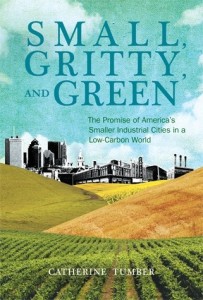
They should have interviewed my friend Catherine Tumber, who wrote a prescient book about this a few years ago called “Small, Gritty, and Green: The Promise of America’s Smaller Industrial Cities in a Low-Carbon World.” I hope you’ll give it a read.

Talk about this post on Facebook.