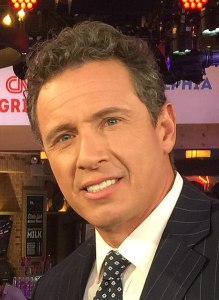
Brian Williams. Photo (cc) 2011 by Anthony Quintano.
Today is Brian Williams’ last day at NBC News, where he’s been hosting a program on MSNBC. Back when he was exposed for his fabrications, and lost his position as anchor of the NBC nightly newscast, I thought he should be fired. I stand by that.
That said, Williams worked hard to rebuild his career, never complained, and earned back much of the respect he’d lost. Good luck and best wishes to him.
One president lied about COVID-19 (the country’s and his own), embraced white supremacists and tried to overturn the results of an election that he lost. Another president has hit a few bumps in the road as he attempts to persuade Congress to pass his agenda. Can you guess which one received more negative news coverage?
If you guessed President Joe Biden, then come on down. According to an analysis of 65 news websites, Biden’s treatment by the media was as harsh or harsher from August through November of this year than then-President Donald Trump’s was during the same four-month period in 2020.
On one level, it’s inconceivable. On another, though, it’s all too predictable. Large swaths of the media simply cannot or will not move beyond both-sides journalism, equating the frustratingly hapless Democrats with a Republican Party that has embraced authoritarianism and voter suppression.
“My colleagues in the media are serving as accessories to the murder of democracy,” wrote Washington Post columnist Dana Milbank, who ordered up the study. He concluded: “Too many journalists are caught in a mindless neutrality between democracy and its saboteurs, between fact and fiction. It’s time to take a stand.”
As I’ve written before, and as many others have said, we’re in the midst of a crisis of democracy. The Republican Party, already disproportionately empowered because of the Constitution’s small-state bias and the Senate filibuster (the latter, of course, could be abolished tomorrow), is working to strengthen its advantage through partisan gerrymandering and the passage of voter-suppression laws. The result could be white minority rule for years to come.
The situation has deteriorated to the point that the European think tank International IDEA now regards the United States as a “backsliding democracy.” To quote from IDEA’s report directly, “the United States, the bastion of global democracy, fell victim to authoritarian tendencies itself, and was knocked down a significant number of steps on the democratic scale.”
And the media remain wedded to their old tropes, covering political campaigns as though they were horse races and treating the two major parties as equally legitimate players with different views.
It’s a topic that was discussed at length recently on Ezra Klein’s New York Times podcast by New York University journalism professor Jay Rosen and guest host Nicole Hemmer, a scholar who studies right-wing media. Their conversation defies easy summary (the whole episode can be found here), but essentially, Rosen argued that the political press falls back on its old habits because breaking out of them is just too difficult.
“The horse race absorbs a lot of abuse from people like me,” he said. “But it can take that abuse, because it is such a problem-solver. It checks so many other boxes that even when people know it’s kind of bankrupt, it stays on.” As an alternative, Rosen proposes coverage based on a “citizens agenda,” which he has written about at his blog, PressThink. But he admitted to Hemmer that we may lose our democracy before his ideas are adopted by more than a fraction of journalists.
What I find especially frustrating is that the media have not been ignoring the Republican threat to our democracy. Far from it. As just one small example, the Times on Sunday published a front-page story by Nick Corasaniti on a multitude of actions being taken at the state level to suppress the vote and put Trump loyalists in charge of the election machinery.
“Democrats and voting rights groups say some of the Republican measures will suppress voting, especially by people of color,” Corasaniti wrote. “They warn that other bills will increase the influence of politicians and other partisans in what had been relatively routine election administration. Some measures, they argue, raise the prospect of elections being thrown into chaos or even overturned.”
So why am I frustrated? Because this sort of valuable enterprise reporting is walled off from day-to-day political coverage. We are routinely served up stories about the congressional Republican leaders, Rep. Kevin McCarthy and Sen. Mitch McConnell, going about their business as though they were latter-day versions of the late Bob Dole, sharply partisan but ultimately dedicated to the business of seeking compromise and governing. In fact, whether through cowardice or conviction, they are enabling our slide into authoritarianism by undermining the investigation into the Jan. 6 insurrection as well as by failing to call out Trump and the excesses of their worst members.
Earlier this year, Washington Post columnist Margaret Sullivan endorsed the idea of a “democracy beat,” which would look closely at attempts to subvert voting rights. Sullivan would go further than that, too. “The democracy beat shouldn’t be some kind of specialized innovation,” she wrote, “but a widespread rethinking across the mainstream media,” permeating every aspect of political and governmental coverage.
If Trump runs again, he may very well end up being installed as president even if he loses both the popular vote and the Electoral College. Who would stop him? In the aftermath of the 2020 election, there were still enough Republican state and local officials with integrity who refused to go along with Trump’s demands that they overturn the results. That is not likely to be the case in 2024. As Barton Gellman wrote in a new Atlantic cover story, “The prospect of this democratic collapse is not remote. People with the motive to make it happen are manufacturing the means. Given the opportunity, they will act. They are acting already.”
Meanwhile, the media go about covering President Biden and his travails as though our politics hadn’t changed over the past 40 years. Of course Biden needs to be held accountable. The ugly withdrawal from Afghanistan, confusing White House messaging about COVID and his inability to bring Sens. Joe Manchin and Kyrsten Sinema to heel are all worthy of tough coverage. (But not inflation because, please, don’t be stupid.) But it needs to be done in a way that we don’t lose sight of the big picture. And the big picture is that we are in real danger of losing our country.
As the Dartmouth political scientist Brendan Nyhan put it on Twitter, “The problem is the media failing to distinguish threats to democracy from normal negative coverage (an important form of democratic accountability!).”
The problem is the media failing to distinguish threats to democracy from normal negative coverage (an important form of democratic accountability!).
In other words, the fundamental problem isn't the Biden coverage (however imperfect); it's the Trump coverage. https://t.co/Qw7Z1ntfZC
— Brendan Nyhan (@BrendanNyhan on 🟦☁️) (@BrendanNyhan) December 4, 2021
Five years ago Thomas Patterson of the Harvard Kennedy School issued a report showing that coverage of Trump and Hillary Clinton during the 2016 general-election campaign had been equally negative — a finding that he found disturbing. Patterson wrote that “indiscriminate criticism has the effect of blurring important distinctions. Were the allegations surrounding Clinton of the same order of magnitude as those surrounding Trump? It’s a question that journalists made no serious effort to answer during the 2016 campaign. They reported all the ugly stuff they could find, and left it to the voters to decide what to make of it.”
Well, here we go again. Next time, though, it’s the future of democracy that is likely to be at stake.
The death of Fred Hiatt ends a period of remarkable stability at the top of The Washington Post’s masthead. Hiatt, the editorial-page editor, had served in that position since 1999. Marty Baron, who was hired as executive editor in 2012, retired earlier this year. Hiatt and Baron predated Jeff Bezos’ acquisition of the Post in 2013, and their continuation in those roles was a signal that Amazon’s founder was determined not to interfere with either the newsroom or the opinion operation.
Baron was replaced by Sally Buzbee, previously the top editor at The Associated Press. It will be interesting to see who replaces Hiatt — though I suspect it could be a while given that his sudden death at 66 was unanticipated. When Buzbee was interviewed recently by Kara Swisher on her New York Times podcast, she gave the impression that publisher Fred Ryan was more involved in her hiring than Bezos was. We’ll see if Bezos follows the same pattern in hiring a new opinion editor. Not that he has to — the ethical standard good news organizations follow is that the owner should stay out of the newsroom but is free to meddle with the editorial pages.
I didn’t realize that Hiatt had Boston-area roots until I read the tributes this morning. He grew up in Brookline and graduated from Harvard, where his father was dean of the School of Public Health.
Hiatt’s retention was noteworthy, as new owners often want to exert their influence on the opinion pages. But even though Bezos’ politics were thought to be generally libertarian, the Post’s editorial stance — which could be described as moderately liberal with a taste for foreign intervention — did not change under Bezos’ ownership.
Looking back over the course of Hiatt’s career, I’d say that observation has held up. The Post is, indeed, moderately liberal. But his unsigned editorials called for war following the terrorist attacks of Sept. 11, 2001, and — more controversially — against Iraq, which then-President George W. Bush wrongly claimed had weapons of mass destruction. The Post, of course, was hardly the only newspaper to endorse what proved to be a horrendous foreign-policy blunder. But it’s the job of a great newspaper to take unpopular stands when warranted. In fact, the Times came out against going to war in Iraq, if rather grudgingly.
The Post’s opinion section diverged from the Times’ during the Donald Trump era as well. Though Hiatt was staunchly anti-Trump and published many anti-Trump columnists — including conservatives like Max Boot, Michael Gerson and George Will — he also employed pro-Trump pundits like Marc Thiessen (“Three cheers for ‘Let’s Go Brandon'”) and Gary Abernathy (“A Trump candidacy in 2024 would threaten his own legacy”).
I’m not sure what Hiatt thought such drivel added to his section. Maybe he just wanted his readers to see what the pro-Trump argument was without having to seek it out on Fox News. In any case, the Times took a different approach, restricting its in-house conservatives to Never Trumpers like Ross Douthat and Bret Stephens. (I’d mention David Brooks, too, except that he really isn’t much a conservative these days.)
Hiatt was a strong supporter of human rights around the world and spoke out forthrightly against the Saudi regime following the murder of one of his columnists, Jamal Khashoggi. By all accounts, he was also a very nice guy, which counts for a lot. A Post editorial put it this way: “Mr. Hiatt made it possible for The Post’s opinion writers and the content they produce to encompass a wide range of views on virtually every subject of public debate, without the rancor, personal enmity and bad faith that have become so prevalent elsewhere in Washington and the nation. Our respect for and loyalty to Mr. Hiatt, and his for us, held this staff together.”
Hiatt served long enough in his position to watch the Post shrink under Graham family ownership from a viable competitor with the Times to a regional paper forced to cut its staff year after year; and then to preside over its rebirth and growth under Bezos. He was an honorable servant of the Washington establishment, which I mean in both a positive and a negative sense. Given the fractures that are now tearing the country apart, we may not see the likes of him again.
I’ve heard three questions come up since CNN suspended, then fired, Chris Cuomo for his inappropriate involvement in his brother Andrew’s defense against charges that he’d sexually harassed and assaulted women. I don’t know the answers to any of them. But they’re worth framing as we think about the extraordinary events of the past week.
1. Why did it take so long for CNN to act? The original bad actor in all of this was CNN head Jeff Zucker, who allowed Chris to host Andrew on his show when Andrew, as governor of New York, was winning widespread praise for how he had handled the early stages of the COVID pandemic.
It may have struck many people at the time as a harmless diversion during a very dark period. You may recall that Chris himself contracted the virus. But it was unethical, and in the months to come we learned just how unethical. Remember, Andrew ended up being accused not just of groping women but of grossly mismanaging the pandemic as well.
Then the drip, drip, drip started, as we learned that Chris had advised his brother and taken part in meetings as the sexual-misconduct scandal became increasingly serious. Zucker may have worried that suspending or firing one of his stars would have only called attention to his own role, so he let it go.
The revelations that were reported last week, though, weren’t just more but were also different. They showed that Chris had abused his position by, for instance, trying to find out what stories other journalists were working on. This went way beyond anything Zucker could have reasonably foreseen, and thus may have given him the freedom he needed to do what he should have done earlier.
No doubt Zucker’s hand was strengthened further when Chris Cuomo was hit during the past few days with a sexual misconduct allegation of his own — his second.
2. What about Sean Hannity? I’ve heard a number of people ask why Chris Cuomo has to go when Fox News did nothing about Hannity’s close relationship with Donald Trump. To which I can only respond that Fox, notwithstanding good work by a few of its journalists, is not really a news operation. It’s a propaganda outlet whose stock in trade is lies and ginned-up culture-war stories about issues such as race and the evils of vaccinations.
CNN is not what it used to be, and I’m not a fan of its prime-time line-up of opinionated talk shows. But it’s good to see that management still cares enough about the network’s reputation that it’s not going to stand for a host who breaks all journalistic boundaries — even if he didn’t do much journalism on the air. To imagine that Fox News would take similar action is to believe that Fox and CNN are in the same business. They’re not.
And wouldn’t it be great if CNN ultimately decides to replace Cuomo’s 9 p.m. talk show with an actual newscast? I’m not holding my breath.
3. What about Jeffrey Toobin? You may recall that CNN suspended Toobin as its legal analyst after he was caught pleasuring himself during a Zoom meeting. Many observers were surprised when the network took him back eight months later.
I’m not sure what that was about except to note that the incident took place during a New Yorker staff meeting, where Toobin was a writer. The New Yorker fired Toobin and shows no signs of being willing to take him back. CNN may have figured that it would be unfair to banish Toobin permanently for something he did for another employer. Still, it’s hard to watch Toobin without going “ewww.” And I say that as someone who liked his work both at The New Yorker and on CNN.
Finally: What an extraordinary downfall for the House of Cuomo. I revered their father, Mario; long before 2020, though, I was aware of Andrew’s thuggish reputation as governor. Chris struck me as an amiable lightweight. Scandals like this have a human dimension that can’t be overlooked. Andrew and Chris got what they deserved — but I feel bad for their mother, Matilda, who, at 90, is still very much with us.
Stephen Glass — yes, that Stephen Glass, of “Shattered Glass” infamy — has been touched by God. I don’t know how else to put it. No spoiler alerts, so just read this.
As an alumnus of “Beat the Press,” which was canceled over the summer, I’ve been curious about what GBH-TV (Channel 2) would do about filling the Friday 7 p.m. time slot.
The station ran a local politics show during the fall that was supposed to end on Election Day but was instead extended through the rest of the year. Now it looks like that show is being made permanent, with a new name — “Talking Politics.” The show will be focused on the suddenly hot Massachusetts gubernatorial race.
Although I don’t know whether it’s deliberate (I suspect it was), the name conjures up the connections between GBH News and the late, great Boston Phoenix. The host, Adam Reilly, used to be the Phoenix’s “Talking Politics” columnist. GBH News senior editor Peter Kadzis, who’ll be part of the new show, was the editor of the Phoenix for many years.
Other Phoenix alums associated with GBH News include former “Talking Politics” columnists Jon Keller and David Bernstein as well as civil-liberties columnist Harvey Silverglate. And, of course, yours truly. Might we consider renaming my GBH media column “Don’t Quote Me”?
The full press release follows.
BOSTON (December 2, 2021) – GBH News today announced the launch of Talking Politics, a new weekly show that will take a deep dive into local politics, with a special focus on the 2022 Massachusetts gubernatorial race. Hosted by GBH News politics reporter Adam Reilly, the panel-based series will feature conversations with local political newsmakers, influencers, analysts and activists. GBH News City Hall reporter Saraya Wintersmith, Statehouse Bureau reporter Mike Deehan and politics editor Peter Kadzis will also be key contributors. Talking Politics debuts on Friday, December 3 at 7:00 p.m. on GBH 2 and streaming on the GBH News YouTube Channel.
“Audiences throughout Massachusetts know that the issues being debated on Beacon Hill have the potential to directly impact their lives. And it’s not just the issues, but the individuals who are shaping these discussions,” said Pam Johnston, general manager of news at GBH. “With this week’s announcement from Governor Baker that he will not seek reelection, the race to lead Massachusetts is wide open. Talking Politics will bring audiences compelling conversations and deeply reported local journalism about political issues across the Commonwealth with the 2022 gubernatorial race at center stage.”
Talking Politics builds on the foundation created by Boston’s Race Into History, the pop-up television show integral to GBH News’ multi-platform initiative focused on the 2021 Boston Mayoral Race. In each week’s half-hour episode, Talking Politics will take a broader look at state and local politics and their impact on the issues that matter. The series will investigate a wide range of political developments across the Commonwealth including the unfolding gubernatorial race, the new leadership in place in key Massachusetts cities, and the administration of Boston Mayor Michelle Wu.
The debut episode will look at Massachusetts Gov. Charlie Baker’s decision to not seek reelection in 2022 after leading the Commonwealth for two terms. Host Adam Reilly and guests will also provide an update into the campaigns of the race’s declared candidates, Republican Geoff Diehl, and Democrats Danielle Allen, Ben Downing, and Sonia Chang-Díaz.
Audiences can stay up-to-date with local political coverage by subscribing to the GBH News politics newsletter. GBH News has been expanding its political coverage over the past year including a multi-platform journalism initiative focused on Boston’s mayoral race and regular appearances by elected officials on Boston Public Radio.
I’ve been defending CNN’s Chris Cuomo ever since we learned that he had been advising his brother, former New York Gov. Andrew Cuomo, about how to respond to allegations of sexual harassment and assault.
It’s not that I like his program especially; I don’t. It’s that the misguided decision to let Chris host Andrew during the early days of the COVID pandemic was more a failing by management than it was something that could be blamed on Chris, and that it wasn’t fair to criticize him for acting like a brother.
No more. Monday’s revelations show that Chris Cuomo went beyond giving his brother advice, and even went beyond strategizing with other members of Andrew Cuomo’s team. According to the newly released documents, Chris Cuomo abused his position at CNN, and for that he needs to pay a steep price — maybe a long suspension, maybe termination.
“How in the world does Chris Cuomo survive this?” asks Tom Jones of Poynter, taking note of the sordid details:
According to documents released Monday by the New York attorney general’s office, Chris used his media sources to seek out information about women who accused his brother of sexual misconduct. He then relayed some of that information to his brother’s top advisers.
Writing in The Atlantic, David A. Graham — who believes that Chris Cuomo should resign or be fired — offered this:
When Chris Cuomo simply offered advice to staff members, he failed to observe the rules CNN had set for his private behavior. But by gathering information from “sources” and passing it to his brother’s staff, Cuomo committed the more egregious step of directly mixing the journalistic work of calling sources and gathering information with his personal, familial commitments. He was wise not to go further into the realm of “oppo research” [something Chris told investigators he did not do], but he still went far beyond the bounds of propriety.
Chris Cuomo hosts an opinionated talk show that is only peripherally tied to journalism. But as Graham notes, he does, in fact, act as a journalist, and people are going to return his calls when he tells them that he’s working on a story. His behavior violated multiple rules of “The Elements of Journalism,” including reporting the truth, maintaining independence from those we cover and serving as an independent monitor of power.
I tuned in Cuomo’s show Monday at 9 p.m. to see whether he’d be on and if he’d address it. There he was, but he made no mention of the revelations — not at the beginning, not at the end.
Well, now. Not only is Chris Cuomo on tonight, but he’s talking about Omicron as if there was nothing else for him to address.
I’ll give him this much — he seemed every bit his normal self, even though he had to know his career was hanging in the balance.
CNN seems to be taking the new allegations seriously. “The thousands of pages of additional transcripts and exhibits that were released today by the NY Attorney General deserve a thorough review and consideration,” CNN said in a statement. “We will be having conversations and seeking additional clarity about their significance as they relate to CNN over the next several days.”
The next step is to act. I doubt that we’ll see Chris Cuomo in the anchor chair tonight. The question is whether we’ll ever see him there again — or should.
I love Wirecutter. You love Wirecutter. But don’t use it — don’t even visit the website — until next Tuesday. The site’s workers are taking part in a Black Friday weekend strike, lasting through Cyber Monday, to protest two years of failed contract negotiations with the New York Times Co.
In a recent article for Digiday, Sara Guaglione offered some background on the job action, including the NewsGuild’s claim that Wirecutter staff members are paid $43,000 less than their counterparts at The New York Times.
The Times Co. is profitable and growing. It can afford to share some of that prosperity with its employees. And good for the union for hitting management where it hurts — the busiest shopping days of the year.
Previously published at GBH News. This is ostensibly a column about the Steele dossier. But it’s really a column about the media — or, rather, what we mean when we talk about “the media.”
You remember the Steele dossier, right? Just before Donald Trump’s inauguration as president in 2017, we learned that intelligence officials had briefed both Trump and outgoing President Barack Obama about a report that contained some lurid accusations. The most famous: that there was a video of Trump consorting with prostitutes in a Russian hotel room, which became known far and wide as “the pee tape.”
The dossier, we learned, had been compiled at the behest of Trump’s opponents for the Republican presidential nomination and later on behalf of Hillary Clinton’s campaign. Christopher Steele, a former British intelligence agent, arrived on the scene at some point after it became a Clinton operation.
Now that special counsel John Durham, appointed by then-Attorney General Bill Barr in the waning days of the Trump administration, has indicted a crucial source and thus discredited the dossier, we are being subjected to some serious handwringing over the media’s credulous reporting.
Sara Fischer of Axios called it “one of the most egregious journalistic errors in modern history.” Writing in The New York Times, Bill Grueskin of the Columbia Journalism School lamented that “so many [journalists] were taken in so easily because the dossier seemed to confirm what they already suspected.” Needless to say, Fox News has been having a field day.
But there’s a huge problem with the narrative that the Steele dossier drove the story that Trump’s 2016 campaign colluded with the Russians, and that the media pushed it in order to destroy Trump’s presidency: that’s not what happened. Or, to be more precise, a few media outlets pushed it, but more didn’t. And most serious people understood from the beginning that the dossier comprised raw intelligence, some of which might be true, some of which almost certainly wasn’t, and some of which probably consisted of outright disinformation.
CNN, the first outlet to report that Trump and Obama had been briefed, left out any details in its initial story even though it had the 35-page dossier in hand. BuzzFeed News, which remains the only major news organization to publish the full dossier (a mistake, as I said at the time), called it “unverified” and noted that it included “some clear errors.” The New York Times reported that the dossier was “unsubstantiated” and “generated by political operatives seeking to derail Mr. Trump’s candidacy.” The Washington Post: “unconfirmed” and “unsubstantiated.”
To be fair, these articles also said that the allegations contained therein might be true, and that the intelligence officials who briefed the two presidents were taking them seriously. But that’s just accurate reporting.
By the time the dossier was made public, we already knew that Trump’s then-lawyer, Michael Cohen, had vociferously denied he’d held a meeting in Prague with Russian operatives. But as the national security blogger Marcy Wheeler noted in a Columbia Journalism Review podcast last week, at the same time Cohen was telling the truth about the Prague meeting, he was also lying about meeting with Russian officials regarding a deal to build a Trump tower and lying about paying off women to keep quiet about their sexual liaisons with Trump. (How can you tell Cohen isn’t lying? When he’s not talking.) Wheeler, I should point out, has been casting doubt on the Steele dossier for a long time, so she’s hardly an apologist for the media.
Were there some media outlets that irresponsibly ran with the Steele dossier? Of course. On the CJR podcast, Washington Post media critic Erik Wemple, who’s been indefatigable in his efforts to debunk the dossier, cited MSNBC, CNN and the McClatchy newspapers. Grueskin pointed to MSNBC’s Rachel Maddow, Slate’s Jacob Weisberg and McClatchy.
To which I would respond that MSNBC and CNN’s prime-time lineups consist of liberal talk shows aimed at keeping their viewers riled up so they won’t change the channel. They are certainly more careful with the facts than Fox News, but they are hardly the journalistic gold standard. I don’t think I ever saw McClatchy’s reporting at the time, and I don’t believe it made its way very far up the journalistic food chain. The Washington Post recently corrected and removed parts of two articles after Durham announced the indictment, thus making it clear that its sourcing had been wrong.
But how important was the Steele dossier to our understanding of Trump’s relationship with Russia? Not very, I would argue. Over the weekend, CNN.com published a lengthy overview by Marshall Cohen showing that the FBI began its investigation before it had any knowledge of the dossier. Cohen also reported that the dossier was not used as the basis for any part of the investigation except a probe into the activities of a minor Trump operative named Carter Page.
And let’s not forget that ties between the Trump campaign and the Russians were right out in the open. Donald Trump Jr. and other campaign officials met with a Russian lawyer in Trump Tower in Manhattan after being promised “dirt” on Hillary Clinton. The Mueller report found that Trump campaign manager Paul Manafort had multiple contacts with Russian agents. WikiLeaks, almost certainly under Russian influence by 2016, released emails that had been stolen from the Democratic National Committee to damage the Clinton campaign — and Trump publicly expressed the hope that more of her emails would be dumped into public view. And on and on. Given all this, the Steele dossier was just one piece of the puzzle, and not an especially important one. I mean, come on. Trump engaging in water sports with prostitutes? Did anyone ever really believe that?
Which brings me back to the point I want to make about the media: there really isn’t any such thing as “the media.” Rather, there are a myriad of outlets, and at any given time some are acting responsibly and some are acting irresponsibly. Pointing to something that Rachel Maddow said as evidence of media malfeasance makes no more sense than blaming the media because Tucker Carlson used his Fox News streaming program to push the lie that the Jan. 6 insurrection was a false-flag operation. No, I’m not equating Maddow with Carlson. She tries to be careful with the facts, whereas Carlson just makes stuff up. But she’s the host of an opinionated talk show, not an investigative reporter.
“The ‘mainstream media’ — I’m going to stop putting that in quotes, but keep imagining that I’m saying it sarcastically — is probably made up of several thousand individuals and then a three-figure number of institutions,” the conservative commentator Jonathan V. Last wrote for The Bulwark recently. “At any given moment, on any given story, some number of these people and institutions will communicate facts that are eventually understood to be misleading or incorrect. Some of these people and institutions are better at their jobs than others.
“The point is that the MSM universe is so large that you’re always going to be able to cherry-pick examples to support the notion that ‘they’ are feeding ‘us’ false narratives.”
Most of the media handled the Steele dossier responsibly right from the start, even if much of what it contained turned out to be even less credible than it originally appeared. A few journalists and commentators got carried away. And, in any case, the dossier played only a minor role in the investigations into Trump’s ties to Russia.
Attempts to conflate it into more than that are not only silly but play into Trumpworld’s lies that the entire collusion story was a “hoax.” It was not a hoax, and I suspect we haven’t heard the last of it.
You may have heard that John Henry and his Fenway Sports Group are looking to buy the Pittsburgh Penguins of the NHL. I spoke with Christopher Ayers of WESA Radio in Pittsburgh what Henry’s leadership style at the Red Sox and The Boston Globe might mean for the Penguins.