In an editorial that’s getting a lot of national attention, the Des Moines Register is calling for a criminal case to be dropped against one of its reporters, Andrea Sahouri, who was charged with failure to disperse and interference with official acts. Sahouri was arrested at a protest on May 31 last year. Her trial is scheduled for March 8. The Register puts it this way:
Sahouri, who has worked as a reporter for the Register since August 2019, was doing her constitutionally protected job at the protest, conducting interviews, taking photos and recording what was happening.
If convicted, she’ll have a criminal record and faces possible penalties of 30 days in jail and a fine of $625 for each offense.
The editorial also notes that the U.S. Press Freedom Tracker has documented 126 arrests and detainments of journalists in 2020, most of them at Black Lives Matter demonstrations.
And though the police killings of George Floyd and Breonna Taylor may resulted in a massive increase in such detentions, there’s nothing new about it. In 2018, police in Bridgeport, Connecticut, detained a reporter during a Black Lives Matter protest in a transparent attempt to stop her from doing her job. Their actions were the subject of a 2019 GBH News Muzzle Award.
Following the death of Rush Limbaugh, a number of observers — including me — noted that Ronald Reagan had paved the way for him and other right-wing talk show hosts by ending enforcement of the fairness doctrine. That rule, part of the FCC’s toolbox for decades, required broadcasters to air opposing views and offer equal time to those who had been attacked.
So why not bring it back? It’s a suggestion I’ve seen a number of times over the past week. But though the idea of enforcing fairness on the airwaves has a certain appeal to it, the fairness doctrine is gone for good, and for some very sound reasons. For one thing, it applies only to broadcast, a shrinking part of the audio and video mediascape. For another, you can’t apply it to new technologies without violating the First Amendment.
The U.S. Supreme Court case that upheld the fairness doctrine and that simultaneously started the clock ticking on its eventual demise is Red Lion Broadcasting v. FCC, a 1969 decision based on the “scarcity rationale” — the theory that because the broadcast spectrum is limited, it may be regulated in the public interest.
The unanimous decision, written by Justice Byron White, involved an evangelical preacher named Billy James Hargis, who anticipated the likes of Jerry Falwell and Pat Robertson by a good decade. In a 15-minute tirade, Hargis attacked a journalist named Fred J. Cook, who had written a critical biography of Barry Goldwater, the 1964 Republican presidential candidate.
According to Hargis, the newspaper where Cook had worked fired him for making false accusations against city officials, and was a communist sympathizer besides. Cook contacted the Red Lion-owned radio station in Pennsylvania where he’d heard Hargis’ rant and demanded equal time. Red Lion refused, citing its free-speech protections under the First Amendment.
Justice White’s decision follows two main threads — that the FCC was well within its authority, as granted by Congress, to enforce the fairness doctrine and order Red Lion to provide Cook with an opportunity to respond; and that the reason the FCC had such authority was because of limits to the number of radio stations that can be on the air in a given coverage area. For instance, White writes:
Before 1927, the allocation of frequencies was left entirely to the private sector, and the result was chaos. It quickly became apparent that broadcast frequencies constituted a scarce resource whose use could be regulated and rationalized only by the Government. Without government control, the medium would be of little use because of the cacophony of competing voices, none of which could be clearly and predictably heard.
Later on, he adds:
Because of the scarcity of radio frequencies, the Government is permitted to put restraints on licensees in favor of others whose views should be expressed on this unique medium. But the people as a whole retain their interest in free speech by radio and their collective right to have the medium function consistently with the ends and purposes of the First Amendment. It is the right of the viewers and listeners, not the right of the broadcasters, which is paramount.
Red Lion argued, among other things, that technological advances were making the fairness doctrine obsolete. Justice White replied that new uses for additional broadcast spectrum were quickly eating up that additional capacity, and that the demand was likely to exceed supply for many years to come. It was a crucial point — and it also anticipated the situation that developed in the post-Reagan era.
White’s decision explains why the scarcity of broadcast spectrum was the key to upholding the constitutionality of the fairness doctrine. I want to drive that home for those who think a new fairness doctrine could be applied to, say, satellite radio, cable television and the internet. Without scarcity, there is no constitutional rationale for the regulation of content. And with cable and satellite, there are hundreds of options; with the internet, the choices are theoretically infinite.
If Fred Cook wanted to respond to the not-so-good reverend today, he could attack him on Twitter, start a podcast, set up a blog — whatever. But he would not be able to demand redress from the radio station given that he would have multiple other ways of making his voice heard. (He could also sue for libel if he believed Hargis’ words were false and defamatory.)
The central role that scarcity plays in these legal calculations can be seen in another case where there was no scarcity — Miami Herald Publishing v. Tornillo (1974), in which the Supreme Court unanimously overturned a Florida law requiring newspapers to offer a right of response to political candidates who had been criticized.
In a unanimous decision, Chief Justice Warren Burger writes that even though media concentration and the demise of newspaper competition had led to a scarcity problem similar to that which prevailed in broadcast, it was the result of market forces rather than the unbreakable physical limitations of the broadcast spectrum. In order to start an over-the-air radio or television station, you need a license from the government, whereas anyone, at least in theory, is free to start a newspaper. Burger writes:
[T]he implementation of a remedy such as an enforceable right of access necessarily calls for some mechanism, either governmental or consensual. If it is governmental coercion, this at once brings about a confrontation with the express provisions of the First Amendment and the judicial gloss on that Amendment developed over the years.
First Amendment protections are extraordinarily high, and they can only be breached for extraordinary reasons.
When Reagan’s FCC stopped enforcing the fairness doctrine in 1987, it cited the rise of cable TV as signaling the end of scarcity. I would argue that the FCC acted too soon. But by the mid-1990s, there was no longer any good reason for the government to regulate speech simply because it had been broadcast over the public airwaves.
Rush Limbaugh, Fox News, Alex Jones and the like have done serious damage to our democracy. But as Justice Louis Brandeis wrote in 1927, “If there be time to expose through discussion the falsehood and fallacies, to avert the evil by the processes of education, the remedy to be applied is more speech, not enforced silence.”
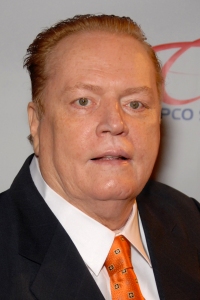
Larry Flynt, who took mainstream pornography to a new low, was an unlikely champion of the First Amendment. Then again, most First Amendment champions are unlikely. As Oliver Wendell Holmes Jr. put it, it’s “freedom for the thought that we hate” that needs protecting, not anodyne statements that offend no one.
Flynt, who died Wednesday at 78, many years after surviving an assassination attempt that left him partially paralyzed, achieved freedom-of-speech immortality because of a parody that he published in his magazine Hustler. It took up a full page and was meant to look like an ad, although the words “Ad Parody — Not to Be Taken Seriously” did appear at the bottom. The fake ad was a takeoff on a series of a real ads for Campari liqueur in which various celebrities talked about their “first time.” The idea was to make it appear they were discussing the first time they’d had sex, only to reveal at the end that they were talking about the first time they drank Campari.
The Hustler parody starred the Rev. Jerry Falwell, founder of the Moral Majority, a leader of the first wave of right-wing television evangelists and a figure of revulsion among liberals. Among other things, Flynt’s Falwell spoke about the “first time” he’d had sex with his mother in an outhouse.
Falwell sued for libel and the intentional infliction of emotional distress, arguing on the latter count that the parody met the legal standard for “outrage.” The case, Hustler Magazine v. Falwell, decided by the U.S. Supreme Court in 1988, established two important principles.
First, on the libel claim, Falwell contended that the parody was false and defamatory. Since he was a public figure, he also had to establish that Hustler published it knowing or strongly suspecting that it was false. A federal appeals court had thrown out the libel count on the grounds that there were no statements in the ad that could be subjected to a true-or-false test. In other words, no reasonable person could possibly believe that Falwell had sex with his mother in an outhouse and had then talked about it for a liqueur ad. The Supreme Court upheld the lower court’s ruling.
Second, the Supreme Court overturned the appeals court’s ruling on the emotional-distress allegation. In so doing, the high court imposed the Times v. Sullivan “actual malice” libel test to claims of emotional distress: in order for a public official or public figure to win such a suit, they would have to show that the offending material contained a false statement of fact — again, with the knowledge that it was false or strongly suspecting it was false. The ruling established a significant new protection for parody and satire.
The unanimous decision, written by Chief Justice William Rehnquist, compared the parody to previous work by Thomas Nast about the corrupt Tweed ring in New York, vicious cartoons about George Washington, and other political and public figures. Rehnquist wrote:
There is no doubt that the caricature of respondent [Falwell] and his mother published in Hustler is at best a distant cousin of the political cartoons described above, and a rather poor relation at that. If it were possible by laying down a principled standard to separate the one from the other, public discourse would probably suffer little or no harm. But we doubt that there is any such standard, and we are quite sure that the pejorative description “outrageous” does not supply one. “Outrageousness” in the area of political and social discourse has an inherent subjectiveness about it which would allow a jury to impose liability on the basis of the jurors’ tastes or views, or perhaps on the basis of their dislike of a particular expression.
Whenever I teach our First Amendment course, I assign my students to write about a major case of their choosing. Inevitably, half the papers are about Hustler v. Falwell, nearly always accompanied by a copy of the ad — just in case I’d forgotten what it looked like, I suppose.
And if you ever get a chance to see the 1996 movie “The People v. Larry Flynt,” you should. It’s a rollicking good portrayal of the whole affair.
Become a member! For $5 a month, you can support Media Nation and receive a weekly newsletter with exclusive content. Just click here.
You would think that reforming the opaque workings of the Massachusetts legislature would be something everyone could agree on. In fact, though, you can always find someone to defend the status quo.
Last summer, for example, New England School of Law Professor Lawrence Friedman wrote in The Boston Globe that the legislature should keep its exemption from the state’s public records law even though Massachusetts is only one of just four states with such a secrecy statute.
“It is not difficult to imagine state representatives and senators censoring themselves out of concern that their words might be taken out of context,” Friedman wrote. “Perspectives about proposed laws and their implications could go unshared and, therefore, unconsidered.”
Now Raymond La Raja, a political science professor at UMass Amherst, has written a commentary for CommonWealth magazine arguing that efforts to make committee votes public are misguided and would lead to more power for the legislative leadership. Such a move would also create incentives for grandstanding by members, La Raja argues, conjuring up the dysfunction in Washington as a warning:
Congress is an obvious example of where “messaging” has become more important to many than legislating. Using Twitter, members can score political points against opponents, shame colleagues, and try to torpedo discussions on policy. Calling out colleagues on committee votes or internal deliberations is especially valuable to extremists who value purity. The model here is the Freedom Caucus, whose members call other Republicans “RINOs” (Republicans in name only) and threaten to enlist primary opponents against them. This kind of behavior erodes goodwill and the ability to forge the kind of compromises that make democracy possible.
CommonWealth contributor Colman M. Herman disagrees, writing that the Massachusetts legislature “is one of the least transparent legislatures in the entire nation.” Herman is right. And the idea that good government will lead to bad government is absurd. If our elected officials need secrecy in order to do the right thing, then we are in mighty bad shape.
Louisiana Attorney General Jeff Landry. Photo (cc) 2011 by Gage Skidmore.
Well, this is certainly a novel response to receiving a public-records request. The Republican attorney general of Louisiana, Jeff Landry, has sued a reporter for The Advocate and The Times-Picayune. The newspapers are seeking records about an official in the AG’s office who’s been accused of sexual misconduct. Landry has asked a judge to issue a declaratory judgment turning down the request and sealing the proceedings.
“In my 40 years as an editor, I’ve never seen a journalist get sued for requesting a public record,” Peter Kovacs, the newspaper’s editor, was quoted as saying. “We’re not intimidated. In fact, we’re more determined.” The reporter, Andrea Gallo, took to Twitter to warn: “I worry about reverse FOIA [Freedom of Information Act] suits against those who do not have my level of resources to fight back. Another reason to support local journalism!”
Just wanted to thank everyone who has reached out about this! I'm overwhelmed by the support. I worry about reverse FOIA suits against those who do not have my level of resources to fight back. Another reason to support local journalism!https://t.co/ClI1M96WxS
In fact, Gallo’s fears are already coming true. According to The Washington Post, such lawsuits are on the rise, with University of Georgia professor Jonathan Peters citing such examples as a lawsuit against a student newspaper filed by a university and an education agency that sued a nonprofit seeking enrollment information. Peters told the Post:
Government officials generally claim that these actions are initiated in good faith and that it is prudent for courts to step in immediately if an agency’s disclosure obligations are unclear. But suing record requesters is unwise, democratically dangerous, and usually unlawful.
Here in Massachusetts, reporters have long since grown accustomed to having their public-records requests ignored. Thanks to a weak state law, penalties for ignoring a valid public-records request are minimal, and government officials take full advantage of that. But suing journalists for seeking public records takes matters to a new and dangerous level.
The COVID pandemic made the fall semester a challenge for everyone. As someone who teaches journalism, I found that challenge to be especially acute. I wanted to give my intermediate-reporting students the same real-life experience as I have with my previous classes, but I needed to do it with the understanding that pavement-pounding and door-knocking were out of the question.
The previous fall, we’d had some success with a group project. My Northeastern University undergradsvisited nine governmental offices in the Boston area and requested public records. They reported on their experience and whether they were asked to do anything forbidden by the law, such as produce identification. They also took photos of the places they had visited. Could a similar project be adapted to the age of Zoom?
A bill filed in the New Hampshire legislature would make it more difficult for the public to access police records, reversing a recent decision by the state’s supreme court that requires greater openness. The New England First Amendment Coalition reports:
Senate Bill 39 intends to exempt police personnel files, internal investigations and other law enforcement records from the New Hampshire Right-to-Know Law.
If made law, the bill would overturn a New Hampshire Supreme Court decision — Seacoast Newspapers, Inc. v. City of Portsmouth — that ruled such documents were not categorically exempt under the public records statute.
Donald Trump in 2016. Photo (cc) by Gage Skidmore.
Suzanne Nossel, the chief executive of PEN (Poets, Essayists and Novelists) America, is concerned that the second impeachment of Donald Trump could be used to weaken the legal standard for convicting someone of incitement to violence. I differ with her New York Times op-ed, and in fact I think criminal charges could be brought against Trump without doing any harm to the First Amendment.
Nossel, a lawyer, rightly differentiates between the impeachment proceedings, which are based on a layperson’s definition of incitement, and the legal definition. By any reasonable measure, Trump whipped a mob into a frenzy on Jan. 6 and pointed it in the direction of Capitol Hill, a reckless action that led to five deaths, including that of a police officer.
The legal standard, as Nossel explains, is much more narrow, based on the 1969 case of Brandenburg v. Ohio, in which a Ku Klux Klan leader, Clarence Brandenburg, was convicted of incitement under Ohio state law after telling those attending a rally that they should take “revengeance” upon Black and Jews. The Supreme Court overturned the conviction, ruling that Brandenburg’s threat wasn’t imminent or specific enough.
The Brandenburg decision was the culmination of a series of court rulings going back to Schenck v. United States (1919), in which Justice Oliver Wendell Holmes Jr. offered his famous metaphor that the law does not protect falsely shouting “fire” in a crowded theater. The standard the court arrived at was that speech could be banned if it presented a “clear and present danger.”
The Schenck decision is often reviled as repressive today, but it was a step forward at the time. For the next 40 years, the court sought to refine and narrow what was meant by a clear and present danger, finally arriving the Brandenburg standard. As Nossel explains, the legal definition of incitement is based on the idea that the language in question was intended to cause violence; that the threat of violence must be imminent; and that the language must be likely to result in violence.
I read the transcript of Trump’s remarks, and it seems to me that they could support an incitement conviction. First of all, there is the context. Trump lies, at great length and in fine detail, about the outcome of the election. You’ve heard it all before, but right near the beginning he says this:
All of us here today do not want to see our election victory stolen by emboldened radical left Democrats, which is what they’re doing and stolen by the fake news media. That’s what they’ve done and what they’re doing. We will never give up. We will never concede, it doesn’t happen. You don’t concede when there’s theft involved.
Now you might say Trump actually believes this. But over the weekend it was reported that Trump, in the White House, has railed about his defeat with associates. According to Axios, he has gone so far as to say, “Can you believe I lost to that fucking guy? That fucking corpse?” So he knows. He’s lying. And though that lie doesn’t amount to incitement, it prepares the crowd for what follows.
The most incendiary language comes at about the 18-minute mark:
After this, we’re going to walk down and I’ll be there with you. We’re going to walk down. We’re going to walk down any one you want, but I think right here. We’re going walk down to the Capitol, and we’re going to cheer on our brave senators, and congressmen and women. We’re probably not going to be cheering so much for some of them because you’ll never take back our country with weakness. You have to show strength, and you have to be strong. We have come to demand that Congress do the right thing and only count the electors who have been lawfully slated, lawfully slated.
Trump immediately follows up with what could be considered exculpatory language: “I know that everyone here will soon be marching over to the Capitol building to peacefully and patriotically make your voices heard.” But we’ve heard him do this many times over the years. If you’re on the jury, would you let him off the hook because, in course of an hour-long speech aimed at stirring up a frenzy, he used the word “peacefully” — once?
Later in his speech, he says, “We got to get rid of the weak congresspeople, the ones that aren’t any good, the Liz Cheneys of the world, we got to get rid of them. We got to get rid of them.” Again, maybe there’s just enough ambiguity here — that sentence is preceded by “a year from now, you’re going to start working on Congress.” That sounds like he could be referring to primary challenges. But Cheney and other Republicans who voted for impeachment are receiving death threats, The Daily Beast reports, and it’s hard to make the case that Trump’s words didn’t have more than a little something to do with it.
I think we also need to keep in mind that Trump took part in a rally at which his son Donald Trump Jr. and one of his lawyers, Rudy Giuliani, spoke even more recklessly than he did. Giuliani spoke of a “trial by combat,” which he ludicrously claimed later was a reference to “Game of Thrones.” Trump Jr., among other things, said:
It [the gathering on the National Mall] should be a message to all the Republicans who have not been willing to actually fight, the people who did nothing to stop the steal. This gathering should send a message to them: This isn’t their Republican Party anymore. This is Donald Trump’s Republican Party.
Again, Junior could, at least in theory, have been referring to primary challenges. But he was speaking to an angry mob, not a gathering of precinct captains. We have to look at what he had to know the effect of his words would be. There’s no reason we have to interpret what he said in a light most favorable to him.
In other words, it’s possible that Giuliani and Trump Jr. could be in legal jeopardy. And it’s also possible that a jury could use what they said to clarify the president’s own statements.
Would it be wise to prosecute Trump for incitement once he’s out of office? Probably not. This is a close enough call that there’s a good chance he’d be acquitted, which would make the case against him look like a politically motivated attack by his enemies. The best route, it seems, is to hope that the Senate convicts him by the necessary two-thirds vote followed by banning him from holding office in the future, which only requires a majority.
In any case, a possible incitement prosecution is likely to be the least of Trump’s concerns once the clock hits 12:01 p.m. on Wednesday. He faces financial ruin and endless legal problems, both civil and criminal. If he pardons himself, that will be challenged in court. If he prevails, he still faces trouble in a number states, which are not bound by a federal pardon.
But an incitement prosecution is an interesting thought exercise. It could well be that Trump went further than Clarence Brandenburg, sheets and all, in unleashing mob violence. That’s quite a distinction.
Please consider becoming a paid member of Media Nation for just $5 a month. You’ll receive a weekly newsletter with exclusive content. Click here for details.
David Ellis Jr. in his office last November. Photo via New Hampshire Public Radio.
What kind of fallout should there be for public officials who are Donald Trump supporters and who took part in the “Stop the Steal” rally-turned-insurrection in Washington on Jan. 6? Three stories in The Boston Globe explore that issue.
The most ambiguous, and therefore the most interesting, is the case of David Ellis Jr., the police chief in Troy, New Hampshire, a longtime Trump supporter who’d previously gotten into trouble for displaying MAGA paraphernalia in his office (see photo above). According to the Globe and to New Hampshire Public Radio, Ellis took part in the protest, but was not among the rioters who invaded the Capitol. He’s also spoken out against the violence.
“I witnessed the people harassing the riot police that were getting in their gear on Constitution Ave, as I’m walking back to get to the train station at Union Station,” Ellis told NHPR. “It was ridiculous, people were giving police such a hard time.”
Nevertheless, there have been calls for town officials to fire Ellis. There have been threats, leading to a lockdown at town hall. But, so far, they’re standing by Ellis. NHPR quoted Richard Thackston, chair of the town’s selectmen, as saying at a public meeting:
I personally find the events that happened yesterday appalling; they brought tears to my eyes, the thought that three people, four people lost their lives in an utterly unnecessary and pointless occurrence is tragic. But I believe that any individual, any public servant has the right to participate in political events without fear of loss of employment or having it have any effect.
I think that’s the right call for anyone who took part in the protests but did not engage in any violent behavior and made no attempt to enter the Capitol. It sounds like Ellis holds dangerously false views put forth by Trump about the integrity of the election. But unless evidence emerges that his activities were not limited to peaceful protest, that should be the end of the matter.
Not so with an unnamed Boston Police officer who, according to the Globe, may have attended the rally and gone inside the Capitol, and who issued threats against Vice President Mike Pence on social media. He should be gone for the threats alone, and if he was among the invading force, he should be prosecuted.
The same goes for Natick town meeting member Suzanne Ianni, who was photographed inside the Capitol, and who told Agence France-Presse (not Yahoo News, as the Globe erroneously reports), “We will fight tooth and nail. This isn’t over just if Biden gets inaugurated, if that happens. We’ll never stop fighting. And Trump will be our president for the next four years, no matter who they inaugurate.”
Town officials have said they can’t get rid of Ianni. But every single one of the rioters who entered the Capitol should be prosecuted. And there she is in the photo accompanying the Globe story, fist upraised.
Please consider becoming a paid subscriber to Media Nation for just $5 a month. Click here for details.
A federal appeals court has upheld the right to secretly record police officers in the performance of their public duties, but has declined to act similarly with respect to other government officials because they have a greater expectation of privacy.
The ruling, by the First Circuit Court of Appeals, essentially strikes down the Massachusetts wiretap law, also known as Section 99, as it pertains to police officers. According to an analysis by Michael Lambert, a First Amendment lawyer with the Boston firm of Prince Lobel, “The decision means that Massachusetts journalists and citizens can, openly or secretly, record police discharging their duties in public without fear of criminal charges under the state’s wiretap law.”
The ruling came in response to two separate cases, both filed in 2016. The case involving the police was brought by a pair of civil-rights activists, K. Eric Martin and René Pérez. The broader case was brought by Project Veritas, a right-wing organization known for making undercover recordings of liberal targets and often editing them deceptively. (For instance, see this backgrounder assembled by the American Federation of Teachers.)
The appeals court upheld 2018 rulings by U.S. District Court Judge Patti Saris. The Dec. 15 decision, by Judge David Barron (himself a former journalist, as Lambert notes), reads in part:
We conclude that, by holding that Section 99 violates the First Amendment in criminalizing the secret, nonconsensual audio recording of police officers discharging their official duties in public spaces and by granting declaratory relief to the Martin Plaintiffs, the District Court properly accounted for the values of both privacy and accountability within our constitutional system. We further conclude that the District Court properly rejected Project Veritas’s First Amendment overbreadth challenge, in which the organization sought to invalidate the measure in its entirety, given the substantial protection for privacy that it provides in contexts far removed from those that concern the need to hold public officials accountable.
As Lambert observes, openly recording police officers who are performing their duties has been legal in Massachusetts since 2011 regardless of whether they have given their consent. Judge Barron’s decision now legalizes secret recordings of officers as well. The issue has drawn attention not just in Massachusetts but across the country as smartphones have made it increasingly easy for citizens to document police conduct and misconduct. The Black Lives Matter movement has been fueled in part by such videos — the best known example being the police killing of George Floyd earlier this year.
Matthew Segal, legal director of the ACLU of Massachusetts, which represented Martin and Pérez, said in a statement:
The right to record the police is a critical accountability tool. Amid a nationwide reckoning with police brutality and racial injustice, the Court has affirmed the right to secretly record police performing their pubic duties.
A final wrinkle worth noting: Retired Supreme Court Justice David Souter was among the three appeals court judges who presided.