Album #17: Various artists, ‘The Harder They Come’

Like many people who went to college in Boston during the 1970s, I visited the Orson Welles in Cambridge one midnight to see “The Harder They Come,” the Jimmy Cliff movie that introduced us all to reggae. Oh, sure, Eric Clapton had had a huge hit with “I Shot the Sheriff” and Johnny Nash with “I Can See Clearly Now.” But this was the real thing.

The movie, released in 1972, stars Jimmy Cliff as an outlaw who tries to elude the police while a record that he made on a whim moves up the charts. Cliff is the focus of the soundtrack album as well as the movie, singing the title track and classics like “Many Rivers to Cross” and “You Can Get It If You Really Want.” But my favorite tracks are by Toots and the Maytals, who burn it up with “Sweet and Dandy” and “Pressure Drop.” Another favorite: “Johnny Too Bad,” by the Slickers.

Among other things, “The Harder They Come” is one of the greatest summer albums ever, along with Bruce Springsteen’s “The Wild, the Innocent & the E Street Shuffle” and the Beach Boys’ “Endless Summer.” What’s odd, in retrospect, is that there’s nothing here by the Wailers, even though Bob Marley, one of the Wailers’ three front men, would soon emerge as reggae’s biggest star.

Unfortunately, I don’t think you can see “The Harder They Come” these days — but you can listen to it. Perfect for a socially distanced backyard summer cookout. And check out that album cover!

Talk about this post on Facebook.

Album #18: Neil Young, ‘Decade’

I’m guessing that the idea behind the sprawling Neil Young anthology “Decade” was that his career was on an irreversible downward arc. Why not cash in while he still had some record-store cachet?

As it turned out, Young had a long way to go. “Rust Never Sleeps,” one of his best albums, was released in 1979, just two years after “Decade.” “Freedom,” another classic, came 10 years after that (“Decade II”?), and he remains active and relevant. Still, “Decade” is a great introduction to one of the most remarkable musicians of our time, taking us from his early years with the Buffalo Springfield to his long solo career, with and without Crazy Horse, with pit stops along the way for Crosby, Still, Nash and Young and, for a nanosecond, the Stills-Young Band.

Young has two modes: acoustic singer-songwriter and all-out rocker. I prefer the loud stuff with Crazy Horse, featuring Young’s cosmic guitar solos (definitely the triumph of feel over technique), but I’ll listen to either anytime. “Decade” covers both phases of his work; even though it comprises 35 songs over just 10 years, he was so productive during that period that it still manages to leave out some my favorites, like “Out on the Weekend,” from 1972’s “Harvest.” On the other hand, “Decade” includes a “Harvest” clunker, “A Man Needs a Maid,” anti-feminist claptrap with strings that may be the only song you’ll want to skip over. (Trust me on this, kids: Evolving sensibilities aside, he was criticized for it 48 years ago.)

On the acoustic side, there are so many great songs here that it’s hard to narrow them down. Some have suffered from too much radio time over the years, like “Sugar Mountain,” “Heart of Gold,” and “After the Gold Rush.” Try listening to them with fresh ears, because they are truly for the ages.

Of the rockers, again, the list is endless. My favorite is “Like a Hurricane,” among the loudest, longest, most guitar-drenched songs Young ever recorded. But it’s hard to go wrong with anything here other than “Maid.” It’s two and a half hours of love songs, drug songs, lost-youth songs, and songs that appear to be about everything and nothing.

Bob Dylan once sang: “I’m listening to Neil Young, I gotta turn up the sound/
Someone’s always yellin’ ‘Turn it down.'”

Nope. Turn that sucker up to 11.

Talk about this post on Facebook.

Album #19: Muddy Waters Day at Paul’s Mall

Muddy Waters with James Cotton in 1978. Photo via Wikipedia.

Like any suburban kid who ever picked up a guitar, I loved the blues. So when the old WBCN Radio announced that it would broadcast the Muddy Waters Day festivities live from Paul’s Mall, I was pretty excited. On June 15, 1976, I turned on my tape deck and managed to capture 48 minutes of musical magic.

No, you can’t buy the album. (Actually, maybe you can. See below.) But the Muddy Waters Day recording features the man born McKinley Morganfield at his finest, from the rollicking opener, “Caledonia,” to his stinging slide guitar on “Long Distance Call,” to his hits: “Mannish Boy,” “Hoochie Coochie Man” and, of course, his signature song, “Got My Mojo Working.” Waters grew up in Mississippi, the birthplace of the blues, and later moved to Chicago, where he was among the first blues musicians to go electric.

I’d long since ceased to have anything I could play the cassette on. But last year I bought a cheap little machine that converts old cassettes into MP3s. The tape was in better shape than I had imagined, and so now I can listen to it all over again. (To my surprise, it looks like you can buy it, along with a concert he gave at the Newport Folk Festival in 1960.)

Why no actual albums? Years ago I picked up the Johnny Winters-produced “Hard Again” as well as the Chess three-CD anthology. Good stuff, but just not as good. There was also a huge plus factor to the Paul’s Mall concert — I got to see him and his band the following night. So the tape — now an MP3 — also serves as a memento of a special night.

Waters was 63 when we saw him — an old man, we thought, though a little younger than I am now. He played for about half of a very long show, with his band taking the rest of it without him.

Toward the end of the night, he came up behind us and sat down as he waited to go back on stage. My friend and I suddenly realized we were in the presence of royalty. “Play ‘Mojo’!” my friend said excitedly. “Aw, you don’t want to hear that shit,” he replied.

He played “Mojo.” How could he not?

Talk about this post on Facebook.

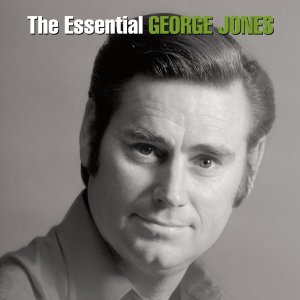
Album #20: ‘The Essential George Jones’

It’s a little embarrassing these days to say you once were a Don Imus fan. By the time he died earlier this year, he was thought of — to the extent that he was thought of at all — as a racist has-been. But for several years during the mid to late ’90s, his nationally syndicated radio show was a favorite of the chattering classes. I was an avid listener during my morning commute. And the one thing I don’t regret about it is that he introduced me to George Jones.

Which is why “The Essential George Jones” is on my list of top 25 albums. Somewhat different from the “Essential” album you’ll find on Spotify, with a different cover, the 1994 two-CD set features 44 songs from Jones’ long, booze-drenched career. I’m not a fan of his upbeat songs; the man just didn’t have the knack, and I find stuff like “White Lightning” and “I’m a People” pretty much unlistenable.

But those ballads. And that voice. From “Just One More” to “A Good Year for the Roses,” from “We Must Have Been Out of Our Minds” to “Bartender’s Blues,” Jones takes over a song with waves of depth and emotion.

Jones’ Mount Olympus is “He Stopped Loving Her Today,” which hit No. 1 in 1980. Often described as the greatest country song ever, it is so floridly sentimental, with swelling strings and a chorus by way of producer Billy Sherrill, that it would inspire laughs in lesser hands. Instead, Jones elevates it to something so fragile and heartbreaking that it’s almost unbearable.

I went to see him just today, oh but I didn’t see no tears / All dressed up to go away, first time I’d seen him smile in years.

Talk about this post on Facebook.

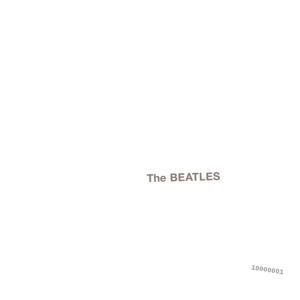
Album #21: The Beatles, the White Album

Where do I fit the Beatles into my Top 25? I really struggled with this one. I loved the Beatles when I was a teenager, but as an adult I haven’t gone out of my way to listen to them. For me, at least, they haven’t held up as well as most of the other musicians on this list.

Overexposed? No doubt. I think their heyday came along too early, too. I’d rather listen to George Harrison’s “All Things Must Pass” (1970) than anything they recorded as a group, mainly because George’s masterpiece came along a little later and doesn’t seem as dated. Then again, my favorite music from the ’60s sounds as fresh to me today as it did when I first heard it. But, you know, these are the Beatles we’re talking about, and I’ve got to get them in here somewhere.

“Revolver” (1966) is most people’s consensus pick as their best album, but to me it’s half an album. I love John Lennon’s contributions, especially “She Said She Said” and “Tomorrow Never Knows.” Ringo Starr’s drumming on both those tracks kills me every time. I like George’s “Taxman,” especially Paul McCartney’s guitar solo. But Paul’s tracks leave me cold. He had not yet matured into the songwriter who wrote the band’s last great string of singles, “Lady Madonna,” “Hey Jude” and “Let It Be” among them.

So … “Sgt. Pepper”? There’s a lot to like, and it was hailed as their masterpiece when it was released in 1967. But I don’t think it’s aged all that well. The two best songs recorded for the album, “Strawberry Fields Forever” and “Penny Lane,” got left off because the record company had demanded they be released as singles months earlier. And sorry, but “A Day in the Life” is a lot less profound than we all used to think. But Paul’s bass-playing throughout is revelatory, and the whole album hangs together nicely thanks to George Martin’s brilliant production.

Which brings me to “The Beatles” (1968), better known as the White Album. As countless other critics have complained, the White Album isn’t so much a coherent album as it is a bunch of solo tracks by the four. Some of it is wretched, like Ringo’s “Don’t Pass Me By.” Some of it is self-indulgent crap, like John’s “Revolution #9.” But the songwriting, overall, is superb, and the whole thing is modest and focused on the music rather than any sort of grand “Pepper”-like concept.

It’s also one of those rare albums when Paul and John were both on top of their game at the same time. John’s “Revolution #1” (which I prefer to the amped-up single version), “Happiness Is a Warm Gun,” “I’m So Tired” and “Julia” are standouts, as are Paul’s “Back in the U.S.S.R.,” “Helter Skelter” and “Martha My Dear.”

Then there’s George’s “While My Guitar Gently Weeps,” which features some of the most hilariously ridiculous lyrics on the album. (OK, he gets points for rhyming “inverted” and “perverted.”) But it sounds great thanks to Eric Clapton’s lead guitar, and it’s still a song I’ll turn up loud when it comes on the radio.

And let’s play “Birthday” one more time for Paul, who celebrated his 78th last week, and for Ringo, who turns 80 (!) on July 7.

Talk about this post on Facebook.

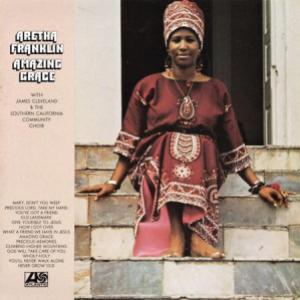
Album #22: Aretha Franklin, ‘Amazing Grace’

Aretha Franklin represents something of a quandary for me. She was, without question, one of the greatest singers of the 20th century — never mind calling her the “Queen of Soul,” which diminishes her universality. Her 2016 show at the Blue Hills Bank Pavilion was among the great concerts I’ve ever had the honor of attending.

But albums? For me, Aretha wasn’t about albums so much as a string of incredible singles that she recorded in the late 1960s and early ’70s. I could have chosen “Aretha’s Gold,” her 1969 compilation that includes hits like “Chain of Fools,” “Think” and, of course, “Respect.” (Has a cover ever surpassed the original as thoroughly as Aretha’s “Respect” exceeds Otis Redding’s?)

A few years ago, though, I heard “Amazing Grace” for the first time. Released in 1972, it became Franklin’s biggest hit as well as the top-selling gospel album of all time. Listening is a challenge for someone like me, a mostly secular aging white guy who likes a strong beat. “Amazing Grace” consists mainly of Aretha’s voice soaring above the Southern California Community Choir, with a band led by the Rev. James Cleveland on piano.

My appreciation of “Amazing Grace” deepened after we saw the 2019 documentary of the same name. It mostly tracks with the album, but to see her perform takes it to an entirely different level and offers a deeper perspective on the material. There’s more of her father, the Rev. C.L. Cleveland, than there is on the album as well. And look! There’s Mick Jagger!

“Amazing Grace” is one of those aspirational albums that I keep going back to. I hear something new every time I play it. And if I keep at it long enough, I might finally get it.

Talk about this post on Facebook.

Album #23: Lucinda Williams, ‘Car Wheels on a Gravel Road’

I had just started this exercise when we were all sickened by the police killing of George Floyd and then turned our attention to the Black Lives Matter protest movement that quickly grew out of it. For a while, writing about my favorite albums seemed beside the point. But music is important, and it’s also important that we not keep ourselves in a continual state of rage over events that we have a limited ability to control. So — back to the list.

Lucinda Williams’ “Car Wheels on a Gravel Road,” released in 1998, is a near-perfect album that combines rock, country and, yes, suicide. It sounds as fresh today as it did 22 years ago. From the upbeat, sexy opener, “Right in Time,” to the evocative closer, “Jackson,” “Car Wheels” is one of those proverbial take-it-to-the-island albums.

After “Car Wheels,” I started anticipating Williams’ new albums, and listened to “Essence” (2001) and “World without Tears” (2003) as soon as they came out. There are some good tracks on both, but she wasn’t quite able to recapture the magic. Her singing became increasingly mannered, too.

But “Car Wheels” is one for the ages. I do want to listen to her latest, “Good Souls Better Angels.” And she’s on my bucket list of musicians I want to see — if we can ever get back to going to concerts.

Talk about this post on Facebook.

Album #24: Christopher Parkening, ‘Parkening Plays Bach’

During the summer and fall of 1975, I was working as a Northeastern co-op student at the United Way, then located on Beacon Hill in a building that is now a Suffolk dorm. That much I remember. What I don’t remember is why I came back from my lunch break one day with a copy of the classical guitarist Christopher Parkening‘s 1971 album “Parkening Plays Bach.” But I’m glad I did.

When it came to my own guitar-playing skills, I was at the peak of what proved to be a very tiny hill, so that might have had something to do with it. I mainly liked rock and blues, and I played bass in a band. But I also had acquired a book on how to play classical guitar, and I did some messing around with that.

I can’t say I made much progress. But I loved listening to Parkening play Bach. The great composer wrote for the harpsichord and ensembles, but Parkening made those pieces sound like they were always meant for the guitar. And he made them sound effortless. For an example, listen to “Sheep May Safely Graze.”

Even today, I don’t listen to a lot of classical music, and my tastes tend to be on the lite side — Bach, Vivaldi (my apologies), a little Mozart. I love Rudolf Serkin’s recording of the Andante in Mozart’s Piano Concerto No. 21 so much that I almost chose that for this list instead of Parkening. We’ve seen live performances of Handel’s “Messiah” and Bach’s Brandenburg Concertos. But, at home, when we choose classical music it’s mainly for background.

Still, I have Parkening to thank for opening up my musical vistas a bit.

Talk about this post on Facebook.


Album #25: Mavis Staples, ‘We Get By’

Like many people, I recently took the 10-album challenge on Facebook. It was fun, but I found it too limiting. Only 10? Plus you’re discouraged from offering any commentary, and the albums are supposed to be those that influenced your musical tastes, not necessarily the ones you think are the best.

Given all that, I thought I would write about my top 25. It’s a fluid list — ask me six months from now and it might be different. But these are 25 albums that mean a lot to me, and I’m going to try to rank them in some kind of order. My only self-imposed rule is that I won’t choose more than one album by any particular musician or band.

I’ll start with Mavis Staples’ 2019 album “We Get By,” which will certainly be the most recent entry on the list. A few years ago WUMB Radio (91.9 FM) reintroduced me to Staples. I’m in my 60s, so the Staple Singers were a radio, ah, staple when I was a teenager in the 1970s. Back then, though, I didn’t pay much attention. It turns out that they were great, and that Mavis, at 80, is still going strong. Indeed, we saw her in 2017 at UMass Boston and in 2019 at the Cabot in Beverly, and I swear she had more stamina at the second show.

I like all of Staples’ albums from recent years, but “We Get By” is the strongest. Written and produced by Ben Harper, it features a crack hard-rock trio, as does her terrific live album, also released in 2019, called “Live in London.” The standout track on “We Get By” is “Sometime,” which would have been a Staple Singers hit in 1971.

The Mavis Staples revival has sent me back into the Staple Singers catalog. And there are days when I think “If You’re Ready (Come Go with Me)” is the last song I want to hear before they turn off the lights once and for all.

Talk about this post on Facebook.


What the great songwriter John Prine meant to me — and to all of us

Two of my favorite musicians have died in the past month — first McCoy Tyner and now John Prine. I wrote about Tyner here. Now let me tell you a little bit about Prine, who’d been in poor health for years and who did not survive COVID-19.

I came to Prine fairly late. I knew who he was and had heard a few of his early classics. But it wasn’t until his 1991 comeback album, “The Missing Years,” started getting some airplay that I really tuned in. It’s still my favorite Prine album. His songwriting had matured and his thin, reedy voice had given way to something deeper and more expressive. (You can learn about all of his music at his website.)

Prine only recorded three more albums of original material after that, the most recent being “The Tree of Forgiveness” (2018) — as warm and funny and heartfelt as anything he’d recorded. But he also recorded two terrific albums of country classics on which he sang duets with female singers.

“In Spite of Ourselves” (1999), the first and better of the two, featured the old George Jones classic “We Must Have Been Out of Our Minds.” Not only was it audacious for Prine to take on perhaps the greatest country singer ever, but his singing partner, Melba Montgomery (who also wrote the song), had recorded the original with Jones some 35 years earlier. It was a magical moment.

Another magical moment was in June 2018, when we finally got to see Prine in Boston. I’d been warned that his voice was shot from cancer treatments, but in fact he sounded fine that night. He told some great stories and seemed genuinely glad to be there. So were we.

Talk about this post on Facebook.