The Lowell Sun sports editor’s farewell column was taken down. Here’s every word of it.

Note: The hedge fund-owned newspaper chain MediaNews Group recently laid off several people at its Massachusetts papers, including sports editor Dennis Whitton of The Sun in Lowell. Whitton posted a farewell column on The Sun’s website and linked to it on Twitter, but when I tried to read it, it was gone — taken down (by management), he said in a tweet. (The column did appear in print.) An anonymous person with access to the CMS forwarded it to me, and I was able to verify that it was authentic. Here is Whitton’s farewell:

40 years of memories

By Dennis Whitton

“And then one day you find, ten years have got behind you. No one told you when to run, you missed the starting gun…”

— Pink Floyd, “Time”

LOWELL — It’s more like 40 years have got behind me. Where have they gone? What do I have to show for them? Can I get some of them back?

After 35 years as The Sun’s sports boss and another 5-6 behind that as a reporter, co-op, cub and otherwise, your intrepid correspondent will be leaving the building this afternoon for the final time.

Corporate cost-cutting is the culprit. Apparently I was making too much money to suit the suits, even with years of frozen wages. I didn’t realize I was making so much. I would have spent more.

Our assistant sports boss, Barry Scanlon, is in the same liferaft. That’s a real head-scratcher because Barry was the staff workhorse and he loved what he did for the most part and did it extremely well. Like me, he took maybe two sick days in 22 years. But he, too, was unknowingly making too much money.

My super-supportive wife Jan says I should use the term “let go” when talking about this stuff because it sounds better than “laid off.”

It probably also sounds better than fired, downsized, axed, canned, dumped, released and forced out, too. But any way you cut it, we’re down to the final countdown in a job I’ve held since before that ball went through Bill Buckner’s legs.

If I sound bitter you’re reading me wrong. With all the technology now in play it’s a young person’s game. I’ve probably overstayed my “sell by” date and now I’m looking forward to the next chapter. Of the book I’m reading. Sitting on the beach.

At least the ax wasn’t performance-related. I know that because the suits in question have no idea what Barry and I did or how we did it. In the end we were numbers on a spreadsheet. There is one major downside to the affair: According to the exit agreement, my discounted employee newspaper subscription will be rolled over to the regular customer rate at the end of the month. Damn.

Everybody knows newspapers are yesterday’s news, useful mainly to parents making scrapbooks for their high school heroes. In the Internet age there isn’t much we can tell you in the rag that you couldn’t have found out 12 hours ago. Advertisers know this, which is why newspapers are circling the drain. Which is why we’ve been let go, and a number of other good people before and after us.

Those were the days.

In looking back for this “farewell column” that the aforementioned Jan has pressured me to write, I realize nearly all of my most interesting times in the game came in the previous century. After that I became a cynical curmudgeon.

So in a nutshell, and with apologies for the overuse of the dreaded pronoun “I,” here are some of my memories:

One of my first assignments as a Northeastern (Class of ’80) co-op student in the Sun sports department was the 1978 Beanpot. Of course the Blizzard of ’78 hit and I was stuck wandering Boston for five days. At least I didn’t bail. A true newspaperman.

In October of that same year I was in the overflow “press box” on the left field roof at Fenway Park when Bucky Dent’s home run cleared the fence so close to me I could almost read Bowie Kuhn’s signature on the baseball.

I covered a lot of Red Sox, Bruins and Celtics games in that time period (much of it while still in college) and even went on several Sox road trips when Charlie (not yet Chaz) Scoggins was on vacation. Milwaukee, Baltimore, Cleveland, the Bronx, Arlington, Texas — all the garden spots. I rode the team buses (Luis Tiant was a hoot. Nobody talked to Yaz. The nicest guy was Jack Brohamer) and stayed at the team hotels.

Jack Costello, the editor whose family owned the paper, wasn’t averse to spending money, at least where travel was concerned (lunch was another matter). Now we don’t even go to the Garden because it costs too much to park.

In September of 1979 I was off to Syracuse for a feature story on Ayer’s Joe Morris, who was setting records for the Orange. From there I detoured down to Madison Square Garden where I covered Larry Bird’s first exhibition game with the Celtics. Still have the press pass to prove it.

In 1982, the paper sent me to Kitchener, Ontario, for three days to do a profile of junior hockey superstar Brian Bellows because the Bruins had the first overall pick in the draft. The stories came out OK, but the B’s went and drafted Gord Kluzak instead.

Jack sent me to Augusta National to cover five Masters Tournaments, ending with Tiger’s historic win in 1997. Got to play the course in 1990 and made birdie on the par-3 sixth with a rented Cannon 5-iron to six feet. Been living off that story ever since. Also got to take the ferry over to Long Island for two U.S. Opens at Shinnecock Hills.

Speaking of golf, in 1999 we were double-teaming the Ryder Cup in Brookline until I told Dave Pevear on Saturday night to go ahead and cover the Patriots’ game on Sunday rather than come to the U.S. funeral at TCC. A case of over-managing.

In 1980, I remember covering the horrendous clubhouse fire at Rockingham Park. It was the morning after I hit the last race, with Skip Row paying $10.20 (I kept the program).

Closer to home there was a story on Dave Boutin, a ULowell catcher from Pawtucketville who was dying of cancer. That one has always stuck with me. Dave and his mother Fleurette were a source of inspiration, even for a cynic. Absolute profiles in courage.

In 1987, they sent me to Pasadena, Calif., for Super Bowl XXI to do stories on Ayer’s Joe Morris (again), by now the Giants’ star running back. From there Mr. Costello had me drive down to San Diego to do a piece on Dennis Conner, who had brought the America’s Cup back to the States in historic fashion.

Dennis was not even in the country, but there was some good yachting talk with various officials at the leather-and-mahogany San Diego Yacht Club. Nothing like some good yachting talk on the company’s dime. At least I got to see the actual Cup.

Westford golfer Pat Bradley always made time for me whenever I needed a story. I attended her Hall of Fame induction dinner in Boston in 1991 (still have the commemorative wine glass) — and shockingly ran into her atop Mt. Washington last year after she had hiked up through thick fog at age 67.

The Golden Gloves were my beat through the ’80s and into the ’90s. I covered Micky Ward’s amateur career (and later Ward-Gatti II), saw Mike Tyson destroy a poor local kid named Jimmy Bisson in 42 seconds in 1983, got to know the tireless Arthur Ramalho and his saint of a wife, Rita, and went on five or six National Golden Gloves trips.

The most memorable of those was in Albuquerque, N.M., when Gloves director Norm Lombardi, “chaperone” Jack Baldwin and I hopped on a small plane to Las Vegas one night. I had to call Ramalho’s hotel room to find out what happened to the heavyweight we had fighting in the tournament and cranked out the story from some cheap hotel off the strip where you had to duck under the TV set when you entered the room.

Norm was obsessed with that casino game where you plug in nickels and they fall into the bin and push other nickels over a cliff for a possible 20-cent payout. Obsessed.

From 1983-85 I left to work with another mentor, Frank Dyer, at the Boston Herald. We had a blast, but there was zero chance to write so I went looking and Lowell happened to be in need of a sports editor. At age 28 I took the job.

Which brings me to the old Sun All-Star sports banquets, usually held at the Windsor (now Lenzi’s) in Dracut. By actual count I did three banquets a year for 23 years until they were discontinued in 2008 — corporate cost-cutting was the culprit.

Introducing shy high school kids and reading about their accomplishments to beaming parents for two-plus hours a night was the drill. I dreaded it at the time but looking back it was a true highlight of my career.

We were able to talk with a ton of area coaches and AD’s and athletes and parents, and it no doubt helped our high school coverage, which was always The Sun’s bread and butter.

There were usually guest speakers, too. Tom Glavine was extremely nervous and kept repeating himself. Now he’s as polished as they come. His girlfriend at the time may have been overserved. Reggie Lewis showed up with a severe burn on his right hand.

A popcorn accident in the kitchen, he told us. Wink wink. Nod nod. Jim Calhoun spoke when he was still at NU and not yet the legend he became at UConn. And there were plenty more.

I covered a Marvin Hagler fight one winter night at the Worcester Centrum and got caught again in a raging blizzard. Unwilling to wait in a long line for gas, I negotiated my beloved but totally unreliable MGB roadster back to Lowell on absolute fumes, barely able to see out the windshield. It finally gave up as I pulled into the old Rex parking lot astride the Sun office. Loved that car.

The Rex was where a Lowell cop moonlighting as a snowplow driver hit my car one night and left a note on the windshield. Thus began a long friendship with Jack Dolan.

So in the interest of wrapping this thing up, let me throw out some other names of people who have helped me along the way, made the journey more enjoyable, and in some cases even became friends:

Jack Costello, Frank Dyer, Mickey Sullivan, Jim Moriarty, Gene Manley, Ken Hughes, Kendall Wallace, Meg Buckley, Shawn Smith, Peter Flynn, Paul Daley, Chris Scott, Jim Campanini, Bill Biswanger, the entire group of sports personnel, past and present, who turned the deadlines we faced every single day into child’s play.

Then there is my aunt Joyce Dalton in Wilmington, who faithfully clipped all of my articles from day one, regardless of topic, passed judgment and sent them down the family line through Auntie Moo.

I know there are others whose names will pop into my head as I drive home after writing this. If that’s you, I apologize.

But as the great Blues Traveler song goes: “It won’t mean a thing in a hundred years.”

— 30 —

Talk about this post on Facebook.

Private equity ownership is devastating retail — just as it has destroyed newspapers

The Washington Post reports some startling figures about the role of private equity firms in the retail business. According to the Post’s Abha Bhattarai:

More than 1.3 million Americans have lost their jobs in the past decade as a result of private equity ownership in retail, according to a report released Wednesday. That includes 600,000 retail workers, as well as 728,000 employees in related industries. Overall, the sector added more than 1 million jobs during that period. [my emphasis]

This is exactly what has happened to the newspaper business over the past several decades. Yes, the internet has devastated the economic model, with advertisers fleeing to Craigslist, Google and Facebook. But that’s only part of the story. The other part is that corporate chains have hollowed out newsrooms in order to maximize profits at a time when what was really needed was investment and patience.

The most notorious of the corporate raiders is MediaNews Group, formerly Digital First Media, which is owned by Alden Global Capital. MNG has all but destroyed once-great papers like The Denver Post and The Mercury News of San Jose, as U.S. Sen. Elizabeth Warren notes in her proposal to re-regulate Wall Street. Cuts continue at MNG’s Massachusetts holdings, the Boston Herald, The Sun of Lowell and the Sentinel & Enterprise of Fitchburg. Meanwhile, The Berkshire Eagle is rebuilding after a group of local business people bought the paper back from MNG.

Consider, too, that independent regional papers such as The Boston Globe and the Star Tribune of Minneapolis are doing reasonably well, and others are taking innovative steps such as giving iPads to their readers to ease the transition to all-digital (the Arkansas Democrat-Gazette), operating under hybrid for-profit/nonprofit ownership (The Philadelphia Inquirer) or are pursuing pure nonprofit ownership (The Salt Lake Tribune).

For years we’ve been hearing that Amazon is destroying retail — yet, as the Post observes, that part of the sector not being strangled by private equity has continued to grow. Newspapers’ business problems are very real. But surely they would be shrinking a lot more slowly, and perhaps groping their way toward sustainability, if they weren’t being destroyed by our financial overlords.

Talk about this post on Facebook.

Millennials and the news: A new study shows that they’re tuned in after all

Previously published at WGBHNews.org.

Is there a more maligned demographic group in the United States than millennials? Blamed for everything from narcissism to avocado toast, adults between the ages of 18 and 34 are regularly disparaged as less ambitiousless tolerant, and less well-informed than members of older generations.

We believe these stereotypes even though they are supported by precious little in the way of evidence. In at least one of those categories, we now have some countervailing data. According to a new study by the Knight Foundation, millennials are regular news consumers who rely on journalism for information, entertainment, and guidance on how to vote.

The survey of 1,660 young adults “shows that 88 percent of people ages 18-34 access news at least weekly, including 53 percent who do so every day,” according to the Knight report. Interestingly, Hispanics and African Americans were somewhat less likely to engage with the news than whites, but were “more likely to share news with friends on social media.” Twitter habits differed by ethnic group as well: “Forty percent of young African American adults get news on Twitter at least once a week, compared to 27 percent of Hispanics and 26 percent of whites.”

I’ve been teaching young adults for the past 15 years, and the Knight findings confirm what I’ve seen. Young people care deeply about the news. But the way they define and consume it is quite different compared to my generation.

Remember Marshall McLuhan’s famous maxim that “the medium is the message.” When those of us who grew up with newspapers read journalism on our phones, we might retain some of our pre-digital ways of thinking — oh yeah, if this were the paper, what I’m reading now would be the editorial page. But for young adults who never read a print newspaper, the digital experience is everything. They don’t draw those kinds of analogies, and they accept the mobile environment for what it is: a source of infinite news and information that they have to sort through.

Granted, I teach mainly journalism students, whose interest in the news is more intense than that of other young adults. Still, I have a few observations that I think are applicable to digital natives of all backgrounds:

• Young people are dubious about “the news” as a curated package. Rather than seeing news as a compilation of international, national, and local information that they need to keep up with on a daily basis, younger news consumers tend to dive deeply into a few areas that interest them. They don’t see the digital environment as disaggregated because for them it was never aggregated. They do their own aggregation, making themselves well informed on a few topics.

• Quality is as important to millennials as it is to older generations. Studies show that older people are more likely to believe and share fake news than younger people. If we’re going to offer classes in media literacy, they are needed at the senior center every bit as much as they are in middle school — maybe more so. Perhaps that’s because older news consumers have a reverence for anything that appears in print (or even in digital text), whereas millennials grew up knowing that they have to be their own fact-checkers. In my experience, young adults are intensely concerned about quality, and they know how to separate the good stuff from the garbage.

• Millennials are unlikely to develop brand loyalty in their media habits. National newspapers like The New York Times, The Washington Post, and The Wall Street Journal are experiencing some success in charging for digital subscriptions, as are a few regional papers like the Los Angeles Times and The Boston Globe. Long-term, though, those papers may be leaving millennials behind, since they’re not going to want to restrict themselves to a few titles they pay for. We need new ideas, such as subscriptions that include a wide range of news sources, or the ability to pay for that day’s digital paper. Single-copy sales were a staple of the newspaper business for generations; they need to make the leap to the way we consume news today.

The Knight Foundation study, conducted by the NORC research institute at the University of Chicago, also found that young people regard the media as being highly biased — even sources they use regularly. They also worry that the media are harming democracy and national unity. African Americans and Hispanics said that news sources did not portray them accurately. No particular media outlets are mentioned in the report. But it does show that millennials are well aware that the country is in crisis, and that the media are too often part of the problem rather than part of the solution.

All of which shows that we older people ought to welcome our millennial overlords. We can only hope that they’ll show up on Election Day. Sadly, that is one area in which they thoroughly deserve their dismal reputation. Perhaps that will change in 2020.

Talk about this post on Facebook.

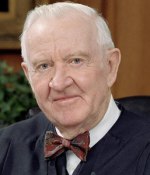
Why Justice Stevens’ fraught relationship with the First Amendment still reverberates

Justice Stevens

Previously published at WGBHNews.org.

The late Supreme Court Justice John Paul Stevens today is being hailed as a liberal beacon who took strong stands against the death penalty and in favor of gun control and limits on political spending.

But despite his well-deserved reputation as a judge who was motivated by decency and principle, his legacy with regard to the First Amendment is mixed.

For one thing, as Linda Greenhouse observed in The New York Times, Stevens in 1989 broke with his colleagues when they overturned a Texas law that banned flag-burning. “His patriotism was of the old-fashioned, unabashed variety,” wrote Greenhouse by way of explanation.

For another, on two important cases that pitted the right to privacy against freedom of the press, Stevens sided against the media. In one instance he was on the losing end. In the other, though, he wrote the majority opinion, limiting public access to government information in a decision that reverberates three decades later.

First, Stevens’ dissent. Starting with New York Times v. Sullivan in 1964, the Supreme Court began issuing a series of decisions that made it more difficult for plaintiffs to win libel suits. In the Times case, the court ruled that public officials suing for libel would have to show not only that false, defamatory material had been published about them, but that the publisher had acted with “actual malice” — that is, with the knowledge that it was false or with reckless disregard for the truth. That standard was later extended to public figures as well. Then, in Gertz v. Robert Welch Inc. (1974), the court ruled that even private figures would at least have to prove negligence in addition to falsehood and defamation.

These decisions greatly strengthened freedom of the press. Still to be settled, though, was the matter of proof. Traditionally, after a plaintiff sued for libel, it was up to the publisher to prove that the material in question was true. That changed with Philadelphia Newspapers Inc. v. Hepps (1986), in which the court ruled by a five-to-four margin that it should be up to the plaintiff to prove falsity.

Stevens was outraged. In his dissent, he wrote that “in order to comprehend the full ramifications of today’s decision, we should assume that the publisher knew that it would be impossible for a court to verify or discredit the story, and that it was published for no other purpose than to destroy the reputation of the plaintiff.” He added: “I simply do not understand … why a character assassin should be given an absolute license to defame by means of statements that can be neither verified nor disproved.”

Three years later, though, Stevens was on the winning side in ruling that public records may become private in some circumstances, and that the privacy rights of an individual can sometimes outweigh the public’s right to know.

The case, Department of Justice v. Reporters Committee for Freedom of the Press, was decided unanimously in 1989, but it had been many years in the making. Starting in 1978, Robert Schakne, a reporter for CBS News, had been seeking FBI rap sheets about the four Medico brothers, who were alleged organized crime figures with ties to a corrupt congressman named Daniel Flood. Schakne’s case, fought on his behalf by the Reporters Committee, was thrown out in 1985 at the district court level. But a federal appeals court ruled in his favor in 1987. By the time the matter reached the Supreme Court, only one of the Medico brothers was still living. That set the stage for Justice Stevens.

The rap sheets Schakne sought consisted entirely of public records that could be searched for at courthouses and other venues. Yet Stevens wrote that they had ceased to be public because they had been compiled and computerized by the FBI. Thus, the records were covered by the privacy exemption to the federal Freedom of Information Act, or FOIA.

As Stevens put it, there is a “distinction … between scattered disclosure of the bits of information contained in a rap-sheet and revelation of the rap-sheet as a whole. The very fact that federal funds have been spent to prepare, index, and maintain these criminal history files demonstrates that the individual items of information in the summaries would not otherwise be ‘freely available’ either to the officials who have access to the underlying files or to the general public. Indeed, if the summaries were ‘freely available,’ there would be no reason to invoke the FOIA to obtain access to the information they contain.”

But that was only part of the test. Under FOIA, records deemed private may still be released if there is a compelling public interest in doing so. The Reporters Committee argued that disclosure of the rap sheets was warranted because the Medico brothers had dealings with Flood. Again, Stevens ruled against the committee, writing that the documents would have provided information about the Medicos rather than the government.

Stevens wrote that “although there is undoubtedly some public interest in anyone’s criminal history, especially if the history is in some way related to the subject’s dealing with a public official or agency, the FOIA’s central purpose is to ensure that the Government’s activities be opened to the sharp eye of public scrutiny, not that information about private citizens that happens to be in the warehouse of the Government be so disclosed.”

The decision was a blow against freedom of the press. Even though rap sheets by their nature are filled with falsehoods and rumors, it seemed (and still seems) absurd that government documents that could have provided information about the Medicos’ dealings with a congressman who had pled guilty to corruption charges were not made public. As Jane Kirtley, then the director of the Reporters Committee, put it at the time, the decision had “very serious implications for public access to government information. It says that today something may be a public document but tomorrow it’s not because it’s on a computer tape.”

And yet there was something admirable about Stevens’ insistence that the privacy rights of individuals should take precedence over the interests of the news media. As a journalist and as a First Amendment advocate, I wish Stevens and his fellow justices had ruled otherwise. But today we are at the mercy of a government that has been spying on us for years and of technology giants who store all kinds of personal data about us for purposes benign and otherwise. I think it says something positive about Stevens’ character that he stood up for privacy in the early days of computerized databases.

It says something, too, for the court we had and lost. Justice Stevens was a giant, and he will be missed.

Talk about this post on Facebook.

Better campaign coverage: More substance, less horse race — and holding Trump to account

Previously published at WGBHNews.org.

Nineteen days ago, the journalist and advice columnist E. Jean Carroll leveled a credible accusation of rape against President Trump. Carroll’s claim that Trump violently assaulted her during an encounter in the 1990s created a brief stir of outrage — then all but disappeared. Meanwhile, Trump’s lies and falsehoods mount, the abuse of children at the southern border continues, and his contempt for lawful subpoenas and even Supreme Court decisions grows. The press covers all of this, of course, but with an increasingly perfunctory, what-else-is-new tone of resignation.

Compare that with the second Democratic presidential debate, at which Sen. Kamala Harris reinvigorated her campaign by challenging former Vice President Joe Biden on race and by taking a stand in favor of Medicare for all. Here we are nearly two weeks later, and we’re still discussing whether Harris was being disingenuous given her own nuanced position on the use of busing to desegregate public schools and her shifting views on private insurance. Is Harris slippery? Is she electable? Was she too tough on poor old Joe? (And — gasp! — several of the candidates attempted a little Spanish, proving, of course, that they are hopeless panderers.)

Media coverage of the 2020 presidential campaign is shaping up to be the same depressing spectacle that it always is. With few exceptions, the press focuses on polls, fundraising, who’s up, who’s down, and who made a gaffe. Two and a half years after Hillary Clinton was denied the White House despite winning nearly 3 million more votes than Trump, there’s also a lot of dangerously silly talk about whether Americans are willing to elect a woman.

On Twitter, Washington Post political reporter Dave Weigel took a shot at acknowledging legitimate questions about Harris’ shifting views while placing them within a larger Trumpian context. “The question about Harris’s debate win is if she can shake off the problem that sapped her momentum before: Twisting into a pretzel when pressed on a policy question. So far…,” Weigel tweeted. “And yes, this is another area where Trump gets to play by different rules.”

The overarching problem is the same one that defined the 2016 campaign. As Weigel noted, the media hold Trump to a different standard than the Democratic candidates. The Democrats are treated as serious political players who should be held accountable for their policy positions and for what they say. Trump is presumed to be a lying imbecile, and is therefore not covered as though his words matter.

There was at least some justification for that in the last campaign, when media organizations assumed they could exploit the Trump phenomenon for ratings and profits, safe in the knowledge that, you know, he would not actually be elected. Now there are no excuses. But the press, like the rest of us, appears to be suffering from Trump fatigue, covering the president’s latest outbursts but then dropping them almost immediately in order to chase the next shiny object.

What would better coverage look like?

First, even though Trump will be all but uncontested for the Republican nomination (sorry, Bill Weld), reporters need to understand how crucial it is that he be held accountable in exactly the same way the Democratic candidates are. That seems unlikely to happen. But at a minimum we should avoid a repeat performance of 2016, when the media feasted on emails that had been stolen from the Clinton campaign, making themselves unwitting (and witting) accomplices of Russian efforts on Trump’s behalf.

Second, the media need to stop covering politics as a sporting event and focus on what really matters. Sen. Elizabeth Warren has emerged as a leading candidate on the strength of her in-depth policy proposals on issues such as income inequality, student debt relief, and health care. But a candidate’s background, experience, character, and leadership skills are at least as important as policy. Those tend to be the subject of lengthy chin-strokers early in the campaign, supplanted by the horse race once things heat up. It shouldn’t be that way — such stories are essential, and they should be at the center of any serious news organization’s coverage right up until Election Day. On a related note: Chuck Todd of NBC News should be banned from future debates for demanding one-word answers to complex, important questions.

Third, the press should stop trying to “define the narrative.” The narrative, such as it is, is what emerges, and shouldn’t be used as a mnemonic device to make it easier for journalists to do their jobs. Yes, there are serious questions about Sen. Amy Klobuchar’s temperament. But she had long been considered a real contender, and media overkill pretty much derailed her candidacy before it could begin. Warren was described as having missed her best chance by not challenging Clinton in 2016, but here she is. Harris opened strongly! stumbled! and now is back in it! These are normal ups and downs; the press errs by taking them too seriously.

There have been some positive signs. CNN’s one-hour town halls with the Democratic candidates have encouraged thoughtfulness and depth. Unfortunately, they demand too much from all but the most committed viewers. The 10-candidate “debates” on NBC were far too superficial. How about a series of 15-minute interviews, eight a night for three nights? That should be enough time to get into some substance.

As I wrap this up, Yahoo News is reporting that the Seth Rich conspiracy madness — the false tale that the Clintonistas ordered the 2016 murder of a young Democratic operative in order to cover up their own corrupt acts — originated with Russian intelligence. This bit of toxic fakery was not taken seriously by the mainstream media, but it was promoted by Sean Hannity on Fox News and, later, by the Trump White House itself. In other words, it got wide distribution and polluted our discourse even though actual news organizations handled it responsibly.

Which brings me to my final observation. Even if political reporters can improve on their efforts to hold Trump to account, to focus more on substance and less on the horse race, and to let the larger narrative emerge rather than trying to define it for us, there are few signs that they are prepared to deal with the new media world of foreign actors, Facebook fakery, and disinformation in which we are now immersed.

That world, as much as anything, got Trump elected in 2016. If the media aren’t prepared to identify and expose such efforts in 2020, it could happen again.

Talk about this post on Facebook.

David Blight’s biography of Frederick Douglass

Photo from the Library of Congress Brady-Handy Collection

I just finished David Blight’s monumental (750 pages) biography “Frederick Douglass: Prophet of Freedom.” Perhaps a controversial view: It would have been better at half the length, supplemented with 100 to 150 well-curated pages of Douglass’ lectures and writings.

Still, it’s a great work of scholarship, well deserving of the Pulitzer that it won, with deep dives into Abolitionism, the Civil War, Reconstruction, and emergence of Jim Crow and lynchings. And, of course, Douglass, perhaps the most remarkable public person of the 19th century, and his family.

Talk about this post on Facebook.

Some contrary thoughts on the pending closure of Youngstown’s Vindicator

I’m no conspiracy theorist, but I want to sound a note of skepticism over the pending closure of The Vindicator, the only daily newspaper in Youngstown, Ohio. The paper is family-owned, and those who have looked at the situation — including Joshua Benton of Nieman Lab and Lukas I. Alpert of The Wall Street Journal — have noted that the family also owns the NBC and CW television affiliates.

That’s where I think some more reporting needs to be done. It’s been said that the owners couldn’t find a buyer, not even a cost-cutting chain like GateHouse Media. But it strikes me that that would be a dicey proposition given that the old owners would still be able to leverage relationships they’ve built with advertisers for many years in order to crush a paper that they would now see as a competitor.

I don’t know what the union situation is at the TV stations. But I do know that, according to the Journal, the unionized Vindicator employs 144 people. The TV stations could, if they wanted to, add some free web-only local coverage while hiring far fewer than 144 people in order to further put pressure on The Vindicator.

I realize this is a pretty cynical take and that The Vindicator’s business model has no doubt broken down, perhaps irretrievably. But I do think a little more needs to be said about this odd development.

Talk about this post on Facebook.

Some thoughts on those 3,000 lost journalism jobs

The news was shocking. On Monday, Gerry Smith of Bloomberg reported that about 3,000 employees at news organizations have lost their jobs through layoffs or buyouts through the first five months of this year — the worst drop since 2009.

There is nothing good to be said about this. But, in looking over the details, it seems to me that things aren’t quite as bad as they first appear.

First, there is that “worst since 2009” claim. For the first five months of 2009, Smith writes, the job loss came to 7,914 — more than double what we’ve seen this year. Of course, that was in the midst of the Great Recession, a time when the structural problems facing the news business were compounded by economic collapse. The New York Times Co. was even threatening to shut down The Boston Globe, which it then owned. In 2019, journalism job losses have accelerated in the midst of prosperity, which is pretty ominous. Still, things are not nearly as bad as they were 10 years ago.

Second, a large share of those 3,000 lost jobs were at digital-only news organizations whose business model has always been dubious. The Bloomberg story puts the number of lost jobs at 800 at HuffPost and Yahoo and another 250 at BuzzFeed News. Todd Spangler reported for Variety earlier this year that Vice Media had eliminated 250 jobs. So that’s a total of 1,300, or more than 43 percent of the 3,000 lost jobs. Obviously I don’t like to see any jobs eliminated, and I especially don’t like the fact that Facebook’s and Google’s ongoing dominance in digital advertising is crushing free news sites. But in these cases, the job losses should mainly be seen as the day of reckoning finally arriving.

That’s good news — or, rather, the not-so-awful news. The bad news is that many of the other job losses involve local news organizations. Many are owned by gigantic corporate chains such as GateHouse Media, MediaNews Enterprises (formerly Digital First), Gannett and McClatchy, all of which have cut numerous jobs this year. Some are independents, such as The Vindicator of Youngstown, Ohio, which, as Joshua Benton notes at Nieman Lab, couldn’t even find a buyer. Via Brian Stelter, I learned this morning that the weekly Katy Times of Texas will go out of business, too.

As I and others have written on multiple occasions, the real crisis in journalism is at the community level. This week’s Bloomberg numbers are sobering, but it’s important to keep in mind what they say and what they don’t say.

Talk about this post on Facebook.

The 2019 New England Muzzle Awards: Spotlighting 10 who diminish free speech

Previously published at WGBHNews.org.

With freedom of speech under unprecedented assault, it is heartening that young people get what’s at stake. Two of our 2019 New England Muzzle Awards single out high school principals who tried to silence their students — and wound up being taken to school about the true meaning of the First Amendment.

In Burlington, Vermont, students were forced to remove from their school newspaper’s website an unflattering story about one of their guidance counselors. They fought back, won, and received an award from the New England First Amendment Coalition, which recognized their efforts on behalf of a free press.

In Epping, New Hampshire, a freshman decided to take part in her school’s “America Day” celebration by wearing a red, white, and blue T-shirt that said “Trump: Make America Great Again.” Her principal ordered her to cover it up, which led to a public outcry, an apology, and an acknowledgment that she had a right to express herself as she chose.

The Muzzles are published around the Fourth of July every year to call attention to outrages against freedom of speech and of the press. This year’s round-up covers a wide range of offenders — from the police chief in Bridgeport, Connecticut, whose officers arrested a reporter covering a Black Lives Matter demonstration, to Massachusetts Gov. Charlie Baker, whose administration slapped a gag order on (get this) the state ornithologist. Other recipients include former Maine Gov. Paul LePage, the Massachusetts State Police, and the Rhode Island Division of Taxation, for playing literary critic in its enforcement of a tax exemption.

Our awards come at a time of great peril for the First Amendment. At the behest of President Trump, the U.S. government has charged WikiLeaks founder Julian Assange under the World War I-era Espionage Act for publishing secret documents stolen by former Army private Chelsea Manning. Assange may be an unsavory character, and he certainly was not a traditional journalist even in the years before WikiLeaks intervened in the 2016 election on behalf of Russian interests. But, as Margaret Sullivan argues in The Washington Post, it is virtually impossible to draw a constitutional distinction between what he did in the Manning case and what The New York Times and The Washington Post do when they work with sources such as Daniel Ellsberg and Edward Snowden. Going after Assange could set a dangerous precedent.

Moreover, just a few months ago, U.S. Supreme Court Justice Clarence Thomas wrote that his fellow justices should revisit Times v. Sullivan, a landmark 1964 libel case that protects news organizations from lawsuits by public officials (and, later, public figures) who would would like nothing better than to sue them into oblivion because of inadvertent errors. Times v. Sullivan freed the press to pursue stories like the Pentagon Papers and Watergate, and it remains an essential safeguard for investigative journalism.

The Muzzle Awards, launched in 1998, were published for many years by the late, great Boston Phoenix, which ceased publication in 2013. This is the seventh year they have been hosted by WGBH News. They take their name from the Jefferson Muzzles, begun in 1992 by the Thomas Jefferson Center for the Protection of Free Expression.

The envelopes, please.

Armando Perez
Bridgeport police chief’s officers detain reporter for doing her job

When protesters took to the streets of Bridgeport, Connecticut, one evening in early May, their goal was to call attention to the death of Jayson Negron, an unarmed 15-year-old who had been fatally shot by a police officer in a Walgreens parking lot two years earlier.

Among those on hand for the protest was Tara O’Neill, a reporter with Hearst Connecticut Media. She had come to cover the demonstration. Instead, she found herself recording a video of her own arrest and posting it on Twitter. Even though she was reportedly wearing a press badge, she was handcuffed and detained for about a half-hour before being released. She was not charged; apparently the police realized at some point that journalism is not a crime.

“This is a public sidewalk and I’m the press,” O’Neill later recalled telling the officer who arrested her. “He said, ‘OK,’ and cuffed me.”

The Muzzle for this malicious act goes to Police Chief Armando Perez. The chief leads a department whose officers think nothing of removing a reporter from the scene of a demonstration so they can crack down on protesters free from the eyes of the press.

“Tara O’Neill is a dedicated reporter who is well-known to Bridgeport police and police leadership,” Matt DeRienzo, vice president of news and digital content for Hearst Connecticut Media, was quoted as saying. “There’s no chance this was a case of mistaken identity. They arrested a reporter while she was doing her job.”

O’Neill’s arrest drew condemnation from free-press advocates. “The fact that someone can be arrested in Bridgeport for the lawful exercise of a First Amendment right is chilling,” said Bruno Matarazzo, president of the Connecticut chapter of the Society of Professional Journalists.

In a letter to Chief Perez and Mayor Joseph Ganim, Justin Silverman, executive director of the New England First Amendment Coalition, added, “While responsible law enforcement is crucial to the well-being of our communities, so is journalism. There is simply no excuse for a journalist to be arrested for doing her job.”

Gov. Charlie Baker
The state ornithologist is muzzled, shining new light on an old, censorious policy

One Saturday evening in mid-May, The Boston Globe published a story by its environmental reporter, David Abel, about the fate of barn swallows. Abel reported on a mini-controversy — federal officials wanted to demolish a rickety barn at the Silvio O. Conte National Fish and Wildlife Refuge that was home to the state’s largest colony of the birds.

Abel’s article included this tidbit: “Baker administration officials declined to allow the state ornithologist to comment, following a pattern of refusing to allow many state scientists to speak to the Globe. State officials acknowledged, however, that the swallows are experiencing ‘a long-term decline.’”

Seriously? Gov. Charlie Baker and his administration had muzzled the state ornithologist? It seemed absurd — so much so that Abel wrote a follow-up on Baker’s policy of not letting state scientists speak to reporters on the record. Invariably, he said, requests to interview scientists are answered with talking points from press spokespersons.

“The response I nearly always receive from the administration — as do many of my colleagues — is a self-serving statement with background bullet points,” Abel wrote. “Rarely do the answers address my questions.” Or as Abel was quoted as telling his fellow Globe staffer Felice Freyer in a post she wrote for the blog Covering Health: “This was a story about f***ing birds.”

To be fair to Baker, the policy is not new with his administration, and it extends beyond state-employed scientists — and far beyond Massachusetts. Elected officials like to maintain tight control of information. From their perspective, it’s better to force reporters to deal with media relations staff experienced at the art of not really saying anything than to connect them with unpredictable experts.

“The Public Information Officer is a frequently obstructive mechanism thinly veiled by a helpful sounding title,” wrote Cinnamon Janzer recently in the Columbia Journalism Review. “PIO-approved comments shape the narratives of their news coverage across the country on matters that range from the mundane to the extremely consequential.”

How bad is it? Janzer cited a 2015 study that showed more than 74 percent of science journalists “were routinely required to get approval from PIOs to interview employees some, most, or all of the time.”

As Abel reported, in Massachusetts that approval is rarely granted.

The absurdity exposed by Abel may not have originated with Baker. But it’s vital that reliable information about important issues be communicated to the public rather than having it filtered and fuzzed-up through the state’s various press offices. Until Baker fixes it, he owns it.

Exeter Police Department
Shades of John Peter Zenger: An internet troll is charged with criminal libel

By all accounts, Robert Frese is one of those cranks who are the bane of online discussion boards, spewing venom indiscriminately at those he thinks have done him wrong. He reportedly referred to a life coach as a molester and a drug dealer. More recently, he called an Exeter police officer “corrupt” and a perjurer, and claimed the police chief was a coward who had “covered up for a dirty cop.”

What makes Frese unusual is that he has been charged twice under a New Hampshire law that defines libel under some circumstances as a misdemeanor criminal offense. For this gross overreaction to harsh criticism, the Exeter Police Department in New Hampshire has earned a Muzzle.

If you have given any thought to libel, you probably assumed that the days of charging someone with a crime for publishing defamatory statements about government officials went out nearly 300 years ago with the acquittal of John Peter Zenger. In fact, though, about half the states still have criminal libel laws on their books. And no less a First Amendment advocate than Eugene Volokh believes the New Hampshire statute is constitutional.

Nevertheless, the ACLU of New Hampshire is mounting a challenge in federal court, arguing that such laws “violate the First Amendment, give the public far too little guidance on what may constitute a crime, and give law enforcement far too much discretion in deciding whom to prosecute.”

The state attorney general, Gordon MacDonald, dismissed the case, arguing that Frese actually believes what he wrote, and that the law pertains only to statements that are made with the knowledge that they are false. But the ACLU counters that Frese should be allowed to proceed with his legal challenge on the grounds that he could face the same charge again. “Mr. Frese reasonably fears that his continued criticism of law enforcement and government officials, including officials in the Exeter Police Department, will result in future prosecutions,” according to the ACLU’s lawsuit.

The Frese matter is odd enough that it has been the subject of stories in both The New York Times and The Atlantic. And not just odd. The New Hampshire law, and similar laws elsewhere, amount to seditious libel, making it a crime to criticize the government. The courts should overturn this once and for all, both here and across the country.

Holyoke, Scituate and Wellesley
Attempts to censor political signs run head-long into the First Amendment

What is it about municipalities and political signs? The courts have ruled over and over that messages with political content deserve the highest degree of First Amendment protection. Yet that hasn’t stopped local officials from trying to regulate or ban them. This year, our sign-related Muzzles go to the city of Holyoke and the towns of Scituate and Wellesley. If we have overlooked any other municipalities, our apologies.

According to the ACLU of Massachusetts, the Holyoke City Council last October passed a ban on “temporary” lawn signs during the winter months and prohibited bumper stickers year-round, overriding a veto by Mayor Alex Morse. The ACLU noted that the ordinance theoretically could have banned not just signs favoring one candidate or another but also those saying “Black Lives Matter” or “All Are Welcome Here.” Not surprisingly, with the help of the Boston law firm Prince Lobel, the ordinance was thrown out in federal district court.

Similarly, members of the select board in Scituate agreed to suspend their own sign ordinace after they received a letter from the ACLU informing them that the bylaw violated the First Amendment. The Scituate ordinance restricted political signs to 30 days before an election and mandated that they be removed within three days after.

In Wellesley, a poet named Dan Chiasson ran afoul of town officials after he put up a self-designed “Impeach Trump” banner on his house. According to The Boston Globe, he was told that the banner was too large and too high up, and that he would be fined $300 a day if he didn’t take it down. The Wellesley Townsman reported that Chiasson tweeted out the certified letter he received and asked, “Do you really want to try to enforce this?”

The answer: No, not really. In a statement, the town said that it was “prepared to review its bylaw to ensure that it complies with recent Federal Court decisions on political signs.”

Paul LePage
Former Maine governor hides Trump-related spending until after he leaves office

What would the New England Muzzle Awards be without an appearance by Paul LePage? He won on several occasions when he was governor of Maine. Now he can claim his first post-gubernatorial statuette.

According to the Portland Press Herald, receipts that the newspaper obtained as the result of a public documents request show that the then-governor and his staff stayed in more than 40 rooms at the Trump International Hotel in Washington over the course of two years, spending around $22,000 in tax money. Rooms ranged from $362 to more than $1,000.

Now what, you might ask, does this have to do with the Muzzles? Very simple: LePage refused to comply with Maine’s public records law when he was governor, so the Press Herald was unable to obtain these receipts until after he had left office.

And lest you think this is nothing more than a gotcha story about public officials’ running up the tab while on state business, it turns out that the LePage administration’s high living may be used as evidence in a federal lawsuit filed by the attorneys general of Maryland and Washington, D.C. Their suit claims that President Trump has violated the “emoluments” clause of the Constitution, which prohibits the president from personally benefiting as a result of spending by foreign or domestic government officials. Indeed, U.S. District Judge Peter Messitte specifically cited LePage’s spending as a reason for why he was allowing the lawsuit to proceed. (LePage responded by calling the judge an “imbecile.”)

LePage has hated the news media for years. As governor, LePage said, among other things, that he’d like to blow up the Press Herald and shoot a cartoonist for the Bangor Daily News. Thanks to the Press Herald’s work in documenting LePage’s entanglements with President Trump’s business empire, his attitude about the press is unlikely to improve now that he’s out of office.

Mass. House court officers
Overzealous enforcement of a ban on photos interferes with accurate reporting

Four years ago we awarded a Muzzle to two court officers at the Massachusetts House of Representatives for manhandling two reporters and ordering them to leave a meeting of the Democratic caucus, even though members had not voted to close the doors. In a quote that became an instant classic, one of the officers reportedly said, “Why can’t you be a f***ing gentleman?”

You’d think that would be enough censorious action for a lifetime. But no. Once again, we are bestowing a Muzzle upon the House court officers, this time for flipping out when they caught WGBH News political reporter Mike Deehan taking a picture of the vote tally board. Deehan tweeted his out-of-focus effort and added:

It’s a serious issue. Not only is taking a photo of how members voted an accurate, fast way to take notes, but it could make for an interesting story if any votes were changed before the final tally. Needless to say, photos of legislators in action would also be newsworthy.

“It’s just a fantastically stupid and obstructionist rule,” Deehan said in an email. “The press is effectively banned from taking photos of any kind inside the Massachusetts House or Senate Chambers. … All photos, by the press, public or members themselves, are prohibited according to the House rules. Anyone who has ever seen a lawmaker’s social media knows that rule is never applied to members, only the press and public.”

Equally bad is the arbitrary nature of the way the rules are enforced. Deehan said he had permission from Speaker Robert DeLeo’s office to take pictures of the tally board, but the court officer who approached him seemed either unaware of it or uninterested. And, as was the case in 2015, the court officers occasionally bar reporters from meetings even when the members have not voted to go into executive (closed) session. One recent instance involving the House Ways and Means Committee led to an apology — but by then it was too late, as the meeting had gone uncovered.

The Great and General Court of the Commonwealth of Massachusetts is not known for its transparency. But it’s long past time to drop the ridiculous ban on photos — and to make sure that the court officers do not exceed their authority by blocking the press from doing its job.

Rhode Island Division of Taxation
Officials tax nonfiction while exempting fiction. Or do they?

In 2013 the Rhode Island General Assembly passed a law exempting writers, composers, and artists who sell their own work from the 7 percent sales tax if they live in the state. But the law left a question to be answered: Who was covered? And who wasn’t?

For writers, the answer apparently given by the state’s Division of Taxation was bizarre indeed: those who produce fiction and poetry are exempt. But those who write non-fiction are not covered and must pay the tax. Although it’s unclear exactly who came up with this interpretation, it is based on the idea that non-fiction does not meet the “original and creative” test written into the law.

Among those on the receiving end of this edict was Paul Caranci, a former member of the North Providence Town Council, former FBI undercover agent, and the author of books such as “Scoundrels: Defining Corruption Through Tales of Political Intrigue in Rhode Island.” According to The Providence Journal, Caranci “sits side-by-side at flea markets, craft fairs, farmers markets and book expos with writers exempt from the state sales tax, while his work is not.” As Caranci put it in an interview with NPR, “It’s a strange enforcement of the law.”

Last fall Steven Brown, executive director of the ACLU of Rhode Island, wrote to the Division of Taxation and the State Council on the Arts only to be rebuffed by a response that was a model of bureaucratic vagueness. So the ACLU sued in federal court, arguing that it was impossible and unconstitutional for the government to try to make a distinction between fiction and poetry on the one hand and non-fiction books such as Norman Mailer’s “The Executioner’s Song” and Truman Capote’s “In Cold Blood” on the other.

But wait. The Division of Taxation later issued a statement that said the ACLU had misinterpreted its rule, claiming that “the sale of a book by its author may qualify for a tax exemption whether the book is a work of fiction or non-fiction,” but that “the book must be a one-of-a-kind, limited edition work, and must not be created or executed for industry-oriented, commercial or related production.”

The ACLU’s Brown, though, says that clearly contradicts the testimony gathered in the course of researching the lawsuit — such as that of Caranci, a plaintiff in the suit, who was told by the state that he had to charge sales tax. Another plaintiff, Steven Porter, said he had been granted an exemption for his fiction but was told he had to charge sales tax for his non-fiction books.

In a statement, Brown said, “The state’s post hoc denial that it has treated fiction and non-fiction books differently flies in the face of the evidence presented in our lawsuit and the unwavering testimony of local authors. Their new claim that they instead grant the exemption for only ‘one-of-a-kind, limited edition works’ flies in the face of the evidence concerning the many clearly non-limited-edition fiction books that have qualified for an exemption. The state’s muddled rationales only highlight the importance of our First Amendment claims.”

Brian Ernest
Principal tells a Trump-supporting freshman to cover up her #MAGA T-shirt

Students at Epping High School in New Hampshire were encouraged to don the red, white and blue this past April for what was dubbed “America Day.” Ciretta MacKenzie, a freshman, was excited to take part. But her choice of attire — a T-shirt that said “Trump: Make America Great Again” — did not meet the approval of school authorities.

Ciretta was called to the front office, where the principal, Brian Ernest, told her that the message was divisive and that she would have to cover it up. According to the New Hampshire Union Leader, Ernest sent an email to Ciretta’s mother in which he “explained that we need to separate political views from patriotism. In today’s climate it is important to not mix church or state.”

For better or worse, Donald Trump is the president. And so, as you might expect, all hell broke loose over Ernest’s act of censorship. School Superintendent Valerie McKenney ordered an investigation. Ernest, to his credit, quickly realized his mistake and issued a public apology. “In retrospect, I want to fully acknowledge my error in judgment and sincerely apologize if my actions were misinterpreted and offended anyone,” he said, according to CBS Boston. “That was never my intention.”

Ciretta turned out to be a forgiving soul. At a school board meeting to discuss the incident that was attended by about 150 people, she said she accepted Ernest’s apology, adding, “I do respect my principal. Even though I do not agree with the decision he made, I do still love him and I do still believe in giving people second chances. I’m very proud of our whole entire community, that everyone can come together and not be angry and not be haters.”

Thanks to the mature reaction of school officials, Trump supporters, and a high school freshman, the situation was resolved amicably. But Ciretta MacKenzie never should have been humiliated by her principal for expressing her First Amendment views. School officials need to make sure this doesn’t happen again.

Massachusetts State Police
From destroying and suppressing public records to spying on motorists

In January 2018, the Massachusetts State Police were in the midst of an internal audit into possible overtime abuse. Among the records needed to conduct that audit were traffic citations, which could be used to prove whether state troopers turned in fraudulent documents so they could collect overtime and hide the fact that they were not actually working.

Yet, as Matt Rocheleau reported in The Boston Globe recently, the agency destroyed several years’ worth of traffic records — documents that are now needed as part of a federal investigation so serious that U.S. District Judge Mark Wolf recently asked prosecutors why they were not considering building an organized-crime case under the RICO laws.

State Police spokesman David Procopio told the Globe that the destruction was routine and that the agency at that time had not been informed of any criminal investigation — even though the documents were relevant to the internal audit that was already under way. Procopio’s reasoning did not impress former state inspector general Gregory Sullivan, who was quoted as telling the Globe, “Wow. I’m dumbfounded about hearing this. This is blatant, outrageous, and worse than the underlying crime. It’s 10 times more serious.”

The destruction of records deserves a Muzzle because not only does it hamper an investigation into serious wrongdoing, but it also deprives the press and the public of important information. But it was only one in a series of actions by the State Police against freedom of information and civil liberties during the past year.

Last October, the website MassLive reported that the State Police had defied an order from the secretary of state’s office to release the audio of a 911 call — a public record — related to a quadruple homicide in West Brookfield.

In March, the Cape Cod Times reported that the State Police were secretly recording the license plates of every motor vehicle that travels across the Bourne and Sagamore bridges, a practice whose constitutionality has been called into question in a drug case. The Globe published a follow-up, and earlier this month it was reported that the state’s Supreme Judicial Court will take up the issue.

The First Amendment is grounded in the idea that the public’s business should be conducted in public. All too often, though, the State Police — the commonwealth’s leading law-enforcement agency — acts like it is above the law.

Noel Green
Students teach their principal a lesson in freedom of the press

Four students from The Register, the student newspaper at Burlington High School in Vermont, stepped forward this past February to receive a Special Recognition Award at the annual meeting of the New England First Amendment Coalition. The students had made use of public records in reporting a story about disciplinary charges that had been filed against their guidance counselor.

It was a proud moment. But what had brought them to Boston that day wasn’t their enterprising journalism — it was their courage in standing up to their interim principal, Noel Green, who had ordered that their entirely accurate story be removed from The Register’s website.

The students fought back. In an interview with the Burlington Free Press, they said they went along with deleting the story in order to protect their faculty adviser. But they didn’t stop there. They contacted the Student Press Law Center in Washington, which informed them that school officials were violating a Vermont law aimed at protecting student journalists from censorship.

Retired Free Press reporter Michael Donoghue, who is first vice president of the New England Coalition and president of the Vermont Press Association, praised The Register’s story, saying in an interview with his old paper, “There was no interpretation or slant. They wrote a factual report based on public documents.”

Ironically, the state law that ultimately led to the students’ victory had been enacted two years earlier after school authorities killed a story in The Register about a sign held up at a football game claiming facetiously that Burlington players were gang members or convicts. Without that law, the more recent controversy might have had a different outcome.

“This has been the biggest learning experience of our lives,” Julia Shannon-Grillo, one of the students who was honored last February, told the Free Press.

The award citation put it this way: “By appearing at city meetings, speaking to the media and working with press and First Amendment groups, the student journalists prevailed in their battle with the administration and reposted their story. The School Board appointed the editors to a special committee to review the school’s student publication policies to assure that they conform to state and federal law. As a result of the students’ efforts, Burlington High School now has an updated policy that is designed to prevent similar censorship in the future.”

Talk about this post on Facebook.

Also: Be sure not to miss Harvey Silverglate’s Campus Muzzles, his annual round-up of outrages against free speech at colleges and universities in New England.